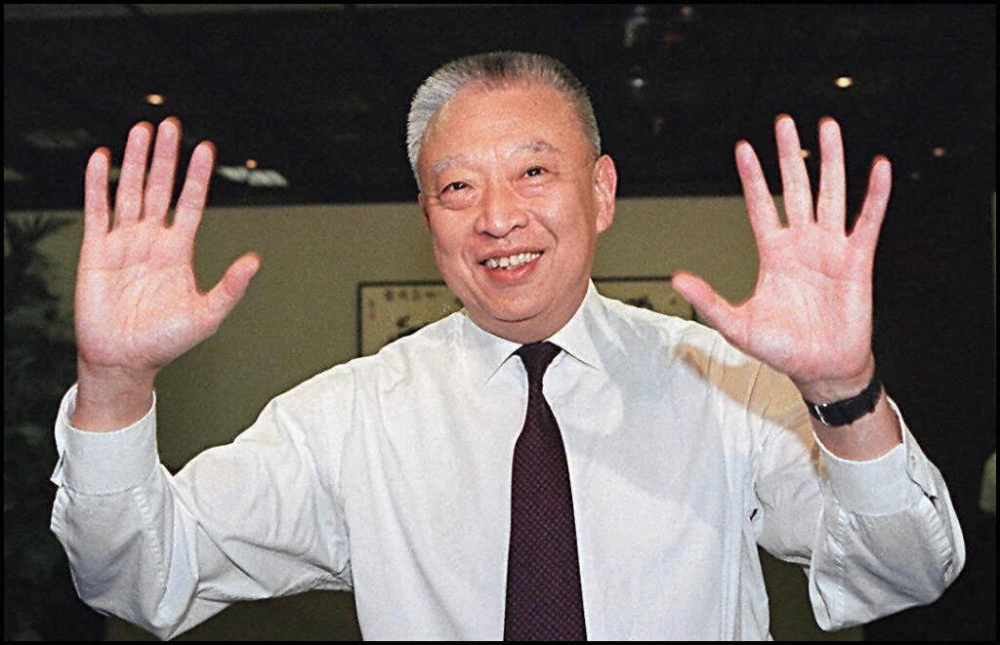
Tung Chee-hwa, Hong Kong’s first post-colonial leader, dies at age 89
From shipping tycoon to Chief Executive, Tung's tenure was marked by the 2003 SARS outbreak and the massive protests that forced the scrapping of Article 23.
Official eulogies praising Hong Kong's first post-colonial leader as a role model
defined by integrity, compassion, and dignity
stand in sharp contrast to the derisive monikers that tracked his time in office: 7-11
for his punishing work hours, and Old Dumb Tung
for his perceived indecisiveness. Tung Chee-hwa died Tuesday, 8 September 2026, at the age of 89, according to an official statement from his office announcing that he passed away peacefully in the presence of his family members.
Hand-picked by a panel of pro-Beijing elites after the 1997 end of British colonial rule, the former shipping tycoon spent eight years attempting to steer a territory caught between Communist leadership edicts and a population fiercely protective of its civil liberties.
Related YouTube video

From Shipping Tycoon to Beijing Bridge
Born into one of China's richest shipping dynasties in Shanghai on May 29, 1937, according to his government biography, Tung offered a different birth date to mainland Chinese media in 2017, claiming he was born on July 7 instead. His family moved to the territory in 1947. After graduating with a degree in marine engineering from the University of Liverpool in 1960, he worked for General Electric and his family's business in the United States before returning to Hong Kong in 1969 to join the family shipping enterprise.
According to Wwaytv3, the central government perceived Tung as a loyalist who would reliably execute Communist leadership edicts. This political alignment was underpinned by a concrete financial obligation: the rescue of his family's ailing shipping company, Orient Overseas Container Line, by China's state-run banks during a global maritime slump in the 1980s.
Quietly working his way through political networks on both sides of the border, Tung joined a committee in 1985 to aid in writing the Basic Law, the mini-constitution governing the territory after the handover. He subsequently sat on Beijing's political advisory body and Hong Kong's cabinet, positioning himself as a willing bridge during the sensitive early years of the one country, two systems
framework.
A Sequence of Shocks
Tung's administration was widely criticized for clumsy political skills and sluggish responses, which eroded his popularity and fueled public discontent.
| Crisis | Approximate Timing | Impact/Outcome |
|---|---|---|
| Avian Flu | 1997 | First known human cases of the virus; response criticized as clumsy. |
| Asian Financial Crisis | Late 1990s | Record unemployment and a severe property market crash affecting ordinary citizens. |
| SARS | 2003 | Nearly 300 deaths from severe acute respiratory syndrome; devastated the local economy. |
The economic downturn hit ordinary residents particularly hard, wiping out household wealth through property crashes and driving up unemployment. Compounded by a deep distrust of the media and recurring policy gaffes, Tung struggled to regain the public trust.
The Article 23 Breaking Point
Tension between central security mandates and local freedoms reached a boiling point in July 2003. Tung proposed a restrictive anti-subversion bill, known as Article 23 legislation, which many residents viewed as an existential threat to their civil liberties.
The public backlash was immense. An estimated 500,000 people took to the streets in protest, compelling the government to shelve the legislation. That mobilization transformed the July 1 handover anniversary into an annual fixture of pro-democracy street marches that persisted until 2020. Public pressure intensified further in 2004 as residents rallied to demand direct elections for the city's leader and entire legislature — demands that Tung and his communist overseers in Beijing decisively rejected.
Public Reprimand and Ambiguous Exit
In December 2004, Tung and his cabinet received a public dressing-down from then-President Hu Jintao for poor performance, marking the lowest point of his administration.
On March 10, 2005, Tung announced his resignation with two years remaining in his second term, declaring,
He insisted that fatigue and failing health were behind his departure. Yet Yahoo News reports that most observers suspected China's Communist leadership forced him out after losing confidence in his leadership, given that no health problems had been apparent in the months before his exit. He was succeeded by his deputy, chief secretary Donald Tsang."If I continue as chief executive, I won’t be able to handle it,"
Tung Chee-hwa, Chief Executive, via Wwaytv3
The Elder Statesman of Loyalty
In his later years, Tung transitioned from a beleaguered administrator into an elder statesman of the political establishment. During the 2014 student-led pro-democracy demonstrations, he publicly urged protesters to go home. When mass dissent erupted again in 2019, drawing a severe crackdown and the imposition of a national security law outlawing subversion, Tung remained steadfastly aligned with Beijing.
In September 2019, Chinese leader Xi Jinping awarded Tung a national medal at a ceremony in Beijing, recognizing his devotion to implementing the one country, two systems
policy amidst the ongoing unrest. Tung largely withdrew from public view in his final years, missing subsequent flag-raising ceremonies.
The trajectory of Tung's political life ends in historical irony: the very Article 23 anti-subversion law that Tung failed to pass in 2003 — the catalyst for the mass protests that signaled his loss of control, was formally enacted by the Hong Kong government in 2024.
Archypedia is dedicated to independent, evidence-backed reporting. This briefing was synthesized from primary source reporting, corroborated across independent newsrooms, and verified against our Editorial Standards.
Transparency record
Evidence behind this report
This report synthesizes 5 distinct sources. Open the source ledger below to compare the underlying coverage.
Prepared under the Archypedia Editorial Policy by the Samir Haddad editorial desk profile. AI-assisted tools may support drafting and verification; public accountability remains with Archypedia. Report an error.