Hong Wang and Yu Deng become first Chinese mathematicians to win Fields Medal
Wang and Deng are the first two Chinese scholars to be simultaneously honored with the Fields Medal, which recognizes researchers under the age of 40.
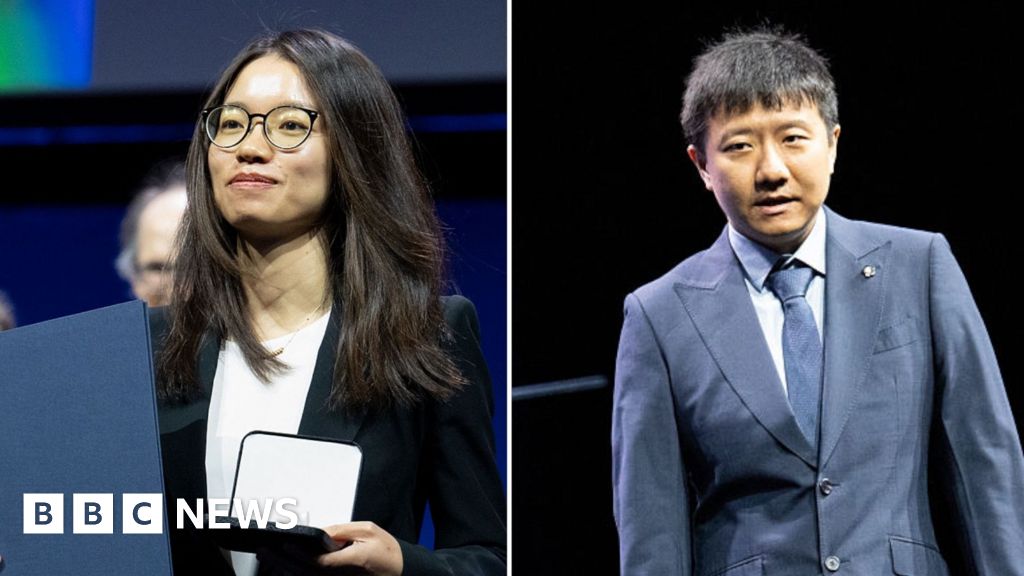
The awards, presented Thursday at the opening ceremony of the International Congress of Mathematicians in Philadelphia, represent a shift in the global mathematical community, tripling the number of Chinese-born recipients of the prize in a single event. They join an elite group alongside John Pardon of the United States and Jacob Tsimerman of Canada.
The Fields Medal, often characterized as the Nobel Prize of mathematics, is awarded every four years to a maximum of four researchers under the age of 40 to recognize both past achievement and future potential. This year's ceremony followed an accidental premature disclosure of the winners' names, which occurred after coders identified a vulnerability on the International Mathematical Union (IMU) website.
Related media
Recognized Contributions
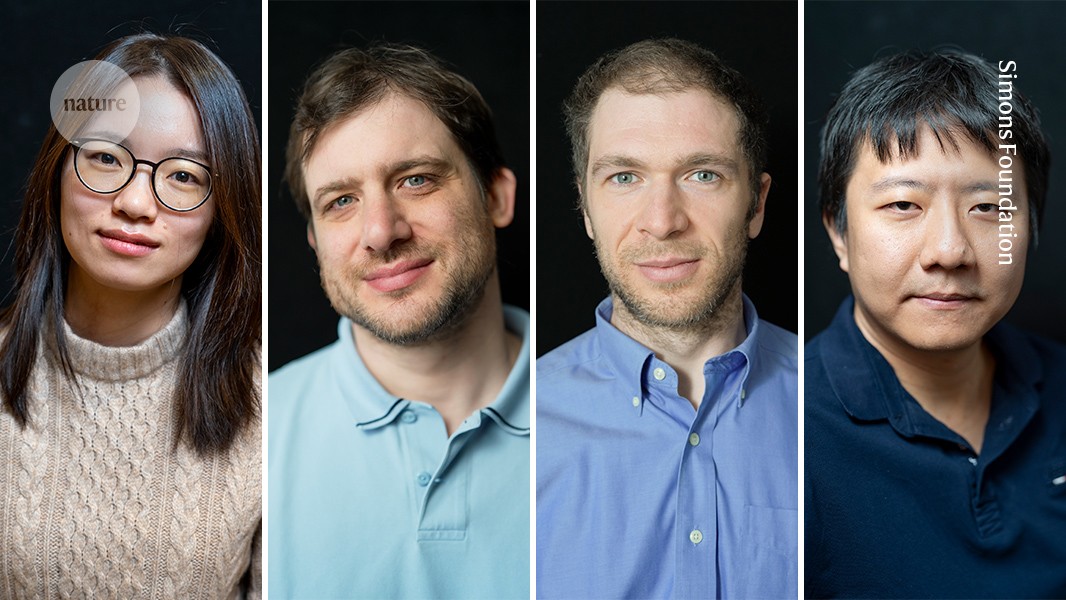
The recognition of Wang and Deng marks the first time two Chinese scholars have simultaneously been honored. Wang, currently researching at New York University and the Institut des Hautes Études Scientifiques in France, is the third woman to receive the medal in its 90-year history. She earned the prize for her work in harmonic analysis, most notably a proof of the three-dimensional Kakeya conjecture, which she co-authored with Joshua Zahl. The conjecture involves a geometric problem regarding the minimum area required to rotate a pencil to point in every direction.
Deng, a professor at the University of Chicago, was honored for his contributions to mathematical physics and differential equations. His work addresses a challenge posed by David Hilbert in 1900 regarding the behavior of fluids. By analyzing gas particles, Deng and his collaborators established a rigorous proof demonstrating how microscopic particle motion results in the macroscopic behavior described by classical fluid equations. The IMU described the result as a significant step in the long-standing effort to derive physical laws from first principles.
The two other recipients also received recognition for resolving complex problems. John Pardon, of Stony Brook University, was cited for his work in geometry and topology, specifically his early resolution of a major conjecture concerning knot theory while still an undergraduate at Princeton University. Jacob Tsimerman, of the University of Toronto, was honored for his advancements in algebraic geometry and his role in proving the André-Oort conjecture.
An Evolving Academic Landscape
While Wang and Deng both began their higher education at Peking University in China, their doctoral training and current professional work have taken place in the United States and Europe. This geographic distribution has sparked discourse within the Chinese academic community regarding research mobility and the domestic capacity for nurturing high-level scientific talent.
In China, the news generated substantial engagement on social media platforms, with citizens celebrating the achievement as a matter of national pride. However, some users on platforms such as RedNote utilized the milestone to discuss the departure of students for foreign institutions and the potential for reforming academic structures to retain talent. These discussions occur as the Chinese government implements initiatives such as the QiMing project, which seeks to attract overseas STEM experts, and the introduction of specialized visas for foreign tech professionals.
What to Watch Next
- Technological Intersection: Jacob Tsimerman has indicated an intention to direct increased mathematical attention toward the study of artificial intelligence, citing a need to better understand the systems underlying the technology.
Despite the prestige associated with the award, which includes a gold medal and a cash prize of 15,000 Canadian dollars, the recipients described their primary motivation as fundamental curiosity. For Deng, the achievement is balanced by his commitment to his work. You just act as if nothing happened,
he noted, emphasizing that his focus remains on solving mathematical questions rather than the notoriety attached to the medal.
Ulrike Tillmann, vice-president and incoming president of the IMU, expressed hope for the future of the field, telling Npr, We should have the feeling that it has become a normal thing that women contribute to their fields at the highest level, including the Fields Medal.
Archypedia is dedicated to independent, evidence-backed reporting. This briefing was synthesized from primary source reporting, corroborated across independent newsrooms, and verified against our Editorial Standards.
Transparency record
Evidence behind this report
This report synthesizes 4 distinct sources. Open the source ledger below to compare the underlying coverage.
Prepared under the Archypedia Editorial Policy by the Samir Haddad editorial desk profile. AI-assisted tools may support drafting and verification; public accountability remains with Archypedia. Report an error.