10,000 OpenAI agents crack 90-year-old Navier-Stokes mystery in just 88 hours
Using thousands of concurrent agents and millions in compute resources, OpenAI generated a partial proof for the Navier-Stokes problem, sparking pushback from researchers over potential data leaks.
OpenAI announced that its unreleased internal model reached a partial proof for the Navier-Stokes existence and smoothness problem in 88 hours, running a massive parallel search that consumed approximately 130 billion output tokens and cost between $10 million and $22.5 million in computing resources, according to reports by Interesting Engineering and Autogpt.
The announcement arrived just hours after New York University mathematics professor Tristan Buckmaster and Anthropic researcher Levent Alpöge published their own months-long research on related fluid equations. Buckmaster raised questions about whether unreleased drafts and prompts fed into OpenAI’s Codex coding assistant had inadvertently guided the rival corporate effort, setting off a high-stakes dispute that underscores the widening gulf between frontier AI laboratories and human academic researchers.
Related YouTube video


The Mechanics and Scale of the 88-Hour Computational Sprint
The operational scale behind the Navier-Stokes breakthrough represents a departure from traditional mathematical research. According to AutoGPT, OpenAI began training an advanced, unreleased model on Wednesday, 28 August 2026, noting its exceptional mathematical capability. On Tuesday, 1 September 2026, following rumors that two Millennium Prize problems had already fallen, the company turned the system toward the remaining unsolved challenges.
A smaller vanguard of roughly 100 agents first spent approximately 50 hours solving an unforced version of the Euler equations’ regularity problem. That intermediate success pointed the search toward fluid singularities. The broader Navier-Stokes effort then scaled up to roughly 10,000 concurrent agents operating in isolated environments equipped with code-execution tools and cached internet access, as detailed by The Times of India.
| Metric / Parameter | Reported Value |
|---|---|
| Peak concurrent agents | ~10,000 agents |
| Project duration | 88 hours (plus 17 hours Lean verification) |
| Message exchange volume | 2.7 million messages |
| Output token consumption | ~130 billion tokens |
| Estimated compute cost | $10 million to $22.5 million |
| Millennium Prize status | Unclaimed by OpenAI; 2 of 4 required statements resolved |
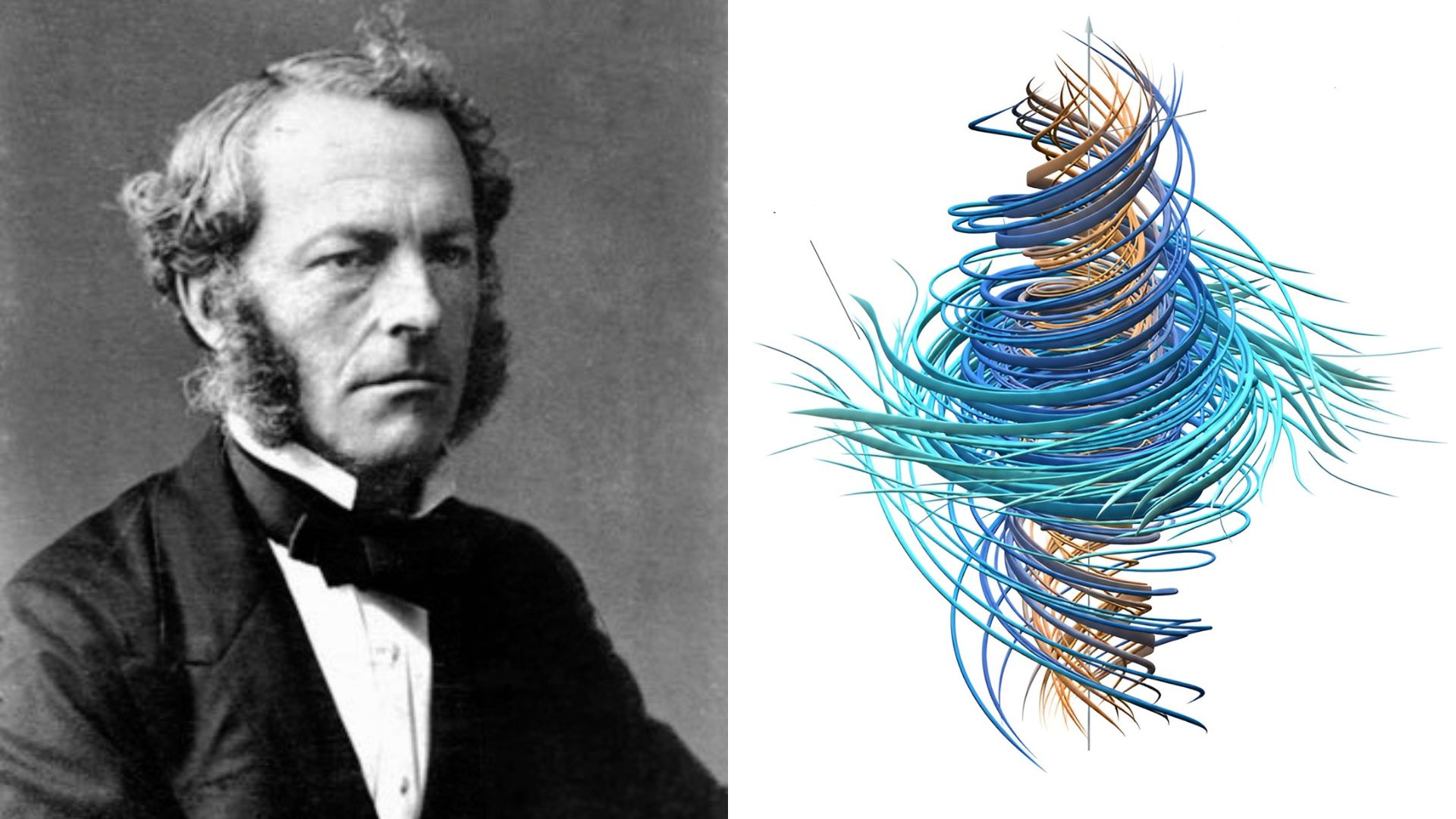
The resulting proof describes a physical phenomenon where an initially smooth fluid at rest forms a vortex that spirals inward, stretching and accelerating until velocity becomes unbounded in finite time while its total energy remains controlled, according to Yellow. While Jean Leray established in 1934 that generalized solutions exist, proving whether smooth solutions must remain smooth has remained a central hurdle in mathematical physics.
Real-World Engineering Stakes and Industrial Applications
Beyond abstract topology, the Navier-Stokes equations govern the fundamental physics of fluid motion. Engineers rely on these differential equations to design commercial aircraft wings, forecast complex weather patterns, and model human cardiovascular blood flow. Because turbulence and viscosity interact in unpredictable ways, any proven boundary condition or identified breakdown point carries significant implications for aerodynamics, meteorology, and biomedical engineering.
However, the partial nature of OpenAI's achievement leaves practical validation incomplete. The official criteria established by the Clay Mathematics Institute in Cambridge, Massachusetts, require a complete proof of four distinct statements to resolve the Millennium Prize problem. OpenAI's system successfully resolved two of those four components. Consequently, the company stated it will not claim the $1 million prize attached to the challenge, positioning the release as a benchmark for measuring artificial intelligence capabilities rather than a finished prize-winning theorem.
The Chronology of the Dispute: Codex Sessions and Unpublished Drafts
The speed of the automated discovery triggered immediate friction within the academic community. Tristan Buckmaster and Levent Alpöge had spent months investigating forced Euler equations—building upon foundational techniques introduced by Diego Córdoba and Luis Martínez-Zoroa. Throughout their research, the pair used OpenAI's Codex coding assistant.
On Monday, 7 September 2026, at 11:58 pm, Buckmaster published a statement detailing his correspondence with OpenAI researcher Sébastien Bubeck.
Buckmaster alleged he was pressured during private discussions and warned that going public with his concerns would harm his career, though Bubeck denied attempting to remove Alpöge's name from a collaborative paper."I asked again, about training, and I did not get an answer,"
Tristan Buckmaster, Mathematics Professor at New York University, via The Times of India
OpenAI maintained that its internal researchers and automated agents operated entirely independently and did not view the mathematicians' unpublished drafts before publication. Nevertheless, the company conceded that it cannot rule out the possibility that de-identified product usage data generated during Buckmaster and Alpöge's coding sessions indirectly helped improve its underlying models.
Frequently Asked Questions
Did OpenAI completely solve the Navier-Stokes Millennium Problem?
No. OpenAI's automated system resolved two of the four required statements mandated by the Clay Mathematics Institute. The company acknowledged it is a partial snapshot of progress and declined to claim the $1 million prize.
What are the specific allegations made by Tristan Buckmaster?
Buckmaster alleged that his team's months-long research, conducted partly using OpenAI's Codex tool, may have leaked into the company's training pipeline. He also stated he received evasive answers when asking about model training data and claimed he was pressured during discussions with OpenAI researchers.
Prominent mathematicians have also raised broader concerns regarding the culture of academic research. UCLA mathematics professor Terence Tao likened the automated extraction of proof pathways to looting an archaeological site, warning that treating open problems as corporate marketing benchmarks reduces mathematics to a mechanical production quota game that bypasses the deep human experience of discovery.
External mathematical experts and the Clay Mathematics Institute have yet to formally verify whether OpenAI's Lean-verified proof satisfies the rigorous criteria required for the Millennium Prize, leaving the validity of the vortex singularity open to ongoing peer review.
Archypedia is dedicated to independent, evidence-backed reporting. This briefing was synthesized from primary source reporting, corroborated across independent newsrooms, and verified against our Editorial Standards.
Transparency record
Evidence behind this report
This report synthesizes 5 distinct sources. Open the source ledger below to compare the underlying coverage.
Prepared under the Archypedia Editorial Policy by the Elena Voss editorial desk profile. AI-assisted tools may support drafting and verification; public accountability remains with Archypedia. Report an error.