France train derails leaving at least 44 injured with carriage overturned
One carriage overturned and four others left the rails between Tourville and Elbeuf-Saint-Aubin, triggering a mass-casualty emergency plan and halting major rail lines.

CLÉON — Ilario Imbert, 15, felt strong vibrations before the train lifted off the tracks. Windows shattered and the carriage directly in front of him derailed and rolled over. While Imbert’s carriage remained on the rails, the impact left passengers inside struggling with flying glass and debris, according to accounts reported by Ouest-France and Aol.
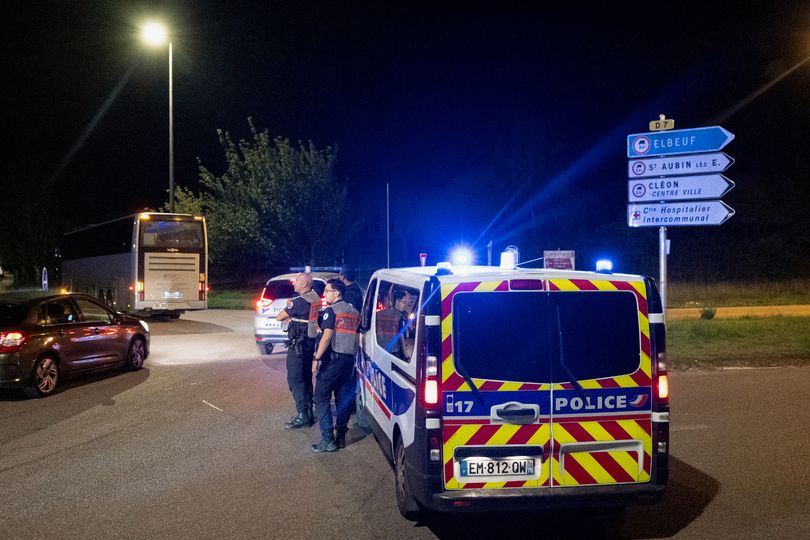
The derailment of a regional TER train on Friday, September 11, has left at least 44 people injured. An 18-year-old woman was in critical condition, while 43 others sustained injuries described by authorities as non-life-threatening
. The accident occurred at approximately 7:45 pm between Tourville and Elbeuf-Saint-Aubin, within the Cléon commune area of Seine-Maritime, Normandy.
Related YouTube video

Conflicting Casualty and Passenger Data
Immediate reports following the crash revealed a discrepancy between the figures provided by the national government and local authorities. French Transport Minister Philippe Tabarot provided a provisional report citing about 20 injured passengers. He also stated the train was carrying around 180 people, a figure echoed by reports from Uk and Ijr.
However, the prefecture of Seine-Maritime and other local officials reported a higher casualty count of at least 44. The prefecture also differed on the scale of the passenger manifest, estimating that roughly 200 people were aboard the train, according to Dailyrecord.
| Metric | Transport Minister Tabarot | Seine-Maritime Prefecture / Local Reports |
|---|---|---|
| Estimated Injuries | About 20 | At least 44 |
| Passenger Count | Approximately 180 | Roughly 200 |
Emergency Mobilization and Scale of Wreckage
The response to the derailment was rapid. The Seine-Maritime prefect activated the departmental operational centre at 8:00 pm, 15 minutes after the event. This triggered the ORSEC NOVI emergency plan, a protocol specifically designed for incidents involving multiple casualties.
A total of 140 firefighters were dispatched to the site to assist passengers and the wounded. The physical scale of the accident was significant: one carriage completely overturned while four others were thrown from the tracks.
Rail services were immediately halted in both directions on the Rouen-Caen line. SNCF Réseau, the network manager, confirmed that power to the tracks was cut to ensure the safety of emergency crews. This caused extensive disruption to several major routes:
- The Rouen-Caen line (entirely halted)
- Paris-Rouen-Le Havre
- Rouen-Amiens
SNCF reported plans to implement replacement bus services in the affected area, according to Ijr.
Competing Theories on the Cause
The official position of the train operator remains cautious. In a statement via X, SNCF Nomad Train said the cause of the accident was not yet known and pledged full cooperation and transparency with investigators.
Despite this, a police source told the broadcaster BFMTV that the regional train had collided with an unidentified object before leaving the rails. This claim aligns with the strong vibrations
and sudden impact described by passengers, though it has not been formally confirmed by the transport ministry or the rail operator.
Frequently Asked Questions
Where exactly did the derailment occur?
The accident happened near the municipalities of Cléon and Tourville-la-Rivière, specifically between Tourville and Elbeuf-Saint-Aubin in the Seine-Maritime department of Normandy.
Who is the most seriously injured?
An 18-year-old woman was reported to be in critical condition.
Which emergency plan was activated?
The ORSEC NOVI plan, used for mass-casualty incidents, was activated by the Seine-Maritime prefect.
Timeline of Emergency Response
The sequence of events on September 11 began with the derailment at approximately 7:45 pm. According to the prefecture of Seine-Maritime, the operational center was activated at 8:00 pm, just 15 minutes after the crash occurred. This rapid mobilization triggered the ORSEC NOVI plan, which allowed for the deployment of 140 firefighters to the site.
The scale of the wreck required the immediate suspension of all rail traffic in both directions on the Rouen-Caen line. SNCF Réseau told the AFP news agency that cutting power to the tracks was a necessary safety measure to allow emergency crews to operate. This decision had a cascading effect on regional transit, causing significant disruption to the Paris-Rouen-Le Havre and Rouen-Amiens routes.
The human toll highlights the violence of the impact. While the prefecture of Seine-Maritime categorized 43 of the injuries as non-life-threatening, the critical state of the 18-year-old woman necessitated an airlift to a hospital. This severity is echoed by the account of 15-year-old Ilario Imbert, who told Ouest-France that windows broke and the carriage in front of his rolled over after the train lifted off the tracks
.
The public prosecutor's office has opened a formal investigation to establish the exact circumstances and cause of the accident. A primary focus for investigators will be the contradiction between SNCF's statement that the cause is unknown and the claim from a police source via BFMTV that the train hit an unidentified object.
Archypedia is dedicated to independent, evidence-backed reporting. This briefing was synthesized from primary source reporting, corroborated across independent newsrooms, and verified against our Editorial Standards.
Transparency record
Evidence behind this report
This report synthesizes 4 distinct sources. Open the source ledger below to compare the underlying coverage.
Prepared under the Archypedia Editorial Policy by the Samir Haddad editorial desk profile. AI-assisted tools may support drafting and verification; public accountability remains with Archypedia. Report an error.