Colombia earthquake death toll rises to 181 as rescue efforts continue
Colombia earthquake death toll rises to 181 as rescue efforts continue

Colombia entered a second day of frantic search-and-rescue operations on Tuesday, August 11, 2026, after a magnitude-7.4 earthquake struck the country, leaving at least 181 people dead, 1,310 injured, and more than 2,500 missing or out of contact. According to the Colombian Association of Capital Cities, cited by Upi and Yahoo News, the disaster has destroyed 153 buildings, primarily across the nation's Coffee Region and the western department of Valle del Cauca, presenting newly inaugurated President Abelardo de la Espriella with an immediate national catastrophe days after taking office.
The earthquake struck at 7:34 a.m. Local time on Monday, August 10, 2026, with its epicenter located near San José del Palmar in the sparsely developed Chocó department, roughly 240 kilometers west of Bogotá, as reported by Protothema. Seismologists noted that the event occurred at an intermediate depth of about 60 miles, or over 100 kilometers. Greek seismologist Gerassimos Papadopoulos observed that such a considerable focal depth could theoretically have limited surface destruction, but the depth actually allowed seismic waves to travel long distances through rigid rock without rapidly losing strength. This phenomenon produced what the Colombian Geological Service described as the longest-lasting seismic event recorded in the country in the 21st century, with intense shaking felt for 40 to 50 seconds, and residents in western departments reporting continuous shaking for up to two minutes.
Related YouTube video

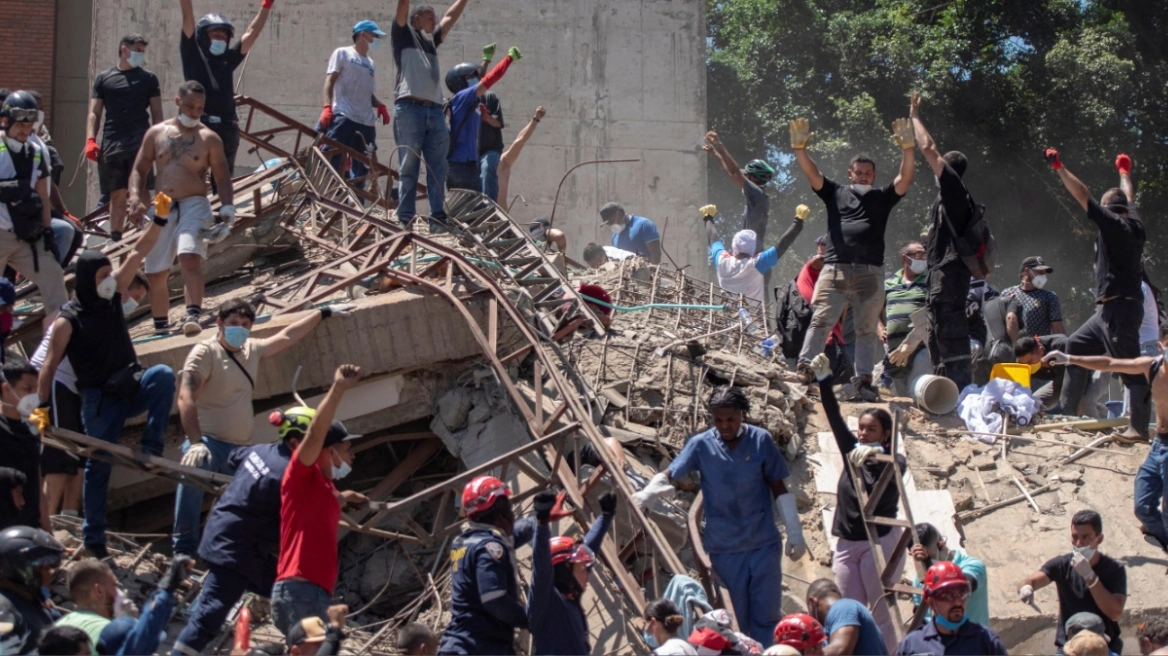
The human toll is heavily concentrated in western urban centers. According to municipal and capital association figures, Cali recorded the highest fatality count with 95 deaths, followed by Pereira with 72, Quibdó with nine, and Manizales with five. In Cali alone, authorities reported that at least 193 people remain trapped beneath the rubble of 56 collapsed residential and commercial buildings. Meanwhile, Pereira's mayor's office stated that 53 people are trapped across 58 destroyed urban structures. Rescuers have faced harrowing conditions; in Cali, emergency crews pulled 37 survivors from the debris, including a 6-month-old baby and his mother found beneath a concrete slab after search dogs and faint cries alerted responders. In Pereira, a complex six-hour vertical rescue operation successfully evacuated 16 people who had been left suspended in mid-air inside cabins of the city's Megacable aerial cable car system when the quake hit.
Critical infrastructure has sustained crippling damage. Healthcare facilities were severely impacted, forcing the partial facade collapse and urgent evacuation of patients from the University Hospital of Valle in Cali, alongside serious structural damage to pediatric and neonatal units reported by Protothema. Transportation networks suffered immediate paralysis, with the civil aeronautics agency suspending operations at seven regional airports—including Cali, Pereira, Manizales, Quibdó, Armenia, Cartago, and Buenaventura—complicating the delivery of emergency aid. In remote areas like Chocó near the epicenter, communications and electrical grids were completely severed, leaving residents like 66-year-old Martha Estrada isolated without electricity or cell phone coverage, as noted by Newstalk ZB.
In response to the crisis, President de la Espriella formally declared a national state of disaster to fast-track financial and logistical aid, announcing that he had personally taken charge of the emergency response and deployed military forces to the hardest-hit zones. Interior Minister Rodrigo Lara told Radio Bli, as cited by UPI, that more than 300 rescuers had been dispatched to critical collapse sites, supplemented by 45 specialists and canine units from Bogotá. International assistance began arriving on Tuesday, featuring $15.5 million in humanitarian aid announced by the United States government, alongside a 47-member urban search-and-rescue team from Ecuador working alongside the Colombian Red Cross and Civil Defense.
Local authorities warn that the casualty figures will likely climb as emergency crews push deeper into the rubble of the 153 collapsed buildings.
Regional Impacts and International Response
According to Protothema, the disaster prompted offers of international solidarity alongside the U.S. Funding package, including expressions of readiness to provide assistance from Mexican President Claudia Sheinbaum and the government of Israel. Furthermore, the Greek Ministry of Foreign Affairs issued a public statement expressing deep sorrow and extending condolences to the families of the victims. Seismological experts have drawn distinctions between this event and the twin earthquakes that struck neighboring Venezuela in late June, noting that while the Venezuelan disasters occurred at shallow depths of less than 20 kilometers along plate interactions involving the Caribbean, the Colombian tremor originated at an intermediate depth exceeding 100 kilometers through the subduction of the Nazca Plate.
- United States: Announced $15.5 million in humanitarian aid for tents, temporary shelters, food, and damage assessments, monitored by Secretary of State Marco Rubio.
- Ecuador: Deployed a 47-member urban search-and-rescue team with canine units to assist local emergency organizations.
- Mexico and Israel: Offered official state assistance and support to aid recovery efforts.
- Seismological Activity: The Colombian Geological Service documented more than 60 aftershocks, with the strongest measuring magnitude 4.8.
As recovery operations proceed around the clock in the western departments, the next step involves comprehensive structural safety inspections across the seven suspended regional airports and the indefinite closure of urban cable car networks, as emergency services race against time to reach individuals still unaccounted for beneath the rubble.
How significant is this development?
Contribute your assessment to the aggregated reader intelligence ledger.
Archypedia is dedicated to independent, evidence-backed reporting. This briefing was synthesized from primary source reporting, corroborated across independent newsrooms, and verified against our Editorial Standards.
Transparency record
Evidence behind this report
This report synthesizes 4 distinct sources. Open the source ledger below to compare the underlying coverage.
Prepared under the Archypedia Editorial Policy by the Samir Haddad editorial desk profile. AI-assisted tools may support drafting and verification; public accountability remains with Archypedia. Report an error.