Company That Makes Billions for Vodacom and MTN Every Year is a Bargain for Investors – MyBroadband Analysis
In the high-stakes world of telecommunications, the spotlight usually falls on the consumer-facing giants—the brands that sell the SIM cards, the data bundles, and the latest smartphones. In the South African and broader African markets, Vodacom and MTN dominate the narrative. However, beneath the surface of these mobile network operators (MNOs) lies a critical, often overlooked layer of infrastructure that serves as the actual backbone of the digital economy. Recent market discussions, including perspectives shared via Company that makes billions for Vodacom and MTN every year is a bargain for investors – MyBroadband, suggest that the companies managing this “passive infrastructure” are currently some of the most undervalued assets in the investment landscape.
While MNOs battle for subscriber growth and navigate the complexities of Average Revenue Per User (ARPU), the companies that own the towers, the masts, and the power systems—known as TowerCos—operate on a fundamentally different and often more stable economic model. For the astute investor, the realization that these entities generate billions in recurring revenue while trading at a discount presents a compelling opportunity. This shift from owning assets to leasing them is not merely a corporate trend; it is a structural evolution of the global telecoms industry.
The Invisible Engine: Understanding the TowerCo Business Model
To understand why a company providing infrastructure to Vodacom and MTN is considered a bargain, one must first understand the concept of “passive infrastructure.” In simple terms, passive infrastructure includes the physical tower, the land lease, the fencing, and the power supply (generators and batteries). This is distinct from “active infrastructure,” which consists of the antennas and electronic equipment that actually transmit the cellular signal.
Historically, Vodacom and MTN built and owned their own towers. However, the capital expenditure (Capex) required to maintain and expand a nationwide network is astronomical. By selling these towers to a third-party infrastructure company and then leasing them back, MNOs can move massive liabilities off their balance sheets and convert fixed capital costs into predictable operating expenses (Opex).
The Mechanics of Recurring Revenue
The financial allure of these infrastructure companies stems from the nature of their contracts. Unlike a retail consumer who might switch networks for a cheaper data deal, an MNO cannot simply “switch” towers. Once a carrier’s equipment is mounted on a mast, they are locked into long-term lease agreements—often spanning ten to twenty years.
- Long-Term Lease Stability: Revenue is guaranteed by contracts with creditworthy tenants like MTN and Vodacom.
- Inflation Indexation: Most lease agreements include annual escalations linked to inflation, protecting the investor’s real returns.
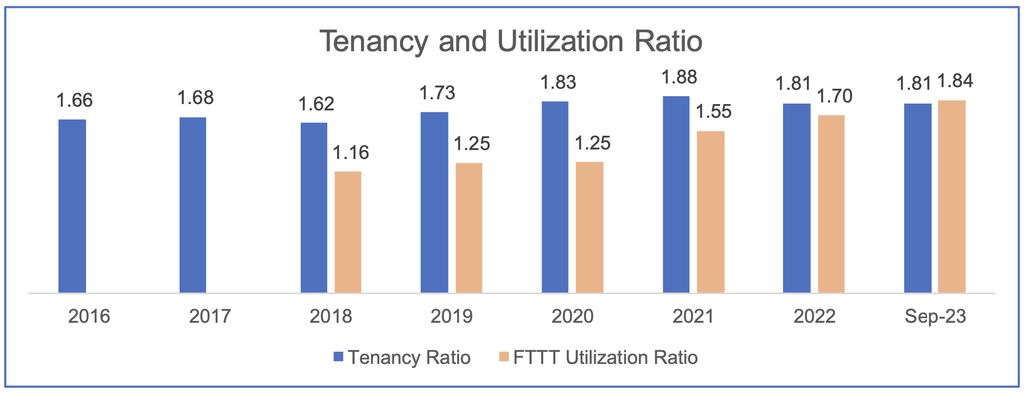
- The “Tenancy Ratio” Multiplier: This is the “secret sauce” of TowerCo profitability. A tower costs roughly the same to maintain whether it hosts one tenant or three. When a second or third operator (such as Telkom or a smaller MVNO) joins a tower, the additional rent is almost pure profit.
“The shift toward infrastructure sharing is a win-win. MNOs reduce their capital burden, while the infrastructure owner builds a high-margin, recurring revenue stream that is largely decoupled from the volatile consumer market.”
Why These Assets are Currently Viewed as a Bargain
If the business model is so robust, why are these companies seen as “bargains” rather than overpriced premiums? The discrepancy between the intrinsic value of these assets and their current market valuation is driven by several macroeconomic and sector-specific factors.
Market Mispricing and Risk Perception
Many investors view the telecommunications sector through the lens of the MNOs, which are currently facing headwinds. These include regulatory pressure to lower data costs, intense competition, and the massive cost of 5G deployment. Because TowerCos are so closely linked to these giants, their stock prices often move in tandem with the MNOs, despite having a vastly different risk profile.
While an MNO is exposed to consumer churn and regulatory pricing caps, a TowerCo is primarily exposed to the solvency of the MNO. Given that Vodacom and MTN are systemic pillars of the African economy, the risk of default is relatively low, yet the market often prices these infrastructure plays as if they carry the same volatility as a consumer retail business.
The Capex Cycle of 5G
The transition to 5G requires a denser network of “slight cells” and more frequent tower sites because high-frequency 5G signals do not travel as far as 4G. This necessitates a massive wave of new construction. While the initial build-out requires significant capital, it creates a long-term expansion of the asset base. Investors who enter now are essentially buying into the foundation of the next decade’s connectivity.
| Feature | Mobile Network Operator (MNO) | Infrastructure Company (TowerCo) |
|---|---|---|
| Revenue Source | Consumer subscriptions & data | Long-term corporate leases |
| Cost Structure | High marketing & spectrum costs | Maintenance & land leases |
| Risk Profile | High (Consumer churn, Regulation) | Low to Medium (Tenant solvency) |
| Growth Driver | User growth & ARPU increase | Tenancy ratio & Site expansion |
The Symbiotic Relationship: Vodacom, MTN, and the Tower Provider
The relationship between the operators and the infrastructure provider is not merely transactional; it is symbiotic. For Vodacom and MTN, the ability to outsource their towers allows them to focus on the “service” layer of the business—improving customer experience, developing FinTech solutions (like M-Pesa and MoMo), and optimizing spectrum usage.
Reducing the Burden of Maintenance
Maintaining a tower in remote or challenging environments is a logistical nightmare. It involves securing land rights, managing diesel deliveries for backup generators, and ensuring physical security against theft and vandalism. By shifting this burden to a specialized company, MNOs eliminate the operational headache of “bricks and mortar” management.
Strategic Flexibility
When an MNO wants to expand into a new region or launch a new technology, it is far faster to lease an existing tower from an infrastructure provider than to apply for zoning permits and build a new mast from scratch. This agility is crucial in a market where the first-mover advantage in 5G can define market share for years.

For the investor, this means the infrastructure company is effectively a “toll booth” on the digital highway. No matter which operator wins the subscriber war, the data must still pass through the tower. This makes the infrastructure play a hedge against the volatility of the MNO competition.
Critical Challenges and Potential Headwinds
No investment is without risk, and the “bargain” thesis must be weighed against the specific challenges facing the African infrastructure market. A professional analysis requires a balanced look at what could go wrong.
The Energy Crisis and Operational Costs
In markets like South Africa, the energy crisis (load shedding) has placed an immense strain on tower operations. Towers rely on the grid, but when the grid fails, they switch to diesel generators. The skyrocketing cost of diesel and the logistical challenge of refueling thousands of sites in unstable areas can eat into profit margins. Infrastructure companies that invest in solar and battery storage (Green Towers) are likely to be the long-term winners, but the transition requires significant upfront investment.
Regulatory Shifts and Spectrum Allocation
While TowerCos are less exposed to consumer regulation than MNOs, they are still affected by government policy. If a government mandates “forced sharing” of infrastructure to lower costs for consumers, it could potentially cap the rents that TowerCos can charge. Conversely, if the government encourages infrastructure sharing to bridge the digital divide in rural areas, it could accelerate the growth of the tenancy ratio.
The Threat of Satellite Connectivity
The emergence of Low Earth Orbit (LEO) satellites, such as SpaceX’s Starlink, introduces a theoretical threat to traditional tower infrastructure. For extremely remote areas, satellite internet may bypass the need for a physical tower. However, for high-density urban environments and high-capacity 5G, physical towers remain indispensable due to latency and bandwidth requirements. The “satellite threat” is more of a niche concern than a systemic risk to the TowerCo model.
Analyzing the Value Gap: Why Now?
The argument that these companies are a bargain usually centers on the Enterprise Value to EBITDA (EV/EBITDA) multiple. In many developed markets, TowerCos trade at high multiples because they are viewed as “real estate plays” with a tech twist. In emerging markets, these multiples have historically been lower due to the “country risk” premium.
However, as the African digital economy matures, this risk premium is shrinking. We are seeing a convergence where the stability of the cash flows is beginning to outweigh the perceived geopolitical risks. When you combine this with the fact that the “tenancy ratio” (the number of operators per tower) is still relatively low in many African regions compared to Europe or North America, the growth potential is substantial.
For those following the narrative of Company that makes billions for Vodacom and MTN every year is a bargain for investors – MyBroadband, the key takeaway is the disconnect between the utility of the asset and its current price. These companies provide a service that is non-negotiable for the functioning of modern society. Without the towers, there is no mobile banking, no e-commerce, and no remote work.
Key Investment Indicators to Watch
- Tenancy Growth: Are more operators moving onto existing towers?
- Energy Transition: What percentage of the portfolio has been migrated to renewable energy?
- Churn Rate: Are MNOs renewing their long-term leases at expected rates?
- Debt-to-Equity Ratio: Since these are capital-intensive businesses, how is the company managing its leverage in a high-interest-rate environment?
For a deeper dive into the financial health of the sector, readers may find a related explainer on telecommunications CAPEX trends useful to understand how spending patterns are shifting across the continent.
Frequently Asked Questions
Which company exactly makes billions for Vodacom and MTN?
While several companies operate in this space, the “Company” usually refers to large-scale TowerCos (Tower Companies) or infrastructure funds. These can be independent entities or specialized arms of the MNOs themselves that have been spun off into separate legal entities to attract external investment. Examples globally include American Tower and IHS Towers, with various regional players operating specifically within the South African and African markets.
Why is it considered a “bargain” for investors?
It is considered a bargain because the market often prices these companies based on the volatility of the mobile phone industry (MNOs) rather than the stability of the real estate/infrastructure industry. Because they have long-term, inflation-linked contracts and high barriers to entry, their intrinsic value is often higher than their current share price or valuation.
Do these companies rely solely on Vodacom and MTN?
While Vodacom and MTN are the primary “anchor tenants” due to their size, these companies strive to diversify. They seek to add other tenants, such as Telkom, Rain, or government agencies, to their towers. The more tenants a tower has, the higher the profit margin, as the cost of maintaining the tower remains relatively constant.
What is the biggest risk to this investment?
The most immediate risk is operational cost inflation, specifically regarding energy. In regions with unstable power grids, the cost of diesel and security can fluctuate wildly. Long-term, the main risk is regulatory intervention that could force a reduction in lease rates to lower the cost of connectivity for the end consumer.
How does 5G affect these infrastructure companies?
5G is generally a positive catalyst. Because 5G signals have a shorter range, more towers and “small cell” sites are needed to provide the same coverage as 4G. This increases the demand for the physical space and power that TowerCos provide, leading to more lease agreements and potential expansion of their asset portfolios.
The evolution of the African telecoms landscape is moving toward a future where the “pipes” (the infrastructure) are separated from the “service” (the data and voice). For those looking past the consumer headlines, the companies that own the physical ground and the steel in the air represent a strategic intersection of real estate stability and technological growth. As the digital divide closes and more of the population comes online, the value of the infrastructure that enables this connection only increases, making the current valuation gap a point of significant interest for long-term investors.
