US Strikes Iran for Second Straight Day Over Stalled Peace Talks – Bloomberg.com
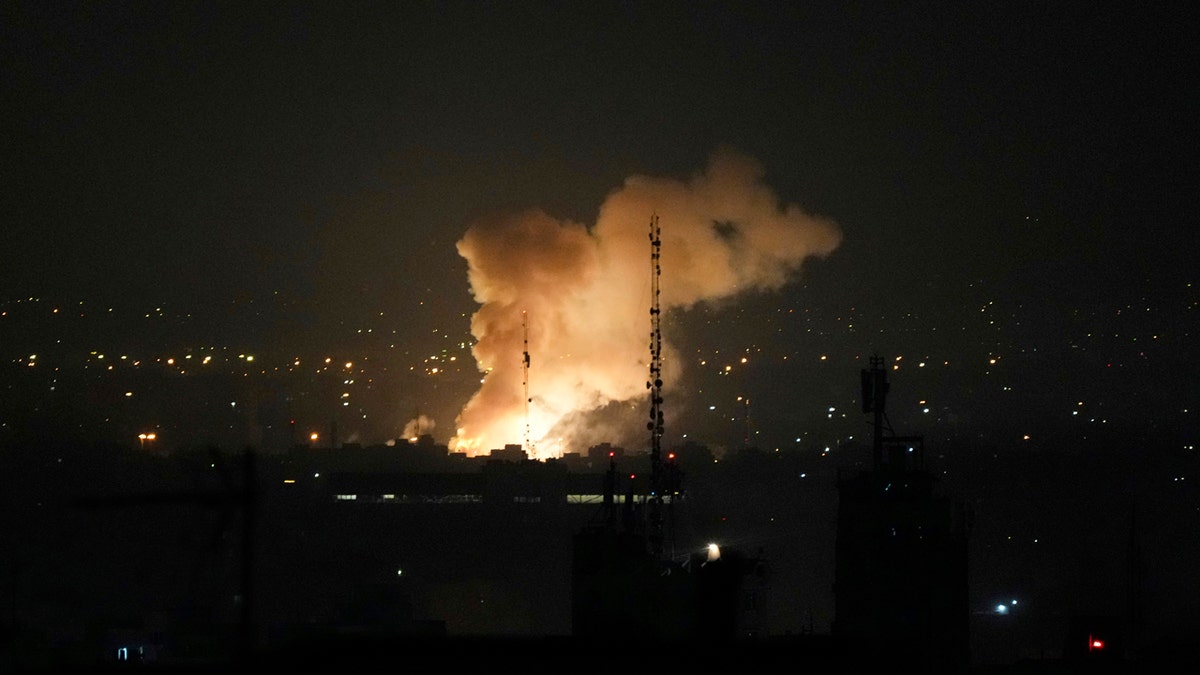
The United States military conducted airstrikes against targets in Iran for a second consecutive night following the downing of a US Apache helicopter, according to reports from the Wall Street Journal and Axios. These strikes occur as diplomatic peace negotiations have stalled, per Bloomberg, while US bases across the Middle East face a second night of retaliatory Iranian attacks, according to CNN.
Why did the US launch strikes on Iran for two consecutive days?
The US military initiated the bombing campaign as a direct response to the loss of an Apache helicopter, the Wall Street Journal reports. The strikes represent a rapid escalation in kinetic activity, with Axios confirming that the US bombed Iranian targets for two straight nights.
Military officials typically use these types of targeted strikes to degrade the capabilities of the adversary that caused the initial loss of aircraft. The Apache helicopter is a primary attack aircraft used for reconnaissance and precision strikes; its downing is viewed by US command as a significant provocation requiring an immediate and proportional response.
Key triggers for the escalation include:
- The Downed Apache: The primary catalyst for the military response, as cited by the Wall Street Journal.
- Diplomatic Failure: Stalled peace talks, according to Bloomberg, which removed the diplomatic buffer that previously prevented direct strikes.
- Retaliatory Cycle: A pattern of attacks and counter-attacks, with CNN reporting that US bases in the Middle East are currently enduring a second night of Iranian strikes.
What is the current status of US-Iran peace talks?
Diplomatic efforts to stabilize the region have reached an impasse. Bloomberg reports that peace talks between the US and Iran have stalled, leaving the two nations without a functional channel to resolve grievances or prevent military escalation.
The breakdown in these talks is critical because it changes the operational environment for US forces. Without a diplomatic framework, tactical incidents—such as the downing of a helicopter—are more likely to lead to direct military confrontation rather than being resolved through negotiation.
The stagnation of these talks suggests a disconnect in the core demands of both parties. While specific terms of the stall were not detailed in the immediate reports, the timing of the strikes indicates that the US no longer views diplomacy as a sufficient deterrent against Iranian aggression.
How were the US helicopter crews rescued near the Strait of Hormuz?
In a significant operational detail, a sea drone was used to rescue a US Army helicopter crew near the Strait of Hormuz, according to the BBC. The rescue occurred in one of the world’s most volatile maritime corridors, where the risk of interception or capture by Iranian forces is high.
The use of an unmanned sea drone for a Search and Rescue (SAR) operation highlights a shift in US military strategy. By deploying a drone rather than a manned rescue vessel or aircraft, the US reduced the risk of further casualties in a high-threat environment. The Strait of Hormuz is a narrow waterway that connects the Persian Gulf with the Gulf of Oman and is the world’s most important oil transit chokepoint.
The rescue operation near the Strait of Hormuz underscores the high-risk nature of current US operations in the region, where unmanned systems are increasingly used to mitigate the danger to personnel.
What are the risks to US bases in the Middle East?
US military installations across the Middle East are currently under threat. CNN reports that these bases are facing their second consecutive night of retaliatory Iranian attacks. These attacks typically involve drones or missiles launched from Iranian territory or via regional proxies.
The risk to these bases is compounded by the geographic spread of US forces. Iranian retaliatory strikes often target logistics hubs, airfields, and command centers to disrupt the US ability to sustain the airstrikes reported by Axios and the Wall Street Journal.
The current threat landscape can be summarized as follows:
| Threat Source | Target | Reported Status |
|---|---|---|
| Iranian Forces/Proxies | US Middle East Bases | Second night of attacks (CNN) |
| Iranian Air Defenses | US Apache Helicopter | Downed (WSJ) |
| US Air Force/Navy | Iranian Targets | Two straight nights of bombing (Axios) |
How are different news outlets framing this escalation?
Analysis of the reporting shows a divide in how the conflict is being framed. While the facts remain consistent, the emphasis varies by outlet, providing a broader picture of the crisis.
Bloomberg focuses on the political failure, framing the strikes as a consequence of stalled peace talks. This perspective suggests that the military action is a symptom of a larger diplomatic collapse. In contrast, the Wall Street Journal and Axios frame the event as a military necessity, focusing on the downing of the Apache helicopter as the primary driver for the response.
CNN emphasizes the vulnerability of US assets, highlighting the ongoing attacks on US bases. This shifts the focus from the US as the aggressor in the airstrikes to the US as a target of retaliation. Meanwhile, the BBC provides a technological angle, reporting on the sea drone rescue, which emphasizes the operational complexities of the Strait of Hormuz.
This divergence in framing illustrates the three-dimensional nature of the conflict: diplomatic (Bloomberg), tactical (WSJ/Axios), and strategic/regional (CNN/BBC).
Timeline of Recent Events
- The Trigger: An Iranian-linked action leads to the downing of a US Apache helicopter.
- The Rescue: A sea drone recovers the helicopter crew near the Strait of Hormuz (BBC).
- The Initial Response: The US launches the first night of airstrikes against Iranian targets (Axios).
- The Retaliation: Iran begins attacks on US bases in the Middle East (CNN).
- The Second Wave: The US strikes Iran for a second straight night (Axios/WSJ).
- The Diplomatic Context: Peace talks remain stalled, preventing a ceasefire (Bloomberg).
What are the strategic implications of the Strait of Hormuz operations?
The location of the helicopter crash and subsequent rescue—the Strait of Hormuz—adds a layer of global economic risk to the military conflict. Any significant escalation in this area can lead to the closure of the strait, which would immediately impact global oil prices and shipping lanes.
The US deployment of sea drones for rescue operations indicates a desire to maintain a presence in the strait without escalating to a full-scale naval battle. However, the fact that a US aircraft was downed in this proximity suggests that Iran is willing to challenge US air and sea superiority in its “backyard.”
If the US continues to strike Iranian soil for multiple days, the likelihood of Iran attempting to block the Strait of Hormuz increases. This would move the conflict from a series of targeted strikes to a global economic crisis.
For more context on regional stability, readers may find a related explainer on Middle East maritime security useful.
Common misconceptions about the current US-Iran conflict
One common oversimplification is that these strikes are an isolated military event. As reported by Bloomberg, the strikes are inextricably linked to the failure of diplomacy. Without the stalled peace talks, the US might have pursued a different channel of grievance resolution.
Another misconception is that the US is operating without risk. While the US possesses superior air power, the reports from CNN regarding attacks on US bases prove that the US military is facing a distributed threat. The conflict is not a one-sided bombing campaign but a symmetrical exchange of strikes across different domains (air, sea, and land-based installations).
Finally, the rescue of the crew via sea drone is sometimes viewed as a minor detail, but it represents a major shift in modern warfare. The integration of unmanned systems into active combat rescue missions shows that the US is prioritizing the reduction of “boots on the ground” in high-risk zones.
Frequently Asked Questions
Why did the US strike Iran for a second day?
According to the Wall Street Journal and Axios, the US launched strikes for a second straight night in response to the downing of a US Apache helicopter. This was a retaliatory measure intended to respond to the loss of the aircraft and its crew.
What happened to the Apache helicopter crew?
The BBC reports that the crew was rescued near the Strait of Hormuz. The rescue was carried out by a sea drone, which allowed the US to recover the personnel without risking further manned assets in a volatile area.

Are US bases in the Middle East safe?
CNN reports that US bases in the region are currently facing their second night of retaliatory attacks from Iran. This indicates that while the US is striking targets in Iran, Iranian forces are simultaneously targeting US installations across the Middle East.
Why didn’t diplomacy prevent these strikes?
Bloomberg reports that peace talks between the US and Iran have stalled. The lack of progress in these negotiations means there is currently no diplomatic framework to resolve the conflict or prevent military escalation.
Where exactly are these events taking place?
The airstrikes are targeting locations within Iran. The helicopter incident and subsequent rescue took place near the Strait of Hormuz, a critical waterway between the Persian Gulf and the Gulf of Oman. Retaliatory attacks are occurring at various US bases throughout the Middle East.
The current situation remains fluid. The combination of military strikes, retaliatory attacks on bases, and a total collapse of diplomatic talks suggests a period of heightened instability. Observers should watch for any movements in the Strait of Hormuz, as this remains the most likely flashpoint for wider economic disruption.
