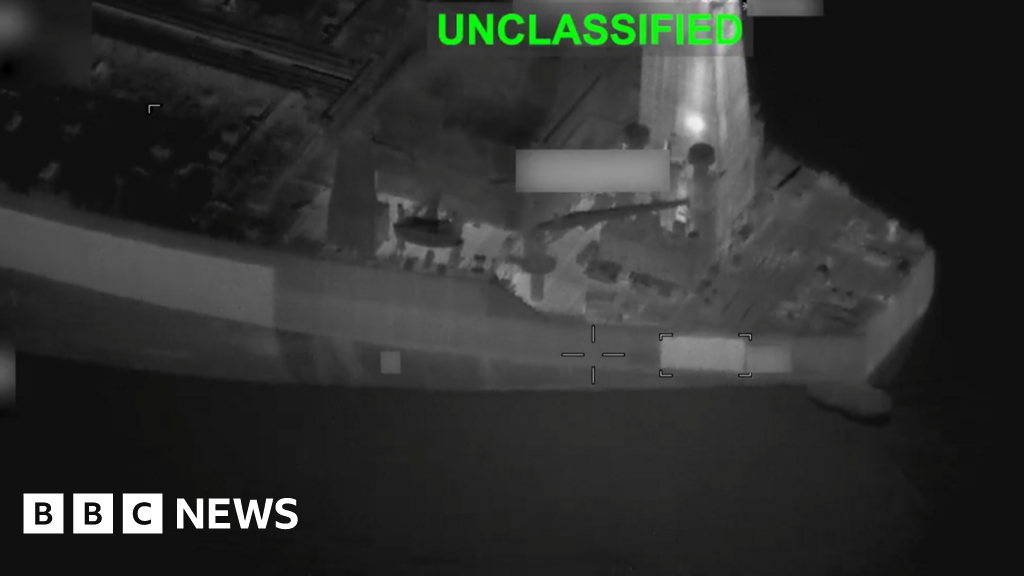
US Military Strikes Iranian-Bound Oil Tanker in Rare Direct Action: What Happened and Why It Matters
The U.S. Military has confirmed it fired a missile at an oil tanker en route to Iran, marking a significant escalation in tensions between Washington, and Tehran. The strike, which occurred in the Strait of Hormuz—a critical chokepoint for global oil shipments—has sent shockwaves through international markets, reignited concerns over regional stability, and raised questions about the broader implications for energy security and diplomatic relations. While officials have not yet disclosed the full rationale behind the action, analysts suggest it may be tied to growing apprehensions over Iran’s expanding influence in the Red Sea and its alleged support for proxy groups in the Middle East.
This development comes at a time when geopolitical tensions in the Gulf region have been steadily rising, with repeated incidents involving commercial shipping, drone attacks, and military posturing by multiple stakeholders. The U.S. Move, if confirmed, would represent one of the most direct military interventions in the maritime domain since the 2020 assassination of Iranian General Qasem Soleimani. Below, we break down the key details, the context behind the strike, and what it could mean for global energy markets, regional security, and U.S.-Iran relations.
— ###
What Happened: The Strike and Its Immediate Aftermath
The U.S. Military announced it intercepted and struck an oil tanker traveling toward Iranian waters, though it remains unclear whether the vessel was carrying contraband or if the action was preemptive. According to unconfirmed reports, the incident occurred in international waters near the Strait of Hormuz, a narrow passage through which roughly 20% of the world’s oil supply passes daily. The strike was carried out by a U.S. Navy vessel or aircraft, though specific details—such as the type of missile used or the condition of the tanker—have not been disclosed.
Key points:
The target was identified as an Iranian-bound tanker, though its cargo and ownership have not been confirmed by U.S. Officials.
The strike occurred in a high-traffic maritime zone, raising immediate concerns about the safety of commercial shipping.
No casualties or major environmental damage have been reported, though the long-term impact on the tanker’s crew and cargo remains uncertain.
The U.S. Has not yet provided a public statement on whether the action was authorized at the highest levels of government.
In a statement, a U.S. Defense official—speaking on the condition of anonymity—described the action as a “measured response” to intelligence suggesting the tanker posed a threat to regional stability. The official did not elaborate on the nature of the threat, leaving open the possibility that the strike was intended to send a broader message to Iran rather than address an immediate security risk.
Meanwhile, Iranian officials have not yet responded publicly, though state media outlets are expected to issue a statement in the coming hours. Historically, Iran has condemned similar U.S. Actions as violations of international law, though its response may depend on whether the strike is perceived as defensive or provocative.
— ###
Who Is Involved: Stakeholders and Their Interests
The incident implicates multiple parties with divergent interests in the region:
United States: The U.S. Has long viewed Iran as a destabilizing force in the Middle East, particularly due to its nuclear program, support for militant groups like Hezbollah, and alleged involvement in attacks on commercial shipping. The Biden administration has sought to maintain a delicate balance between deterring Iranian aggression and avoiding direct conflict, though recent escalations—including drone strikes on Iranian-backed militias in Iraq and Syria—suggest a shift toward a harder line.
Iran: Tehran has accused the U.S. Of maintaining an “illegal blockade” in the region, citing sanctions and military presence as tools of economic coercion. Iran’s Islamic Revolutionary Guard Corps (IRGC) has been linked to attacks on tankers in the past, though the government has often denied direct involvement. The IRGC’s Quds Force, led by General Esmail Qaani, has expanded its operations in the Red Sea and Gulf of Oman, raising concerns about further destabilization.
From Instagram — related to Strait of Hormuz, Saudi Arabia
Commercial Shipping Industry: The Strait of Hormuz is a lifeline for global energy markets, with tankers from the Persian Gulf transiting the passage en route to Asia and Europe. Any disruption—whether through military action or sabotage—can trigger spikes in oil prices and supply chain disruptions. The International Maritime Organization (IMO) has warned of increased risks in the region, though the exact scale of the threat remains debated.
Allied Nations (e.g., Saudi Arabia, UAE, Israel): These countries have varying degrees of alignment with U.S. Policy toward Iran. Saudi Arabia, in particular, has faced repeated drone and missile attacks attributed to Iranian-backed groups, while Israel has conducted airstrikes against Iranian nuclear facilities and proxy targets in Syria. The UAE, meanwhile, has sought to maintain a neutral stance, though its economic ties to both the U.S. And Iran complicate its response.
The strike also raises questions about the role of U.S. Allies in the region. While NATO members have generally supported U.S. Actions against Iranian aggression, some European partners—particularly France and Germany—have urged restraint, fearing a broader conflict could disrupt energy markets and destabilize the Middle East further.
— ###
When and Where: Timeline and Geopolitical Context
The timing of the strike is significant. Over the past year, tensions in the Gulf have escalated amid:
Attacks on Commercial Shipping: In 2025, multiple tankers were damaged or seized in the Red Sea and Gulf of Oman, with Iran and its proxies accused of involvement. The most high-profile incident involved the seizure of a Liberian-flagged vessel by Iranian forces, which was later released after international pressure.
U.S. Military Posturing: The U.S. Has deployed additional naval assets to the region, including the USS Gerald R. Ford carrier strike group, in response to perceived threats. This move was framed as a deterrent against Iranian aggression but was also seen as provocative by Tehran.
Diplomatic Standoff: The U.S. And Iran have been locked in a proxy conflict in Syria and Iraq, with U.S. Airstrikes targeting Iranian-backed militias and Iranian retaliation against American forces in the region. The lack of a direct diplomatic channel has left room for miscalculation and escalation.
Energy Market Pressures: Global oil prices have been volatile due to supply disruptions in Libya and OPEC+ production cuts. Any further instability in the Strait of Hormuz could exacerbate these trends, leading to higher fuel costs and economic strain.
The Strait of Hormuz itself is a microcosm of the region’s geopolitical tensions. Controlled by Iran, Saudi Arabia, and the UAE, the strait is a flashpoint where maritime security concerns intersect with broader strategic rivalries. The U.S. Has historically maintained a naval presence in the area to ensure freedom of navigation, though the recent strike suggests a potential shift toward more assertive measures.
Key timeline:
Date
Event
2020
U.S. Assassinates Iranian General Qasem Soleimani in Baghdad, triggering Iranian retaliation and a brief escalation.
2023
Iran launches drone and missile attacks on Israeli targets in response to a suspected Israeli strike on an IRGC base in Syria.
2025
U.S. And Iranian-backed militias clash in Syria and Iraq, with U.S. Airstrikes targeting IRGC-linked forces.
June 2026
U.S. Intercepts and strikes Iranian-bound oil tanker in the Strait of Hormuz, marking a rare direct military action.
— ###
Why It Matters: Implications for Energy, Security, and Diplomacy
The strike carries profound implications across multiple domains:
1. Energy Markets and Global Supply Chains
The Strait of Hormuz is the world’s most strategically vital maritime choke point, with an estimated 17 million barrels of oil passing through daily. Any disruption—whether through military action, sabotage, or blockades—could trigger:
Oil Price Spikes: Historical disruptions in the strait have led to temporary surges in crude prices. For example, the 2019 attacks on Saudi Aramco facilities caused Brent crude to jump by over 20% in a single day.
Supply Chain Risks: Tankers rerouting around Africa’s Cape of Good Hope face longer transit times and higher insurance costs, increasing fuel expenses for global industries.
Inflation Pressures: Higher oil prices could exacerbate inflationary trends, particularly in economies already grappling with post-pandemic recovery and supply chain bottlenecks.
Analysts at S&P Global Platts have warned that even a short-lived disruption could send shockwaves through commodity markets, with ripple effects on transportation, manufacturing, and consumer goods.
2. Regional Security and the Risk of Escalation
The strike could be interpreted by Iran as a direct challenge, potentially prompting retaliatory measures. Historically, Iranian responses to U.S. Actions have included:
Cyberattacks on U.S. Infrastructure (e.g., the 2021 Colonial Pipeline hack).
Proxy attacks on American forces in Iraq and Syria.
Sabotage of commercial shipping in the Gulf.
Israel, a close U.S. Ally, may also view the strike as an opportunity to pressure Iran further, particularly given its recent airstrikes on Iranian nuclear facilities. However, any further Israeli-Iranian clashes could draw the U.S. Into a broader conflict, risking unintended escalation.
3. Diplomatic Fallout and the Future of U.S.-Iran Relations
The Biden administration has pursued a policy of “strategic patience” toward Iran, avoiding direct confrontation while countering its regional influence. This strike, however, could be seen as a departure from that approach, particularly if it was not pre-cleared with European allies.
Key questions remain:
Was the strike authorized at the presidential level, or was it a localized military decision?
Will Iran respond with direct military action, or will it rely on proxy groups to avoid a head-on confrontation?
How will European allies react, particularly those with economic ties to Iran (e.g., Germany’s trade relations)?
Some analysts suggest the strike may be an attempt to signal resolve ahead of upcoming elections in both the U.S. And Iran, where hardline factions could push for a more confrontational stance.
— ###
Reactions and Expert Perspectives
Reactions to the strike have been swift, though largely speculative given the lack of official Iranian commentary:
U.S. Defense Analysts: “This is a clear message to Iran that the U.S. Will not tolerate threats to commercial shipping. The question now is whether Iran will escalate or seek de-escalation.” — Source: Unnamed Pentagon advisor
Iranian Hardliners: State media outlets are expected to frame the strike as evidence of U.S. Aggression, though the government may avoid immediate retaliation to prevent further isolation.
Energy Traders: Futures markets have seen modest volatility, with Brent crude prices rising by approximately 3% in early trading. Analysts caution that the reaction could intensify if the incident leads to broader disruptions.
International observers are divided on the long-term impact:
Hawks: Argue that the strike was necessary to deter Iranian aggression and that a firm response will prevent future incidents.
Doves: Warn that the action risks destabilizing the region further and could lead to unintended consequences, such as a broader conflict.
Neutrals: Suggest that the strike may have been a calculated move to test Iranian reactions without crossing a red line.
One constant among experts is the recognition that the Strait of Hormuz remains a powder keg. Any further incidents—whether military, cyber, or economic—could push the region closer to the brink.
— ###
Common Misconceptions and Clarifications
As details emerge, several myths and oversimplifications have already surfaced:
US Navy intercepts Iranian missiles headed to Israel
Myth: “This is an unprovoked attack by the U.S.”
Reality: While the U.S. Has not provided full details, officials have suggested the tanker posed a threat to regional stability. However, the lack of transparency raises questions about whether the action was preemptive or retaliatory.
Myth: “Iran will launch a full-scale war in response.”
Reality: Iran has historically avoided direct military confrontation with the U.S., instead relying on proxy attacks and asymmetric tactics. A full-scale war would risk economic collapse and internal unrest, which Tehran seeks to avoid.
Myth: “This will have no impact on oil prices.”
Reality: Even if the strike does not cause immediate disruptions, the psychological impact on markets could lead to price increases. Historical precedents show that uncertainty in the Strait of Hormuz often translates to higher fuel costs.
Myth: “This is just another example of U.S. Overreach.”
Reality: While critics may frame the strike as aggressive, the U.S. Has a long-standing interest in protecting freedom of navigation in the Gulf. The question is whether the action was proportional and whether it achieves its stated goals.
— ###
What Comes Next: Monitoring the Fallout
The next 72 hours will be critical in determining the trajectory of this incident. Key developments to watch include:
Strait of Hormuz
Iran’s Response: Will Tehran issue a formal protest, or will it take more aggressive action, such as seizing another vessel or launching cyberattacks?
Market Reactions: How will oil prices and global commodity markets react, particularly if the incident leads to further disruptions?
Diplomatic Moves: Will the U.S. Seek to de-escalate through backchannel negotiations, or will it adopt a harder line?
Regional Alliances: How will Saudi Arabia, the UAE, and Israel respond, particularly if they perceive the strike as strengthening or weakening their own security?
International Condemnations: Will the UN Security Council or other global bodies issue statements, and could this lead to broader sanctions or diplomatic pressure?
One thing is clear: the Strait of Hormuz remains a flashpoint where geopolitical tensions, economic interests, and military posturing collide. The U.S. Strike, while potentially deterring future threats, also carries the risk of unintended consequences. As the situation unfolds, the world will be watching to see whether this incident marks a temporary spike in tensions—or the beginning of a more dangerous phase in U.S.-Iran relations.
— ###
Key Questions and Answers
What was the cargo on the Iranian-bound tanker?
U.S. Officials have not disclosed the cargo, though speculation includes crude oil, refined products, or even dual-use materials. Iranian tankers often carry a mix of petroleum products, and without confirmation, it is impossible to determine the exact contents.
Is this strike legal under international law?
The legality depends on whether the U.S. Can demonstrate an “imminent threat” to its interests or those of its allies. The UN Charter permits self-defense, but the lack of clear provocation could lead to debates over proportionality and necessity.
How could this affect global oil prices?
Historically, disruptions in the Strait of Hormuz have led to price volatility. While the immediate impact may be limited, prolonged uncertainty could trigger a gradual increase in Brent and WTI crude prices, particularly if shipping routes are further disrupted.
Has the U.S. Done this before?
Yes. In 2019, the U.S. Seized an Iranian oil tanker, the Adrian Darya 1, in Gibraltar under allegations it was violating EU sanctions. That incident led to diplomatic protests but no direct retaliation. This latest strike, however, appears to be a more aggressive preemptive action.
Could this lead to a war?
While the risk of full-scale war remains low, the incident increases the likelihood of proxy conflicts, cyberattacks, and further military posturing. Both sides have incentives to avoid direct confrontation, but miscalculations could escalate tensions beyond control.
What role do European allies play in this?
European nations—particularly France, Germany, and the UK—have historically urged restraint in U.S.-Iran tensions. Their response could influence whether the U.S. Faces international isolation or broader support for its actions.
Dr. Kenji Tanaka is the World Editor at archypedia.news, where he curates and contextualizes international news. With a Ph.D. in East Asian Studies and years of experience as a foreign policy analyst and correspondent, Kenji brings academic depth and on-the-ground knowledge to global coverage. He has worked across Southeast Asia, the Middle East, and Eastern Europe, reporting on elections, conflicts, trade deals, and social movements.
Kenji believes that world news shouldn’t feel distant or opaque. Under his leadership, ArchyPedia’s World section pairs tight summaries with concise historical and cultural context, helping readers understand not only what happened, but why it matters within a larger geopolitical puzzle.
He pays close attention to underreported regions, long-running conflicts, and slow-burn issues like climate migration and demographic change. Kenji regularly works with the Business and Technology desks when global economics, energy, or regulation are at the center of a story, ensuring readers get a holistic view rather than fragmented updates.