
China’s New Capital Controls Are Locking Out Retail Investors—Here’s Who Wins and Loses in the Shift
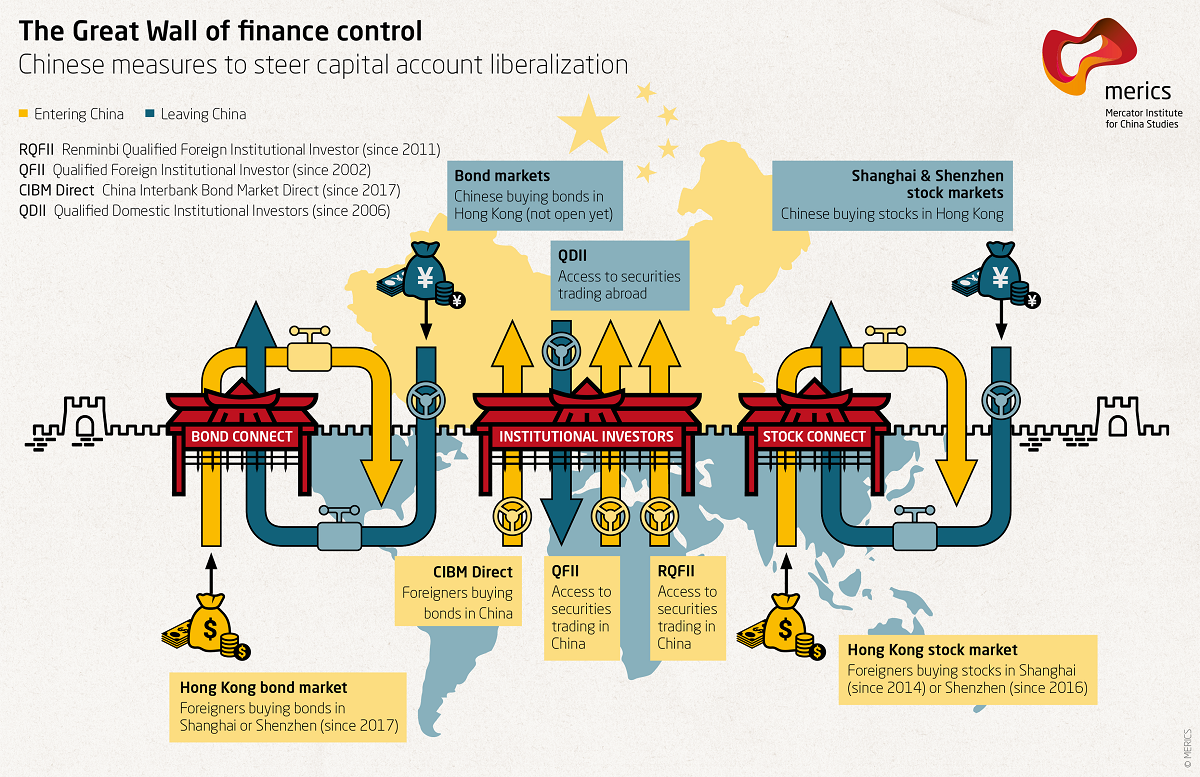
Beijing’s tightening grip on cross-border investments is reshaping how millions of Chinese retail investors access global markets—and the winners are already emerging. In a move that could redefine financial access for everyday investors, major trading platforms have begun restricting new positions in U.S. Stocks for mainland clients, while regulators in Hong Kong and China are enforcing stricter oversight of capital outflows. The implications stretch far beyond individual portfolios, potentially benefiting financial institutions, insurers, and even certain Hong Kong-listed companies as retail traders pivot to domestic alternatives.
This isn’t just about limiting access to American tech giants or blue-chip stocks. The broader trend reflects a deliberate shift in China’s economic policy: prioritizing capital retention over global investment freedom. For retail investors—often referred to as “Mom and Pop” traders—So higher barriers to diversifying wealth abroad. But for banks, insurers, and select financial players, the crackdown creates new opportunities in wealth management, domestic asset classes, and regulatory-compliant investment vehicles.
Understanding who stands to gain—and who may struggle—requires examining the mechanics of these controls, the players involved, and the long-term consequences for both individual investors and the financial ecosystem. The picture is complex, but one thing is clear: the days of unfettered access to global markets for Chinese retail investors may be numbered.
—
What Just Happened? A Timeline of the Crackdown
The latest wave of restrictions follows years of gradual tightening on capital outflows, but recent moves signal a more aggressive phase. Here’s how we got here:
- 2015–2017: The Great Outflow Era After China’s stock market bubble burst in 2015, retail investors flocked to U.S. Markets via Hong Kong-listed trading platforms like 富途牛牛 (Futures International) and Tiger Brokers. These platforms allowed mainland investors to trade American stocks without direct access to foreign exchanges, using a loophole in cross-border regulations. By 2017, Chinese retail investors held an estimated $300 billion in U.S. Stocks, according to Bloomberg Intelligence.
- 2018–2020: Early Warning Signs Regulators began tightening scrutiny on these “Stock Connect” programs and offshore trading accounts. The Hong Kong Monetary Authority (HKMA) and Securities and Futures Commission (SFC) introduced stricter KYC (know-your-customer) rules, and platforms faced delays in approving new client registrations. Meanwhile, China’s State Administration of Foreign Exchange (SAFE) cracked down on unauthorized capital outflows.
- 2021–2023: The Slow Squeeze Platforms like Tiger Brokers and 富途牛牛 reported declining new user registrations from mainland China, citing regulatory hurdles. In 2022, Tiger Brokers paused new account openings for Chinese clients, citing “compliance requirements.” The South China Morning Post noted that Hong Kong’s insurance sales—often tied to wealth management products offering U.S. Stock exposure—also slowed as cross-border restrictions tightened.
- 2024: The Latest Restrictions In early 2024, multiple trading platforms announced they would suspend mainland investors from opening new positions in U.S. Stocks, though existing portfolios could still be managed. Analysts at JPMorgan and HSBC have since highlighted how this shift could benefit domestic banks and insurers by redirecting retail capital into onshore products.
Key Point: The restrictions aren’t just about U.S. Stocks—regulators are also targeting wealth management products (WMPs), insurance-linked investments, and even real estate-backed securities that historically allowed indirect access to foreign assets.
—
Who’s Behind the Controls—and Why?
The crackdown is driven by a mix of economic, political, and social objectives:
- 1. Capital Flight Concerns China has long struggled with unauthorized capital outflows, with estimates suggesting $1 trillion left the country illegally between 2014 and 2020. Retail investors using offshore platforms to buy U.S. Stocks contributed to this trend. By restricting new positions, regulators aim to stem the tide of wealth leaving the country, particularly during economic slowdowns.
- 2. Financial Stability A sudden exodus of capital could destabilize China’s financial system, especially if retail investors rush to sell domestic assets to repatriate funds. Stricter controls help prevent liquidity crises in onshore markets.
- 3. Geopolitical Pressure U.S.-China tensions—particularly around tech restrictions, semiconductor bans, and sanctions—have made Beijing more cautious about allowing unfettered access to American markets. Some analysts speculate that political considerations may be influencing the timing of these moves.
- 4. Domestic Policy Priorities China’s leadership has repeatedly emphasized “common prosperity” and reducing inequality. Restricting retail access to high-growth U.S. Stocks (like those of Apple, Microsoft, and Nvidia) aligns with efforts to redirect wealth into domestic industries, such as semiconductors, green energy, and state-backed enterprises.
Who’s Enforcing These Rules? The crackdown involves multiple regulators:
- China’s State Administration of Foreign Exchange (SAFE) – Oversees capital controls and monitors cross-border transactions.
- Hong Kong Monetary Authority (HKMA) & Securities and Futures Commission (SFC) – Regulate trading platforms and enforce compliance with mainland restrictions.
- China Securities Regulatory Commission (CSRC) – Scrutinizes wealth management products and insurer-linked investments.
- People’s Bank of China (PBOC) – Adjusts reserve requirements and liquidity policies to support onshore markets.
Key Point: The controls aren’t just about blocking U.S. Stocks—they’re part of a broader push to consolidate financial activity within China’s borders, reducing reliance on offshore hubs like Hong Kong.
—
Who Benefits? The Winners in China’s Investment Lockdown
While retail investors face tighter access to global markets, several sectors stand to gain:
1. Domestic Banks and Wealth Managers
With retail capital stuck onshore, Chinese banks and wealth management firms are poised to benefit from increased demand for onshore investment products. Analysts at JPMorgan and HSBC have already highlighted:
- Higher Asset Management Fees – As retail investors seek alternatives, banks like Bank of China (Hong Kong) and Industrial and Commercial Bank of China (ICBC) are expected to see growth in private wealth management and structured products.
- Insurance-Linked Investments – Life insurers like AIA and FWD offer wealth management products tied to domestic assets. With U.S. Stock access restricted, demand for these may rise.
- Brokerage Commissions – Onshore brokers like China Securities and Everbright Securities could see increased trading volumes as investors shift to local markets.
HSBC Research’s Take:
“The enhanced oversight on cross-border flows will likely redirect retail capital into onshore wealth management channels, benefiting banks and insurers with strong domestic distribution networks.”
2. Hong Kong’s Financial Sector (Select Winners)
Not all Hong Kong financial players will suffer. Some may adapt and thrive under the new rules:
- Bank of China (Hong Kong) (02388.HK) As a state-linked bank with deep ties to mainland regulators, it’s well-positioned to capture redirected wealth through compliant investment products.
- Wealth Management Platforms Firms like 富途牛牛 (which has expanded into onshore wealth management) may pivot to offering domestic-focused ETFs and mutual funds.
- Insurance Companies with Onshore Strategies AIA and FWD have been diversifying into mainland wealth management, reducing reliance on cross-border sales.
Key Point: While Hong Kong Exchanges (HKEX) may see lower trading volumes in U.S. Stocks, the exchange’s domestic Chinese stock listings (like those of Alibaba and Tencent) could remain resilient.
3. Chinese State-Backed Enterprises
By limiting retail access to foreign markets, Beijing is effectively forcing capital into domestic industries that align with its strategic priorities:
- Semiconductors & Tech – Companies like SMIC and Huawei could see increased investment as retail money flows into onshore tech stocks.
- Green Energy & EVs – Firms like BYD and CATL may benefit from redirected wealth seeking exposure to China’s clean energy transition.
- Real Estate (Select Players) – While the broader sector faces challenges, state-backed developers with compliant financing structures could see stable demand.
Key Point: The restrictions create a forced allocation effect, where retail investors—previously diversified globally—must now choose between limited domestic options or sit on the sidelines.
—
Who Loses? The Hidden Costs of the Crackdown
While certain players benefit, the restrictions impose real costs:
1. Retail Investors (The “Mom and Pop” Crowd)
For millions of Chinese retail investors, the changes mean:

- Limited Diversification – U.S. Stocks have historically provided inflation hedges and higher growth compared to China’s slower-growing markets.
- Higher Fees for Alternatives – Onshore wealth management products often come with higher management fees and less transparency.
- Reduced Liquidity – Some offshore platforms may delist U.S. Stocks for mainland clients, forcing sales at unfavorable prices.
- Psychological Impact – Many investors built portfolios during China’s stock market downturns of 2015–2016, viewing U.S. Stocks as a safe haven. Losing access can lead to frustration and reduced participation in markets.
Example: A Shanghai-based teacher who allocated 30% of her portfolio to U.S. Tech stocks may now face forced liquidation or a shift to lower-yielding onshore bonds.
2. Trading Platforms and Brokers
Offshore platforms like Tiger Brokers and 富途牛牛 are seeing:
- Declining New User Sign-Ups – Regulatory hurdles make it harder to onboard mainland clients.
- Lower Revenue from Trading Commissions – Fewer U.S. Stock trades mean shrinking fee income.
- Pressure to Pivot Business Models – Some are shifting to domestic brokerage or wealth management, but this requires new licenses and infrastructure.
Key Point: While these platforms may survive, their growth potential in China is now severely constrained.
3. Hong Kong’s Insurance and Wealth Management Sector
Insurers like AIA and FWD have historically relied on cross-border wealth management sales to mainland clients. With restrictions tightening:
- Lower Sales of U.S.-Linked Products – Many insurance policies include foreign stock allocations, which are now harder to sell.
- Shift to Domestic Products – Insurers must retool offerings to focus on onshore assets, which may not appeal to risk-averse investors.
- Potential Slowdown in Premium Growth – If retail investors reduce exposure to wealth management products, insurance sales could cool.
JPMorgan’s Analysis:
“While the earnings impact on banks and insurers is limited in the near term, the longer-term risk is a structural slowdown in cross-border wealth management, which has been a key growth driver for Hong Kong’s financial sector.”
—
What’s Next? Three Scenarios for the Future
The crackdown isn’t final—it’s a dynamic policy shift with potential evolutions:
1. Gradual Easing with Stricter Compliance (Most Likely)
Regulators may relax some restrictions if:
- China’s economy stabilizes, reducing capital flight risks.
- Offshore platforms demonstrate enhanced compliance with anti-money laundering (AML) and KYC rules.
- New domestic investment channels (e.g., onshore ETFs, private equity) prove successful.
Outcome: Retail investors regain limited access to U.S. Stocks, but under stricter monitoring.
2. Full Lockdown with Domestic Alternatives
If Beijing prioritizes capital retention over global integration, we could see:
- A permanent ban on new U.S. Stock positions for retail investors.
- Expansion of onshore wealth management products tied to state-backed assets.
- Higher barriers for insurance and brokerage firms offering foreign exposure.
Outcome: Retail investors are forced into domestic markets, benefiting state-aligned industries.
3. Regulatory Arbitrage and Shadow Markets
If restrictions become too onerous, some investors may turn to:
- Underground wealth management channels (high-risk, unregulated).
- Crypto or digital assets as indirect exposure to global markets.
- Offshore trusts and private banking in Singapore or Switzerland.
Outcome: While risky, these workarounds could keep some capital flowing out, undermining Beijing’s goals.
Key Point: The most likely path is Scenario 1—gradual easing with tighter controls, but the long-term direction depends on China’s economic and geopolitical priorities.
—
Common Misconceptions—and What You Should Know
As this story unfolds, several myths have emerged. Here’s what’s really happening:
Myth 1: “This Only Affects U.S. Stocks”
Reality: The restrictions apply to all cross-border investments, including:
- Wealth management products with foreign exposure.
- Insurance policies tied to international assets.
- Even some real estate-backed securities linked to offshore markets.
Myth 2: “Retail Investors Can Just Use VPNs or Offshore Accounts”
Reality: While some investors still use VPNs or overseas accounts, platforms are cracking down. Many have:
- Banned VPN usage for trading.
- Imposed higher KYC requirements for new accounts.
- Limited withdrawal amounts to curb capital flight.
Myth 3: “This Won’t Hurt Hong Kong’s Financial Sector”
Reality: While some players (like Bank of China) benefit, others face risks:
- Insurance sales may slow as cross-border products become harder to sell.
- Trading volumes in U.S. Stocks could decline, affecting HKEX’s revenue.
- Wealth managers may relocate operations to Singapore or Shanghai to bypass restrictions.
Myth 4: “China Will Reverse Course If Markets Crash”
Reality: Past experience shows that capital controls often tighten during downturns, not loosen. For example:
- After the 2015 stock market crash, China accelerated capital controls.
- During the 2020 COVID-19 selloff, regulators restricted foreign exchange conversions.
- If U.S. Markets fall, Beijing may see this as a reason to keep capital at home, not release it.
—
What Should Investors Do Now?
If you’re a retail investor in China, here’s what to consider:
- Assess Your Current Holdings If you already hold U.S. Stocks, evaluate whether you need to hold, sell, or convert to onshore alternatives.
- Explore Onshore Alternatives Consider domestic ETFs, mutual funds, or wealth management products that align with your risk profile.
- Diversify Within China’s Markets Instead of relying solely on U.S. Stocks, look at Chinese tech, green energy, or state-backed enterprises.
- Monitor Regulatory Updates Platforms like 富途牛牛 and Tiger Brokers may adjust policies—stay informed on new compliance rules.
- Consult a Licensed Advisor Given the complexity of onshore vs. Offshore investments, a regulated financial advisor can help navigate the new landscape.
Key Point: The shift isn’t just about losing access—it’s about rethinking your entire investment strategy in a more restricted environment.
—
FAQ: Your Questions About China’s Investment Crackdown
Q: Will I still be able to trade my existing U.S. Stocks? A: Most platforms are allowing existing positions to be managed, but new purchases may be restricted. Check with your broker for updates on withdrawal limits or forced liquidation policies.
Q: Can I use a VPN to bypass these restrictions? A: Many platforms have banned VPN usage for trading, and regulators are increasing monitoring. Doing so could result in account suspension or legal risks.
Q: Are there any legal ways to still invest in U.S. Stocks? A: Some options include:
- Using onshore ETFs that track U.S. Indices (e.g., CSI 500 ETF).
- Investing through compliant wealth management products that offer indirect exposure.
- Exploring private banking in Hong Kong or Singapore (with higher minimum investments).
However, these may come with higher fees or lower liquidity.
Q: How will this affect Hong Kong’s stock market? A: While U.S. Stock trading volumes may decline, Hong Kong’s market could still benefit from:
- Stronger Chinese tech and green energy stocks.
- Increased onshore wealth management activity.
- Potential new listings from mainland firms seeking global capital.
However, insurers and brokers may face lower cross-border sales.
Q: Could China ever reverse these controls? A: Unlikely in the short term. Past experience shows that once capital controls tighten, they rarely fully reverse. However, selective easing (e.g., allowing limited access for high-net-worth individuals) is possible if economic conditions improve.
Q: What’s the biggest risk for retail investors right now? A: The lack of diversification. With U.S. Stocks off the table, investors may be forced into less liquid or lower-growth onshore assets, increasing portfolio risk in the long run.
—
China’s tightening on cross-border investments marks a pivotal moment for retail finance—one that will reshape how millions of investors build wealth. For some, it’s an opportunity to redirect capital into domestic growth sectors. For others, it’s a loss of financial freedom that could take years to recover. What’s clear is that the era of unfettered global investing for Chinese retail traders is ending, and the financial ecosystem is already adapting.
The next few months will reveal whether this shift sparks innovation in onshore wealth management—or whether it leaves investors searching for new ways to bypass the rules entirely.
