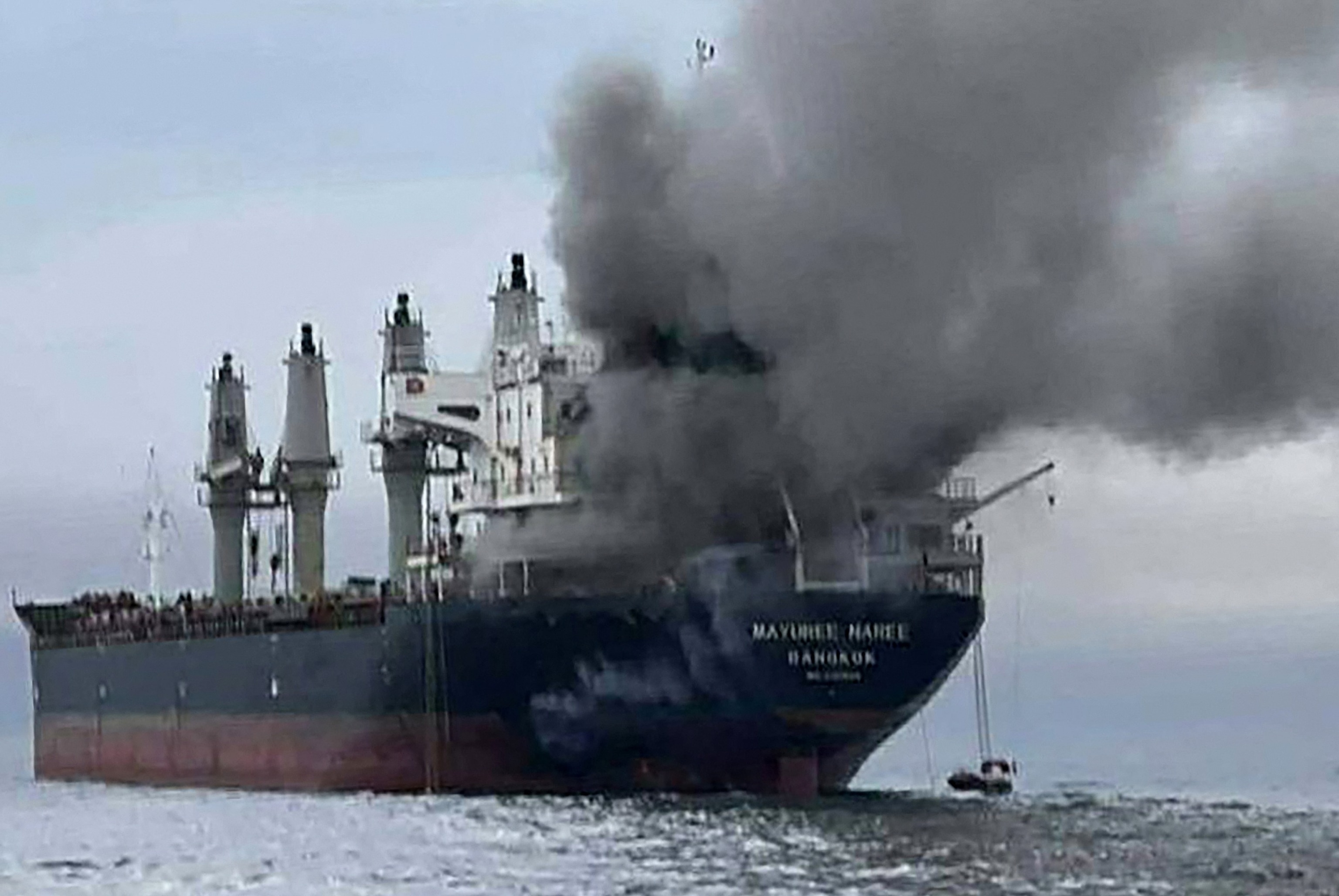
A U.S. Military strike on a commercial oil tanker en route to Iran has reignited concerns over escalating tensions in the Persian Gulf, with Tehran warning of “serious consequences” as regional powers brace for potential retaliation.
The Strike and Its Immediate Aftermath
According to government officials, the U.S. Military intercepted and destroyed a tanker carrying Iranian-bound fuel near the Strait of Hormuz on Tuesday. The operation, confirmed by multiple sources, targeted a vessel flagged in Panama but suspected of violating sanctions on Iranian oil exports. The strike occurred as diplomatic efforts to ease trade restrictions remain stalled, with Iran accusing Western powers of economic warfare.
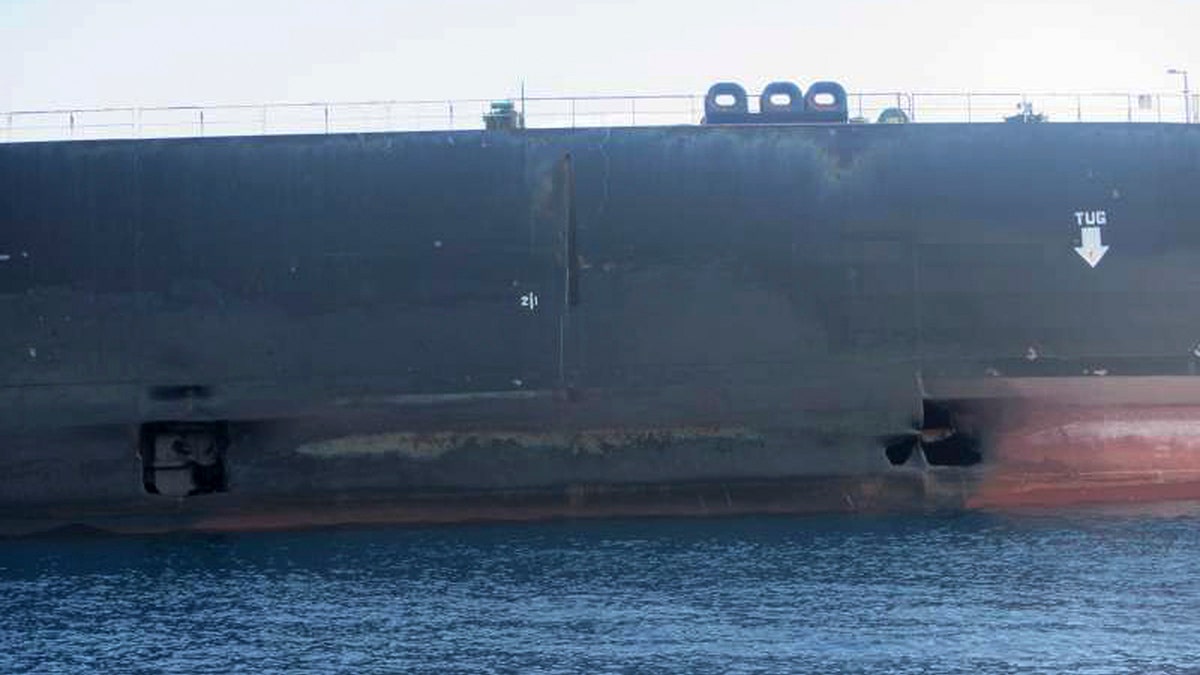
The tanker, identified as the MT Sivand, was traveling under a third-party flag—a common practice for vessels navigating sanctions-laden waters. U.S. Central Command stated the action was taken to prevent the transfer of sanctioned petroleum products to Iran
, citing intelligence indicating the shipment was destined for the Islamic Revolutionary Guard Corps (IRGC), a group designated as a terrorist entity by Washington.
The IRGC, in a rare public statement, condemned the strike as an unjustified aggression
that will not go unanswered.
Iranian state media later reported that the vessel had been carrying approximately 1 million barrels of fuel, intended for domestic consumption amid crippling sanctions. The loss of the cargo has sparked fears of fuel shortages in Iran, where protests over economic hardship have already flared in recent weeks.
Regional Flashpoints and Historical Context
The incident unfolds against a backdrop of heightened maritime tensions in the Gulf. Since the 2019 attack on commercial tankers in the Strait of Hormuz—widely attributed to Iran or its proxies—the U.S. Has deployed additional naval assets to the region, including aircraft carriers and missile defense systems. The current standoff follows a series of near-misses between U.S. And Iranian forces, including a January 2024 confrontation where a drone strike on a U.S. Destroyer in the Arabian Sea was narrowly avoided.

Iran’s response to the latest strike remains unclear, but analysts warn of potential retaliatory measures ranging from cyberattacks on Western infrastructure to further disruptions in the Strait of Hormuz—a chokepoint through which roughly 20% of the world’s seaborne oil passes daily. Saudi Arabia, a key U.S. Ally in the region, has urged restraint, while Israel—facing its own proxy conflicts with Iran in Syria and Yemen—has not publicly commented on the strike.
International Reactions and Diplomatic Fallout
European Union officials, caught between their reliance on Iranian oil and their sanctions obligations, have called for de-escalation
while avoiding direct criticism of the U.S. Action. China, a major buyer of Iranian crude, has not issued a formal statement but has historically opposed unilateral military actions that disrupt global energy markets.
The U.S. State Department defended the strike as a proportionate measure to enforce international law,
adding that America will not tolerate efforts to circumvent sanctions that destabilize the region.
However, critics argue the operation risks further isolating Washington in the Gulf, where Iran’s influence—through proxies like Hezbollah and the Houthis—has grown in recent years.
In a separate development, the U.S. Has reportedly increased patrols in the Red Sea, where Houthi attacks on commercial shipping have disrupted trade routes linking Asia, and Europe. The move suggests a broader strategy to counter Iranian-backed groups, though it also raises the specter of wider conflict.
What’s Next?
With Iran’s leadership set to convene an emergency meeting of the Supreme National Security Council, the immediate focus is on assessing damage and determining a response. The U.S. Has not ruled out further intercepts of vessels suspected of sanctions violations, but the strike’s timing—amid stalled nuclear talks and Iran’s domestic unrest—could complicate diplomatic efforts. For now, the Strait of Hormuz remains a powder keg, with both sides digging in as the risk of miscalculation grows.