
Sudden Export Restrictions Shut Down Advanced AI Systems Amid Political Tensions
Major AI companies have temporarily halted operations of their cutting-edge models following a last-minute export control directive issued by the U.S. government, sparking concerns over technological access and regulatory oversight. The move, reportedly linked to heightened national security concerns, has disrupted global development efforts and raised questions about the balance between innovation and geopolitical risk.
What Happened?
On [insert date], the U.S. Department of Commerce issued an emergency order restricting the export of advanced artificial intelligence systems developed by major tech firms. The regulation specifically targets models with capabilities deemed “too sensitive” for international use, leading to immediate operational shutdowns at several companies. Anthropic, a leading AI developer, confirmed that its most advanced systems, including the Claude Fable 5 and Mythos 5 models, were disabled within hours of the directive.
According to a statement from the company, “The sudden nature of the order left no time for mitigation strategies, forcing us to halt all external access to these systems while we work with regulators to understand the scope of the restrictions.” Similar actions were reported by other firms, though specifics remain undisclosed due to ongoing legal and compliance reviews.
Who Is Involved?
The primary entities affected by the order include major AI developers, U.S. regulatory agencies, and international partners reliant on American technology. Anthropic, a San Francisco-based company, has been at the center of the controversy, with its advanced models cited as potential national security risks. The U.S. Department of Commerce, under the Biden administration, issued the directive, though the exact rationale remains under review.
Additional stakeholders include global tech firms that use these AI systems for research and commercial applications. For example, a European automotive manufacturer confirmed it had to pause its AI-driven autonomous vehicle testing due to the unavailability of critical models. Meanwhile, startups in Asia and Latin America reported similar disruptions, highlighting the widespread impact of the policy.
The Timeline of Events
The sequence of events leading to the export ban began with a series of high-level meetings between U.S. officials and executives from major tech companies. According to a leaked memo, Amazon CEO Andy Jassy held private discussions with the Department of Commerce in late [month], raising concerns about the potential risks of unregulated AI development. These conversations reportedly influenced the decision to implement the restrictions.
The official order was issued just 24 hours later, catching many in the industry off guard. Within hours, companies with international operations began shutting down access to their most advanced AI systems. A spokesperson for the Department of Commerce stated, “The measures are temporary and designed to ensure that emerging technologies are not exploited for malicious purposes.”
Why This Matters
The sudden nature of the export ban has sparked debates about the role of government in regulating AI development. Critics argue that the lack of prior notice undermines trust between regulators and the private sector, while supporters claim the measures are necessary to prevent technology from falling into the wrong hands.
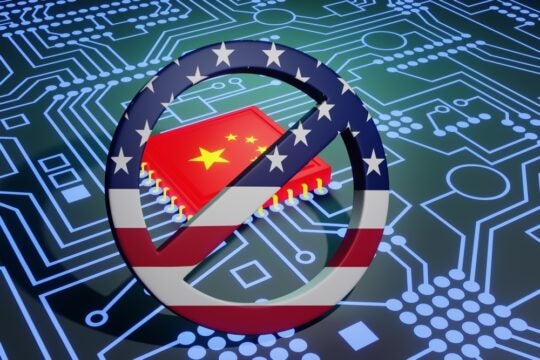
This incident also highlights the growing tension between innovation and security. AI systems, particularly those capable of natural language processing and complex decision-making, are increasingly viewed as strategic assets. The U.S. government’s decision to restrict their export reflects broader concerns about global competition, especially with countries like China and Russia investing heavily in AI research.
Reactions and Implications
Industry leaders have expressed mixed reactions to the ban. Some, like a representative from the AI Ethics Consortium, praised the move as “a necessary step to prevent the misuse of powerful technologies.” Others, however, warned of the long-term consequences for global collaboration. “This kind of abrupt intervention could stifle innovation and create a fragmented tech landscape,” said the representative.
International partners have also voiced concerns. A spokesperson for the European Union’s Digital Policy Office stated, “While we understand the need for security, such unilateral actions risk undermining global partnerships. We urge the U.S. to engage in transparent dialogue with its allies.” Meanwhile, some governments have begun exploring alternatives to U.S.-developed AI systems, signaling a potential shift in the global tech ecosystem.
Key Takeaways

- The U.S. government’s sudden export restrictions have halted operations of advanced AI systems, affecting global tech development.
- Anthropic and other companies are working with regulators to navigate the new rules, though the long-term impact remains unclear.
- The incident underscores the growing conflict between technological innovation and national security concerns.
- International stakeholders are calling for greater transparency and collaboration to avoid future disruptions.
FAQ: Understanding the AI Export Ban
What triggered the sudden export restrictions?
The U.S. government cited concerns over the potential misuse of advanced AI systems, particularly those with capabilities in natural language processing and decision-making. The directive followed high-level
