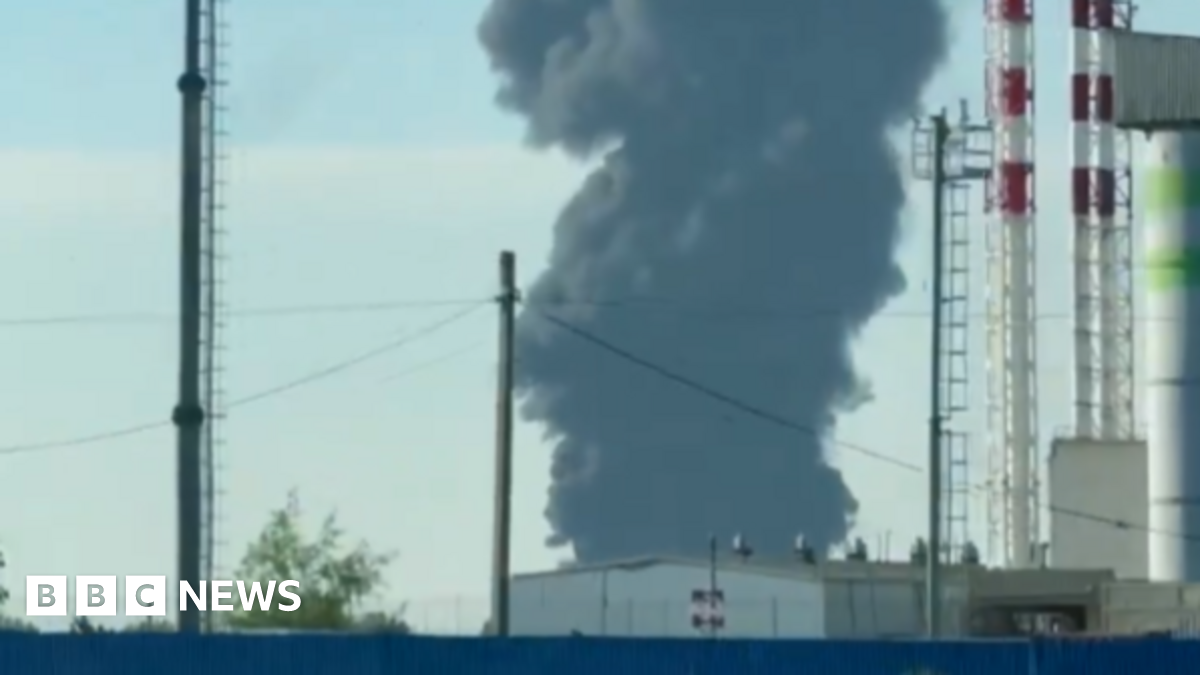
Scores of Ukrainian Drones Target St Petersburg in Attack Russia Calls ‘Unprecedented’
In a striking escalation of aerial warfare, scores of Ukrainian drones target St Petersburg in attack Russia calls ‘unprecedented’, marking a significant shift in the geography and timing of the conflict. The operation, which coincided with the opening and closing stages of President Vladimir Putin’s flagship economic forum, brought the reality of the war directly to one of Russia’s most symbolic cities and its strategic naval assets in the Baltic.
The scale and precision of the strikes have sent ripples through the Kremlin, not only because of the physical damage to infrastructure but because of the timing. By launching a massive drone swarm during a high-profile international investment event, Kyiv has demonstrated an ability to disrupt the narrative of Russian internal stability and security at a moment when the Kremlin was attempting to project economic resilience to the world.
The Anatomy of the St Petersburg Drone Swarm
The operation was characterized by the use of large numbers of unmanned aerial vehicles (UAVs) designed to overwhelm air defense systems. Reports indicate that the attack was not limited to a single target but was a coordinated effort to strike multiple high-value locations across the region. This “swarm” tactic is designed to saturate radar and interceptor capabilities, ensuring that at least some drones penetrate the defensive perimeter.
Russian officials have described the scale of the incursion as “unprecedented,” a term that suggests a leap in both the quantity of drones deployed and the distance they traveled to reach the northern metropolis. St Petersburg, being far removed from the primary front lines in the east and south, has historically been viewed as a relatively safe zone, though it has faced sporadic attacks in the past.
Key Targets and Strategic Impacts
The drone campaign was multifaceted, targeting military, economic, and logistical hubs. The primary objectives appear to have been designed to maximize psychological impact and degrade operational capabilities.
- The Baltic Fleet: In a first-of-its-kind operation, Ukrainian drones struck a Russian warship in the Baltic. This marks the first time the conflict has extended into the Baltic naval theater via drone technology, stripping away the perceived “safe harbor” status of the region’s naval bases.
- Energy Infrastructure: Large-scale attacks hit oil depots, resulting in massive fires. These facilities are critical for fueling both civilian transport and military logistics.
- Maritime Ports: Ports were among the primary targets, with reports of fires breaking out at key docking and loading facilities, potentially disrupting the movement of goods and military hardware.
- Regional Coordination: The strikes were not isolated to St Petersburg; simultaneous drone attacks hit occupied parts of the Donetsk Oblast, suggesting a wide-reaching coordinated offensive.
| Target Category | Location | Primary Impact |
|---|---|---|
| Naval Assets | Baltic Sea/St Petersburg | First-ever drone strike on Baltic warship |
| Energy Logistics | Russia/Donetsk Oblast | Oil depots set on fire |
| Trade Infrastructure | Russian Ports | Fire and operational disruption |
| Political/Economic | St Petersburg | Disruption of flagship economic forum |
Timing the Attack: The Economic Forum Angle
The timing of the drone strikes was perhaps as significant as the targets themselves. The attacks were meticulously timed to coincide with the opening and the final day of Putin’s flagship economic forum in St Petersburg. This forum is designed as a showcase of Russia’s ability to maintain economic growth and attract investment despite heavy international sanctions.

By launching scores of drones during this window, Ukraine effectively turned a prestige event into a security crisis. The juxtaposition of high-level investment discussions with the sound of air raid sirens and the sight of burning oil depots serves as a potent reminder that the war is not confined to distant borders.
“The attack serves as a strategic message that no part of Russian territory is beyond the reach of Ukrainian capabilities, especially during events intended to project strength and stability.”
This synchronization suggests a sophisticated intelligence operation, allowing Kyiv to time its strikes for maximum visibility and political embarrassment for the Kremlin. For the international delegates and domestic elites attending the forum, the “unprecedented” nature of the attack shattered the illusion of a secure rear area.
The Strategic Significance of the Baltic Strike
The strike on a Russian warship in the Baltic is a watershed moment in the conflict. Until now, the naval war has been concentrated primarily in the Black Sea, where Ukraine has successfully challenged the Russian Navy despite not having a traditional fleet of its own. Expanding this capability to the Baltic Sea represents a significant widening of the operational theater.
This development forces Russia to re-evaluate its naval security across all its coastlines. The Baltic Fleet, which is crucial for Russian power projection in Northern Europe, now faces a threat it was not previously equipped to handle on a regular basis. The use of long-range drones to hit ships in “safe harbors” indicates that Ukraine has developed the reach and the targeting data necessary to operate thousands of kilometers from its own borders.
For more on the evolution of naval warfare in this conflict, see our related explainer on asymmetric naval strategies.
Infrastructure Warfare: Oil Depots and Ports
Beyond the symbolic value of the St Petersburg attacks, the targeting of oil depots and ports reflects a calculated strategy of economic and logistical attrition. Oil depots are the lifeblood of any modern military; without a steady supply of fuel, the movement of tanks, trucks, and aircraft is paralyzed.
The reports of ports and depots being set on fire indicate a focus on “high-consequence” targets. When an oil depot burns, the loss is not just the immediate fuel but the infrastructure itself, which can take months or years to rebuild. Similarly, damaging port facilities disrupts the export of commodities and the import of essential components, adding further pressure to a Russian economy already strained by sanctions.
The Logic of the “Large-Scale” Approach
The decision to launch “scores” of drones rather than a few precision missiles suggests a shift in tactics. Swarm attacks provide several advantages:

- Cost-Efficiency: Drones are significantly cheaper to produce than cruise missiles, allowing Ukraine to maintain a high tempo of attacks.
- Defense Saturation: By launching dozens of drones, Ukraine forces Russian air defenses to expend expensive interceptor missiles on cheap targets.
- Psychological Pressure: The prolonged nature of a drone swarm—where sirens may sound for hours—creates a state of constant anxiety for the civilian population and government officials.
Russia’s Reaction and the ‘Unprecedented’ Label
The Russian government’s decision to label the attack “unprecedented” is telling. In the lexicon of Russian state media, this term is often used to justify subsequent escalations or to explain away failures in air defense. By framing the attack as something never seen before, the Kremlin attempts to mitigate the embarrassment of allowing drones to reach the heart of St Petersburg during a major international event.
However, the “unprecedented” nature of the attack also acknowledges a reality: the defensive umbrella over Russia’s second-largest city has been breached. The inability to fully intercept a swarm of drones suggests gaps in the integrated air defense systems (IADS) that Russia has spent years refining.
The reaction from the ground in St Petersburg included the activation of air defenses and the implementation of emergency protocols, but the resulting fires at ports and depots prove that the defensive screen was not impenetrable. This creates a narrative of vulnerability that is particularly damaging for a regime that emphasizes the “invincibility” of its security apparatus.
Wider Implications for the Conflict
The St Petersburg operation is not an isolated incident but part of a broader pattern of Ukrainian long-range strikes. By hitting targets in the Donetsk Oblast and St Petersburg simultaneously, Ukraine is demonstrating a “multi-axis” capability. This forces the Russian military to spread its air defense resources thin, as they cannot know whether the next swarm will target a frontline ammunition dump or a strategic city in the north.
this operation signals a shift in the “red lines” of the conflict. As Ukraine increases the frequency and depth of its strikes inside Russian territory, the psychological barrier for the Russian population is being eroded. The war is no longer a distant event happening in the Donbas; We see an event that can set fire to a port in St Petersburg or strike a warship in the Baltic.
Analysts suggest that these strikes may be intended to:
- Force Resource Diversion: Compelling Russia to move air defense systems away from the front lines to protect cities like St Petersburg.
- Degrade Logistics: Reducing the available fuel and shipping capacity for the Russian war effort.
- Political Signaling: Showing the Russian public and the international community that the Kremlin cannot protect its own prestige events.
For a deeper look at the geopolitical shifts in this region, read our analysis of Eastern European security dynamics.
Common Misconceptions About the Drone Attacks
There are several common misunderstandings regarding these types of operations that require clarification:
Misconception 1: These drones are simply “cheap toys.”
While the airframes may be inexpensive, the guidance systems, satellite integration, and intelligence required to hit a specific warship in the Baltic or an oil depot in St Petersburg are highly sophisticated. These are weaponized systems, not hobbyist drones.
Misconception 2: The attacks cause massive civilian casualties.
The primary focus of these long-range operations appears to be infrastructure—ports, oil depots, and military ships—rather than residential areas. The goal is strategic degradation and psychological impact, not indiscriminate urban destruction.
Misconception 3: Russia’s air defenses are completely useless.
Russia likely intercepted many of the “scores” of drones launched. However, in a swarm attack, the “success” is measured by the drones that get through, not the ones that are shot down. A 90% interception rate is still a failure if the remaining 10% destroy a warship or a fuel depot.
Frequently Asked Questions
Why did Ukraine target St Petersburg during an economic forum?
The timing was designed for maximum political and psychological impact. By attacking during a flagship event intended to show Russian stability, Ukraine highlighted the vulnerability of the Russian state and disrupted the Kremlin’s narrative of economic resilience.
What is the significance of the attack on the Baltic warship?
It represents a major geographical expansion of the war. By striking a ship in the Baltic, Ukraine has proven it can project power far beyond the Black Sea, challenging the security of the Russian Baltic Fleet in its own home waters.
How do “swarm” drone attacks work?
A swarm attack involves launching a large number of drones simultaneously. Here’s intended to overwhelm the radar and missile capacity of air defense systems, making it mathematically probable that some drones will reach their targets despite the presence of interceptors.
What were the primary targets in the St Petersburg region?
The primary targets included a Russian warship in the Baltic, oil depots, and maritime ports. These strikes focused on degrading Russia’s naval power and logistical infrastructure.
Was this attack isolated to St Petersburg?
No. The operation was part of a larger coordinated effort that included drone strikes on occupied parts of the Donetsk Oblast, indicating a wide-scale offensive targeting both rear-area hubs and frontline logistics.
The operation in St Petersburg marks a new chapter in the conflict, where the boundaries of the “battlefield” continue to expand. As Ukraine refines its long-range capabilities, the pressure on Russian infrastructure and the psychological toll on its leadership will likely increase. The transition from tactical strikes at the front to strategic strikes in the heart of Russia’s northern naval and economic hubs suggests a long-term strategy of attrition and exposure.
