Ukraine, Latvia Sign Drone Deal as Russia Says Europe Not Ready to Mediate Peace Talks – Reuters
Ukraine and Latvia have signed a drone technology agreement as part of a broader strategy by Kyiv to integrate defense production with Nordic and Baltic partners, according to Reuters. This development coincides with statements from Russia claiming European nations lack the readiness to mediate peace talks, while President Volodymyr Zelenskyy maintains that increased pressure on Moscow is necessary to force negotiations.
What are the details of the Ukraine-Latvia drone agreement?
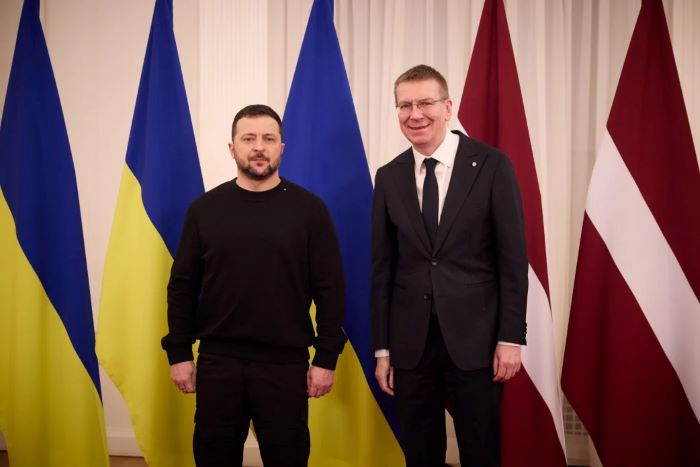
Ukraine and Latvia have formalized a deal to cooperate on drone technology, Reuters reports. The agreement focuses on the joint development and production of unmanned aerial vehicles (UAVs), leveraging Ukraine’s combat-tested experience and Latvia’s industrial capacity.
President Volodymyr Zelenskyy stated that Ukraine is prepared to share its drone technology with countries across the Nordic and Baltic regions, according to AP News. This initiative aims to create a regional network of drone production and innovation, reducing reliance on external suppliers and accelerating the deployment of autonomous systems.
The cooperation extends beyond simple procurement. By sharing technical specifications and operational data, Ukraine intends to help Baltic partners develop defense systems tailored to the specific threats posed by Russian electronic warfare and air defense, AP News reports.
How is Ukraine expanding defense ties with other Baltic and European partners?
The agreement with Latvia is one component of a wider diplomatic push by Kyiv to secure long-term military and political commitments from Northern Europe. Recent diplomatic engagements highlight a multifaceted approach to defense and integration:
- Estonia: President Zelenskyy met with Estonian President Alar Karis, during which Estonia reaffirmed its support for Ukraine’s future membership in both the European Union and NATO, according to UNITED24 Media.
- Slovakia: Zelenskyy held discussions with Slovak Prime Minister Robert Fico (referred to as Orpo in some reports) regarding a drone deal and the implementation of an anti-ballistic missile program, according to Ukrinform.
- Nordic-Baltic Bloc: The overarching goal, as noted by AP News, is to establish a shared technological ecosystem where Ukraine provides the “battlefield laboratory” and Nordic/Baltic states provide the investment and manufacturing scale.
These interactions suggest a strategy of “distributed production,” where drone components are manufactured across several allied nations to ensure supply chain resilience against Russian strikes on Ukrainian factories.
Why does Russia claim Europe is unfit to mediate peace talks?
While Ukraine strengthens its military ties in the North, Russia has dismissed the possibility of European-led mediation. Russian officials state that Europe is not currently ready to serve as a neutral or effective mediator in peace negotiations, according to Reuters.
The Kremlin’s position suggests that European nations are too closely aligned with Kyiv’s strategic goals to offer a balanced framework for peace. This perspective contrasts sharply with the goals of several EU member states that have sought to create a diplomatic off-ramp to end the conflict.
The tension over mediation reflects a fundamental disagreement on the prerequisites for talks. Russia continues to demand the recognition of its territorial gains, while Ukraine insists on the full restoration of its 1991 borders as a starting point for any legal agreement.
How does President Zelenskyy plan to force Russia to the negotiating table?
President Zelenskyy has explicitly stated that peace cannot be achieved through diplomacy alone. According to Euronews, Zelenskyy believes that the international community must build significant pressure on Russia to force Moscow into genuine peace talks.
This “pressure” strategy involves several key pillars:
- Military Attrition: Increasing the volume and sophistication of weaponry—such as the drones being developed with Latvia—to make the cost of occupation unsustainable for Russia.
- Economic Isolation: Strengthening sanctions to limit the Kremlin’s ability to fund its war machine.
- Diplomatic Encirclement: Securing firm commitments for NATO and EU membership to ensure Ukraine’s long-term security, a move backed by Estonia according to UNITED24 Media.
“Zelenskyy wants to build up pressure on Russia to force Moscow to peace talks,” Euronews reports, indicating that Kyiv views military strength as the only viable leverage for diplomatic success.
Comparing the Strategic Positions on Peace and Defense
The current geopolitical landscape shows a stark divide between the goals of Kyiv and Moscow, with the Baltic states acting as a critical support bridge for Ukraine.
| Entity | Position on Peace Talks | Primary Defense Strategy |
|---|---|---|
| Ukraine | Requires increased pressure on Russia to force talks; demands territorial restoration. | Joint drone production with Baltic/Nordic states; anti-ballistic missile programs. |
| Russia | Claims Europe is unfit to mediate; demands recognition of annexed territories. | War of attrition; leveraging European diplomatic divisions. |
| Baltic States | Support Ukraine’s EU/NATO integration to ensure regional stability. | Industrial partnership in UAV technology and intelligence sharing. |
The Role of UAV Technology in the Conflict
The shift toward joint drone production with Latvia and other Nordic countries is not merely a political gesture but a tactical necessity. Drones have redefined the front lines in Ukraine, serving three primary functions:
1. Intelligence and Surveillance
Small-scale UAVs provide real-time data on Russian troop movements. By sharing this technology, Ukraine allows Baltic states to integrate similar surveillance capabilities into their own border security frameworks.

2. Precision Strike Capabilities
The drone deal with Latvia likely involves long-range strike capabilities. This allows Ukraine to target logistics hubs deep behind Russian lines without relying solely on expensive cruise missiles.
3. Counter-Electronic Warfare (EW)
Russia employs some of the world’s most sophisticated jamming technology. According to AP News, the sharing of technology allows partners to develop drones that can operate in “denied environments,” where GPS and radio signals are blocked.
The integration of these systems across the Baltic region creates a “defense shield” that serves as a deterrent against potential Russian aggression toward NATO members in the region.
Geopolitical Implications for the Nordic-Baltic Region
The decision by Latvia and Estonia to deepen military ties with Ukraine signals a shift in how these nations view their own security. Historically reliant on the overarching NATO umbrella, the Baltic states are now pursuing active “co-production” of weaponry.
By partnering with Ukraine, Latvia and Estonia gain access to real-time data on how modern weaponry performs under extreme conditions. This creates a feedback loop where Ukrainian combat experience informs Baltic manufacturing, which in turn provides Ukraine with a more stable production base outside the reach of Russian missiles.
This alignment also pressures other European nations to move beyond the delivery of existing stockpiles and toward the creation of a sustainable, integrated European defense industry. The discussions between Zelenskyy and Slovak officials regarding anti-ballistic missiles, as reported by Ukrinform, further illustrate this push for a comprehensive air defense network across Central and Eastern Europe.
For further context on regional security, readers may find a related explainer on NATO’s Eastern Flank strategy useful.
Common Misconceptions Regarding the Drone Deal
There is often a misunderstanding that these deals are simply “sales” of equipment. However, the reports from AP News and Reuters indicate a more complex relationship:
- Misconception: Ukraine is just buying drones from Latvia.
- Reality: This is a technology-sharing agreement. Ukraine provides the operational expertise and design iterations based on combat use, while Latvia provides industrial scaling.
- Misconception: The deal is purely for offensive operations.
- Reality: A significant portion of the cooperation involves surveillance and defensive capabilities, including the anti-ballistic programs discussed with Slovakia.
Frequently Asked Questions
What is the main goal of the Ukraine-Latvia drone deal?
According to Reuters, the deal aims to establish joint production and development of drone technology. President Zelenskyy has stated the broader goal is to share this expertise with Nordic and Baltic countries to enhance regional defense capabilities.
Why does Russia believe Europe cannot mediate peace talks?
Russia claims that European nations are not ready to mediate because they lack the necessary neutrality and are too closely aligned with Ukraine’s strategic interests, according to Reuters.

Which other countries are involved in Ukraine’s defense technology push?
In addition to Latvia, Ukraine has engaged Estonia for political and NATO-related support (UNITED24 Media) and has discussed drone and anti-ballistic missile programs with Slovakia (Ukrinform).
What is Ukraine’s current stance on peace negotiations?
President Zelenskyy argues that peace talks will only be successful if there is significant pressure on Russia first. As reported by Euronews, Kyiv seeks to strengthen its military and diplomatic position to force Moscow into a favorable negotiation.
How does drone technology sharing benefit Baltic nations?
Baltic nations gain access to combat-proven technology and operational data from the Ukrainian front, allowing them to modernize their own defenses against Russian electronic warfare and surveillance threats, according to AP News.
