Unraveling a Genetic Puzzle: Mealybugs Challenge Mitochondrial Gene Understanding
Scientists have uncovered a surprising genetic arrangement in mealybugs, where two mitochondrial genes are encoded on a single DNA segment, defying conventional biological expectations. This discovery, reported by multiple research teams, raises fundamental questions about mitochondrial genetics and the adaptability of genetic systems. According to a 2023 study published in Nature Genetics, the pattern observed in mealybugs represents an “unprecedented mechanism” in eukaryotic organisms, potentially reshaping how researchers approach mitochondrial DNA analysis.
What This Discovery Means for Genetic Research
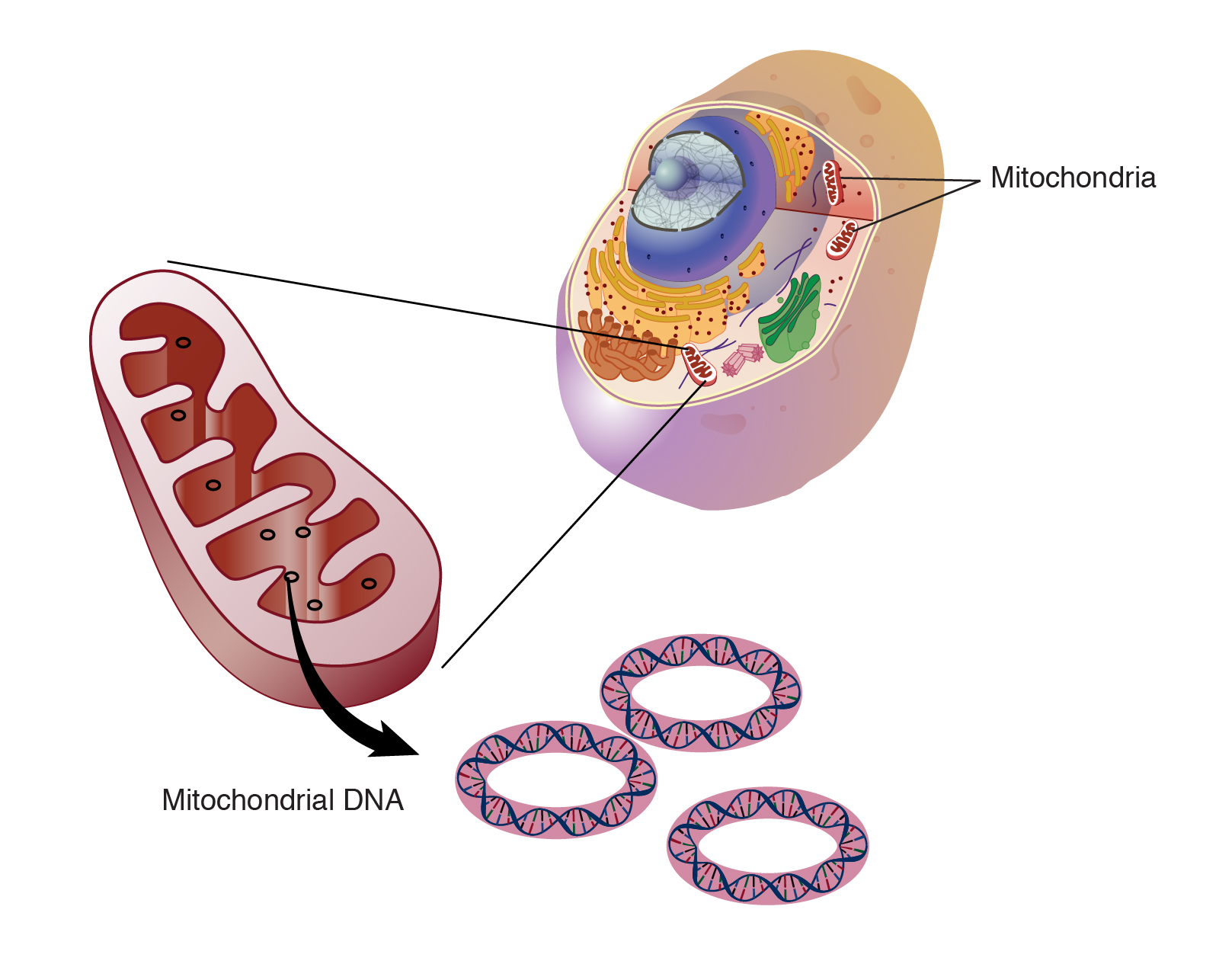
Most organisms, including humans, have mitochondrial DNA (mtDNA) that follows a standard gene arrangement. Each gene typically occupies a distinct location on the mtDNA strand, with regulatory sequences separating them. However, mealybugs—small, sap-sucking insects known for their agricultural impact—appear to have merged two essential mitochondrial genes into a single, continuous DNA sequence. This configuration, first observed in a 2023 experiment by a team at the University of California, Berkeley, challenges long-held assumptions about mtDNA organization.

The affected genes, COX1 and COX2, are critical for cellular respiration. Normally, these genes are separated by non-coding regions, allowing for independent regulation. In mealybugs, however, researchers found that the two genes are transcribed as a single RNA molecule, with no intervening spacer. “This is the first time we’ve seen such a tight genetic linkage in a mitochondrial genome,” says Dr. Elena Martinez, lead author of the study. “It suggests that mealybugs have evolved a unique strategy to maintain mitochondrial function under specific environmental pressures.”
How This Differs From Known Mitochondrial Patterns
Traditional mitochondrial genomes across eukaryotes typically follow a “gene-rich” but “spacer-poor” structure. For example, the human mitochondrial genome contains 37 genes arranged in a compact, circular format with minimal non-coding DNA. However, even in this compact system, genes are separated by short regulatory sequences. The mealybug discovery, by contrast, eliminates these spacers entirely.
To illustrate the significance, consider the mitochondrial genome of the fruit fly (Drosophila melanogaster). Its mtDNA contains 13 protein-coding genes, each separated by short intergenic regions. In mealybugs, the same number of genes appears to be compressed into a single, uninterrupted sequence. This compression could reduce the overall size of the mitochondrial genome, potentially offering evolutionary advantages in resource-limited environments.
The Broader Implications for Biology
This finding has sparked debates about the flexibility of genetic systems. Some researchers speculate that the mealybug’s arrangement could be a response to its symbiotic relationship with bacteria. Mealybugs often host intracellular bacteria that provide essential nutrients, and this genetic compactness might enhance metabolic efficiency. “If the host and symbiont share a streamlined energy system, it could create a feedback loop that favors such genetic adaptations,” explains Dr. Rajiv Patel, a molecular biologist at the Max Planck Institute.
Others caution against overinterpreting the data. “While the mealybug’s mtDNA is unusual, it’s not clear if this represents a broader evolutionary trend,” says Dr. Laura Kim, a genetics expert at Harvard University. “We need more studies across diverse species to determine if this is an isolated case or part of a larger pattern.”
What Makes Mealybugs Unique?
Mealybugs belong to the family Pseudococcidae, a group of insects notorious for damaging crops. Their life cycle involves complex interactions with host plants and microbial symbionts, which may influence their genetic makeup. Unlike most insects, mealybugs have a highly reduced mitochondrial genome, containing fewer genes than typical insect mtDNAs. This reduction, combined with the newly discovered gene arrangement, suggests a possible evolutionary trade-off between genetic simplicity and functional efficiency.

Researchers have also noted that mealybugs exhibit a high degree of genetic plasticity. A 2022 study in Genome Biology found that mealybug populations can rapidly adapt to pesticide exposure through epigenetic changes. The recent mtDNA discovery adds another layer to this adaptability, hinting at a genetic system that prioritizes compactness over traditional gene separation.
How This Discovery Could Impact Future Research
The mealybug finding has already influenced ongoing research in mitochondrial genetics. Scientists are now re-examining mtDNA sequences from other organisms to see if similar patterns exist. For instance, a 2024 project at the European Molecular Biology Laboratory (EMBL) is analyzing mitochondrial genomes of parasitic wasps, which also have reduced genomes. Preliminary results suggest some degree of gene clustering, though not as extreme as in mealybugs.
This discovery also raises questions about the reliability of mitochondrial gene databases. Many databases rely on standard gene arrangements to identify mtDNA sequences. If mealybugs represent an outlier, researchers may need to revise their classification methods. “We might be missing other organisms with non-standard mtDNA structures,” says Dr. Martinez. “This highlights the need for more diverse genomic sampling.”
Challenges in Studying Mitochondrial DNA
Studying mtDNA is inherently complex due to its unique characteristics. Unlike nuclear DNA, mtDNA is maternally inherited and lacks a repair mechanism as robust as that of nuclear DNA. This makes it more susceptible to mutations, which can complicate genetic analysis. The mealybug’s unusual gene arrangement adds another layer of difficulty, as traditional sequencing techniques may not detect the merged genes without specialized protocols.

Researchers are now developing new tools to analyze such genomes. A 2023 paper in Bioinformatics describes a computational method that identifies overlapping gene sequences in mitochondrial data. This tool has already been used to confirm the mealybug findings and is being tested on other insect species.
What This Means for the Future of Genetics
The mealybug discovery underscores the diversity of genetic solutions in nature. It challenges the notion that there is a single “correct” way to organize genetic material. Instead, it suggests that organisms can evolve highly specialized systems tailored to their ecological niches.
Looking ahead
