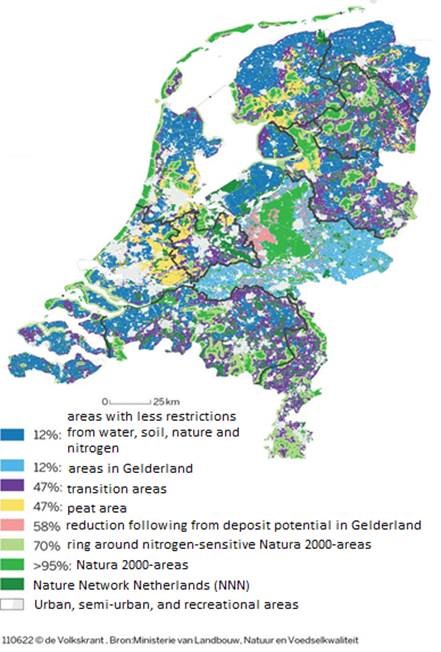
The Dutch cabinet is preparing an emergency law to eliminate the critical deposition value, a controversial nitrogen regulation, according to local media reports. While the government intends to streamline rules, leaked documents indicate that forced reductions in livestock numbers remain a potential tool for meeting environmental targets.
- Policy Shift: An emergency law will scrap the critical deposition value rule.
- Agricultural Impact: Strict zones are planned for farmers near 100 nature reserves.
- Contingency Plans: Leaked documents show the government is retaining “forced shrinkage” as an option.
- Political Pressure: The House of Representatives is attempting to influence the package before its official release.
Why is the critical deposition value being removed?
The decision to scrap the critical deposition value is an effort to resolve a regulatory bottleneck that has hampered construction and agricultural expansion in the Netherlands. According to reports from De Telegraaf, the cabinet is introducing an emergency law to remove this specific metric, which has been widely criticized by stakeholders for being overly restrictive and difficult to manage.

How will the new nitrogen zones affect farmers?
The government’s nitrogen strategy is shifting toward a geographically targeted approach. According to rtl.nl, the emerging nitrogen package includes the creation of strict zones for farmers operating near 100 designated nature reserves. These zones will likely impose tighter emission limits on farms in close proximity to protected areas to ensure ecological compliance.
What is the risk of forced livestock reductions?
Despite the removal of the critical deposition value, the agricultural sector faces the continued threat of mandatory downsizing. Leaked plans suggest the cabinet is keeping “forced shrinkage” (gedwongen krimp) as a fallback measure, according to De Telegraaf. This means if voluntary reductions fail to meet legal nitrogen targets, the government may compel farmers to reduce their herd sizes.
Who is steering the nitrogen policy?
The responsibility for resolving the crisis has been assigned to a 34-year-old member of the D66 party, according to AD.nl. This appointment comes as the House of Representatives (Tweede Kamer) attempts to intervene in the planning process. According to Nieuwe Oogst, lawmakers are already trying to steer the specifics of the nitrogen plans before they are formally presented to the legislature.
