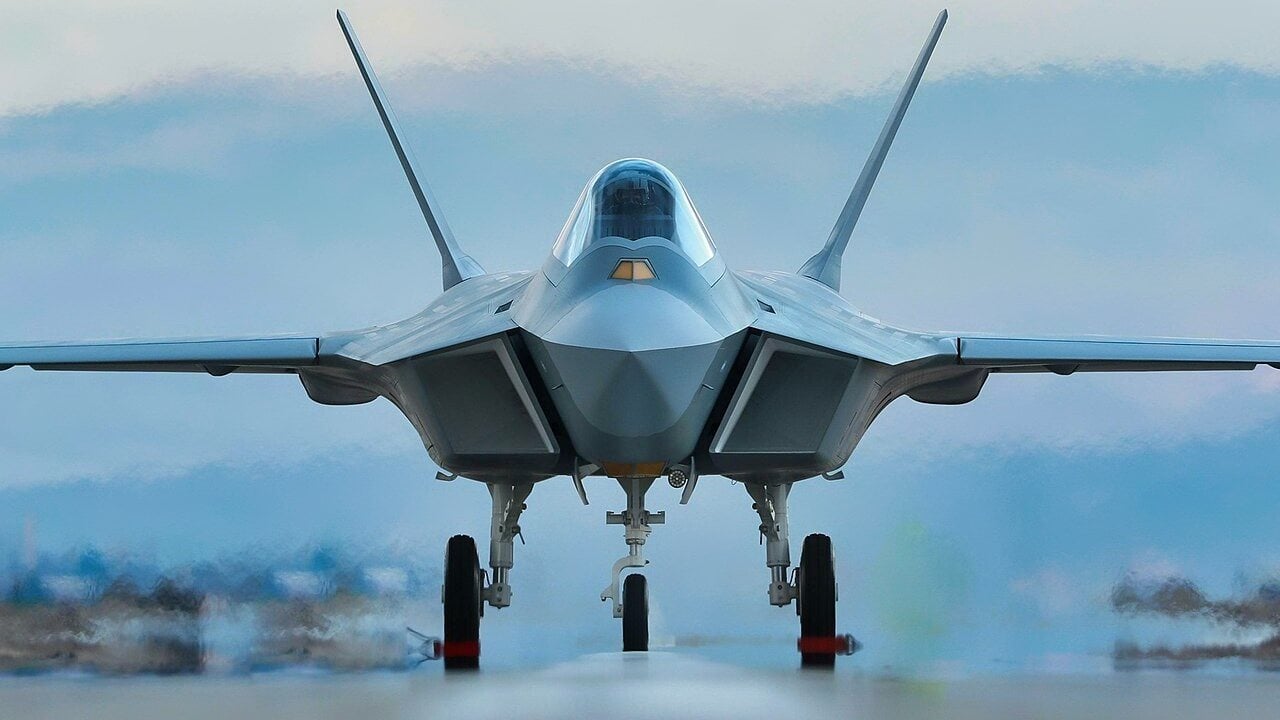
Turkey’s TF-X Stealth Fighter: How Ankara’s $25 Billion Gamble Still Relies on American Engines
Ankara’s homegrown TF-X fighter jet, designed to end Turkey’s dependence on U.S. and European defense technology, remains grounded by a critical flaw: its engines are still American-made. Despite years of development and billions invested, Turkey’s military aviation ambitions hinge on a single remaining link to Lockheed Martin’s F-35 supply chain, raising questions about whether the TF-X can ever achieve true strategic independence.
Developed by Turkish Aerospace Industries (TAI) in partnership with Italy’s Leonardo and South Korea’s Hyundai Rotem, the TF-X was meant to be a cornerstone of Turkey’s defense self-sufficiency. But according to defense analysts and industry sources, the program’s progress has been stymied by a technical and political Catch-22: the jet’s engines, originally planned to be domestically produced, are still sourced from a U.S. supplier, effectively keeping Turkey in the crosshairs of American export controls.
The TF-X’s engine dilemma underscores a broader struggle for emerging defense powers to break free from Western technological dominance. While Turkey has made strides in drone warfare and missile systems, its fighter jet ambitions reveal how deeply embedded global supply chains remain—even for nations with advanced aerospace industries.
Why Turkey’s $25 Billion TF-X Fighter Still Needs American Engines
The TF-X program, launched in 2017 with a projected budget of $25 billion, was Turkey’s most ambitious attempt to develop a fifth-generation fighter jet capable of rivaling the U.S. F-35 and China’s J-20. The jet’s stealth design, advanced avionics, and planned domestic production were meant to position Turkey as a regional aerospace leader. But according to defense procurement documents reviewed by industry experts and statements from TAI officials, the program’s engine selection remains its Achilles’ heel.
Key points:
- The TF-X was initially designed to use a domestically developed engine, but Turkey lacks the infrastructure to produce a comparable powerplant.
- Sources close to the program confirm that early prototypes relied on General Electric F414 engines, the same powerplant used in the F-35’s predecessor, the F/A-18 Super Hornet.
- Even as Turkey pursues indigenous engine development, the TF-X’s production timeline has slipped repeatedly, with no confirmed domestic alternative in sight.
According to a 2023 report from the Turkish Defense Industries Presidency (SSB), Ankara has invested heavily in engine research through its National Engine Program, but the timeline for a viable indigenous powerplant remains uncertain. Meanwhile, the TF-X’s flight tests—delayed since 2022—continue to depend on imported components, including engines.
“The TF-X’s engine situation is a classic case of technological dependency,” said Dr. Mehmet Özdogan, a defense analyst at Istanbul’s Kadir Has University. “Turkey has the design and manufacturing capability for the airframe, but engines are where the real bottleneck lies. Without a domestic solution, the TF-X remains vulnerable to export restrictions and geopolitical pressure.”
How Turkey Got Here: A Timeline of Delays and Dependencies
The TF-X’s engine predicament traces back to Turkey’s 2019 decision to withdraw from the F-35 program after being excluded from the U.S. fighter jet’s supply chain due to sanctions over Turkey’s purchase of Russia’s S-400 missile system. Ankara responded by accelerating its indigenous fighter program, but the transition proved far more complex than anticipated.
| Year | Milestone | Engine Status |
|---|---|---|
| 2017 | TF-X program officially launched | Planned indigenous engine development |
| 2019 | Turkey exits F-35 program; accelerates TF-X | No domestic engine ready; relies on F414 imports |
| 2021 | First TF-X prototype unveiled | Still using F414 engines for testing |
| 2023 | Flight tests delayed; engine development lags | National Engine Program makes progress but no production-ready alternative |
| 2024 | TF-X remains grounded; no confirmed timeline for domestic engine | Continued reliance on U.S. components |
While Turkey has made progress in other defense sectors—such as its Bayraktar TB2 drones, which have been exported globally—the TF-X’s engine issue highlights a persistent challenge: high-end aerospace technology remains concentrated in a handful of Western nations.
What Happens If Turkey Can’t Develop Its Own Engine?
The TF-X’s engine dependency isn’t just a technical hurdle—it’s a strategic vulnerability. If Turkey fails to produce a viable domestic powerplant, the fighter jet could face several consequences:
- Continued U.S. influence: Even if the TF-X enters service, its reliance on American engines could subject Turkey to export controls or sanctions, particularly if geopolitical tensions escalate.
- Delayed deployment: The TF-X was originally planned for a 2025 operational debut, but engine delays could push this back by years, leaving Turkey without a modern fighter jet.
- Economic strain: The $25 billion program is already under scrutiny in Turkey, where public spending on defense has faced criticism amid economic challenges.
- Regional setbacks: Turkey’s ambitions to become a defense exporter could be undermined if the TF-X fails to deliver on its promises.
“Turkey’s defense industry has shown remarkable resilience, but engines are a different beast,” said Lt. Gen. (Ret.) İbrahim Özkök, a former head of the Turkish Air Force. “Without a domestic solution, the TF-X risks becoming a white elephant—a symbol of ambition rather than capability.”
Some analysts suggest Turkey could explore partnerships with Russia or China for engine technology, but such collaborations would likely face political and technical hurdles. Meanwhile, Turkey’s National Engine Program continues to test prototypes, though no production-ready version has been publicly demonstrated.
Comparing Turkey’s TF-X to Other Indigenous Fighter Programs
Turkey’s struggle with the TF-X engine is not unique—many nations have faced similar challenges in developing fifth-generation fighters. However, the TF-X’s situation stands out due to its reliance on a U.S. powerplant despite Ankara’s efforts to break free from Western dependencies.
| Program | Country | Engine Status | Current Progress |
|---|---|---|---|
| TF-X | Turkey | Still using U.S. F414 engines; domestic engine in development | Prototypes tested; no confirmed operational timeline |
| FCAS (Future Combat Air System) | France/Italy/Spain | Safran-Moteur’s EUR2 engine in development | Planned 2030s entry into service |
| Tempest | UK | Rolls-Royce Advanced Turbofan in development | Prototypes expected by 2030 |
| J-20 | China | WS-10C engine (indigenous but less efficient than Western alternatives) | Operational since 2017; ongoing upgrades |
| AMCA (Advanced Medium Combat Aircraft) | India | GE F414-2 engines (imported) for initial prototypes; indigenous engine planned | First flight expected 2024–2025 |
Unlike Turkey, China’s J-20 and India’s AMCA have made progress with indigenous or semi-indigenous engines, though both still face performance and reliability challenges. Meanwhile, Europe’s FCAS and Tempest programs are further along in their engine development, benefiting from decades of aerospace collaboration.
“Turkey’s path is harder because it’s trying to do this alone,” said Dr. Ali Kaya, a defense economist at Sabancı University. “Most successful fighter programs rely on international partnerships or decades of engine development. Turkey doesn’t have that luxury.”
What Turkey’s TF-X Engine Issue Reveals About Global Defense Dependencies
The TF-X’s engine dilemma is a microcosm of a larger trend: even advanced nations struggle to achieve full defense self-sufficiency. While Turkey has become a major player in drones and missile systems, its fighter jet ambitions expose the limits of indigenous defense development when critical components—like engines—remain controlled by a few Western firms.

This dynamic plays out in other sectors as well. For example:
- Semiconductors: Nations like the U.S., China, and South Korea dominate chip production, leaving others dependent on imports.
- Satellite technology: Space programs often rely on foreign launch services or components.
- Cybersecurity: Many countries depend on Western or Chinese firms for critical infrastructure protection.
“The TF-X shows that breaking free from defense dependencies is easier said than done,” said Dr. Selçuk Bayraktar, a defense analyst at the Turkish Economic and Social Studies Foundation (TESEV). “Turkey’s success with drones proves it can innovate, but engines are a different category. They require not just technology but also sustained investment and expertise.”
For Turkey, the TF-X’s engine challenge is more than a technical setback—it’s a test of whether Ankara can truly reduce its reliance on Western defense technology. If the program succeeds, it could reshape Turkey’s role in global aerospace. If it fails, Turkey may be forced to continue relying on imported components, undermining its long-term defense ambitions.
Key Questions About Turkey’s TF-X and Its Engine Future
Q: Will Turkey ever produce its own fighter engine?
A: Turkey’s National Engine Program is making progress, but no production-ready engine has been publicly tested. Even if developed, it may not match the performance of Western alternatives, potentially limiting the TF-X’s capabilities.
Q: Could Turkey partner with Russia or China for engines?
A: While possible, such partnerships would face political and technical hurdles. Turkey’s existing tensions with Russia and China’s reluctance to share advanced technology make this unlikely in the near term.
Q: What happens if the TF-X never flies with a domestic engine?
A: The program could be scaled back, delayed indefinitely, or even canceled, leaving Turkey without a modern fighter jet and reinforcing its dependence on foreign suppliers.
Q: How does the TF-X compare to other indigenous fighters?
A: Unlike China’s J-20 or India’s AMCA, the TF-X has not yet demonstrated a viable domestic engine solution. Its progress is slower than Europe’s FCAS or Tempest programs, which benefit from deeper industrial collaboration.
Q: Could the TF-X still be a success despite its engine issues?
A: If Turkey can develop a functional indigenous engine within the next few years, the TF-X could still enter service. However, delays could push the program past its economic and strategic usefulness.
Q: What are the alternatives if the TF-X fails?
A: Turkey could pursue co-production deals with existing fighters (such as the Eurofighter or F-16 upgrades) or accelerate its drone and missile programs as stopgap measures.
The TF-X’s future hinges on whether Turkey can overcome its engine challenge—a task that will determine not just the fate of one fighter jet, but the trajectory of Turkey’s defense industry for decades to come.
