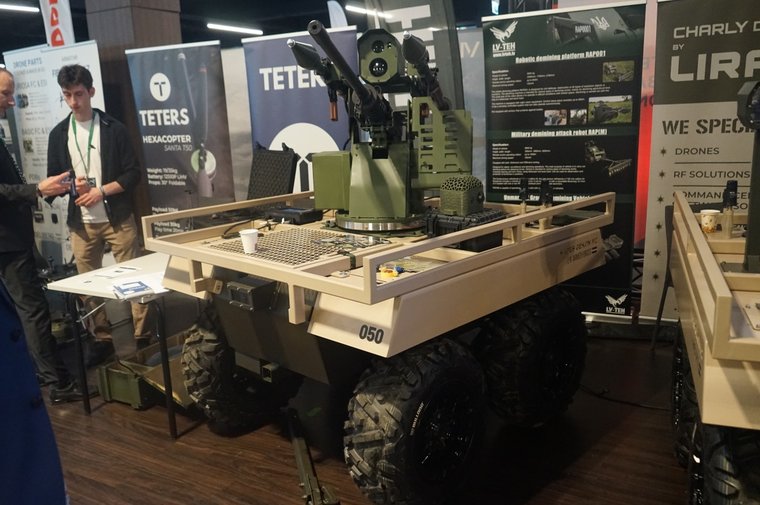
The New Era of UAS: How the Drone Summit turns spotlight on smaller companies and new uncrewed systems – Shephard Media
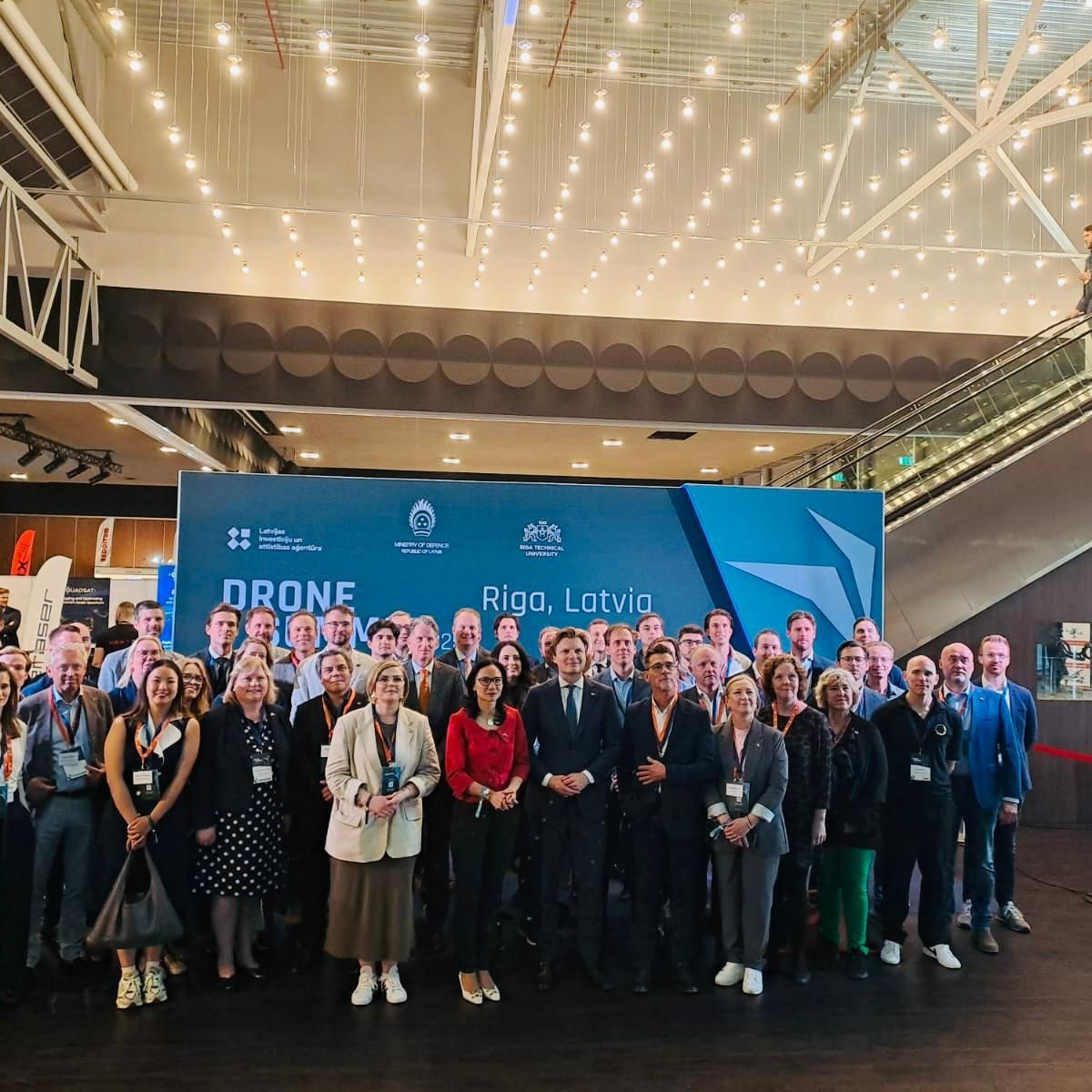
The landscape of modern defense and aerospace is undergoing a seismic shift, moving away from the era of monolithic contracts and toward a more fragmented, agile ecosystem of innovation. This transition was on full display at the recent industry gathering, where the Drone Summit turns spotlight on smaller companies and new uncrewed systems – Shephard Media reports, signaling a broader change in how governments and military organizations approach uncrewed aerial systems (UAS). For decades, the “Prime” contractors—the aerospace giants—dominated the skies. Today, the impetus for breakthroughs is increasingly coming from small-to-medium enterprises (SMEs) capable of iterating software and hardware in weeks rather than years.
This shift is not merely a matter of corporate preference but a strategic necessity. The lessons learned from contemporary global conflicts have demonstrated that high-cost, low-volume platforms are increasingly vulnerable to low-cost, high-volume attrition. The focus has pivoted toward “attritable” systems—drones that are cheap enough to be lost in combat but sophisticated enough to provide a decisive tactical advantage. This evolution is redefining the procurement pipeline, forcing traditional defense bureaucracies to adapt to the speed of the commercial tech sector.
The Rise of the Agile Innovator in Uncrewed Systems
Historically, the barrier to entry for defense contracting was prohibitively high. The requirements for security clearances, massive infrastructure, and long-term financial stability meant that only a handful of global firms could compete. However, the democratization of components—such as high-density batteries, advanced flight controllers, and AI-capable chips—has leveled the playing field. As the Drone Summit turns spotlight on smaller companies and new uncrewed systems – Shephard Media highlights, the agility of these smaller firms is now their greatest asset.
SMEs are not burdened by the legacy systems or the rigid corporate hierarchies of their larger counterparts. They can employ “rapid prototyping” cycles, where a design is tested, failed, and redesigned in a matter of days. This iterative process is critical in the UAS sector, where the “cat-and-mouse” game between drone capabilities and electronic warfare (EW) countermeasures evolves almost daily.
“The ability to pivot a design in response to real-time battlefield data is the difference between a system that is obsolete upon delivery and one that maintains a tactical edge.”
Why SMEs are Outpacing the Primes
- Risk Tolerance: Smaller firms are more likely to experiment with unproven concepts, such as swarm intelligence or novel propulsion systems.
- Software-First Approach: Many new UAS companies are essentially software firms that happen to build hardware, allowing for seamless over-the-air (OTA) updates.
- Cost Efficiency: By utilizing commercial off-the-shelf (COTS) components, SMEs can produce systems at a fraction of the cost of bespoke military hardware.
- Niche Specialization: Rather than trying to build a “do-everything” platform, SMEs often focus on a single, perfected capability, such as long-endurance surveillance or precision loitering munitions.
Defining the “New Uncrewed Systems”
When we discuss the “new systems” highlighted at the summit, we are looking at a departure from the traditional Predator or Reaper-style drones. While High-Altitude Long-Endurance (HALE) platforms still have their place, the current innovation frontier is focused on autonomy, miniaturization, and mass.
Autonomous Swarm Technology
One of the most significant leaps is the move from remotely piloted aircraft to truly autonomous swarms. Instead of one pilot controlling one drone, a single operator can now oversee a “hive” of dozens or hundreds of units. These systems use decentralized AI to communicate with one another, allowing them to coordinate attacks, map terrain, or create communication relays without constant human input. This reduces the cognitive load on the operator and makes the system far more resilient. if ten drones are shot down, the remaining ninety continue the mission.
Loitering Munitions and “Kamikaze” Drones
The emergence of loitering munitions has fundamentally changed the concept of artillery. These systems “loiter” over a target area, searching for a specific signature or waiting for a command to strike. The innovation here lies in the precision of the guidance systems and the ability to integrate with wider intelligence, surveillance, and reconnaissance (ISR) networks. Smaller companies have been the primary drivers of this tech, creating low-cost platforms that can neutralize high-value assets like radar installations or armored vehicles.
VTOL and Hybrid Propulsion
Vertical Take-Off and Landing (VTOL) capabilities are bridging the gap between the hover ability of a multi-rotor and the efficiency of a fixed-wing aircraft. New hybrid systems can take off vertically from a jungle clearing or a ship’s deck and then transition to wing-borne flight for long-distance transit. This eliminates the need for runways, significantly increasing the operational flexibility of uncrewed systems in austere environments.
| System Category | Traditional Approach | New SME-Led Approach | Primary Advantage |
|---|---|---|---|
| Procurement | 10-year development cycles | Rapid iterative prototyping | Speed to market |
| Cost Model | High-cost, low-volume (Exquisite) | Low-cost, high-volume (Attritable) | Sustainability in combat |
| Control | 1:1 Pilot-to-Drone ratio | 1:Many (Swarm/Autonomous) | Reduced operator fatigue |
| Hardware | Bespoke, proprietary parts | COTS and modular architecture | Ease of repair and scaling |
The Procurement Hurdle: Bridging the “Valley of Death”
Despite the brilliance of the technology showcased where the Drone Summit turns spotlight on smaller companies and new uncrewed systems – Shephard Media reports, a significant obstacle remains: procurement. In the defense world, there is a phenomenon known as the “Valley of Death.” This is the gap between a successful prototype or a small-scale pilot program and a full-scale “Program of Record” (a long-term, funded government contract).
Smaller companies often lack the capital to sustain production for years while waiting for government bureaucracy to approve a massive purchase order. If a startup spends its venture capital building a perfect drone, but the government takes three years to sign the contract, the company may go bankrupt before the first official order is placed.
Strategies for Modernizing Acquisition
To combat this, several nations are experimenting with new acquisition models:
- Middle Tier Acquisition (MTA): Allowing for faster prototyping and fielding of capabilities without the exhaustive documentation required for traditional programs.
- Other Transaction Authority (OTA): A legal mechanism that allows government agencies to enter into agreements with non-traditional defense contractors, bypassing some of the rigid Federal Acquisition Regulations (FAR).
- Venture Capital Integration: Governments are increasingly partnering with VC firms to identify and fund promising UAS startups early, ensuring they have the runway to survive the procurement process.
For more on how these procurement shifts are impacting global defense, you might find a related explainer on defense acquisition reform useful.
Geopolitical Implications and the Attrition Economy
The move toward smaller companies and cheaper systems is a direct response to the “attrition economy.” In previous decades, the loss of a single multi-million dollar drone was a strategic and political disaster. In today’s environment, the goal is to flood the battlespace with enough sensors and effectors that the enemy’s defenses are overwhelmed.
This creates a paradoxical situation: the more expensive the defense system (such as a million-dollar surface-to-air missile), the more “profitable” it is for the attacker to use a $20,000 drone. This cost-imbalance is forcing a total rethink of air defense strategies. We are seeing a surge in research into directed-energy weapons (lasers) and high-power microwaves, which offer a “near-zero” cost-per-shot, making them the only viable way to counter massed drone swarms.
Global Competition and the “Sovereign Capability” Race
Governments are now viewing UAS capability not just as a tool, but as a matter of national sovereignty. Relying on foreign-made drones—even from allies—carries risks of supply chain disruption or embedded “backdoors” in the software. This has led to a surge in domestic “Drone Acts” and subsidies designed to foster a local ecosystem of SMEs. The goal is to ensure that a nation can design, build, and update its uncrewed fleet domestically and at scale.
Common Misconceptions About Small-Scale UAS
As the narrative around drones evolves, several misconceptions have taken root. It is important to clarify these to understand the actual strategic value of the systems discussed at the summit.
Misconception 1: “Small drones are just for surveillance”
While ISR (Intelligence, Surveillance, and Reconnaissance) was the initial driver, the “new systems” are increasingly kinetic. From precision-guided munitions to electronic jamming pods, small drones are now active combatants capable of degrading enemy capabilities.
Misconception 2: “Cheap means unreliable”
There is a tendency to equate “low-cost” with “low-quality.” In reality, many SME-produced drones use high-grade industrial components that are more reliable than legacy military hardware because they are produced in millions of units for the commercial market, meaning the “bugs” have already been worked out.
Misconception 3: “AI drones will replace human pilots”
The goal is not replacement but “human-machine teaming.” AI handles the tedious tasks—navigation, target recognition, and formation flying—while the human remains “on the loop” to make the critical ethical and strategic decisions regarding the use of force.
The Future of the Uncrewed Ecosystem
Looking ahead, the integration of these smaller companies into the defense fold will likely lead to a “modular” approach to warfare. Instead of buying a single, expensive aircraft that does everything, militaries will buy a “platform” and then plug in different “payloads” developed by various SMEs. One week a drone might carry a thermal camera; the next, a signal jammer; the next, a precision charge.
This modularity ensures that the system can evolve as quickly as the threat. If a new type of enemy radar is deployed, the military doesn’t need to redesign the drone; they simply need a new software update or a new sensor pod from a specialized startup.
the intersection of UAS with other domains—such as uncrewed surface vessels (USVs) and uncrewed ground vehicles (UGVs)—will create a truly “multi-domain” uncrewed network. A drone can spot a target, a ground robot can move to intercept it, and a naval drone can provide the long-range strike capability, all coordinated by a single AI-driven command center.
Key Takeaways for Industry Stakeholders
- For Governments: The priority must be reducing procurement friction. The “Valley of Death” is the biggest threat to national security in the UAS space.
- For Prime Contractors: The strategy should shift from “competing” with SMEs to “integrating” them. Acquisitions and partnerships are more effective than trying to out-innovate agile startups.
- For Startups: Focus on a specific, high-value problem. The most successful SMEs are those that solve one critical pain point (e.g., battery life or encrypted comms) better than anyone else.
Frequently Asked Questions
What is the significance of the Drone Summit’s focus on SMEs?
The focus on Small and Medium Enterprises (SMEs) signifies a shift in defense strategy. Governments have realized that smaller companies can innovate faster and produce “attritable” (low-cost, replaceable) systems more efficiently than large aerospace firms, which is crucial for modern, high-intensity conflicts.

What are “attritable” uncrewed systems?
Attritable systems are drones designed to be affordable enough that their loss in combat is acceptable. Unlike “exquisite” platforms that cost millions and are treated as strategic assets, attritable drones are used in large numbers to overwhelm enemy defenses through mass and redundancy.
How is AI changing the role of drones in the military?
AI is enabling a transition from remotely piloted aircraft to autonomous swarms. This allows a single operator to manage multiple drones simultaneously, improves target recognition, and allows drones to coordinate their actions in real-time without needing constant instructions from a human pilot.
What is the “Valley of Death” in defense contracting?
The “Valley of Death” refers to the gap between a successful prototype and a full-scale government contract. Many small companies fail because they cannot afford to maintain operations during the long bureaucratic process required to move from a pilot program to a permanent “Program of Record.”
Why is VTOL technology important for new drone systems?
Vertical Take-Off and Landing (VTOL) allows drones to launch and land without a runway. This makes them far more versatile, allowing them to operate from ships, dense forests, or urban environments while still maintaining the long-range efficiency of a fixed-wing aircraft once they are in the air.
As the industry continues to evolve, the synergy between government oversight, prime contractor integration, and SME innovation will determine the next generation of aerial dominance. The focus on agility, mass, and autonomy is not just a trend—it is the new blueprint for uncrewed warfare.
