
Watch: ‘I love the inflation,’ Trump tells reporters – RTE.ie
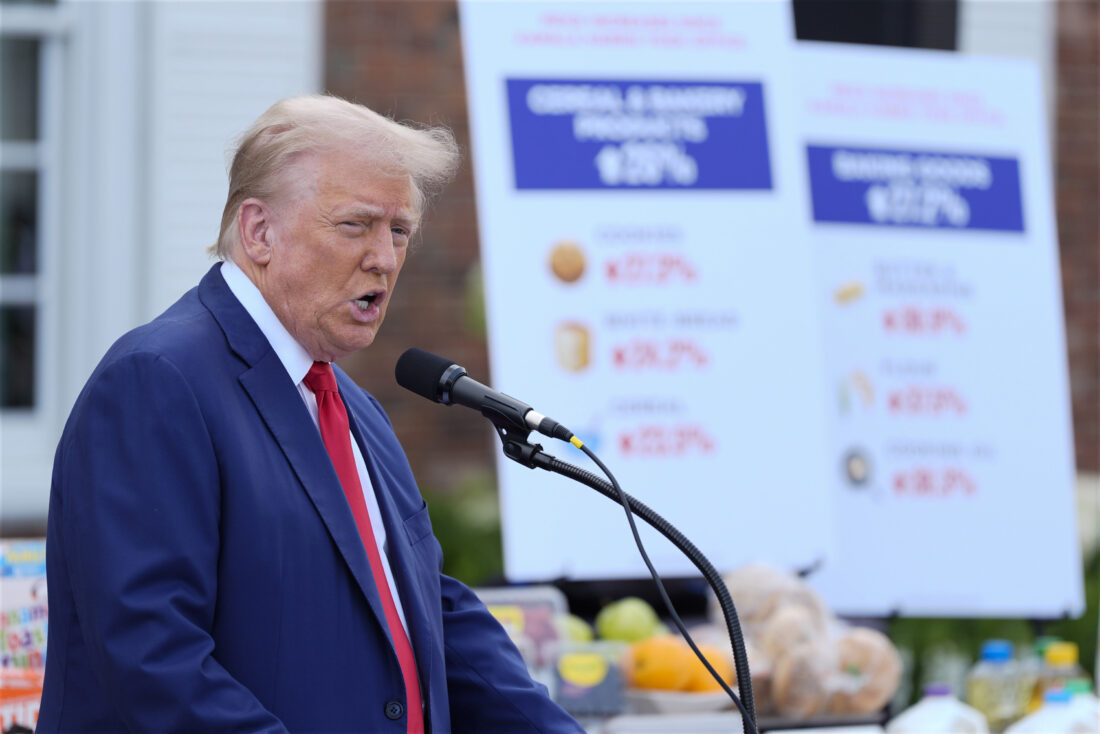
Donald Trump told reporters he “loves the inflation” while U.S. consumer prices climbed at the fastest pace in three years. According to CNBC, annual inflation reached 4.2% in May. This statement comes as Sky News reports Americans face rising costs linked to the Iran war and Politico notes some Trump allies fear the current economic damage is now irreversible.
What did Donald Trump say about U.S. inflation?
Former President Donald Trump stated to reporters that he “loves the inflation,” according to reports from RTE.ie. The comment was made during a period of significant economic volatility, where the cost of living for the average American has seen a sharp increase.
The remark stands in contrast to the traditional political stance of opposing inflation, which typically erodes purchasing power for consumers. While the specific reasoning behind his “love” for the inflation was not detailed in the immediate report, the statement occurred as national price indices hit multi-year peaks.
This public positioning occurs while the U.S. economy grapples with a combination of geopolitical instability and internal price pressures. According to the BBC, the rise in prices is the most rapid the country has seen in a three-year window, creating a stark backdrop for the former president’s comments.
How high did consumer prices rise in May?
Consumer prices in the United States rose 4.2% annually in May, according to data reported by CNBC. This figure represents the fastest rate of increase in three years, signaling a period of accelerated inflation that impacts everything from groceries to energy costs.
Inflation of this magnitude typically forces the Federal Reserve to consider interest rate hikes to cool the economy. When prices rise at a 4.2% clip, the real value of wages often drops unless those wages increase at an equal or higher rate. This creates a “cost-of-living squeeze” for middle- and lower-income households.
| Metric | Value/Status | Source |
|---|---|---|
| Annual Inflation Rate (May) | 4.2% | CNBC |
| Price Trend | Fastest rate in 3 years | BBC |
| Economic Sentiment (Allies) | “The die has been cast” | Politico |
Why a 4.2% increase matters for consumers
A 4.2% annual increase is not merely a statistic; it manifests as higher prices at the pump and the checkout counter. When the BBC reports this as the fastest rate in three years, it suggests that the inflationary trend is accelerating rather than stabilizing. This acceleration often leads to “inflationary expectations,” where businesses raise prices in anticipation of future cost increases, further fueling the cycle.
How is the Iran war affecting American finances?
Americans are paying an increasing financial toll due to the conflict involving Iran, according to Sky News. Geopolitical instability in the Middle East often translates directly into higher costs for U.S. consumers, primarily through the energy sector.
The mechanisms linking the Iran war to U.S. inflation generally include:
- Energy Price Spikes: Tensions in the Persian Gulf can disrupt oil supplies or create market panic, driving up the price of crude oil.
- Supply Chain Disruptions: Conflict in key shipping lanes can increase freight costs and delay the delivery of goods.
- Defense Spending: Increased military engagement often requires higher government spending, which can impact national deficits and monetary stability.
Sky News emphasizes that these financial pressures are a “growing price” paid by the public, suggesting that the economic impact of the war is cumulative rather than a one-time shock.
Are Trump’s allies concerned about the economy?
Despite the former president’s public comments, some of his own allies express deep concern that the economic situation has deteriorated beyond repair. According to Politico, some associates believe “the die has been cast,” suggesting it may be too late to reverse the current economic woes.
This internal anxiety contrasts sharply with Trump’s outward expression of “loving” the inflation. The phrase “the die has been cast” implies a sense of inevitability, where the structural damage to the economy—whether from inflation, debt, or geopolitical conflict—is viewed as permanent or irreversible by these political insiders.
“The die has been cast”: Trump allies fear it’s too late to reverse economic woes. — Politico
This division between public rhetoric and private concern highlights a tension within the political camp regarding how to message economic hardship to the electorate. While the public face may remain defiant or unconventional, the private assessment among strategists appears more grim.
Comparing the different narratives of the inflation crisis
The reporting across different outlets reveals a multifaceted crisis. While the data from CNBC provides the hard numbers (4.2%), the narratives from the BBC and Sky News provide the “how” and “why.”
The Data Narrative (CNBC/BBC): This focus is on the velocity of inflation. By labeling the 4.2% rise as the “fastest in three years,” these outlets frame the story as a statistical anomaly and a warning sign for the economy.
The Geopolitical Narrative (Sky News): This framing links domestic pain to foreign policy. By attributing the financial price to the Iran war, the narrative shifts from internal economic management to the costs of global conflict.
The Political Narrative (Politico/RTE.ie): This focuses on the reaction and the optics. The contrast between Trump’s “love” for inflation and his allies’ fear that the “die has been cast” creates a story of political dissonance.
Key points on the current economic climate
- Price Acceleration: May’s 4.2% rise is a critical benchmark, marking a three-year peak.
- External Shocks: The Iran war is cited as a direct contributor to the financial burden on U.S. citizens.
- Political Friction: There is a documented gap between Donald Trump’s public comments and the private fears of his allies.
Common misconceptions about inflation and political rhetoric
Many observers may find the statement “I love the inflation” confusing, as inflation is generally viewed as a negative economic indicator. However, in certain specific—though rare—economic contexts, some argue that inflation can reduce the real value of debt. For a government or entity with massive debts, inflation can make that debt easier to pay back in “cheaper” dollars.
Another common misconception is that inflation is caused by a single factor. As the sources indicate, the current situation is a mix of:
- Monetary trends: Reflected in the 4.2% consumer price rise reported by CNBC.
- Geopolitical conflict: The Iran war’s impact as reported by Sky News.
- Psychological factors: The “die has been cast” sentiment reported by Politico, which can influence market confidence.
By attributing the rise to the Iran war, Sky News suggests that the inflation is “cost-push” (driven by rising costs of production/energy) rather than “demand-pull” (driven by consumers spending too much money).
For those seeking more context on how global conflicts impact domestic markets, a related explainer on geopolitical economic shocks may provide further insight.
Frequently Asked Questions
What did Donald Trump say about inflation?
According to RTE.ie, Donald Trump told reporters, “I love the inflation,” despite rising costs for American consumers.
What was the US inflation rate in May?
CNBC reports that consumer prices rose 4.2% annually in May, which the BBC notes is the fastest rate of increase in three years.

How does the Iran war affect US prices?
Sky News reports that Americans are paying a growing financial price due to the Iran war, which typically affects energy costs and supply chain stability.
Do Trump’s allies agree with his positive view of inflation?
No. According to Politico, some of Trump’s allies fear that the economic damage is already irreversible, stating that “the die has been cast.”
Why is a 4.2% inflation rate significant?
A 4.2% rate is significant because it represents a three-year high, indicating that the cost of living is increasing more rapidly than it has in several years, which reduces the purchasing power of the U.S. dollar.
The intersection of these reports suggests a volatile period for the U.S. economy. With prices rising at their fastest clip in years and geopolitical tensions in Iran adding financial pressure, the political response remains divided. While the data shows a clear upward trend in costs, the rhetoric coming from the former president and his inner circle reveals a deep split between public confidence and private apprehension.
