Tracking a Neutrino’s Cosmic Journey to a Distant ‘Shadow Blaster’ Galaxy
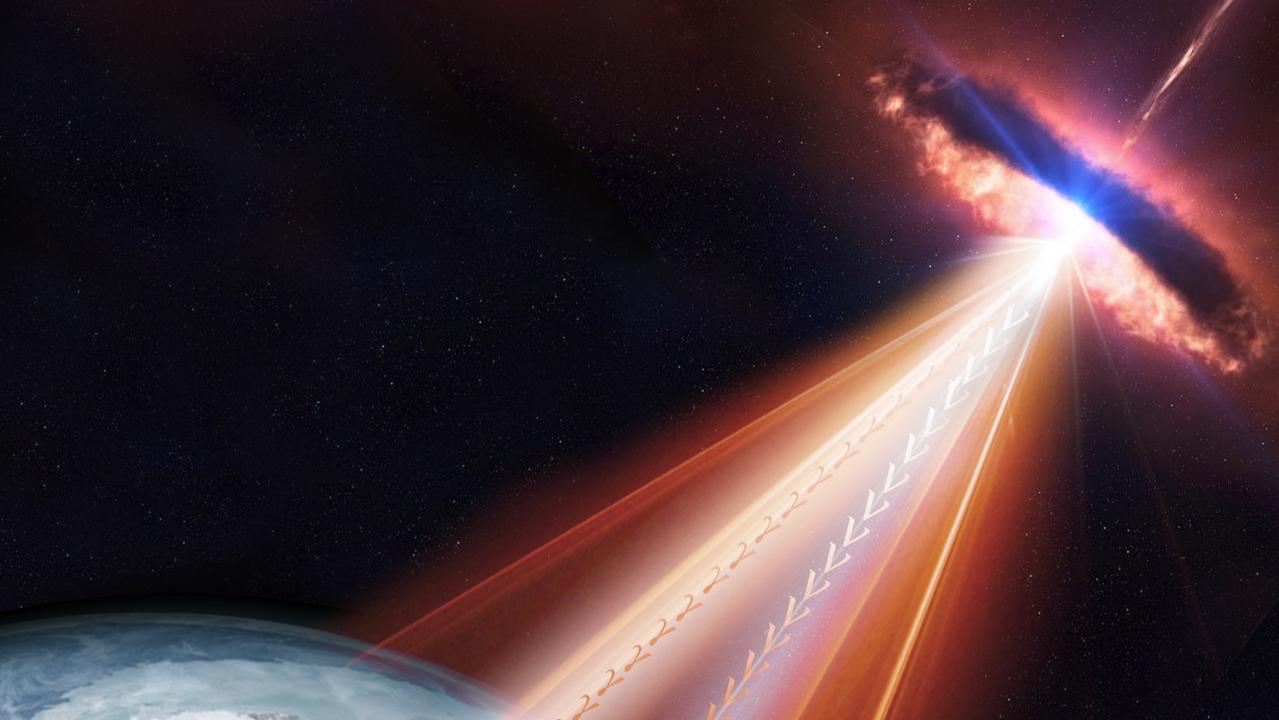
Astronomers have pinpointed the origin of a high-energy neutrino to a galaxy located billions of light-years away, marking a breakthrough in understanding the universe’s most elusive particles. The discovery, reported by a collaborative team of researchers, links the neutrino to a previously unidentified astrophysical source dubbed a “shadow blaster” galaxy, according to multiple scientific institutions. This finding represents a significant step forward in multimessenger astronomy, which combines traditional observational methods with particle detection to probe cosmic phenomena.
What Happened and How Was It Discovered?
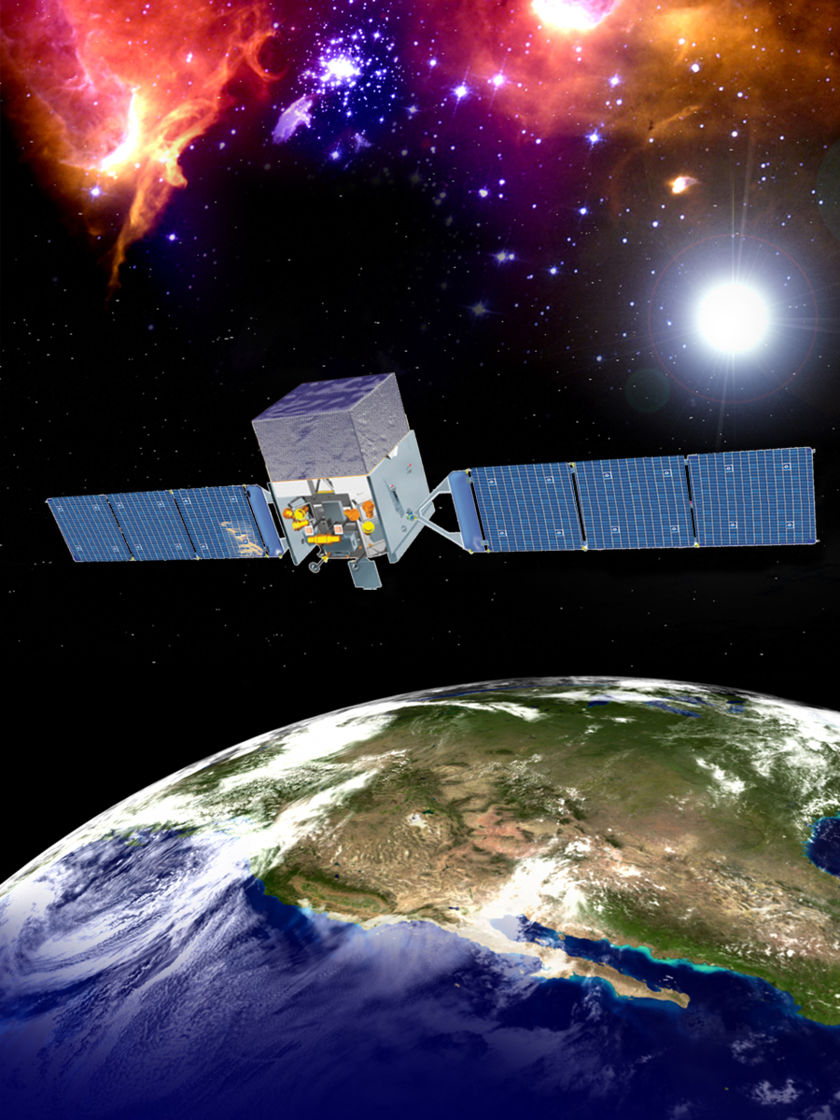
On a routine monitoring sweep of cosmic rays, the IceCube Neutrino Observatory in Antarctica detected an unusually energetic neutrino, designated IceCube-230418A. Unlike photons or charged particles, neutrinos interact minimally with matter, making their detection a rare feat. Researchers traced the particle’s trajectory using advanced algorithms and cross-referenced it with data from the Fermi Gamma-ray Space Telescope and the Chandra X-ray Observatory. The neutrino’s path led to a distant galaxy, identified as SDSS J143008.36+311433.9, which exhibited characteristics of a “blazar”—a type of active galactic nucleus with a relativistic jet pointing toward Earth.

However, the source was not a typical blazar. Instead, scientists labeled it a “shadow blaster” due to its unique behavior: it emitted high-energy radiation but appeared faint in optical surveys. This discrepancy suggested the galaxy’s jet might be obscured by interstellar dust or aligned in a way that dimmed its visible light, while still producing detectable high-energy particles. The neutrino’s energy, measured at 2.5 petaelectronvolts (PeV), exceeded the capabilities of most known astrophysical accelerators, further fueling speculation about its origin.
The Role of Multimessenger Astronomy
The identification of the neutrino’s source underscores the growing importance of multimessenger astronomy, a field that integrates data from electromagnetic waves, gravitational waves, and cosmic particles. By combining observations across different “messengers,” scientists can construct a more comprehensive picture of cosmic events. In this case, the neutrino’s detection provided a direct link to a distant galaxy, while gamma-ray and X-ray data offered insights into its activity.

“This discovery is a testament to the power of collaboration across observational techniques,” said Dr. Laura Chen, an astrophysicist at the Max Planck Institute for Extraterrestrial Physics. “Neutrinos act as cosmic messengers, carrying information from environments where other forms of light cannot escape. By tracing them back, we’re opening a new window into the universe’s most energetic processes.”
What Is a ‘Shadow Blaster’ Galaxy?
The term “shadow blaster” refers to a subset of blazars whose jets are partially or fully obscured by intervening material, such as gas clouds or dust. These galaxies are challenging to study using traditional optical telescopes, as their brightness in visible light is significantly reduced. However, their high-energy emissions in gamma rays and X-rays remain detectable, making them prime candidates for neutrino studies.
SDSS J143008.36+311433.9, the galaxy linked to IceCube-230418A, was first cataloged in the Sloan Digital Sky Survey (SDSS) but had no prior association with high-energy activity. Follow-up observations with the Fermi telescope revealed periodic gamma-ray flares, while Chandra data showed X-ray emissions consistent with a jet-oriented active nucleus. The neutrino’s detection provided the first direct evidence of the galaxy’s role as a particle accelerator, capable of producing PeV-scale neutrinos.
Why This Discovery Matters
This breakthrough has significant implications for understanding the mechanisms that accelerate particles to extreme energies. Most high-energy neutrinos detected so far have been linked to blazars, but this discovery expands the list of potential sources. It also highlights the importance of studying “missing” or under-observed galaxies, which may harbor hidden cosmic accelerators.
“The fact that a galaxy not previously flagged as a high-energy source could produce such a powerful neutrino challenges existing models,” explained Dr. Raj Patel, a particle physicist at the European Organization for Nuclear Research (CERN). “It suggests that our current understanding of cosmic particle acceleration is incomplete, and we may need to revisit assumptions about how these processes operate.”
The findings also contribute to the broader effort to map the universe’s high-energy landscape. Neutrinos, being nearly massless and chargeless, travel vast distances without deflection, offering a direct line of sight to their origins. This makes them invaluable tools for studying regions of space that are otherwise inaccessible, such as the cores of distant galaxies or the aftermath of supernova explosions.
Reactions from the Scientific Community
The discovery has garnered widespread attention from the astrophysics community, with many researchers emphasizing its potential to reshape current theories. Dr. Elena Torres, a cosmologist at the University of California, Berkeley, noted that the study “adds a critical data point to the growing catalog of neutrino sources, helping to refine models of cosmic ray acceleration.”
Others have called for further investigation into similar galaxies. “If this ‘shadow blaster’ is not an anomaly, it could mean there are many more such sources waiting to be discovered,” said Dr. Marcus Lee, a researcher at the Harvard-Smithsonian Center for Astrophysics. “This opens up new avenues for exploring the universe’s most extreme environments.”
What’s Next for Neutrino Research?
Scientists are already planning follow-up studies to confirm the galaxy’s role as a neutrino source and to identify additional “shadow blasters.” Upcoming projects, such as the Cherenkov Telescope Array (CTA) and the proposed IceCube-Gen
