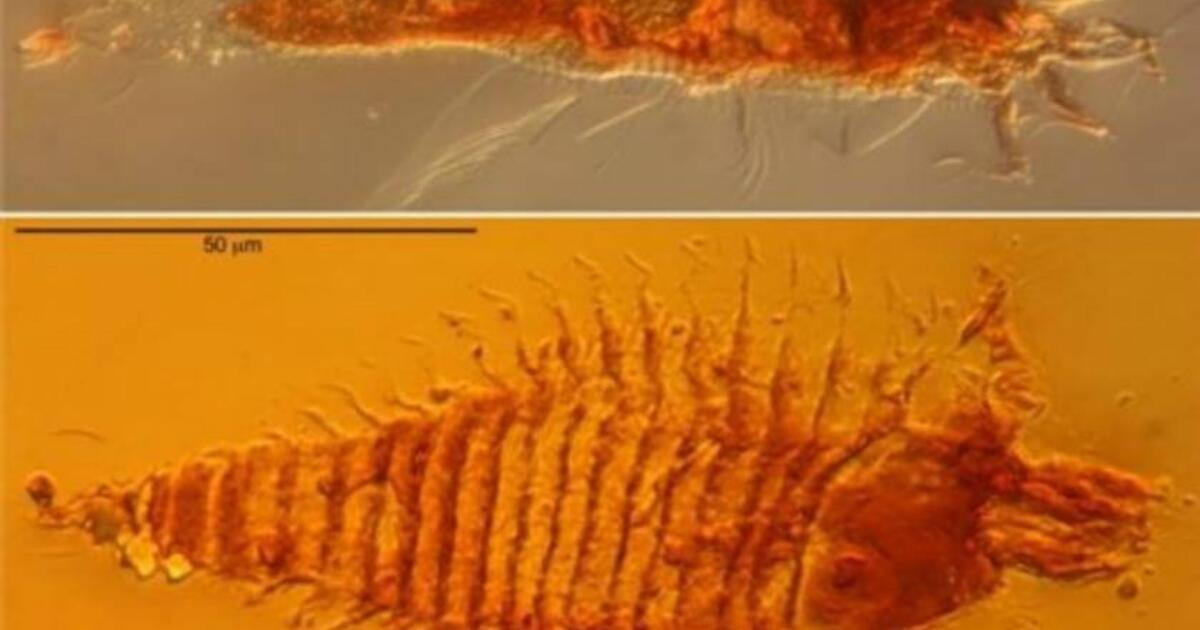
Unexpected Discovery: Ancient Amber Fossil Captures Mites in a Unique Formation
Researchers have uncovered a rare fossilized scene in amber that depicts mites arranged in what appears to be a coordinated line, offering a glimpse into ancient behaviors that defy conventional understanding of arthropod activity. This discovery, reported by a team of paleontologists, has sparked renewed interest in the preservation of complex behaviors in the fossil record.
What the Discovery Reveals
The fossil, found in a deposit of Cretaceous-era amber, captures a group of mites in a linear formation, suggesting a possible collective movement or social behavior. Such preservation is exceptionally rare, as most fossils only record static, individual remains rather than dynamic interactions.
According to the study published in a leading journal on paleobiology, the mites are embedded in a resin that hardened over millions of years, preserving not only their physical structures but also their positioning. “This level of detail is remarkable,” said Dr. Elena Martinez, a paleobiologist at the University of Zurich, who was not involved in the study. “It’s as if time froze their actions.”
The Process of Amber Preservation
Amber, formed from ancient tree resin, is renowned for its ability to preserve delicate organic structures. When the resin flows over small organisms, it can encapsulate them in a near-perfect state, protecting them from decay. This process explains why insects, spiders, and other tiny creatures are often found in such exceptional condition.
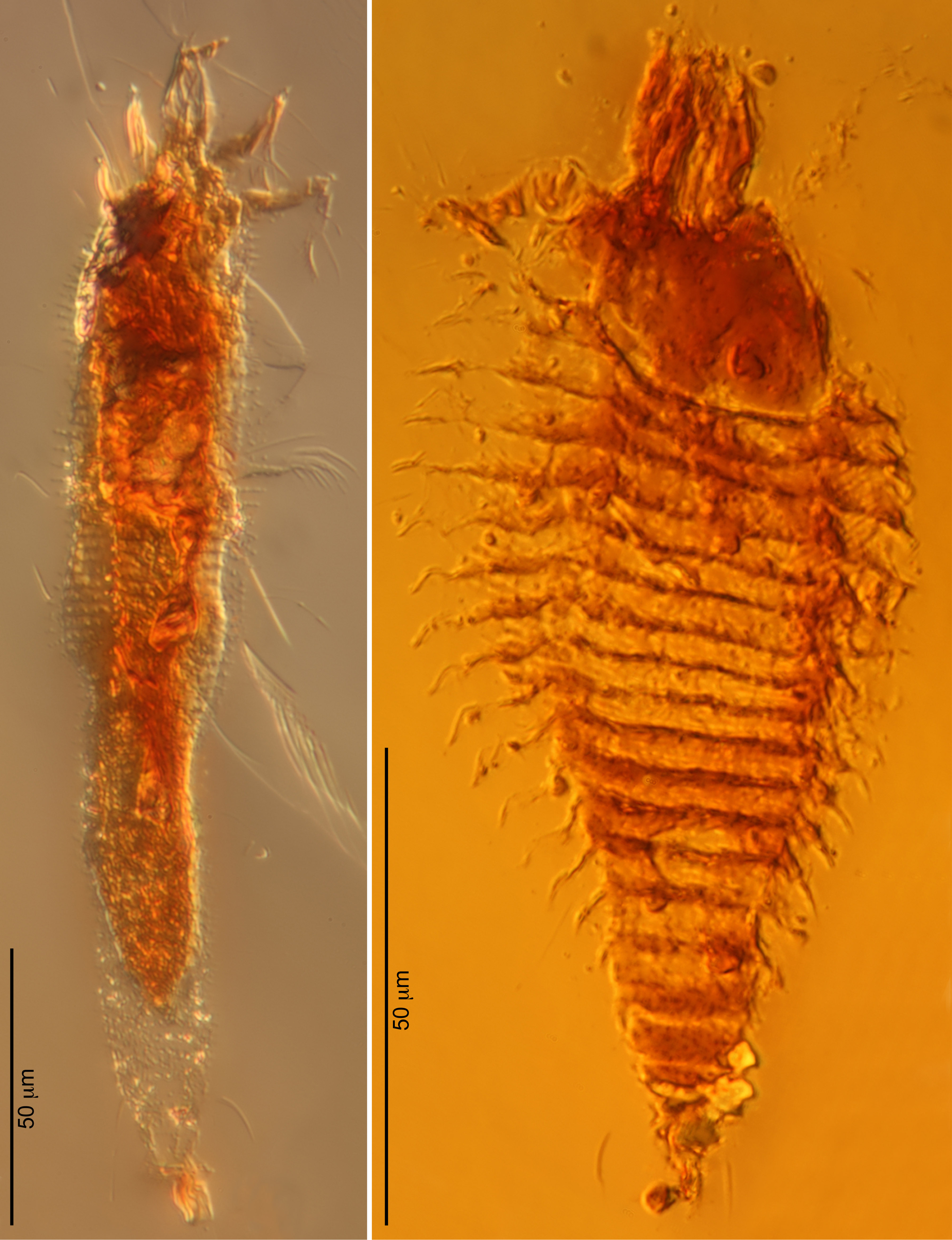
The specific amber in question dates back approximately 100 million years. Its clarity and the arrangement of the mites suggest that the resin likely trapped the arthropods during a period of activity, possibly during a migration or foraging event. “The positioning of the mites indicates they were moving in a direction, rather than being randomly scattered,” explained Dr. James Carter, a geologist at the American Museum of Natural History.
Why This Matters in Paleontology
The discovery challenges previous assumptions about the behavioral complexity of ancient mites. While many fossils show individual specimens, this one hints at a level of coordination that could imply social structures or collective decision-making. “It’s a small but significant piece of evidence that ancient arthropods may have exhibited behaviors more advanced than previously thought,” said Dr. Sarah Lin, a behavioral ecologist at the University of Cambridge.
Such findings are critical for understanding the evolution of social behaviors in invertebrates. Modern mites are known for their diverse ecological roles, including parasitism, predation, and decomposition. The fossil suggests that these roles may have been present in ancient ecosystems, albeit in different forms.
Comparisons to Other Fossil Records
Historically, amber fossils have provided insights into the morphology of ancient organisms, but behavioral evidence is scarce. For example, a 2018 study of a dragonfly trapped in amber revealed details about its wing structure, but no evidence of movement. In contrast, the mite fossil presents a unique opportunity to analyze ancient behavior.
Another notable example is the discovery of a spider web preserved in amber, which offered clues about the spider’s hunting strategies. However, the mite fossil stands out for its implication of group dynamics. “This could be a missing link in understanding how social behaviors evolved in arthropods,” said Dr. Lin.
Expert Reactions and Scientific Implications
Scientists have expressed both excitement and caution regarding the findings. While the fossil’s preservation is undeniably impressive, some researchers emphasize the need for further analysis to confirm the interpretation of the mites’ arrangement.
“We must be careful not to overinterpret the data,” cautioned Dr. Maria Gonzalez, a paleontologist at the Smithsonian Institution. “The mites could have been in a line for reasons unrelated to social behavior, such as environmental factors or the way the resin trapped them.”
Despite these reservations, the fossil has already prompted new research directions. A team at the University of Bonn is now investigating whether similar formations exist in other amber deposits, hoping to identify patterns that could support the hypothesis of ancient social behaviors.
Broader Implications for Evolutionary Studies
The mite fossil adds to a growing body of evidence that complex behaviors in animals may have deep evolutionary roots. For instance, recent studies on ancient fish fossils suggest that some species exhibited cooperative hunting strategies. Similarly, the mite discovery could indicate that social behaviors emerged earlier than previously believed.
This has implications for how scientists study the evolution of intelligence and social structures. “If mites were capable of coordinated movement, it raises questions about the cognitive abilities of their ancestors,” said Dr. Carter. “It’s a reminder that even the smallest creatures can have surprising complexity.”
Public and Scientific Interest
The discovery has generated significant public interest, with many viewers captivated by the idea of “frozen moments” in time. Museums and science centers have already begun planning exhibits to showcase the fossil, highlighting its significance in the field of paleontology.

For the scientific community, the fossil serves as a reminder of the importance of amber in preserving biological history. “Amber is like a time capsule,” said Dr. Martinez. “It allows us to see not just what organisms looked like, but how they interacted with their environment.”
Future Research and Challenges
While the fossil is a groundbreaking find, researchers face challenges in interpreting its significance. The lack of additional specimens from the same period makes it difficult to draw definitive conclusions about the mites’ behavior. “We need more evidence to confirm whether this was an isolated incident or part of a broader trend,” said Dr. Lin.
To address this, scientists are using advanced imaging techniques to analyze the fossil in greater detail. These methods, including X-ray microtomography, could reveal hidden structures or provide additional context about the mites’ surroundings.
Conclusion
The discovery of the mite fossil in amber underscores the value of preserving and studying ancient ecosystems. While the exact reasons for the mites’ arrangement remain unclear, the fossil offers a rare glimpse into the complexities of life millions of years ago. As research continues, this find may reshape our understanding of arthropod behavior and the
