Stress on San Andreas Fault May Be at Highest Level in 1,000 Years, New Study Finds
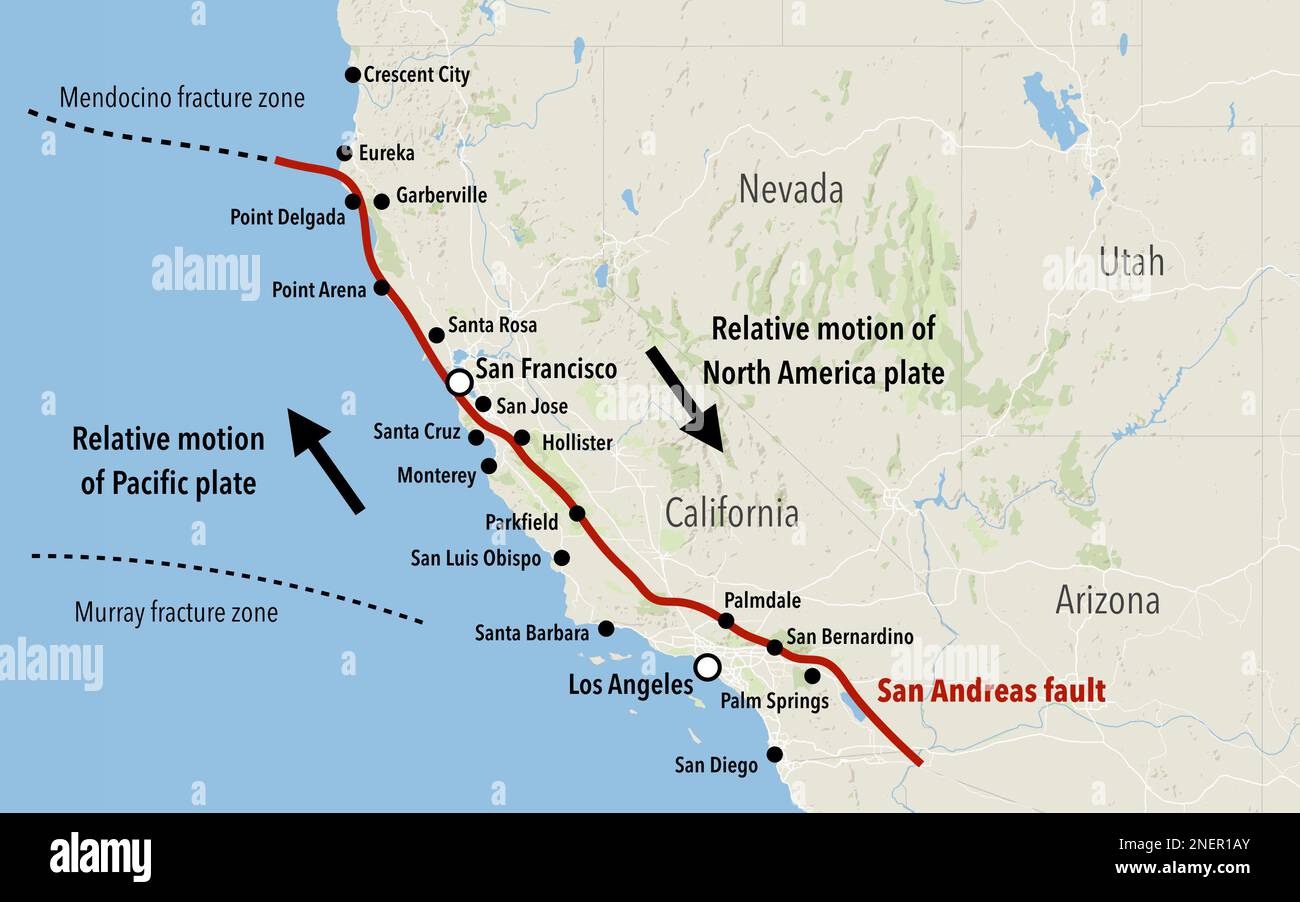
The San Andreas Fault is currently experiencing its highest levels of tectonic stress in 1,000 years, according to recent geological research. This critical stress, combined with similar pressure on the neighboring San Jacinto fault, indicates the system is primed for a major seismic event, as reported by Live Science and FOX Weather.
What does the new research say about the San Andreas Fault?
Recent geological findings indicate that the stress levels along the San Andreas Fault have reached a peak not seen in a millennium. According to reports from Euronews and Live Science, the fault system is “critically stressed,” meaning the energy built up from the movement of tectonic plates has reached a threshold where a significant rupture is increasingly likely.
The research highlights that this is not an isolated issue. The San Jacinto fault, which runs parallel to the San Andreas in Southern California, is also showing signs of extreme stress. Live Science reports that these two systems are closely linked, and the simultaneous stress on both increases the volatility of the region.
Geologists explain that faults do not slide smoothly. Instead, they “lock” in place due to friction while the tectonic plates continue to push against each other. This process stores elastic energy in the rocks. When the stress finally exceeds the strength of the rock and the friction holding the fault together, the energy is released as an earthquake. The current data suggests that the “spring” has been coiled for centuries and is now at its limit.
- Current Status: Highest stress levels in 1,000 years.
- Primary Faults Involved: San Andreas and San Jacinto.
- Condition: “Critically stressed” state.
- Mechanism: Tectonic plate friction resulting in stored elastic energy.
How is the San Jacinto fault linked to the San Andreas?
While the San Andreas is the most famous fault in California, the San Jacinto fault is equally dangerous in the current geological climate. According to Live Science, the two faults operate as part of a broader seismic system. When one fault accumulates stress, it can shift the pressure to adjacent faults, a process known as stress transfer.
The research indicates that the San Jacinto fault is “scarily close” to a major rupture. Because these faults are geographically and mechanically linked, a major event on the San Jacinto could potentially trigger a rupture on the San Andreas, or vice versa. This interdependence creates a “domino effect” risk that complicates earthquake forecasting.
The interaction between these faults is a primary concern for seismologists because it expands the potential “rupture zone.” A rupture that jumps from one fault to another can result in a much larger magnitude earthquake than a rupture confined to a single segment of a single fault.
| Feature | San Andreas Fault | San Jacinto Fault |
|---|---|---|
| Primary Role | Main boundary between Pacific and North American plates | Major secondary fault system in Southern California |
| Current Stress Level | Highest in 1,000 years | Critically stressed |
| Interaction | Can trigger neighboring faults | Can transfer stress to the San Andreas |
| Risk Factor | Massive regional rupture potential | High local volatility and trigger potential |
Why is this 1,000-year stress peak significant?
The 1,000-year timeframe is a critical metric for geologists. By studying paleoseismology—the study of ancient earthquakes—researchers can determine the average “return period” for major quakes. When stress reaches a millennial peak, it suggests that the fault has bypassed its usual cycle of release and is now in an overdue state.
According to reports from FOX Weather, this level of stress suggests that the fault is no longer just “due” for an earthquake, but is actively primed for one. The longer a fault remains locked while stress increases, the more energy is stored. A higher volume of stored energy directly correlates to a higher magnitude earthquake when the fault finally slips.
This situation is particularly concerning for Southern California, where urban density has increased dramatically since the last major ruptures. The “stress on San Andreas Fault may be at highest level in 1,000 years, new study finds – newscentermaine.com” narrative underscores a growing gap between geological readiness and urban expansion.
The mechanics of a “locked” fault
To understand why this stress is dangerous, it is necessary to understand the “stick-slip” behavior of faults. The Pacific Plate and the North American Plate are moving in opposite directions. However, the edges of these plates are jagged. They catch on one another, creating a “locked” zone.

While the edges are stuck, the rest of the plate continues to move. This bends the crust, much like bending a wooden ruler. The 1,000-year stress peak means the “ruler” is bent almost to the point of snapping. Once the friction is overcome, the crust snaps back into place instantly, sending shockwaves through the ground.
Comparing the framing of the risk: “Critically Stressed” vs. “Apocalyptic”
Different news outlets have characterized these findings with varying degrees of urgency. A comparison of the reporting shows a spectrum from technical warning to catastrophic projection.
Live Science and Euronews focus on the technical terminology, using phrases like “critically stressed” and “highest stress levels.” This framing emphasizes the geological state of the fault and the scientific probability of an event. It presents the situation as a matter of timing and physics.
In contrast, Futurism describes the situation as California being “primed for an apocalyptic earthquake.” This framing shifts the focus from the geological process to the potential human and structural outcome. While the underlying data is the same, the “apocalyptic” descriptor highlights the vulnerability of modern infrastructure—such as skyscrapers, bridges, and power grids—that was not designed for a millennial-level seismic event.
This difference in framing reflects the two sides of seismic risk: the hazard (the earthquake itself) and the risk (the damage caused to people and property). The geological study identifies the hazard; the “apocalyptic” framing identifies the risk.
What are the potential implications for California’s infrastructure?
A major rupture on a critically stressed fault would test every aspect of California’s disaster preparedness. Because the stress levels are at a 1,000-year high, the resulting earthquake could exceed the design parameters of older building codes.
Key areas of concern include:
- Transportation Arteries: Major highways and bridges that cross the fault line could be severed, isolating entire communities.
- Water and Power: Aqueducts and power lines crossing the San Andreas are vulnerable to lateral displacement, which could lead to long-term utility outages.
- Urban Density: Cities like Los Angeles and San Francisco have grown significantly since the last major events, meaning more people are now living in high-risk zones.
- Emergency Response: A “critically stressed” system rupture could cause widespread fires and landslides, hindering the ability of first responders to reach affected areas.
Experts suggest that while seismic retrofitting has improved the resilience of many buildings, the scale of a 1,000-year event could overwhelm these protections. The focus is now shifting toward “functional recovery”—not just ensuring a building doesn’t collapse, but ensuring it can be used again quickly after the quake.
For more on how regional planning is adapting, see a related explainer on seismic retrofitting standards.
Common misconceptions about fault stress and prediction
When reports surface that a fault is “critically stressed,” it often leads to the misconception that an earthquake is imminent—perhaps within days or weeks. However, geologists emphasize a crucial distinction: stress levels indicate probability, not a date.
Misconception: “Highest stress means a quake will happen tomorrow.”
In reality, a fault can remain “critically stressed” for years or even decades before the final trigger occurs. There is currently no scientific method to predict the exact day or hour of an earthquake. The study indicates the “fuel” is all there; it does not identify the “spark.”
Misconception: “A small earthquake relieves the stress.”
While some small quakes can release a tiny amount of energy, they often do the opposite. According to seismic theory, small earthquakes can actually increase stress on adjacent sections of the fault, acting as a catalyst for a larger rupture.
Misconception: “Only the San Andreas is the threat.”
As the research into the San Jacinto fault shows, the danger is systemic. The “big one” may not be a single rupture of the San Andreas, but a complex series of ruptures across multiple interconnected faults.
How to prepare for a high-stress seismic event
Given that the system is critically stressed, emergency management agencies recommend a shift from passive awareness to active preparation. Because the timing is unknown, the only variable residents can control is their level of readiness.
Recommended actions include:
- Securing Heavy Furniture: Bolting bookshelves and wardrobes to walls to prevent tipping during high-magnitude shaking.
- Creating a 72-Hour Kit: Ensuring access to water, non-perishable food, and medication for at least three days.
- Establishing Communication Plans: Designating an out-of-state contact to coordinate family members when local phone lines are overwhelmed.
- Identifying “Safe Zones”: Knowing the safest place in every room (e.g., under a sturdy table) and avoiding glass windows.
The scale of the stress reported in the new study suggests that the magnitude of the eventual event could be significant. Preparation at the individual level reduces the burden on emergency services during the critical first hours of a disaster.
Frequently Asked Questions
Can scientists predict exactly when the San Andreas Fault will rupture?
No. According to current geological science, it is impossible to predict the exact date or time of an earthquake. Scientists can only identify that a fault is “critically stressed” and provide probabilities over long periods (e.g., a 30-year window).
What does “critically stressed” actually mean in geology?
A fault is “critically stressed” when the tectonic pressure acting upon it is very close to the amount of friction holding the fault in place. In this state, even a relatively small trigger—such as a minor quake on a nearby fault—could cause the main fault to slip.
Why is the 1,000-year mark important?
Geologists use historical data to find patterns in how often a fault ruptures. If stress is at its highest level in 1,000 years, it suggests the fault has accumulated an extraordinary amount of energy without a major release, increasing the potential magnitude of the next earthquake.
Is the San Jacinto fault more dangerous than the San Andreas?
Neither is necessarily “more” dangerous, but they present different risks. The San Andreas is longer and capable of a larger total rupture, while the San Jacinto is located in a highly populated area and can act as a trigger for the larger system.
Does a “critically stressed” fault mean an earthquake is inevitable?
Yes, in the geological sense. Tectonic plates do not stop moving. Because the plates continue to push against each other, the stress must eventually be released. The only question is when and how that release will happen.
For further reading on geological hazards, you may find a related explainer on tectonic plate boundaries useful for understanding the broader context of Pacific Rim seismicity.
