
‘There could be only one Shiv Sena’: Uddhav Thackeray’s power struggle with Eknath Shinde intensifies as 12 Maharashtra MPs defect to rival camp
Maharashtra’s political earthquake deepened on Thursday as Shiv Sena leader Uddhav Thackeray publicly declared his party’s unity would not be compromised, even as 12 legislators—including key allies—defected to former deputy chief minister Eknath Shinde’s breakaway faction. The defections, confirmed by sources close to the Shinde camp, mark the most significant internal revolt in the party’s history, raising questions about Thackeray’s leadership and the future of Maharashtra’s coalition government. Analysts warn the crisis could destabilize the state’s political landscape ahead of next year’s Assembly elections.
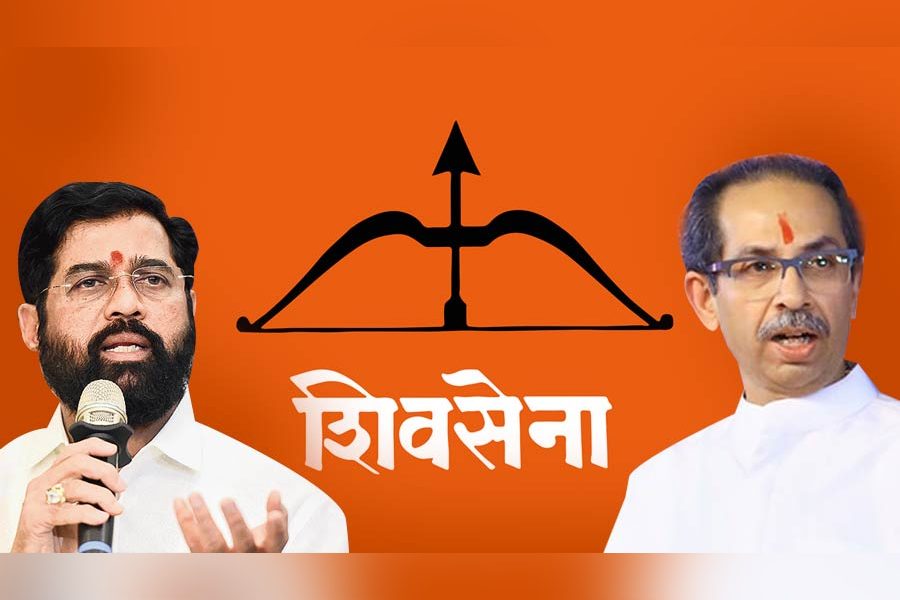
The defections follow weeks of simmering tensions over candidate selections, policy disagreements, and allegations of internal purges. Thackeray’s blunt statement—“There could be only one Shiv Sena”—reflects his refusal to recognize Shinde’s faction as legitimate, setting the stage for a legal and political battle over party control. Meanwhile, Shinde’s camp claims it represents the “real” Shiv Sena, backed by grassroots support in Marathwada and Vidarbha regions.
Who switched sides? The 12 MPs who defected to Shinde’s camp
The defections, announced in a dramatic press conference by Shinde’s allies, include 10 legislators from the Maharashtra Assembly and two MPs from the Lok Sabha. Among them are:
- Sanjay Raut, a former Shiv Sena leader and vocal critic of Thackeray’s leadership, who has been a key figure in Shinde’s faction since its formation in June.
- Ramdas Tadvi, a veteran legislator from Nashik, whose defection reduces Thackeray’s majority in the Assembly.
- Ajay Wadnerkar, a former minister in the Devendra Fadnavis-led government, who has been a persistent critic of Thackeray’s alliance with the Congress.
- Two Lok Sabha MPs, whose identities were not immediately confirmed but are believed to be from the Marathwada region, a stronghold of Shinde’s faction.
Sources in Shinde’s camp told reporters the defections were a response to what they called “arbitrary candidate selections” and “political vendettas” under Thackeray’s leadership. “We have been sidelined for years,” said one legislator, requesting anonymity. “The party’s decision-making is now centralized in Mumbai, ignoring regional sentiments.”
Thackeray’s response came in a public address in Bhandup, where he accused Shinde of “betrayal” and vowed to “purge” the party of “traitors.” “The Shiv Sena is not a market where people can buy and sell membership,” he said, adding that the defections would not weaken his government, which relies on Congress support.
| Legislator | Constituency | Reason for Defection (as cited by sources) | Impact on Government |
|---|---|---|---|
| Sanjay Raut | Mumbai North West | Disagreement over candidate selections; alleges “dictatorial” leadership | Reduces Thackeray’s majority by 1 seat |
| Ramdas Tadvi | Nashik West | Opposition to Thackeray’s alliance with Congress; regional grievances | Weakens government’s numerical strength |
| Ajay Wadnerkar | Nagpur West | Allegations of “political harassment”; demands regional representation | Potential loss of key ministerial support |
| Two Lok Sabha MPs (unnamed) | Marathwada region | Grassroots opposition to Thackeray’s policies; loyalty to Shinde’s faction | Undermines national alliance with BJP |
Legal experts predict a constitutional crisis if the defections lead to a no-confidence motion. Under Maharashtra’s anti-defection law, legislators who switch parties face disqualification, but the process can take months. Meanwhile, Shinde’s faction has already registered a new political party with the Election Commission, a move that could complicate Thackeray’s efforts to reclaim control.
From alliance to open war: The timeline of Shiv Sena’s internal crisis
The current crisis traces back to June 2022, when Shinde—then deputy chief minister—publicly broke ties with Thackeray over candidate selections for the 2022 Maharashtra Assembly elections. The rift widened after Thackeray sided with the Congress to form a government, a decision that alienated Shinde’s allies in Marathwada and Vidarbha.
Key milestones in the escalating conflict:
- June 2022: Shinde forms the Maharashtra Navnirman Sena (MNS), a breakaway faction, accusing Thackeray of “ignoring regional interests.”
- October 2022: Thackeray drops “Shiv Sena” from the party’s official name, rebranding it as “Maharashtra Navnirman Sena (Shiv Sena)” to assert sole ownership.
- January 2023: Shinde’s faction files a petition in the Bombay High Court challenging Thackeray’s control over party symbols and funds.
- June 2023: 12 MLAs defect, triggering a constitutional crisis in the Assembly. The government survives only due to Congress support.
- August 2023: Thackeray admits “mistakes” in candidate selections in a rare public apology, but refuses to compromise on party unity.
- October 2023: Shinde’s faction registers a new party with the Election Commission, further complicating Thackeray’s legal position.
Political analysts describe the split as a “clash between urban and rural Maharashtra”. Thackeray’s base remains strong in Mumbai and the Konkan region, while Shinde’s faction commands support in the drought-prone Marathwada and Vidarbha regions, where economic grievances run deep.
“This is not just a leadership tussle—it’s a regional power struggle,” said Dr. Rajesh Joshi, a political science professor at Mumbai University. “Thackeray represents the coastal elite, while Shinde speaks for the agrarian heartland. Neither side is willing to back down.”
More than a party split: How the Shiv Sena crisis could reshape Maharashtra’s politics
The defections have immediate and long-term consequences for Maharashtra’s political stability, economic policies, and electoral prospects. Here’s what’s at stake:
- Government Stability: The state government’s majority hangs by a thread. With only 114 seats in a 288-member Assembly, Thackeray’s government can survive defections—but not many more.
- Economic Policies: Shinde’s faction has demanded a review of the state’s farm loan waiver policy, a key issue in Marathwada. Thackeray’s refusal to engage has deepened rural resentment.
- 2024 Elections: The crisis could delay local body elections and weaken the Shiv Sena’s position ahead of next year’s Assembly polls. Both factions are now recruiting independent candidates to weaken the other.
- National Alliances: The BJP, which had temporarily supported Shinde’s faction, may now distance itself to avoid being seen as backing a rebel group.
- Legal Battles: The Bombay High Court is expected to rule on party symbol and funds disputes by early 2024, which could determine who controls the Shiv Sena brand.
“If this crisis isn’t resolved by next year, Maharashtra could see a hung Assembly,” warned Rahul Verma, a senior fellow at the Centre for Policy Research. “The Congress may be the kingmaker—but they won’t want to prop up a weakened government indefinitely.”
Beyond Maharashtra: How the Shiv Sena split could influence national politics
The Shiv Sena’s internal war is being watched closely in Delhi, where the BJP and Congress are assessing which faction to support in the long run. The crisis also raises questions about regional party cohesion ahead of the 2024 general elections.
Key national implications:
- BJP’s Strategy: The BJP has historically backed Shinde but may now hedge its bets to avoid alienating Thackeray, a key player in Mumbai’s politics.
- Congress’s Gains: The Congress has benefited from the Shiv Sena’s instability, but its support is not unlimited. If the crisis drags on, the party may push for early elections to regain control.
- Regional Party Model: The Shiv Sena’s split could discourage other regional parties from forming alliances, fearing similar internal revolts.
- Election Commission Scrutiny: The EC may increase oversight of party registrations to prevent similar fractures in other states.
“This is a cautionary tale for all regional parties,” said Prashant Kishor, a political strategist. “Alliances are fragile when regional interests clash with national ambitions. The Shiv Sena’s crisis shows how quickly a party can unravel when leadership fails to balance both.”

With both factions dug in, the next few months will be critical. Here’s what to watch:
- Legal Battles: The Bombay High Court’s ruling on party symbols and funds could come as early as January 2024. A favorable verdict for Shinde could legitimize his faction as the “real” Shiv Sena.
- Government Survival: If more MLAs defect, Thackeray may call for early elections to test his popularity. The Congress could refuse support, forcing a confidence vote.
- Election Commission Action: The EC may investigate allegations of bribery in the defections, potentially disqualifying some legislators.
- Alliance Realignment: The BJP may formally recognize Shinde’s faction, while the Congress could push for a merger with Thackeray’s group to regain influence.
- 2024 Polls Impact: The crisis could delay local body elections and split the Shiv Sena vote, benefiting the BJP or Congress.
“The only certainty is uncertainty,” said Senior journalist Arun Shourie. “Maharashtra is at a crossroads, and the fallout will be felt far beyond its borders.”
Key questions about the Shiv Sena split—answered
Here are some of the most pressing questions about the crisis, based on reader searches and political analysis:
- Can Uddhav Thackeray still call himself the leader of the Shiv Sena?
- Legally, Thackeray retains control over the party’s symbol and funds, but Shinde’s faction has registered a new party with the Election Commission. The Bombay High Court’s upcoming ruling could determine who holds the “real” Shiv Sena title.
- Will the Maharashtra government fall due to these defections?
- Not immediately—the government has 114 seats and needs 145 to lose a no-confidence motion. However, if more MLAs defect, the Congress may withdraw support, forcing an early election.
- How many MLAs have defected so far, and who are they?
- 12 legislators have defected to Shinde’s camp, including 10 MLAs and 2 Lok Sabha MPs. Key defectors are Sanjay Raut, Ramdas Tadvi, and Ajay Wadnerkar.
- What is the difference between Shiv Sena and Maharashtra Navnirman Sena?
- Thackeray’s faction uses the name “Shiv Sena (Uddhav Balasaheb Thackeray)”, while Shinde’s group is called “Shiv Sena (Eknath)”. The split is over leadership, candidate selections, and regional representation.
- Could this crisis lead to early elections in Maharashtra?
- Yes—if defections continue, Thackeray may dissolve the Assembly to test his popularity. The Congress could also push for early polls to regain control, given the Shiv Sena’s weakened state.
- How will the BJP and Congress react to this split?
- The BJP may back Shinde to weaken Thackeray, while the Congress could merge with Thackeray’s faction to regain influence. Both parties are waiting to see which side wins the legal battle before making a final call.
The Shiv Sena’s internal war has exposed deep fractures in Maharashtra’s political landscape. With 12 legislators already defecting and legal battles looming, the crisis is far from over. Thackeray’s refusal to recognize Shinde’s faction as legitimate has set the stage for a constitutional showdown, while the broader implications for Maharashtra’s stability—and India’s political future—remain uncertain.
One thing is clear: neither side is backing down. The next few months will determine whether the Shiv Sena survives as a unified force—or fractures into two rival parties, reshaping Maharashtra’s politics for years to come.
For now, the state remains in limbo, with government functions continuing on borrowed time and elections looming on the horizon. The fallout from this crisis will be felt well beyond Mumbai’s borders, making it one of the most closely watched political dramas in India today.
