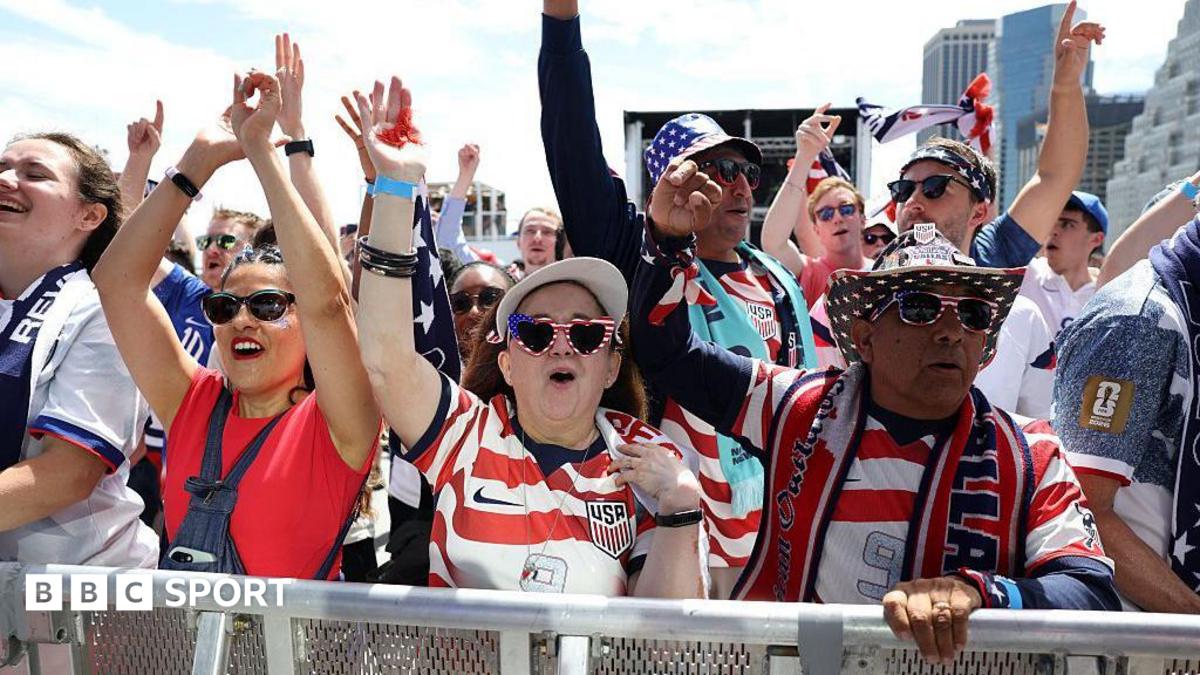
‘There’s a World Cup happening?’ Are Americans Excited About the Tournament?
Nearly half of Americans report a lack of interest in the FIFA World Cup, according to a poll cited by The Hill. While the tournament remains the premier global sporting event, the United States continues to struggle with a cultural disconnect and a developmental system that prevents the rise of world-class male stars, as reported by The Athletic and Bloomberg.
How Much Interest Do Americans Actually Have in the World Cup?
Public enthusiasm for the World Cup in the United States remains fragmented. A poll detailed by The Hill indicates that nearly 50% of Americans are not interested in the tournament. This apathy exists despite the massive global scale of the event and the increasing commercial presence of soccer within the U.S. market.
The BBC notes that for a significant portion of the population, the tournament is an afterthought or an unknown event, captured by the sentiment, “‘There’s a World Cup happening?'” This suggests that while soccer is growing in specific demographics, it has not yet achieved the “national pastime” status held by baseball or the cultural dominance of the NFL.
Factors contributing to this lack of interest include:
- Competing Sports Calendars: The overlap with other major American sports often pushes soccer to the periphery of sports media coverage.
- Lack of Local Connection: Without a consistent history of deep tournament runs, the general public lacks an emotional anchor to the event.
- Cultural Inertia: A long-standing preference for domestic leagues over international club and country competitions.
Why Does the U.S. Struggle to Produce World-Class Male Soccer Stars?
The United States has yet to produce a male soccer player who is universally recognized as a top-tier, world-class superstar on the level of icons from Brazil, Argentina, or France. The Athletic attributes this failure to a “broken” developmental system and a nascent soccer culture that prioritizes different values than the global game.
According to The Athletic, the U.S. system is hampered by a “pay-to-play” model. In this structure, high-level youth coaching and elite academy access are often locked behind expensive tuition fees. This creates a socio-economic barrier that excludes talented athletes from lower-income backgrounds, effectively shrinking the talent pool available to the national team.
Furthermore, the culture surrounding American youth sports often emphasizes early specialization and a collegiate path over the professional academy systems found in Europe and South America. While European teenagers are integrated into professional first teams by age 17, many American players are steered toward the NCAA system, which The Athletic suggests can delay professional maturation.
| Development Factor | Global Elite Model (EU/SA) | U.S. Model (Traditional) |
|---|---|---|
| Access | Club-based, often meritocratic/scouted | Pay-to-play, tuition-based |
| Pathway | Professional Academy → First Team | Youth League → College → Draft |
| Focus | Technical mastery and tactical fluidity | Athleticism and structured competition |
The Gap Between ‘Imagined’ Soccer and Reality
The New York Times reports a disconnect between the version of soccer America imagined it would embrace and the reality of the sport’s integration into the country. For years, the narrative suggested that the arrival of global stars and the hosting of major tournaments would automatically trigger a soccer revolution in the U.S.
However, the reality is more complex. The New York Times suggests that soccer in America often feels like a curated product rather than an organic cultural movement. The sport is frequently marketed as a luxury or a “lifestyle” brand rather than a gritty, community-driven passion. This distinction prevents the sport from gaining the deep-rooted, generational loyalty seen in other nations.
Bloomberg adds that a persistent “stigma” clings to American soccer. This stigma is twofold: internationally, the U.S. is often viewed as a soccer novice, and domestically, soccer is sometimes perceived as a sport for the affluent or for those who didn’t fit into the “traditional” American sports mold.
“American soccer’s stigma: Can USMNT’s World Cup change it?” — ESPN
Can the USMNT Change the American Narrative?
The U.S. Men’s National Team (USMNT) is viewed as the primary vehicle for shifting public perception. According to ESPN and Bloomberg, the team’s performance on the world stage is the only catalyst powerful enough to break the current cycle of indifference.
For the USMNT to move the needle, analysts suggest the team must achieve more than just qualification. They need a “breakthrough” moment—a deep run into the knockout stages or an upset of a traditional powerhouse—that captures the national imagination. Such a victory would provide the “proof of concept” required to validate the sport to the skeptical 50% of the population mentioned by The Hill.
The stakes for the USMNT include:
- Validation of Investment: Proving that the billions invested in Major League Soccer (MLS) and youth academies are yielding results.
- Mainstream Media Shift: Forcing major networks to treat soccer as a primary sport rather than a niche interest.
- Inspirational Loop: Creating a new generation of children who view soccer as a viable path to stardom, similar to how Michael Jordan impacted basketball.
Comparing Perspectives on American Soccer’s Future
There is a notable contrast in how different outlets frame the future of the sport. The Athletic focuses heavily on the structural failures—the “broken” system—suggesting that without a fundamental overhaul of how players are developed, the U.S. will continue to lag behind. In contrast, Bloomberg and ESPN frame the issue more as a perceptual battle, focusing on the “stigma” and the need for a catalyst event to change hearts and minds.
The New York Times takes a more sociological approach, arguing that the issue is not just about money or coaching, but about the very identity of the sport in America. While the “imagined” soccer was a seamless transition to global popularity, the actual transition is slow, clunky, and fraught with cultural contradictions.
This suggests that solving the “interest gap” requires a two-pronged approach: the structural reform demanded by The Athletic and the cultural breakthrough envisioned by ESPN.
Common Misconceptions About Soccer’s Popularity in the U.S.
A common oversimplification is that soccer is “booming” in the U.S. simply because of high youth participation rates. While it is true that millions of children play soccer, this does not automatically translate to adult viewership or World Cup excitement. Many children play the sport because it is a convenient option for parents, not because they are immersed in a soccer-centric culture.
Another misconception is that the presence of Major League Soccer (MLS) solves the visibility problem. While MLS has grown, Bloomberg’s analysis suggests that domestic league success does not always correlate with World Cup fever. The World Cup is a different beast—a nationalistic event—and without a dominant national team, the domestic league’s growth remains isolated from the global tournament’s prestige.
For those looking to understand the broader context of how sports integrate into American culture, a related explainer on the growth of international sports in the US may provide further insight.
Frequently Asked Questions
Why are some Americans unaware that the World Cup is happening?
According to reports from the BBC and The Hill, a lack of deep cultural integration and the dominance of other major sports like the NFL and NBA mean that soccer often fails to receive mainstream media saturation, leaving nearly half of the population uninterested or unaware.

What is the “pay-to-play” system mentioned by The Athletic?
The pay-to-play system is a youth sports model where parents pay significant fees for their children to play in competitive leagues and academies. The Athletic argues this creates a barrier to entry that prevents talented, lower-income athletes from receiving the elite training necessary to become world-class stars.
Can the USMNT actually remove the stigma surrounding American soccer?
ESPN and Bloomberg suggest that a significant, successful run in the World Cup is the most likely way to remove the stigma. By proving they can compete with the world’s best, the USMNT could shift the perception of soccer from a “niche” or “affluent” sport to a point of national pride.
How does the U.S. soccer pathway differ from Europe?
As detailed by The Athletic, European players typically enter professional academies and move into first-team football in their teens. In the U.S., many players follow a path through high school and college (NCAA) before entering the professional ranks, which some analysts believe slows their development.
Is the lack of interest in the World Cup a new trend?
The disconnect has been a long-standing issue, but it is highlighted now as the U.S. seeks to position itself as a global soccer power. The New York Times notes that the “imagined” rapid rise of the sport has not matched the slower, more complicated reality of its cultural adoption.
