From Popcorn Lungs to Toxicity and Depression: PGIMER Doctor Warns Vaping is Far Riskier Than Teens Realise
For years, the narrative surrounding electronic cigarettes has been framed as a “harm reduction” strategy—a cleaner, safer alternative to the combustible tobacco that defined the 20th century. However, a growing body of medical evidence, highlighted by specialists at the Postgraduate Institute of Medical Education and Research (PGIMER), suggests that this perceived safety is a dangerous illusion, particularly for the adolescent population. The reality is that the transition from traditional smoking to vaping has not eliminated health risks but has instead introduced a new, complex array of pulmonary, chemical, and psychological threats.
The warning that from popcorn lungs to toxicity and depression: PGIMER doctor warns vaping is far riskier than teens realise – The Indian Express serves as a critical wake-up call for parents, educators, and policymakers. While the absence of tar and ash makes vaping appear benign, the aerosolized chemicals entering the lungs are triggering severe inflammatory responses and altering brain chemistry in ways that may be irreversible during the formative teenage years.
The Illusion of the “Safe” Alternative
The primary driver of the vaping epidemic among youth is the misconception that e-cigarettes are merely “flavored steam.” This perception is often bolstered by aggressive marketing and a lack of long-term longitudinal data. Unlike traditional cigarettes, which have decades of documented carcinogenic effects, vaping is a relatively recent phenomenon, meaning the full scale of its toxicity is only now becoming apparent to the medical community.
Pulmonologists emphasize that “less toxic than a cigarette” does not mean “safe.” When a liquid is heated to a high temperature, the chemical composition changes. The process of pyrolysis can create new, toxic compounds that were not present in the original e-liquid. For a developing lung, these compounds act as irritants and toxins that can lead to chronic obstructive conditions long before a person reaches adulthood.
“The danger lies in the novelty. Because teenagers do not see the immediate yellowing of teeth or the smell of smoke, they assume there is no damage occurring. In reality, the damage is happening at a cellular level, deep within the alveoli of the lungs.”
Understanding “Popcorn Lung” and Pulmonary Destruction
One of the most harrowing risks associated with vaping is Bronchiolitis Obliterans, commonly known as “popcorn lung.” This is not a typical pneumonia or a simple infection, but a permanent scarring of the smallest airways (bronchioles) in the lungs.
The Role of Diacetyl
The primary culprit in the development of popcorn lung is diacetyl, a chemical compound used in many e-liquid flavorings to create a buttery or creamy taste. When inhaled, diacetyl causes inflammation and narrowing of the bronchioles. Over time, this inflammation leads to the formation of scar tissue, which permanently blocks the airflow.
The symptoms often begin subtly, mimicking a persistent cold or asthma:
- Shortness of breath: Initially only during exercise, eventually occurring at rest.
- Dry cough: A hacking cough that does not produce mucus.
- Wheezing: A whistling sound during exhalation.
- Chronic fatigue: Due to decreased oxygen saturation in the blood.
The Irreversibility Factor
Unlike some lung infections that can be treated with antibiotics or steroids, the scarring associated with popcorn lung is largely irreversible. Once the bronchioles are obliterated by scar tissue, the lung’s ability to exchange oxygen is permanently compromised, potentially leaving a teenager with the lung capacity of an elderly lifelong smoker.
Chemical Toxicity: What Is Actually Being Inhaled?
Beyond the flavorings, the hardware of the vape itself contributes to the toxicity of the aerosol. The heating coils, often made of metals, can degrade over time, leaching heavy metals directly into the vapor that the user inhales.
:max_bytes(150000):strip_icc()/microwave-popcorn-and-cancer-5085309-FINAL-7e29573583f74dacbd7148382f4ddb00.jpg "Health Risks Bronchiolitis Obliterans")
| Toxic Element | Source in Vaping | Potential Health Impact |
|---|---|---|
| Formaldehyde | Overheating of propylene glycol/glycerin | Known carcinogen; irritates nasal passages and lungs. |
| Nickel & Lead | Degradation of heating coils/wires | Neurological damage and systemic toxicity. |
| Acrolein | Thermal decomposition of glycerin | Severe lung inflammation and airway damage. |
| Diacetyl | Flavoring agents (creamy/sweet) | Bronchiolitis Obliterans (Popcorn Lung). |
These chemicals do not just stay in the lungs; they enter the bloodstream and can affect other organs. The systemic toxicity of these aerosols can lead to oxidative stress, which damages DNA and increases the risk of cellular mutations, potentially paving the way for various forms of cancer later in life.
The Psychological Toll: Nicotine, the Brain, and Depression
While the physical damage to the lungs is visible on a CT scan, the damage to the adolescent brain is more insidious. The human brain continues to develop until the mid-20s, with the prefrontal cortex—responsible for decision-making, impulse control, and emotional regulation—being the last to mature.
The Dopamine Loop and Addiction
Nicotine is a highly addictive stimulant that hijacks the brain’s reward system by releasing dopamine. In teens, this process is amplified. Because their brains are more plastic, they develop nicotine dependence much faster than adults. This creates a cycle of addiction where the user no longer vapes for pleasure, but simply to avoid the agonizing symptoms of withdrawal.
The Link to Depression and Anxiety
There is a paradoxical relationship between vaping and mental health. Many teenagers turn to vaping as a way to cope with stress or anxiety. However, nicotine disrupts the development of neural pathways that regulate mood.
The “crash” that follows a nicotine spike often manifests as:
- Increased Irritability: Heightened aggression or mood swings when not vaping.
- Anxiety Spikes: The physical symptoms of nicotine withdrawal (restlessness, insomnia) mimic and exacerbate anxiety disorders.
- Depressive Episodes: Chronic nicotine use can desensitize the brain’s natural reward system, making it harder for the individual to feel joy from normal activities, leading to a state of anhedonia or clinical depression.
This creates a dangerous feedback loop: the teen feels depressed or anxious, vapes to feel better, and the resulting chemical imbalance in the brain further deepens their depression.
Why Adolescents are Uniquely Vulnerable
The risk profile for a 16-year-old is vastly different from that of a 40-year-old switching from cigarettes. The vulnerability of youth is three-fold: biological, social, and psychological.
Biological Vulnerability
Teenage lungs are still growing. Introducing caustic chemicals during this growth phase can stunt lung development, leading to a permanent reduction in vital capacity. The blood-brain barrier in adolescents is more permeable, allowing toxins and nicotine to affect the central nervous system more profoundly.

The “Flavor Trap”
The industry has utilized “kid-friendly” flavors—mango, bubblegum, mint, and cotton candy—to mask the harshness of nicotine. This removes the natural deterrent (the bad taste) that historically prevented children from starting to smoke, making the entry point into addiction seamless and appealing.
Social Validation and Peer Pressure
Vaping has become a social currency. The sleek design of the devices, which often look like USB drives or high-tech gadgets, allows for discreet use in classrooms and bathrooms, normalizing the behavior and creating a peer-driven pressure to conform.
For more information on how to identify early signs of addiction, you may find a related explainer on nicotine withdrawal symptoms helpful.
Correcting Common Misconceptions
To combat the rise of vaping, This proves essential to dismantle the myths that circulate in youth circles and even among some parents.
Myth 1: “Nicotine-free vapes are harmless.”
Reality: Even without nicotine, the aerosol contains the same flavorings (like diacetyl) and heavy metals mentioned above. Popcorn lung is caused by the flavoring, not the nicotine. The pulmonary risk remains high regardless of nicotine content.
Myth 2: “Vaping is just water vapor.”
Reality: It is an aerosol, not a vapor. Water vapor is a gas; an aerosol is a suspension of fine solid particles or liquid droplets in air. These particles can penetrate deeper into the lung tissue than steam ever would.
Myth 3: “It helps me concentrate.”
Reality: Nicotine provides a very brief window of alertness, but this is followed by a cognitive dip. Over time, the brain becomes dependent on the drug to function at a “baseline” level, actually reducing the user’s natural ability to focus without the device.
Strategies for Intervention and Cessation
Breaking a vaping addiction in a teenager requires a multifaceted approach. Because the addiction is both chemical and psychological, a “just stop” approach rarely works.
Medical Intervention
Consulting a pulmonologist or a psychiatrist is crucial. For those with early signs of lung damage, pulmonary rehabilitation can help maximize remaining lung function. For those struggling with the mental health aspect, Cognitive Behavioral Therapy (CBT) can help teens identify the triggers that lead them to vape.
The Role of the Support System
Parents should move away from purely punitive measures, which can drive the behavior underground. Instead, focusing on the health implications—specifically the loss of athletic performance and the risk of permanent lung scarring—often resonates more with teens than general warnings about “health.”
Key steps for recovery include:
- Identifying Triggers: Recognizing whether the urge to vape is driven by stress, boredom, or social pressure.
- Gradual Reduction: In some cases, medical professionals suggest tapering the nicotine strength before complete cessation.
- Replacement Habits: Substituting the oral fixation of vaping with healthier alternatives like chewing gum or drinking water through a straw.
- Physical Activity: Engaging in sports to naturally increase dopamine and improve lung efficiency.
The Long-Term Outlook
As we look toward the next decade, the medical community expects a surge in “vaping-related” chronic illnesses. The current generation of users is the first large-scale human experiment with these devices. While the immediate effects like “EVALI” (e-cigarette or vaping use-associated lung injury) have been documented, the slower, cumulative effects of chemical toxicity and brain remodeling are the real silent threats.
The warning from PGIMER specialists underscores a critical truth: the “harm reduction” argument is invalid when the product is being consumed by a population that was never smoking to begin with. For teenagers, vaping is not a replacement for a bad habit; it is the initiation of a dangerous new one.
Frequently Asked Questions
What exactly is “popcorn lung” and can it be cured?
Popcorn lung, or Bronchiolitis Obliterans, is a condition where the smallest airways in the lungs become scarred and narrowed due to the inhalation of chemicals like diacetyl. Unfortunately, the scarring is permanent and cannot be cured, although symptoms can be managed with medication and pulmonary therapy to improve quality of life.
Is vaping more addictive than traditional smoking?
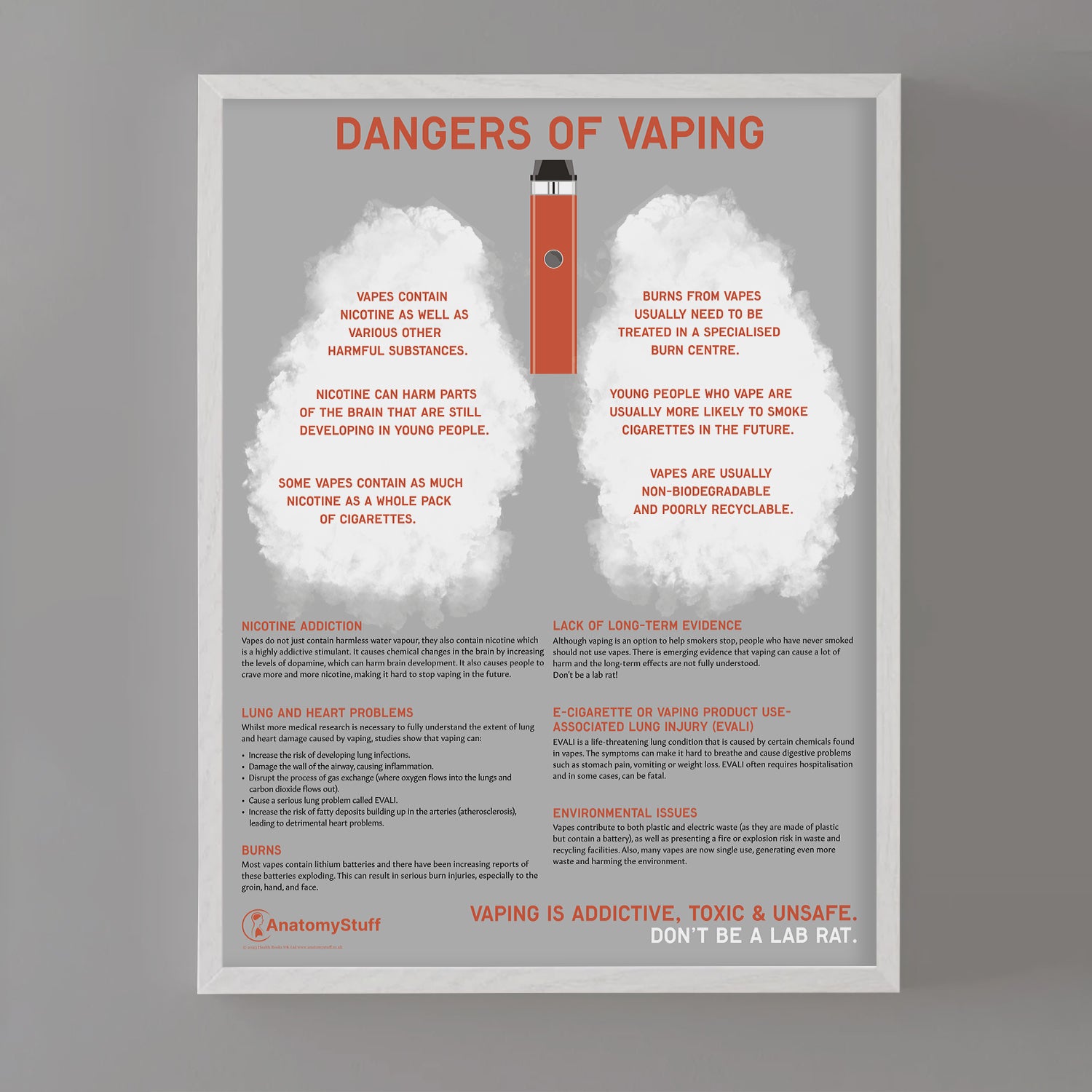
Many experts argue that vaping can be more addictive because of the high concentration of nicotine salts used in many pods. These salts are absorbed more quickly into the bloodstream and are less harsh on the throat, allowing users to inhale much higher doses of nicotine than they would from a traditional cigarette.
Can vaping actually cause depression?
Yes. While some use it to treat stress, nicotine alters the brain’s reward circuitry. Over time, this can lead to a decreased ability to experience pleasure from natural sources and can exacerbate underlying anxiety and depression, especially in the developing adolescent brain.
Are “organic” or “natural” e-liquids safe?
Not necessarily. Even “natural” flavorings can produce toxic compounds when heated to high temperatures. The risk comes not just from the ingredients, but from the chemical reaction (pyrolysis) that occurs during the heating process, as well as the metals leaching from the device hardware.
What are the first signs that a teenager might be vaping?
Common signs include a sudden increase in thirst (nicotine dehydrates), unexplained nosebleeds, a persistent dry cough, increased irritability or anxiety, and the presence of unusual electronic devices or strong-smelling liquids/gels in their belongings.
