Sandia researchers develop crystal sensors for intense fusion environments
Sandia National Laboratories has engineered robust crystal-based sensors to overcome diagnostic failures caused by intense electromagnetic interference.
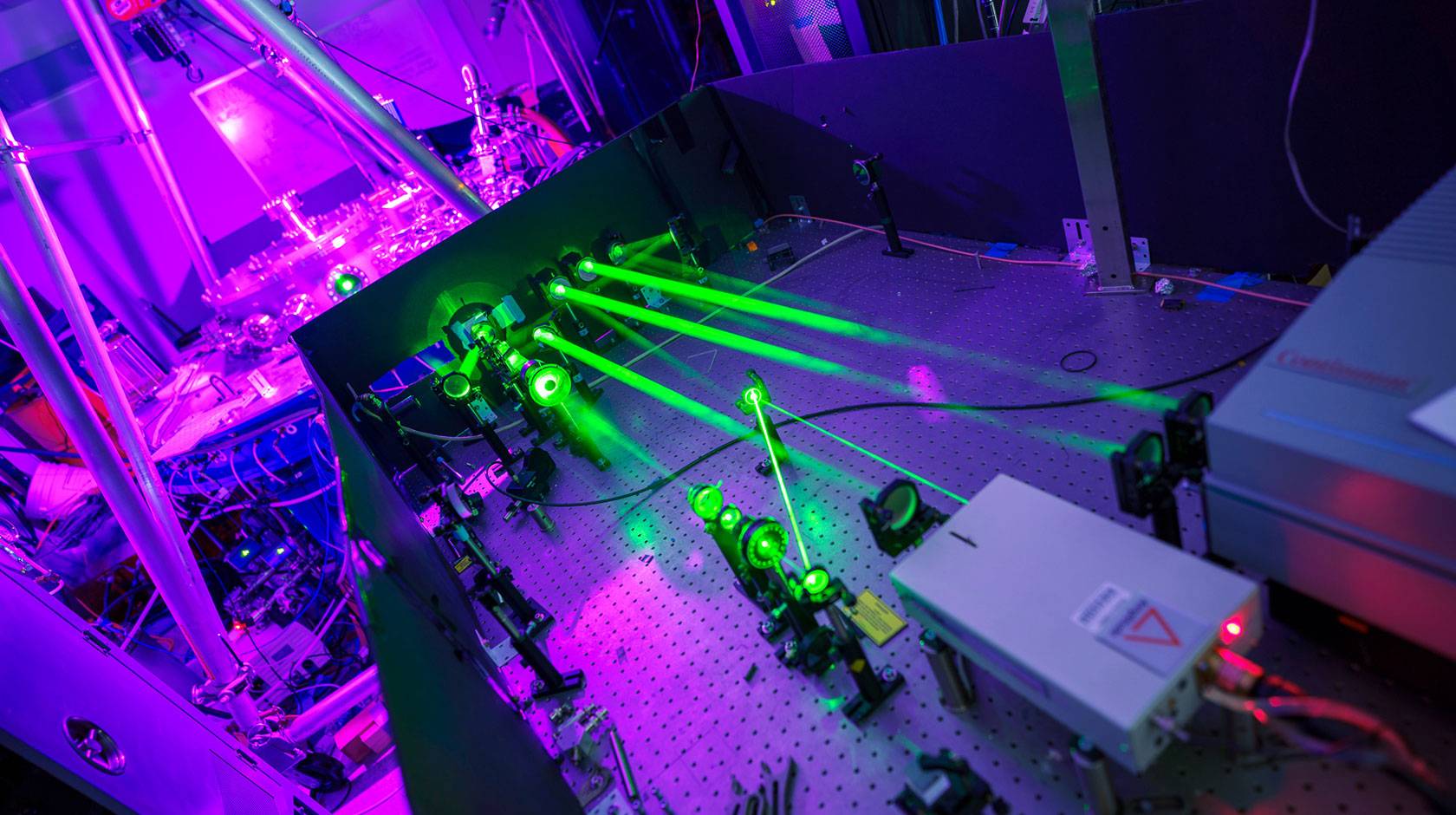
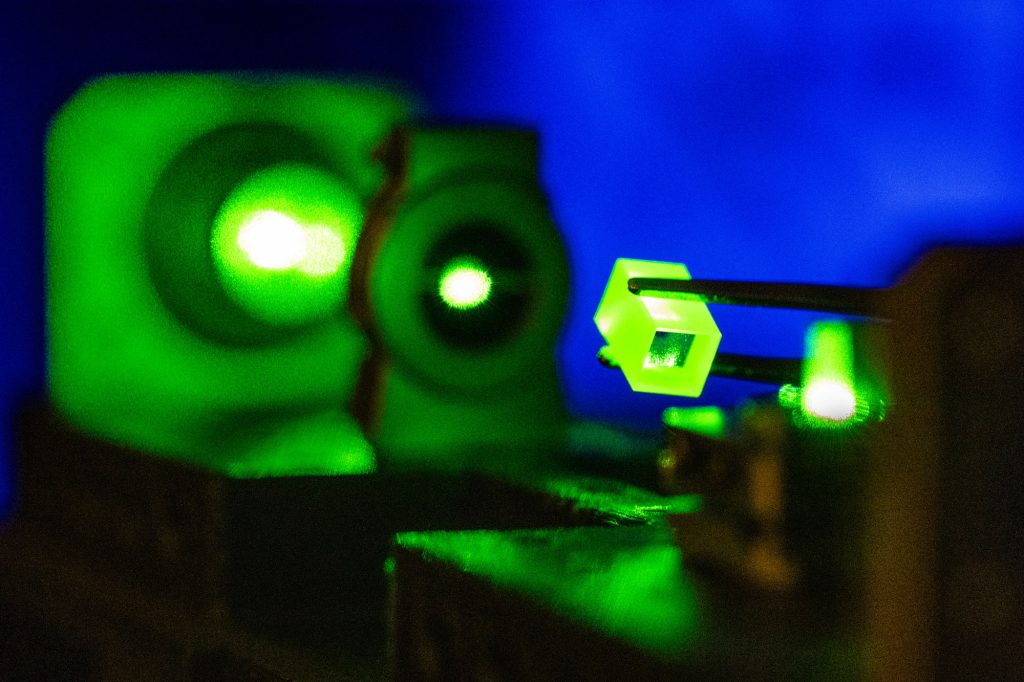
As fusion energy research moves toward commercial viability, the ability to monitor the internal conditions of a reactor has become a critical engineering hurdle. Researchers at Sandia National Laboratories announced the development of a new class of sensors designed to operate within the extreme environments of fusion reactors, high-energy physics experiments, and pulsed-power facilities. The sensors rely on rare earth crystals—specifically garnets—to measure intense magnetic fields that would otherwise destroy conventional diagnostic electronics.
The core of the technology involves a crystal roughly the size of a pencil eraser, composed of materials such as terbium scandium aluminum garnet or terbium gallium garnet. These dielectric materials serve as electrical insulators, a property that allows them to function in the presence of intense electromagnetic interference where traditional metallic sensors, such as B-dots, would short out. According to Sandia physicist and co-inventor Israel Owens, the system functions by passing laser light through the crystal. An external magnetic field parallel to the crystal rotates the polarization of the light; by measuring this rotation, researchers can determine the exact strength of the magnetic field.
Related media

Overcoming Diagnostic Limitations
Modern fusion experiments, such as those conducted on the Wendelstein 7-X stellarator or Sandia’s own Z Machine, require precise diagnostic data to understand plasma confinement. Fiber optic alternatives, while often used, face their own set of challenges, including darkening when exposed to radiation and a requirement for long cable lengths that can increase noise pickup and the risk of physical breakage.
The garnet-based sensors represent a shift toward robust, solid-state diagnostics. Testing performed by the Sandia team at the High-Energy Radiation Megavolt Electron Source III and the Short Pulse High Intensity Nanosecond X-Radiator (SPHINX) demonstrated that the crystal sensors perform as well as conventional devices while offering superior resistance to radiation. Furthermore, the team reported less statistical spread in measurements, suggesting higher precision. The project, which began in 2021, has already been granted a patent, and one company has secured a non-exclusive license option to pursue commercialization.
Broadening the Scope of Fusion Diagnostics
The pursuit of fusion-ready sensors is a multi-institutional priority. The University of California is currently backing a $8 million multi-campus effort to develop diamond-based sensors capable of detecting the nuclear "burn" products of fusion reactions. Because diamonds can withstand extreme radiation, they offer a durable substrate for particle detectors, a potential improvement over traditional silicon sensors that fail in high-radiation zones.
Complementary efforts in the field include:
- X-ray Imaging Crystal Spectrometers (XICS): Systems implemented on devices like the W7-X that monitor impurity transport by utilizing specialized crystals, such as indium antimonide, to track tungsten accumulation in plasma.
What to Watch Next
As the technology moves from the laboratory toward practical application, the Sandia team is scaling its testing protocols. Having validated the sensors in vacuum and air, researchers are now beginning tests in low-density plasma environments. The final, critical phase will involve testing the sensors within high-density plasmas comparable to those required for actual fusion power generation.
State and federal policy continues to accelerate this timeline. In California, legislative support aims to establish a pilot fusion plant by the 2040s, while the U.S. Department of Energy has identified fusion as a central component of future energy innovation.
Archypedia is dedicated to independent, evidence-backed reporting. This briefing was synthesized from primary source reporting, corroborated across independent newsrooms, and verified against our Editorial Standards.
Transparency record
Evidence behind this report
This report synthesizes 7 distinct sources. Open the source ledger below to compare the underlying coverage.
- miragenews.com
- newswise.com
- nature.com
- news.ucsc.edu
- w7-x.auburn.edu
- sandia.gov
- acoustics-research.physics.ucla.edu
Prepared under the Archypedia Editorial Policy by the Niko Vale editorial desk profile. AI-assisted tools may support drafting and verification; public accountability remains with Archypedia. Report an error.


