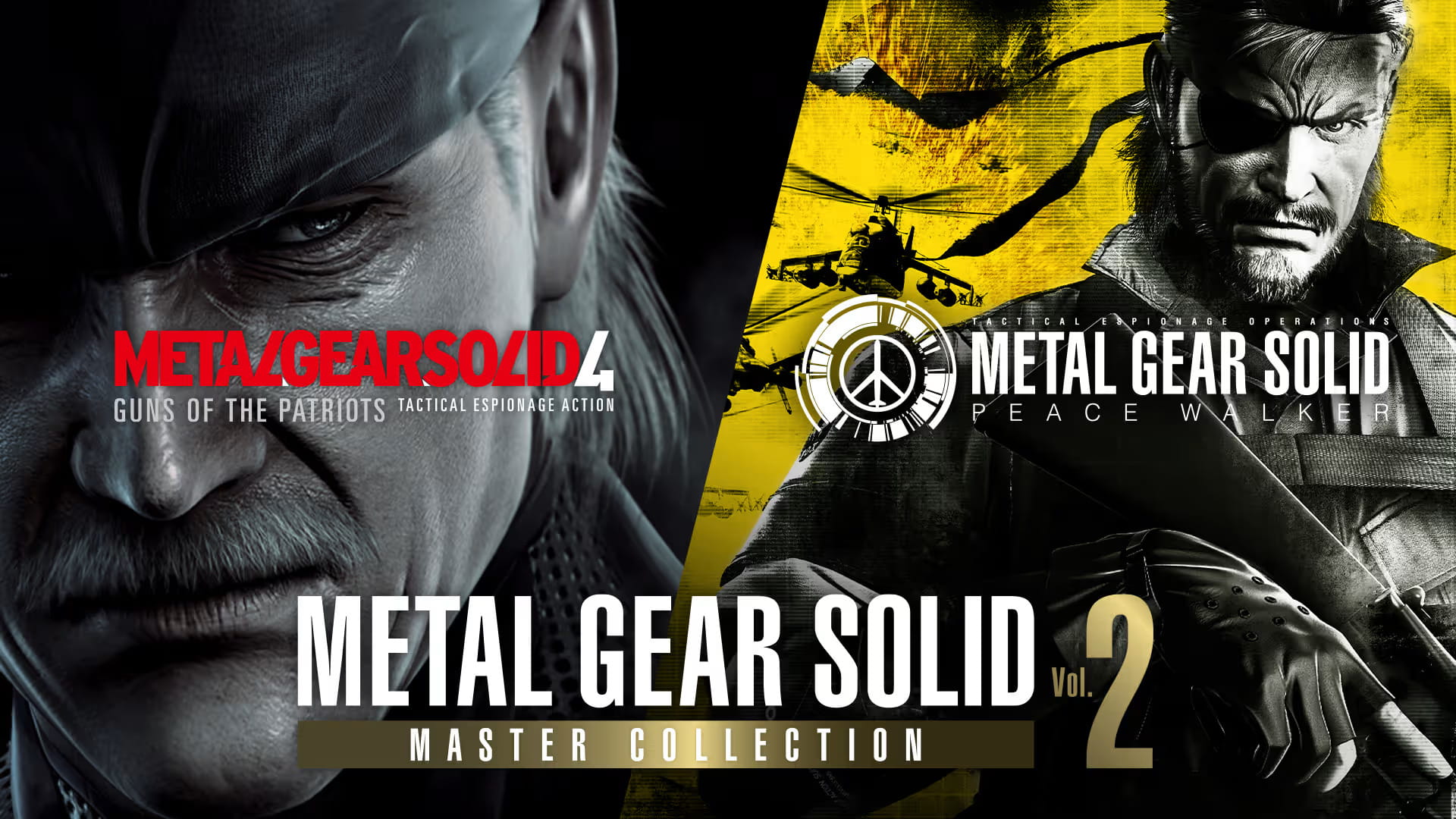
Metal Gear Solid Master Collection Vol 2 brings MGS4 to modern platforms
Konami's new compilation frees Metal Gear Solid 4 from its PS3 hardware prison with 4K and 60 FPS enhancements, though it notably omits the original multiplayer mode.

For more than a decade and a half, one of Hideo Kojima’s defining directorial achievements remained locked away in a hardware prison. Released in MeriStation's telling as a symbol of the PlayStation 3 generation, Metal Gear Solid 4: Guns of the Patriots
spent sixteen years stranded on discontinued architecture, requiring both physical ownership of the original disc and an unavoidable internal hard drive installation just to boot up, as Games.ch notes. That era of friction has officially ended. Konami's release of The Guardian's newly reviewed compilation frees the title alongside two distinct historical companion pieces, offering a major victory for video game preservation advocates while confronting modern players with stark omissions and a clunky dashboard design.
The core technical transformation of the headline title is substantial. Built originally around the complex Cell broadband engine, the fourth installment now runs smoothly at a locked sixty frames per second alongside native four-kilohertz resolution rendering on modern platforms, according to MeriStation and Cogconnected. This performance overhaul completely eradicates the volatile frame rate dips that originally plagued Old Snake's final mission, delivering more responsive combat and fluid movement across environments littered with the debris of proxy war economies. Yet, as MeriStation points out, the physical assets remain conservative; close inspection of character models and polygonal surroundings reveals the visual fingerprints of a production nearing its twentieth anniversary, even if its cinematic sequences retain their commanding presence.
Related YouTube video


Beyond the technical metrics, the compilation serves as an unsettling mirror to contemporary headlines. The Guardian observes that stepping back into the mercenary-driven battlefield evokes a sharp existential crisis, drawing chilling parallels between the fictional, real-time AI monitoring of corporate armies and modern real-world military training data harvested from digital simulations. While the fictional war economy rewards players with black-market currency for every weapon recovered from a fallen soldier, the package itself strips away its own historical multiplayer ecosystem. Konami has entirely omitted Metal Gear Online,
leaving the definitive fourth chapter completely devoid of its original player-versus-player component, a significant disappointment noted by CogConnected and Games.
Rounding out the bundle are two contrasting historical branches of the franchise. CogConnected highlights the inclusion of Peace Walker,
originally designed for PlayStation Portable with comic-book style storytelling and base-building mechanics that laid the groundwork for future franchise entries, complete with updated texture handling and cooperative online play for up to four users. Joining it is Metal Gear Solid: Ghost Babel,
the non-canonical Game Boy Color release praised by MeriStation for its crisp pixel art, VR missions, and the addition of a modern rewind function allowing players to reverse time after tactical blunders.
| Title | Original Platform & Year | Key Technical Upgrades | Notable Omissions |
|---|---|---|---|
| Metal Gear Solid 4: Guns of the Patriots | PlayStation 3 (2008) | Native 4K resolution, locked 60 FPS | Metal Gear Online (PvP) |
| Metal Gear Solid: Peace Walker | PlayStation Portable (2010) | Upscaled textures, adjustable control configurations | — |
| Metal Gear Solid: Ghost Babel | Game Boy Color (2000) | Rewind function, visual filters, screen borders | Canon continuity |
Navigating this historical archive, however, requires patience with the user interface. Similar to the first volume, each game appears as a separate icon rather than residing inside a unified software hub, a layout CogConnected criticizes for cluttering modern console dashboards. Furthermore, the accompanying MGS4 Database
tool contains structural blind spots, supplying exhaustive lore while omitting references to non-canonical spin-offs or events set after the year Metal Gear Solid V
in Afghanistan, according to Games.ch. Players seeking a comprehensive encyclopedic overview must cross-reference these gaps with the separate digital Master Books and screenplay scripts bundled into the main menu.
Preservation Milestones and Pricing Realities
The arrival of Konami’s compilation carries tangible economic and availability stakes for consumers eager to bridge decades of hardware fragmentation. According to The Guardian, the package launches on
For players diving into the restored campaigns, navigating the lack of introductory tutorials noted by Games.ch requires adapting quickly to mechanics left intentionally untouched by the development team. Because Konami approached the project as a preservation effort rather than a full remake, seasoned mechanics and interface quirks remain intact, allowing new audiences to experience the exact design choices that defined the PlayStation 3 era. As fans weigh the omission of multiplayer against the unprecedented hardware freedom, the next step relies on how communities engage with these liberated classics ahead of their widespread public launch.
How significant is this development?
Contribute your assessment to the aggregated reader intelligence ledger.
Archypedia is dedicated to independent, evidence-backed reporting. This briefing was synthesized from primary source reporting, corroborated across independent newsrooms, and verified against our Editorial Standards.
Transparency record
Evidence behind this report
This report synthesizes 4 distinct sources. Open the source ledger below to compare the underlying coverage.
Prepared under the Archypedia Editorial Policy by the Niko Vale editorial desk profile. AI-assisted tools may support drafting and verification; public accountability remains with Archypedia. Report an error.