Anker Unveils Sleep Earbuds 4 and EcoFlow Showcases River Gen4 at IFA 2026
From retail-ready AI sleep earbuds to 66-pound concept vacuums, IFA 2026 highlights a growing gap between immediate consumer releases and experimental engineering.

The exhibition halls of IFA 2026 in Berlin present a stark contradiction: a sprawling display of hardware pushing the physical limits of brightness and scale, yet frequently constrained by regional laws or a lack of commercial intent. While manufacturers are showcasing 10,000-nit televisions and 66-pound autonomous cleaning stations, a significant portion of the most striking technology remains trapped in the concept phase or is legally barred from entering the United States market.
This divide creates a fragmented experience for consumers. Practical, retail-ready upgrades in portable power and sleep tech are arriving this fall, but the high-end vision of the home — defined by AI-driven dental endoscopes and nested robot vacuums — exists primarily as a demonstration of engineering capability rather than a purchasable reality.
Related YouTube video

Retail Logistics: Sleep Tech and Portable Power
Among the verified consumer launches, Anker is expanding its sleep-focused audio line. The Soundcore Sleep Earbuds 4 are 20% slimmer than the previous Sleep A30 model, a design choice intended to improve comfort for side sleepers. According to Mashable, the standard model features an AI-generated dynamic snore masking system, while the "Pro" version adds an on-case display for adjusting alarms, changing tracks, and reviewing sleep metrics without a smartphone.
EcoFlow is pivoting toward higher portability with the River Gen4 series. The redesigned units are smaller than the River 3, targeting the camping market with a focus on weight-to-capacity ratios.
| Product | Capacity | Sustained/AC Output | Peak Output | Weight | Price/Availability |
|---|---|---|---|---|---|
| River 260 Gen4 | 256Wh | 300W | 600W | 6.5 lbs | U.S. TBD |
| River 520 Gen4 | 512Wh | 500W | 1,000W | 10 lbs | U.S. TBD |
| Sleep Earbuds 4 | N/A | N/A | N/A | N/A | $229.99 (Oct 2026) |
| Sleep Earbuds Pro 4 | N/A | N/A | N/A | N/A | $349.99 (Nov 2026) |
Engineering the Home: From Nested Robots to Dental Optics
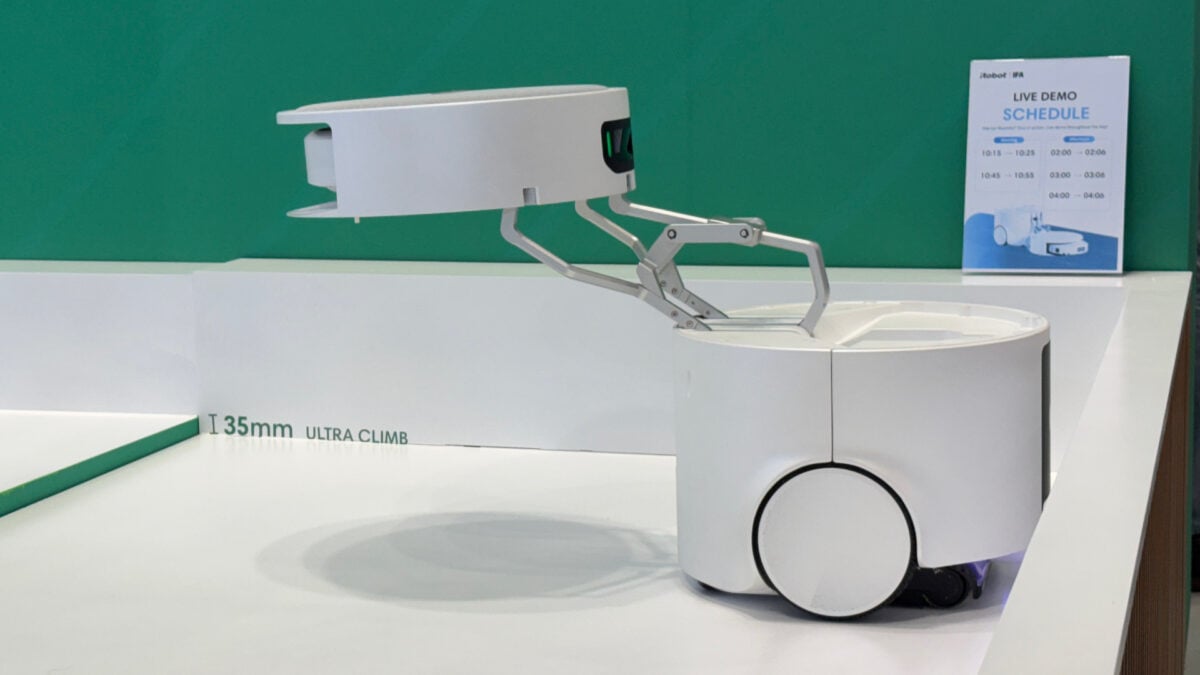
The most ambitious hardware on the floor involves multi-function integration that challenges existing form factors. IRobot showcased the Roomba Duo, described by a product manager via Gizmodo as a concept
to test market response. The unit is a 66-pound, two-foot-tall cylinder designed to replace stick vacuums with heavy-duty steam cleaning. Its primary innovation is a "Matryoshka" design: a cavity in the top unit houses a smaller Roomba Plus 575, which the base unit lowers to the ground to clean tight spaces where the larger bot cannot fit.
While the Duo remains a concept, iRobot's Roomba Max 875 Combo is a commercial reality priced at $1,199 in the U.S. According to Techwalls, the 875 Combo uses SealForce
technology, lowering a chassis skirt to create a tighter seal on carpets, paired with a vane-style blower delivering 35,000 Pa of suction.
Dyson is applying similar precision optics to personal care with the CameraJet toothbrush. Priced at $499.99, the device integrates a 100,000-pixel macro camera that captures 28 images per second. Using Gap Optical Targeting
, the AI identifies gaps between teeth and triggers targeted bursts of mouthrinse. The camera functions as a dental endoscope via the MyDyson app, though Dyson states images are not stored on the device or in the cloud.
The Display War and Regulatory Blockades
TCL is attempting to dominate the brightness metric with its SQD-Mini LED range. The flagship X11L reaches 10,000 nits of peak brightness and uses 20,736 dimming zones, according to PC Guide. This pushes the technical envelope far beyond the C7L model, which is capped at 3,000 nits and 2,176 dimming zones.
TCL is also experimenting with NXTPAPER AMOLED
in its P80 Series smartphones, attempting to blend OLED contrast with E-Ink's reduced glare. The P80 Ultra features a 6.83-inch display with a 120Hz refresh rate and a 50MP 3x periscope telephoto camera.
The DJI Osmo 360 II, which introduces 8K panoramic footage and 14.5 stops of dynamic range, is currently unavailable in the U.S. Due to regulations, as reported by Mashable. Similarly, Tecno's "Bezelless Concept Smartphone", which features a 6.78-inch 1.5K OLED display tucked under a metal frame, is not slated for commercial release. Tecno has provided no production timeline for the device, which runs on a MediaTek Dimensity 7400e processor.
Expanding the Ecosystem: Creator Tools and Smart Mobility
Beyond home automation, the exhibition floor highlights a push into modular creator hardware and urban mobility. Dreame is entering the action camera market with the Leaptic Cube 8K, which Mashable describes as remarkably lightweight. The device features a modular design that allows for the addition of extra batteries and includes accessory packages for underwater exploration, cycling, and mounting to pets. Dreame has set a U.S. Launch for November 2026 with a price of $449.
In the mobility sector, AOTOS showcased the Flux X26 Pro, a smart e-bike featuring a 1,500W rated motor and 2,000W peak power. According to Techwalls, the bike uses Keyless Access
via NFC, proximity sensing, or a passcode, and uses 20×4-inch fat tires for city roads.
This diversification reflects the broader "AI Inspired Life" theme promoted by TCL at its Inspiration Habitat in Hall 21A. This ecosystem integrates not only the P80 Series smartphones but also connected watches and laundry solutions. For those prioritizing screen quality over mobility, TCL's TAB A1 NXTPAPER tablet provides a 120Hz refresh rate and 33W charging to supplement the NXTPAPER experience found in their phones.
The immediate commercial horizon is now defined by specific autumn deadlines. While the Dreame Leaptic Cube 8K and Anker's Sleep Earbuds 4 are slated for October and November, the next step for the more experimental hardware remains dependent on how manufacturers interpret the market response gathered during the IFA event.
The ultimate commercial viability of these high-end experiments remains undecided. While retail dates are set for Anker and Dreame's Leaptic Cube 8K, the heavy-duty Roomba Duo lacks both a price point and a confirmed production window, leaving its transition from a 66-pound showpiece to a household appliance an open question.
Archypedia is dedicated to independent, evidence-backed reporting. This briefing was synthesized from primary source reporting, corroborated across independent newsrooms, and verified against our Editorial Standards.
Transparency record
Evidence behind this report
This report synthesizes 4 distinct sources. Open the source ledger below to compare the underlying coverage.
Prepared under the Archypedia Editorial Policy by the Niko Vale editorial desk profile. AI-assisted tools may support drafting and verification; public accountability remains with Archypedia. Report an error.