Beyond the Event Horizon: How Supermassive Black Holes Could Be the Universe’s Biggest Planet Nurseries
For decades, the scientific consensus regarding supermassive black holes has been one of absolute destruction. These gravitational behemoths, lurking at the centers of nearly every large galaxy, were viewed as the ultimate cosmic vacuum cleaners—entities that devour stars, shred gas clouds, and erase any trace of matter that wanders too close. However, a paradigm-shifting perspective is emerging in the field of astrophysics, suggesting that these celestial monsters might actually be the most prolific creators in the cosmos. The provocative idea that supermassive black holes could be the universe’s biggest planet nurseries – Phys.org highlights a startling irony: the incredibly environment once thought to be the most hostile in existence may actually provide the ideal conditions for the birth of new worlds.
This theoretical reversal transforms our understanding of galactic evolution. If planets can form within the swirling disks of matter surrounding a black hole, it means that planetary systems are not exclusive to the quiet suburbs of a galaxy—like our own Solar System—but can thrive in the most violent, high-energy regions of the universe. This discovery doesn’t just rewrite the textbooks on planetary science; it expands the potential map for where life, or at least the building blocks of planetary bodies, could exist.
The Mechanics of Chaos: Turning Accretion Disks into Cradles
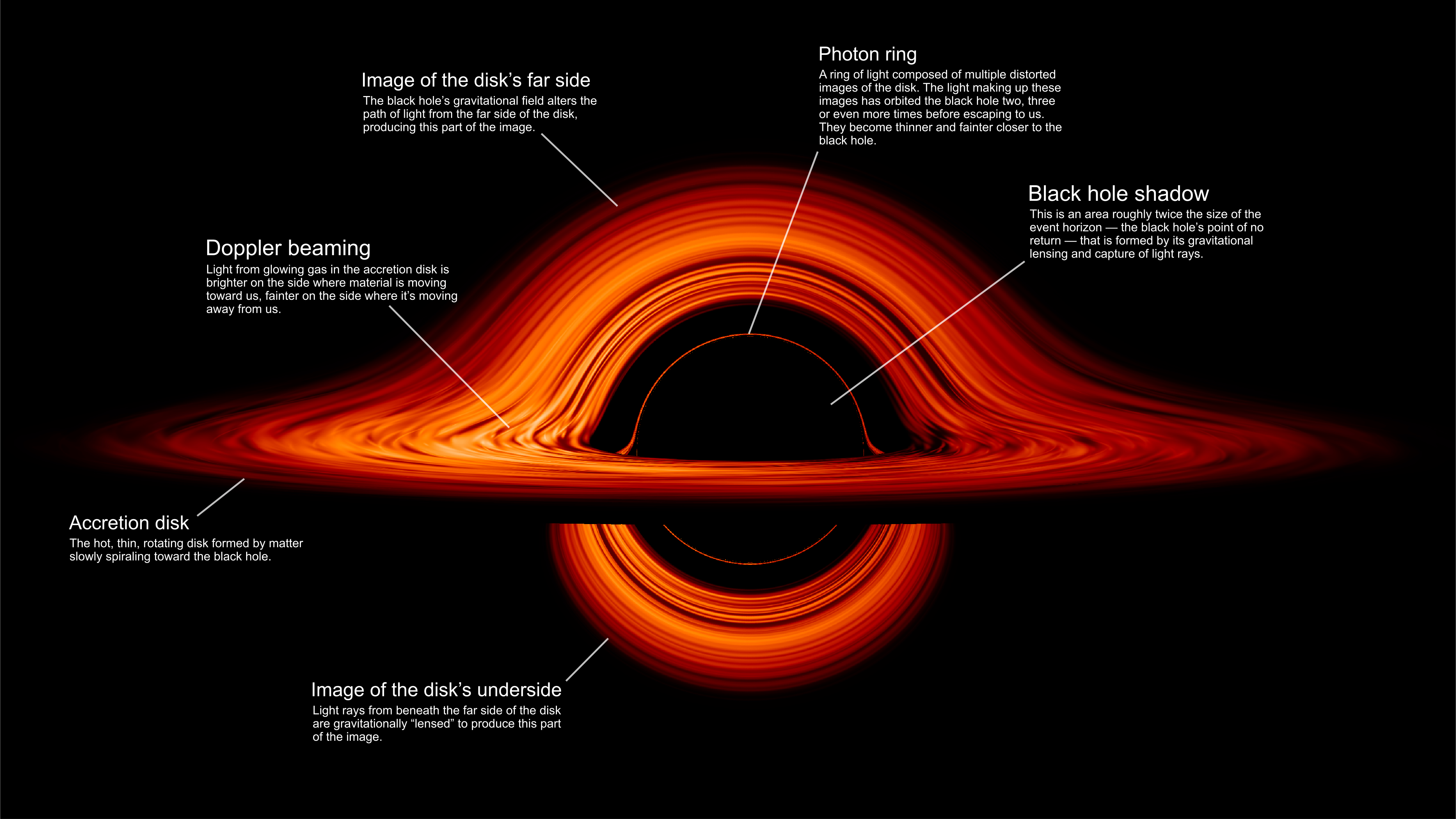
To understand how a black hole can act as a “nursery,” one must first understand the structure of an accretion disk. As a supermassive black hole pulls in surrounding gas, dust, and the remnants of captured stars, this material does not fall straight in. Instead, it spirals inward, forming a massive, rotating disk of plasma and debris known as an accretion disk. These disks are incredibly dense and reach staggering temperatures due to friction and gravitational compression.
In traditional planetary formation, planets emerge from a protoplanetary disk surrounding a young star. Small grains of dust collide and stick together, eventually forming planetesimals, which then grow into full-scale planets. The environment around a supermassive black hole operates on a much grander, more violent scale, but the fundamental physics of gravitation and accumulation remain similar.
Astrophysicists propose that within these accretion disks, there are “stable zones” where the outward pressure of radiation and the inward pull of gravity reach a delicate equilibrium. In these regions, the gas and dust can become sufficiently dense to trigger gravitational collapse. Rather than being sucked into the void, the matter clumps together, forming massive planetary cores.
“The transition from a chaotic disk of plasma to a structured planetary body requires a specific balance of thermal pressure and gravitational attraction. In the dense environment of an active galactic nucleus, these conditions may be met more frequently than we previously imagined.”
Key Factors Driving Planet Formation in Black Hole Disks
- High Material Density: Accretion disks provide a concentrated reservoir of heavy elements and gas, far exceeding the density of many stellar nebulae.
- Centrifugal Balance: The rapid rotation of the disk creates a centrifugal force that prevents all matter from immediately crossing the event horizon, allowing “pockets” of stability.
- Gravitational Instability: When a section of the disk becomes too heavy, it collapses under its own weight, bypassing the slow “dust-grain” process and forming planets rapidly.
Comparing Planetary Birth: Stellar vs. Supermassive Environments
The process of creating a planet around a star is vastly different from the process occurring in the heart of a galaxy. While both rely on gravity, the scales of time, mass, and energy are entirely different. To better understand this, we can compare the two environments across several critical dimensions.
| Feature | Stellar Protoplanetary Disk | SMBH Accretion Disk |
|---|---|---|
| Primary Energy Source | Nuclear Fusion (Young Star) | Gravitational Energy & Friction |
| Formation Speed | Millions of Years | Potentially much faster due to density |
| Material Availability | Limited to the local molecular cloud | Massive influx from galactic center |
| Stability | Relatively stable for eons | Highly volatile; subject to AGN flares |
| Radiation Levels | Moderate (UV/X-ray) | Extreme (Gamma/X-ray) |
While the SMBH environment is far more volatile, the sheer volume of available material suggests that these “nurseries” could produce planets in quantities and sizes that dwarf those found in typical star systems. This suggests a universe where “super-planets” might be common in the galactic centers, even if they are difficult for us to observe from a distance.
The Hostility Paradox: Can These Planets Survive?
The most immediate question arising from the theory that supermassive black holes could be the universe’s biggest planet nurseries – Phys.org is one of survival. The environment surrounding a supermassive black hole is an onslaught of radiation. Active Galactic Nuclei (AGN) emit powerful jets of particles and intense X-ray radiation that would strip the atmosphere off a standard Earth-like planet in a matter of hours.
However, survival depends entirely on the orbit and composition of the planet. If a planet forms far enough away from the event horizon—outside the most intense radiation zones but still within the accretion disk—it might maintain a stable orbit. These planets would likely be massive gas giants or incredibly dense rocky worlds capable of withstanding higher gravitational stresses.
The Role of Magnetic Shielding
For a planet to survive in such a region, it would need an extraordinary magnetic field. In our own Solar System, Earth’s magnetic field protects us from solar wind. A planet born in a black hole nursery would require a “super-magnetosphere” to deflect the lethal radiation of the accretion disk. If the planet’s core is composed of highly conductive liquid metals and rotating rapidly, it could theoretically generate a shield strong enough to preserve its structural integrity.
the “habitable zone” in this context is not defined by the warmth of a sun, but by the balance between the black hole’s radiation and the cooling effects of the surrounding interstellar medium. This creates a theoretical “ring of habitability” where temperatures could, in theory, allow for liquid water, provided the radiation is shielded.
Implications for Astrobiology and the Search for Life
If planets can form in the most extreme environments in the universe, the implications for astrobiology are profound. For years, the search for extraterrestrial intelligence (SETI) and the search for exoplanets have focused on “G-type” stars similar to our Sun. But if SMBHs are indeed planet factories, we must expand our search parameters.
The idea of life evolving around a black hole sounds like science fiction, but from a chemical perspective, the ingredients are all there. Carbon, nitrogen, and oxygen are abundant in the gas clouds that feed black holes. If a planet can maintain a stable atmosphere and a protective magnetic field, the energy provided by the accretion disk could potentially drive biological processes, replacing photosynthesis with a form of “radiosynthesis.”
This expands the “real estate” for potential life in the universe by orders of magnitude. Instead of looking only at the quiet edges of galaxies, we may need to consider that the most densely populated regions of the universe are actually the galactic cores, hidden behind veils of dust and gas.
For those interested in how we detect such distant worlds, a related explainer on gravitational lensing provides insight into how astronomers can “see” objects that are otherwise invisible.
Correcting Common Misconceptions About Black Hole Planets
When discussing planets near black holes, several common myths often cloud the scientific reality. It’s important to distinguish between the “pop culture” version of black holes and the astrophysical reality.
Myth 1: “Spaghettification” happens to everything
The famous “spaghettification” (tidal disruption) occurs when an object crosses the event horizon or gets extremely close to a stellar-mass black hole. However, supermassive black holes have a much larger Schwarzschild radius. Paradoxically, the tidal forces at the event horizon of a supermassive black hole are much weaker than those of a small one. A planet could orbit a supermassive black hole at a significant distance—and even cross the horizon in some theoretical models—without being immediately ripped apart.
Myth 2: Black holes “suck” everything in like vacuums
Black holes do not “suck”; they exert gravity. If you replace our Sun with a black hole of the exact same mass, Earth would not be sucked in; it would continue to orbit in the exact same path, albeit in the dark. The “nurseries” mentioned in recent theories exist because the material in the accretion disk has enough angular momentum to stay in orbit rather than falling straight in.
Myth 3: These planets are “dark” and frozen
While there is no star, the accretion disk itself is one of the brightest objects in the universe. A planet orbiting within or near this disk would be bathed in intense light and heat. These worlds would not be frozen wastes but potentially scorched landscapes or glowing gas giants.
The Path Forward: How We Will Prove the Theory
Currently, the idea that supermassive black holes could be the universe’s biggest planet nurseries – Phys.org is largely supported by computer simulations and mathematical models. Detecting a planet orbiting a black hole millions of light-years away is a monumental challenge for current technology. However, several upcoming advancements could provide the “smoking gun” evidence.
- Next-Generation Interferometry: By linking telescopes across the globe, astronomers can achieve the resolution necessary to see “wobbles” in the accretion disks caused by the gravitational pull of orbiting planets.
- Gravitational Wave Astronomy: When a planet is eventually consumed by its host black hole, it may create a specific gravitational wave signature—an “extreme mass-ratio inspiral” (EMRI)—that detectors like LISA (Laser Interferometer Space Antenna) could identify.
- Advanced Spectroscopy: By analyzing the light coming from AGN, scientists can look for the “chemical fingerprints” of planetary atmospheres, such as methane or water vapor, swirling within the disk.
As our tools improve, the transition from theoretical modeling to empirical observation will likely reveal that the centers of galaxies are far more complex and crowded than we ever dared to imagine.
Frequently Asked Questions
Can a planet actually orbit a black hole without being swallowed?
Yes. Just as planets orbit stars, a planet can maintain a stable orbit around a black hole as long as it is outside the Innermost Stable Circular Orbit (ISCO). The centrifugal force of its orbital velocity balances the gravitational pull of the black hole.
Would a planet in a black hole nursery have a day/night cycle?
It would be different from Earth’s. Instead of a single sun, the planet would be illuminated by the glowing accretion disk. Depending on its position, it might have one side permanently facing the disk (tidal locking) or experience a flickering light pattern as it passes through different densities of the disk.
Are these “black hole planets” the same as rogue planets?
No. Rogue planets are worlds that have been ejected from their home systems and wander interstellar space in total darkness. Planets in black hole nurseries are actively orbiting a massive gravitational center and are often surrounded by high-energy plasma.
Is it possible for life to evolve in such a high-radiation environment?
While unlikely by human standards, it is theoretically possible. Life would need extreme adaptations, such as thick metallic shells or biological mechanisms to repair DNA radiation damage instantly. The energy from the accretion disk could potentially power such life forms.
How do we know the accretion disks have enough “stuff” to make planets?
Observations of Active Galactic Nuclei (AGN) show that they are fed by massive inflows of gas and dust from the host galaxy. The density of this material in the disk is often high enough to meet the thresholds required for gravitational instability and planet formation.
The realization that the universe’s most feared objects may also be its most productive creators changes the way we view the cosmic lifecycle. From the wreckage of dead stars and the hunger of supermassive voids, new worlds emerge. This cycle of destruction and creation suggests that the universe is far more resilient and imaginative in its architecture than we previously believed. As we peer deeper into the galactic centers, we may find that the dark heart of the galaxy is not a graveyard, but a bustling metropolis of alien worlds, waiting to be discovered.
