Ample Inventories May Soften El Nino Global Food Supply Shock – Japan Today
Global food supply shocks triggered by a “Super El Niño” may be mitigated by current ample inventories, according to reports from Japan Today. While the United Nations warns that accelerating climate shocks threaten already vulnerable regions, existing stockpiles of essential grains could prevent the extreme price volatility and acute shortages seen in previous weather-driven crises.
How Do Ample Inventories Mitigate El Niño Food Shocks?
The presence of significant global food reserves acts as a strategic buffer against the immediate production losses caused by extreme weather. According to Japan Today, these inventories can bridge the gap between a failed harvest and the next successful growing season, preventing the sudden supply vacuum that typically drives commodity prices upward.
When a “Super El Niño” disrupts rainfall patterns, key exporting nations may see yields drop. However, if global silos are full, the market does not react with the same panic. Traders and governments can release stored reserves to stabilize prices, ensuring that a local crop failure does not immediately translate into a global price spike. This mechanism is critical for maintaining stability in the global food trade, as it reduces the incentive for exporting countries to implement protectionist bans on food exports.
- Price Stabilization: Stockpiles prevent “panic buying” by national governments.
- Supply Continuity: Reserves ensure that food reaches importing nations even during transit or production delays.
- Market Confidence: High inventory levels signal to traders that the system can withstand a temporary shock.
What Is a “Super El Niño” and Why Does It Threaten Farmers?
El Niño is a climate pattern characterized by the unusual warming of surface waters in the eastern tropical Pacific Ocean. A “Super El Niño” refers to an event where these temperature anomalies are significantly higher than average, leading to more extreme weather disruptions worldwide. According to Mother Jones, this phenomenon is particularly devastating for farmers who rely on predictable seasonal rainfall.
The mechanism of El Niño shifts atmospheric circulation, often bringing torrential rains and flooding to some regions while causing severe droughts in others. For agricultural producers, this unpredictability is catastrophic. In Southeast Asia and Australia, El Niño typically manifests as drought, which can wither corn and rice crops before they reach maturity. Conversely, other regions may experience flooding that washes away topsoil and destroys harvests.
The United Nations reports that these climate shocks are accelerating, hitting regions that are already struggling with economic instability or previous environmental degradation. The intersection of a “Super El Niño” with existing vulnerabilities creates a compounding effect, where a single bad season can push a region from food insecurity into a full-scale humanitarian crisis.
| Region | Typical El Niño Impact | Primary Agricultural Risk |
|---|---|---|
| Southeast Asia | Severe Drought | Rice and Palm Oil yield collapse |
| Australia | Reduced Rainfall / Heatwaves | Wheat and Livestock fodder shortages |
| South America | Heavy Rainfall / Flooding | Soybean and Maize transport disruptions |
| East Africa | Erratic Precipitation | Maize and legume crop failure |
Why Is the Financial Market Reacting to Climate Volatility?
For financial markets, a “Super El Niño” is not just a humanitarian concern but a driver of commodity volatility. According to Bloomberg, stock traders and hedge funds view these climate events as catalysts for price swings in agricultural futures. When weather forecasts indicate a high probability of a Super El Niño, traders begin pricing in the risk of crop failures long before the first plant withers.
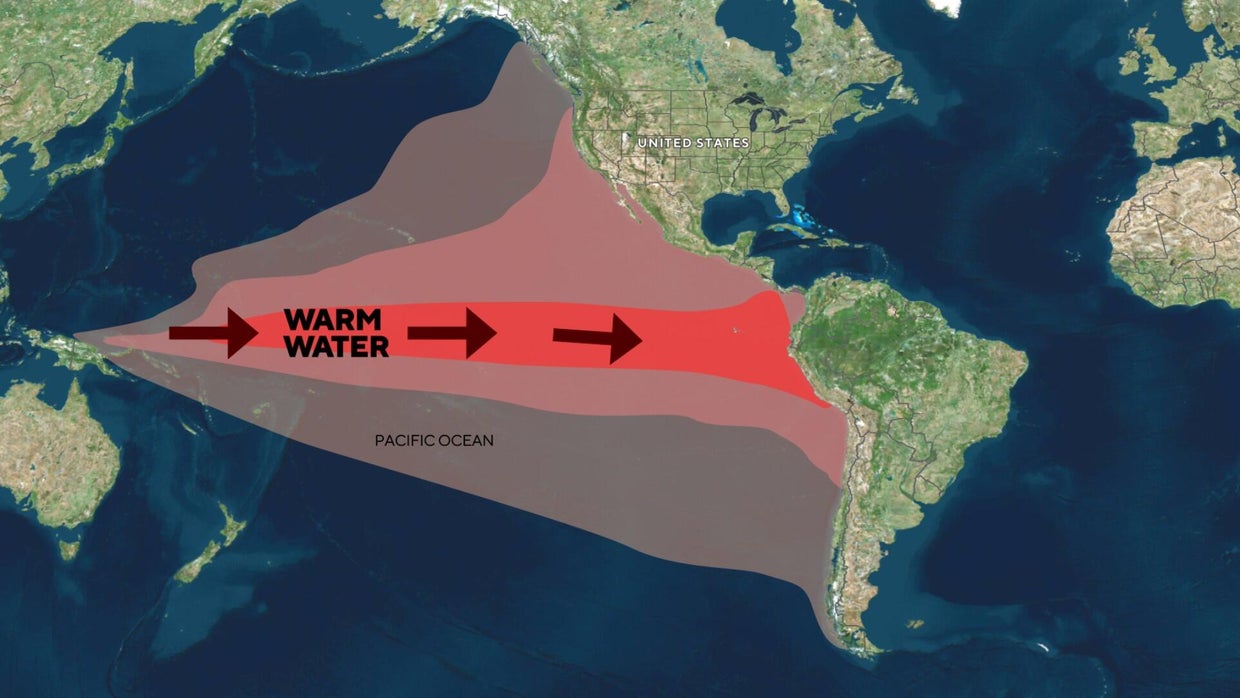
This speculative activity can create a feedback loop. As traders buy “long” positions on wheat, corn, or soy futures, the price of these commodities rises. This price increase can hit consumers at the grocery store even if the physical supply of food is still adequate. The “trader’s guide” to navigating these events involves monitoring sea surface temperature (SST) anomalies and atmospheric pressure changes to predict which specific crops will be most affected.
Bloomberg notes that the financial impact extends beyond the food itself. Energy markets are also affected, as hydropower generation may drop during droughts, increasing the cost of electricity and, by extension, the cost of processing and transporting food. This creates a secondary inflationary pressure on the global food supply chain.
“The volatility seen in commodity markets during a Super El Niño is often as much about the expectation of shortage as it is about the actual loss of crops.”
Comparing the “Systemic Collapse” vs. “Mitigated Shock” Narratives
There is a stark contrast in how different outlets frame the risks associated with the current climate trajectory. On one end, News.com.au describes the potential for El Niño to act as a “final trigger” that could break the world, suggesting that the global system is so fragile that one more massive shock could lead to systemic collapse.
In contrast, the analysis from Japan Today suggests a more tempered outlook, arguing that the global food system possesses enough resilience—specifically through ample inventories—to soften the blow. While the United Nations emphasizes the acceleration of shocks, their focus is primarily on the “vulnerable regions” rather than a total global collapse.
This divergence in framing highlights a key tension in climate reporting: the difference between macro-stability and micro-catastrophe. While the global average price of grain might remain stable due to stockpiles (macro-stability), a small-scale farmer in a vulnerable region may still lose everything (micro-catastrophe). The “softening” of the shock mentioned by Japan Today refers to the global economic aggregate, not necessarily the individual experience of the world’s poorest farmers.
Differing Perspectives on El Niño Impact
- The Catastrophic View (News.com.au): Frames El Niño as a tipping point for global stability, focusing on the potential for cascading failures across food, water, and political systems.
- The Resilience View (Japan Today): Focuses on the logistical buffers, such as grain reserves, that prevent a production dip from becoming a global famine.
- The Humanitarian View (United Nations): Highlights the disproportionate impact on the Global South, where the lack of local inventories makes the “softening” effect of global reserves irrelevant.
- The Market View (Bloomberg): Treats the event as a volatility engine, focusing on hedging strategies and the pricing of risk in agricultural futures.
The Role of Vulnerable Regions in the Global Supply Chain
The United Nations warns that the threat of El Niño is most acute in regions where infrastructure is poor and social safety nets are non-existent. In these areas, the “ample inventories” cited by Japan Today are often inaccessible. While a global reserve might exist in a silo in the Midwest United States or the plains of Ukraine, the cost of transporting that food to a drought-stricken village in East Africa during a crisis can be prohibitive.

Furthermore, these vulnerable regions often suffer from “climate acceleration.” This means that the time between extreme weather events is shrinking, leaving farmers with no time to recover their capital or soil health between shocks. When a Super El Niño hits, it does not hit a healthy system; it hits a system already weakened by previous droughts, floods, and economic instability.
The risk for these regions is not just food availability, but food affordability. Even if the global supply is sufficient to prevent a shortage, the price spikes driven by market speculation (as noted by Bloomberg) can make basic staples unaffordable for the world’s poorest populations. This creates a paradox where the world has enough food, but millions cannot afford to eat.
For more on how climate patterns affect specific agricultural zones, see our related explainer on global crop volatility.
Common Misconceptions About El Niño and Food Security
A frequent oversimplification is the belief that El Niño causes a global food shortage. In reality, El Niño rarely causes a total global deficit in calories. Instead, it causes a geographic redistribution of production. While one region suffers a drought, another may experience a bumper crop due to increased rainfall.
Another misconception is that “ample inventories” solve the problem for everyone. As discussed, inventories solve the problem of aggregate supply, but they do not solve the problem of distribution or local affordability. A high global inventory level does not guarantee that food will be available in a remote, conflict-torn region during a climate shock.
Finally, some believe that El Niño is a purely natural cycle unrelated to human activity. While El Niño is a natural phenomenon, the United Nations and other climate bodies suggest that the increasing intensity and frequency of “Super” events are linked to broader atmospheric warming, which amplifies the natural cycle’s effects.
Key Factors Influencing Food Security During El Niño
- Logistics: The ability to move food from surplus regions to deficit regions quickly.
- Trade Policy: Whether nations keep their borders open or implement export bans to protect domestic supply.
- Local Storage: The presence of community-level granaries versus reliance on global imports.
- Currency Strength: The ability of importing nations to afford commodities priced in US dollars during price spikes.
What to Monitor in the Coming Seasons
To determine if the “softening” effect of inventories holds true, analysts are monitoring several key indicators. First is the “Stock-to-Use Ratio” for major grains like wheat and corn. A high ratio indicates that the world has enough reserves to cover a significant percentage of annual consumption, supporting the Japan Today thesis.
Second is the behavior of major exporting nations. If countries like India or Brazil implement export restrictions on rice or soy to combat domestic inflation, the “buffer” provided by global inventories is effectively neutralized, as those stocks are removed from the international market.
Third is the sea surface temperature (SST) in the Niño 3.4 region of the Pacific. If temperatures exceed the threshold for a “Super” event, the pressure on agricultural yields will likely outweigh the benefits of current inventories, leading to the volatility Bloomberg predicts.
For those tracking the economic fallout, monitoring the related analysis on commodity futures will provide insight into how the market is pricing these risks in real-time.
Frequently Asked Questions
Will El Niño make my groceries more expensive?
According to analysis from Bloomberg and Japan Today, it depends on the scale of the event. While ample global inventories can prevent a massive price surge, speculative trading and local crop failures can still lead to price increases for specific items, such as coffee, cocoa, or certain grains.

What is the difference between El Niño and a “Super El Niño”?
El Niño is the periodic warming of the Pacific Ocean. A “Super El Niño” is an exceptionally strong version of this event, with sea surface temperature anomalies significantly higher than average, leading to more extreme and widespread weather disruptions, as reported by Mother Jones.
Can global food reserves really stop a famine?
Global reserves prevent a total collapse of the food supply, but the United Nations notes they do not automatically stop local famines. Famine is often caused by a combination of crop failure, political instability, and a lack of distribution infrastructure, rather than a total global lack of food.
Which crops are most at risk during an El Niño event?
Crops that are highly sensitive to rainfall patterns are most at risk. This includes rice and palm oil in Southeast Asia, wheat in Australia, and corn and soybeans in parts of the Americas, depending on whether the region experiences drought or excessive flooding.
Why do traders care about ocean temperatures?
Ocean temperatures in the Pacific are the primary driver of the El Niño-Southern Oscillation (ENSO). Because these temperatures dictate global weather patterns, they serve as a leading indicator for crop yields, allowing traders to predict supply shocks months in advance.
