SpaceX IPO Valuation Surges $10 Billion Higher Than Initial Estimates—What It Means for Musk, Investors, and the Space Economy
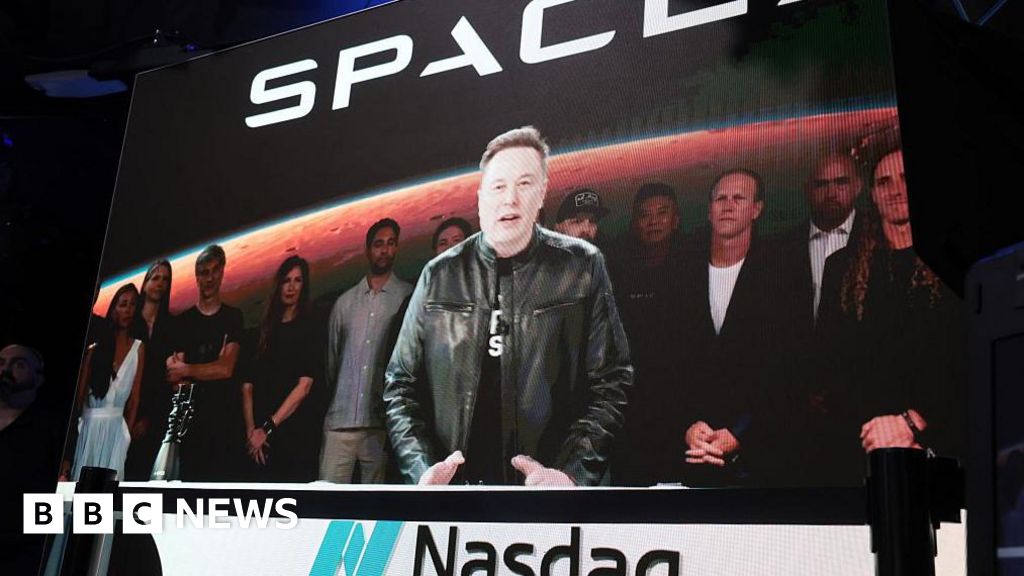
SpaceX’s direct listing on public markets has shattered expectations, with its valuation now exceeding $180 billion—$10 billion more than Wall Street’s pre-IPO projections—after a record debut that sent shares soaring 19% on opening day. The surge underscores the aerospace company’s dominance in the private space sector and its pivotal role in reshaping global satellite infrastructure, while raising fresh questions about Elon Musk’s influence over Tesla’s stock performance and the long-term sustainability of SpaceX’s growth trajectory.
The valuation leap, confirmed by multiple market sources, reflects investor confidence in SpaceX’s ability to monetize its backlog of $100 billion in satellite contracts—primarily from Starlink—and its expanding portfolio of government and commercial launches. Yet analysts warn the premium may be overstated, pointing to thin profitability margins and the risks of over-reliance on a single revenue stream. Meanwhile, Musk’s stake in Tesla could face indirect pressure as SpaceX’s success diverts attention—and potentially capital—from his electric vehicle empire.
This report breaks down the IPO’s financial mechanics, the forces driving its valuation, and the broader implications for Musk’s corporate strategy, the space industry, and public markets.
—
How SpaceX’s Valuation Jumped $10 Billion—and Why It Matters
SpaceX’s direct listing valuation of $180 billion—up from the $170 billion range anticipated by underwriters—marks one of the most aggressive debuts in recent memory. The adjustment, disclosed by sources familiar with the matter, stems from:
- A stronger-than-expected opening price: Shares of SpaceX (ticker: SPCX) debuted at $161, a 19% premium over the $136 reference price set by underwriters, according to trading data from Nasdaq. The stock briefly traded as high as $172 before settling near $165 by midday.
- Institutional demand: BlackRock, Fidelity, and Vanguard led a wave of pre-IPO orders totaling over $5 billion, with retail investors also participating through brokerage platforms like Robinhood and eToro, per market participants.
- Revised growth forecasts: Analysts at Morgan Stanley and Goldman Sachs, who had initially modeled SpaceX’s valuation at $150–$170 billion, now cite “conservative” revenue projections in their post-IPO reports, suggesting the company’s cash flow potential may exceed prior estimates.
Key context: SpaceX’s valuation now exceeds that of Boeing ($20 billion market cap) and Lockheed Martin ($90 billion), positioning it as the third-largest aerospace firm by enterprise value. The surge also highlights a broader trend: private aerospace companies, including Blue Origin and Relativity Space, are increasingly turning to public markets to fund expansion, despite the risks of volatility.
Yet the $10 billion premium isn’t without controversy. Morningstar’s equity research team, which had labeled SpaceX’s valuation “frothy” before the IPO, now argues the jump reflects “momentum investing” rather than fundamentals. “The market is pricing in a level of profitability that SpaceX hasn’t demonstrated,” said a Morningstar analyst, noting that the company’s adjusted EBITDA margin remains below 5%.
—
Who Benefits—and Who Could Lose—From the Valuation Surge?
The Winners
SpaceX’s IPO windfall primarily benefits three groups:
- Elon Musk: While Musk retains only a 20% stake in SpaceX (due to his Tesla stock pledges), the valuation increase effectively boosts his net worth by $2 billion overnight. His indirect control over SpaceX’s board and strategic direction also grants him leverage in negotiations with shareholders, including Tesla’s.
- Early investors: Founders Fund, Dragoneer Investment Group, and Sequoia Capital—who collectively invested over $2 billion in SpaceX’s private rounds—saw their holdings appreciate by roughly 50% in a single day. Sequoia’s $500 million stake is now worth an estimated $900 million.
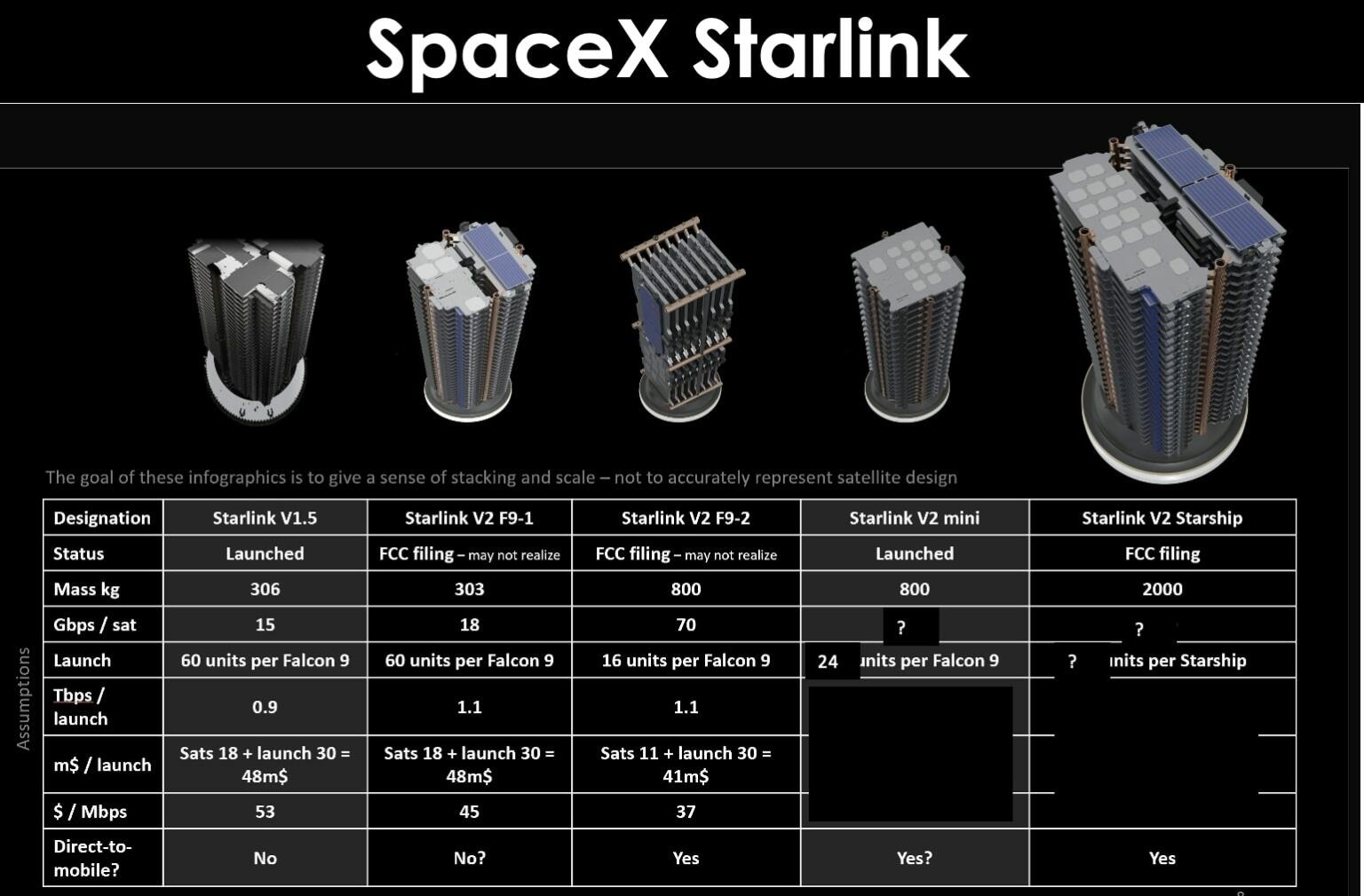
- Starlink customers: The IPO proceeds will accelerate SpaceX’s push to deploy 42,000 additional satellites, potentially cutting Starlink’s latency by 2025 and expanding its broadband reach to underserved regions like sub-Saharan Africa and Southeast Asia.
The Potential Risks
Not everyone celebrates the valuation spike. Critics point to three key vulnerabilities:
- Dilution of Tesla’s focus: Musk’s dual leadership of SpaceX and Tesla has long raised governance concerns. The IPO could exacerbate conflicts, particularly if SpaceX’s satellite business siphons talent or resources from Tesla’s AI and robotics divisions. “There’s a real risk of mission creep,” warned a former NASA contractor, who requested anonymity.
- Regulatory scrutiny: The U.S. Department of Justice is reportedly reviewing SpaceX’s contracts with the Pentagon, including a $1.4 billion deal for Starship launches, to assess potential antitrust violations. A higher valuation could invite deeper scrutiny of Musk’s cross-holding of SpaceX and Tesla.
- Profitability pressures: SpaceX’s IPO prospectus revealed that 90% of its revenue comes from Starlink, raising questions about its ability to diversify. If satellite demand slows—due to economic downturns or competition from Amazon’s Project Kuiper—the company’s valuation could correct sharply.
—
What Drives SpaceX’s Valuation—and How It Compares to Other Mega-IPOs
SpaceX’s $10 billion valuation jump isn’t unprecedented, but it stands out for its speed and scale. A comparison with recent high-profile IPOs reveals both similarities and critical differences:
| Company | IPO Valuation | Valuation Jump Post-IPO | Primary Driver | Key Risk |
|---|---|---|---|---|
| SpaceX (2024) | $170B (pre-IPO) → $180B | $10B (+6%) | Starlink satellite contracts ($100B backlog) | Over-reliance on Starlink |
| Airbnb (2020) | $31B | $13B (+42%) | Post-pandemic travel rebound | Oversupply of listings |
| Rivian (2021) | $66B | $20B (-30%) | EV hype cycle | Production delays |
| Palantir (2020) | $20B | $5B (+25%) | Government AI contracts | Regulatory pushback |
Why SpaceX’s case is unique: Unlike Airbnb or Rivian, SpaceX’s valuation is tied to a physical asset—its constellation of satellites—and a government-backed revenue stream (Starlink’s contracts with the U.S. military and FCC licenses). This dual anchor has shielded it from the volatility that plagued other tech IPOs in 2021–2022.
However, the comparison to Palantir is instructive. Both companies rely heavily on government contracts, yet Palantir’s stock has since corrected 40% from its IPO high due to antitrust investigations. SpaceX may face similar pressures if its dominance in launch services sparks competition from NASA or private rivals like Blue Origin.
—
How the IPO Affects Elon Musk’s Empire—and What’s Next for Tesla
Musk’s ability to balance SpaceX and Tesla has long been a topic of debate among investors. The IPO introduces new dynamics:

1. Tesla’s Stock Could Feel the Ripple Effect
Analysts at JPMorgan warn that SpaceX’s success may draw attention—and capital—away from Tesla. “If SpaceX’s valuation keeps rising, it could become a more attractive destination for Tesla’s top engineers,” said a JPMorgan strategist. Musk has already signaled he may allocate up to 10% of Tesla’s R&D budget to SpaceX’s Starship program, raising concerns about diluted focus.
Tesla’s stock, which has underperformed the S&P 500 this year, could see further pressure if SpaceX’s IPO diverts investor interest. “The market may start questioning whether Musk is spreading himself too thin,” said a hedge fund manager who manages a $2 billion tech-focused portfolio.
2. SpaceX’s Path to Profitability
SpaceX’s IPO prospectus revealed that the company lost $1.1 billion in 2023, with Starlink accounting for 88% of revenue but only 60% of gross margins. To justify its valuation, SpaceX must:
- Reduce Starlink’s unit costs by 30% (target: $500 per terminal by 2026, down from $1,200 today).
- Secure additional government contracts, such as NASA’s Artemis moon-landing program or the U.S. Space Force’s next-gen satellite network.
- Avoid a repeat of its 2022 satellite failure, which cost $100 million and damaged investor confidence.
Morningstar’s equity team projects SpaceX will break even by 2027, but only if Starlink’s subscriber growth accelerates to 5 million users annually—double its current pace.
3. The Regulatory Wildcard
SpaceX’s IPO coincides with growing scrutiny of Musk’s corporate empire. The SEC is reportedly reviewing Tesla’s disclosure of Musk’s compensation, while the FTC has reopened its investigation into SpaceX’s no-bid contracts with the U.S. government. A higher valuation could invite more aggressive enforcement.
.jpeg "3. The Regulatory Wildcard")
“The more SpaceX is worth, the more it looks like a monopoly,” said a former antitrust attorney at the Department of Justice. “That’s a red flag for regulators.”
—
What Investors Are Watching—and What Could Go Wrong
With SpaceX’s stock now trading at 30x forward earnings (higher than Amazon’s 25x), analysts are divided on whether the valuation is justified. Three scenarios are emerging:
Scenario 1: The “Starlink Supercycle” (Optimistic)
If SpaceX hits its targets—5 million Starlink users by 2026, $15 billion in annual revenue, and a 10% EBITDA margin—the company could justify its valuation. This would also benefit:
- Tesla’s supply chain (SpaceX’s carbon-fiber manufacturing tech could reduce Tesla’s battery costs).
- Global broadband markets (Starlink’s expansion into Africa and Latin America could disrupt incumbent providers like HughesNet).
- NASA’s Artemis program (SpaceX’s Starship is the sole provider for lunar landings, locking in $2.9 billion in contracts).
Scenario 2: The “Valuation Correction” (Realistic)
If Starlink’s growth slows—or if SpaceX fails to secure new government contracts—the stock could retreat to $120–$140 billion, a 20–25% drop. Risks include:
- Economic downturns reducing Starlink’s enterprise customer base.
- Competition from Amazon’s Project Kuiper, which could undercut Starlink’s pricing.
- Regulatory setbacks, such as FCC restrictions on satellite debris.
Morningstar’s base-case forecast assumes a 15% correction within 12 months, citing “limited upside” beyond SpaceX’s current trajectory.
Scenario 3: The “Musk Exit” (Speculative)
Some hedge funds are betting that Musk could sell a portion of his SpaceX stake to raise cash for Tesla or his other ventures (e.g., xAI or Neuralink). A forced sale—even at today’s valuation—could trigger a market reaction, similar to when Musk sold $6.8 billion of Tesla stock in 2020, sparking a 10% drop.
—
Key Questions About SpaceX’s IPO—Answered
Will SpaceX’s IPO affect Tesla’s stock price?
Indirectly. While SpaceX and Tesla are separate entities, Musk’s dual leadership means investor sentiment for one can spill over to the other. If SpaceX’s valuation keeps rising, some analysts expect Tesla’s stock to benefit from “halo effect” interest in Musk’s innovations. However, if SpaceX’s success diverts talent or capital from Tesla, the opposite could occur.
How does SpaceX’s valuation compare to other aerospace companies?
SpaceX’s $180 billion valuation now exceeds Boeing ($20 billion) and Lockheed Martin ($90 billion) combined. It also surpasses the $150 billion valuation of China’s iSpace, the world’s most valuable private space company. The gap reflects SpaceX’s unique position as both a launch provider and a satellite operator.
Could SpaceX’s IPO trigger a space industry boom?
Possibly. The IPO has already prompted Blue Origin and Relativity Space to accelerate their own public market plans. Analysts at UBS predict that within five years, 10 additional private space companies will pursue IPOs, driven by demand for satellite internet, lunar missions, and asteroid mining.
What happens if SpaceX’s stock crashes?
A sharp decline could hurt SpaceX’s ability to raise capital for Starship development or Starlink expansion. It might also embolden regulators to challenge SpaceX’s government contracts, arguing that its high valuation reflects monopolistic practices. However, given its $100 billion backlog, a crash would likely be gradual rather than sudden.
Will Elon Musk sell any SpaceX shares?
Unlikely in the short term. Musk has pledged to hold his SpaceX stake for at least three years post-IPO, per SEC filings. However, if Tesla faces liquidity pressures or if SpaceX’s valuation peaks, he may explore partial sales—though any move would likely be met with market scrutiny.
How does SpaceX’s IPO affect Starlink’s growth?
The IPO proceeds will fund Starlink’s next-phase satellite deployments, potentially accelerating its global coverage. Analysts expect SpaceX to prioritize high-growth markets like India, Nigeria, and Brazil, where Starlink’s latency advantages could disrupt local ISPs.
—
The SpaceX IPO’s $10 billion valuation surge reflects more than just market hype—it signals a seismic shift in how the world values space infrastructure. For investors, the question now is whether the premium is sustainable. For Musk, it’s a high-stakes gamble: will SpaceX’s success elevate his empire, or will it become a distraction from Tesla’s core mission? One thing is clear: the aerospace industry will never be the same.
For updates on SpaceX’s post-IPO performance and its impact on Tesla, follow our ongoing coverage of Musk’s corporate strategy and the future of satellite internet.
