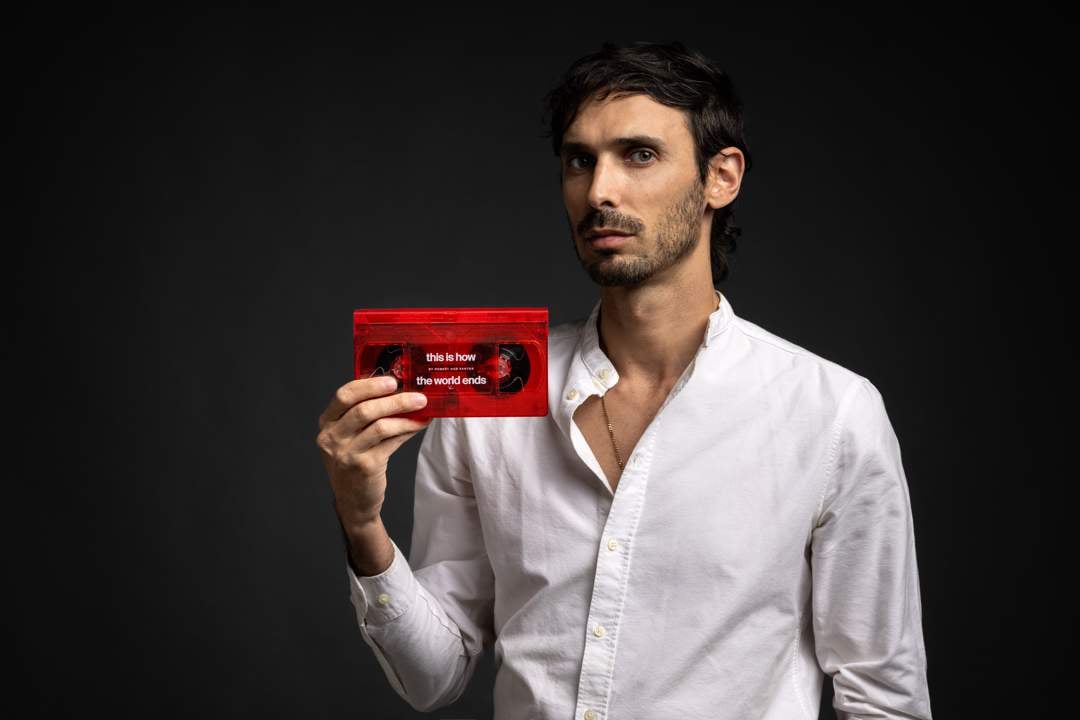
‘Made by humans’: SA-born director takes a stand against AI with first VHS film in 20 years
A South African director has released a feature film exclusively on VHS, claiming it is the first straight-to-video release in 20 years. The project serves as a deliberate protest against the integration of generative AI in the creative arts, with the director positioning the physical, analog medium as a testament to human effort and imperfection.
Why did a South African director release a film on VHS?
The decision to use VHS was a strategic choice to oppose the rise of artificial intelligence in cinema. According to reports from Variety, the director views the project as a “middle finger” to AI, utilizing a defunct technology to ensure the work remains tethered to physical reality. By bypassing digital distribution and AI-assisted production, the filmmaker aims to highlight the distinction between human-led creativity and algorithmic generation.
The project is branded under the ethos of being “made by humans.” This framing is not merely about the absence of AI tools but is a statement on the value of manual labor in art. The director argues that the struggle and the technical limitations of analog media are essential to the creative process. This stance comes at a time when generative AI can produce high-fidelity imagery and video with minimal human input, a trend the director finds antithetical to the purpose of art.
Key drivers behind the VHS release include:
- Physicality: The requirement of a physical tape prevents the instant, frictionless consumption associated with digital streaming.
- Intentional Limitation: Using outdated technology forces the creator to work within strict constraints, which the director claims fosters genuine creativity.
- Anti-Algorithmic Distribution: By avoiding digital platforms, the film escapes the influence of recommendation algorithms that dictate modern viewership.
How does this film challenge the role of AI in the arts?
The film challenges AI by elevating the concept of “effort” as a primary artistic value. According to The Guardian, the director believes that asking an audience and a crew to engage with a difficult, obsolete medium is an act of reclaiming what it means to be human. The argument posits that AI removes the “friction” from creation, and in doing so, removes the soul of the work.
In the current industry climate, AI is often marketed as a tool for efficiency. However, this filmmaker suggests that efficiency is the enemy of art. The process of recording to tape, the risk of degradation, and the tactile nature of the VHS format serve as a counter-narrative to the seamless, “perfect” outputs of generative AI. The director suggests that human art is defined by its imperfections and the visible evidence of labor.
“I’m asking people to do a lot, but that’s what it means to be a human.”
This philosophy suggests that the value of a piece of art is derived not just from the final image, but from the difficulty encountered during its production. According to the director’s perspective, AI-generated content lacks this history of struggle, rendering it a product rather than a piece of art.
What is the significance of a “straight-to-video” release in 2024?
A “straight-to-video” release was a common industry practice in the 1980s and 90s, where films bypassed theatrical runs to be sold or rented directly on VHS. In the current era of 4K streaming and digital cinema, releasing a film exclusively on tape is a radical departure from industry norms. News24 reports that this is the first time in two decades that a filmmaker has intentionally chosen this path as a primary distribution method.
The significance lies in the shift from accessibility to intentionality. While digital files are infinitely replicable and instantly accessible, a VHS tape is a finite object. This scarcity forces a different relationship between the viewer and the film. The viewer must own a functioning VCR, a piece of hardware that has largely vanished from modern homes.
| Feature | AI/Digital Production | Analog/VHS Production |
|---|---|---|
| Production Speed | Near-instant generation | Slow, manual labor |
| Quality | Mathematically “perfect” | Grainy, prone to degradation |
| Distribution | Global, algorithmic streaming | Physical, limited copies |
| Core Value | Efficiency and accessibility | Effort and physicality |
How do different news outlets frame this story?
While the core facts remain consistent, the framing of the story varies across major publications, reflecting different interpretations of the director’s motives. Analyzing these perspectives provides a broader understanding of how the industry views the tension between AI and traditional art.
The Provocateur Angle
Variety frames the story through the lens of defiance. By using the phrase “middle finger to AI,” Variety highlights the antagonistic relationship between the filmmaker and the tech industry. The focus here is on the act of rebellion and the provocative nature of using a “dead” format to make a point about the future of cinema.
The Philosophical Angle
The Guardian takes a more existential approach, focusing on the director’s comments regarding the human condition. The reporting emphasizes the philosophical argument that human identity is tied to effort and the willingness to do things the “hard way.” The narrative is less about a fight against technology and more about a quest for human meaning.
The National/Cultural Angle
News24 and 2oceansvibe News emphasize the South African origin of the director. By highlighting the “SA-born” aspect, these outlets frame the story as a contribution from the South African creative community to a global debate. This adds a layer of regional pride and positions the filmmaker as a voice from the Global South challenging the tech-centric narratives often driven by Silicon Valley.

What are the wider implications for the film industry?
This project is a microcosm of a larger conflict currently playing out in Hollywood and global cinema. The rise of tools like Sora, Midjourney, and other generative AI platforms has created a divide between those who see AI as an evolutionary tool and those who see it as an existential threat to the profession.
The director’s stand highlights several critical tensions in the industry:
- The Labor Crisis: As AI automates tasks previously handled by concept artists, editors, and writers, the “made by humans” movement argues that the loss of these roles is a loss of artistic depth.
- The Value of Friction: There is a growing counter-cultural movement toward “slow media.” Much like the vinyl revival in music, the VHS release suggests a market for media that requires effort to consume.
- Copyright and Authenticity: By using analog formats, the filmmaker creates a “provenance” for the work that is harder to spoof or synthesize than a digital file.
Industry analysts suggest that while a VHS release is a niche event, the sentiment behind it is widespread. The desire for “authentic” human expression is becoming a selling point in an era where synthetic media is becoming indistinguishable from reality. This could lead to a future where “Human-Made” becomes a certified label for artistic works, similar to “Organic” labels in food production.
For more on the evolution of cinema technology, see our related explainer on the history of analog film.
Common misconceptions about AI and analog filmmaking
The debate surrounding this VHS release often leads to several oversimplifications. It is important to distinguish between the technical use of tools and the philosophical approach to creation.
Misconception: This is just about nostalgia
Critics often dismiss the use of VHS as “retro-chic” or mere nostalgia. However, according to the director’s stated goals, the choice is not about longing for the 1980s, but about using the 1980s’ limitations to fight 2020s’ automation. The goal is not to recreate the past, but to protect a specific human process in the present.
Misconception: AI cannot be “artistic”
The director does not necessarily claim that AI cannot produce a visually pleasing image. Rather, the claim is that the process of AI production lacks the human element of struggle. The argument is that art is not defined by the output, but by the intention and the labor invested by the creator.
Misconception: Digital film is the same as AI film
It is important to note that using a digital camera is not the same as using generative AI. Many filmmakers use digital tools while remaining firmly “human-made.” The director’s choice of VHS is an extreme version of this, intended to create the widest possible gap between his method and the algorithmic approach.
Frequently Asked Questions
What is the “Made by humans” film?
It is a feature project by a South African director released exclusively on VHS tapes. The film is intended as a protest against generative AI, emphasizing the importance of human labor, imperfection, and physical media in the creative process.

Why is the director using VHS instead of digital film?
According to reports from Variety and The Guardian, the director uses VHS to introduce “friction” and effort back into cinema. He views the ease of AI and digital production as a threat to the human essence of art, using the obsolete format as a “middle finger” to algorithmic efficiency.
Is this really the first straight-to-video film in 20 years?
The director claims it is the first intentional straight-to-video release in two decades. While some indie films may have been released on physical media, the scale and the specific intent of this project as a primary distribution method make it a unique event in the modern industry.
Does this mean the director is against all technology?
No. The director’s stance is specifically targeted at generative AI that replaces human effort. The use of VHS is a symbolic and practical choice to highlight the value of manual creation, not a blanket rejection of all technological progress.
How can people watch a film released only on VHS?
Viewers would need a functioning VCR (Video Cassette Recorder) and a television compatible with analog input. This requirement is part of the director’s intent to make the viewing experience a conscious, effort-based activity.
As the film industry continues to grapple with the integration of AI, the emergence of “analog protests” suggests a growing appetite for art that prioritizes the human process over the final product. The success or failure of this VHS experiment may signal whether audiences are willing to trade convenience for authenticity.
