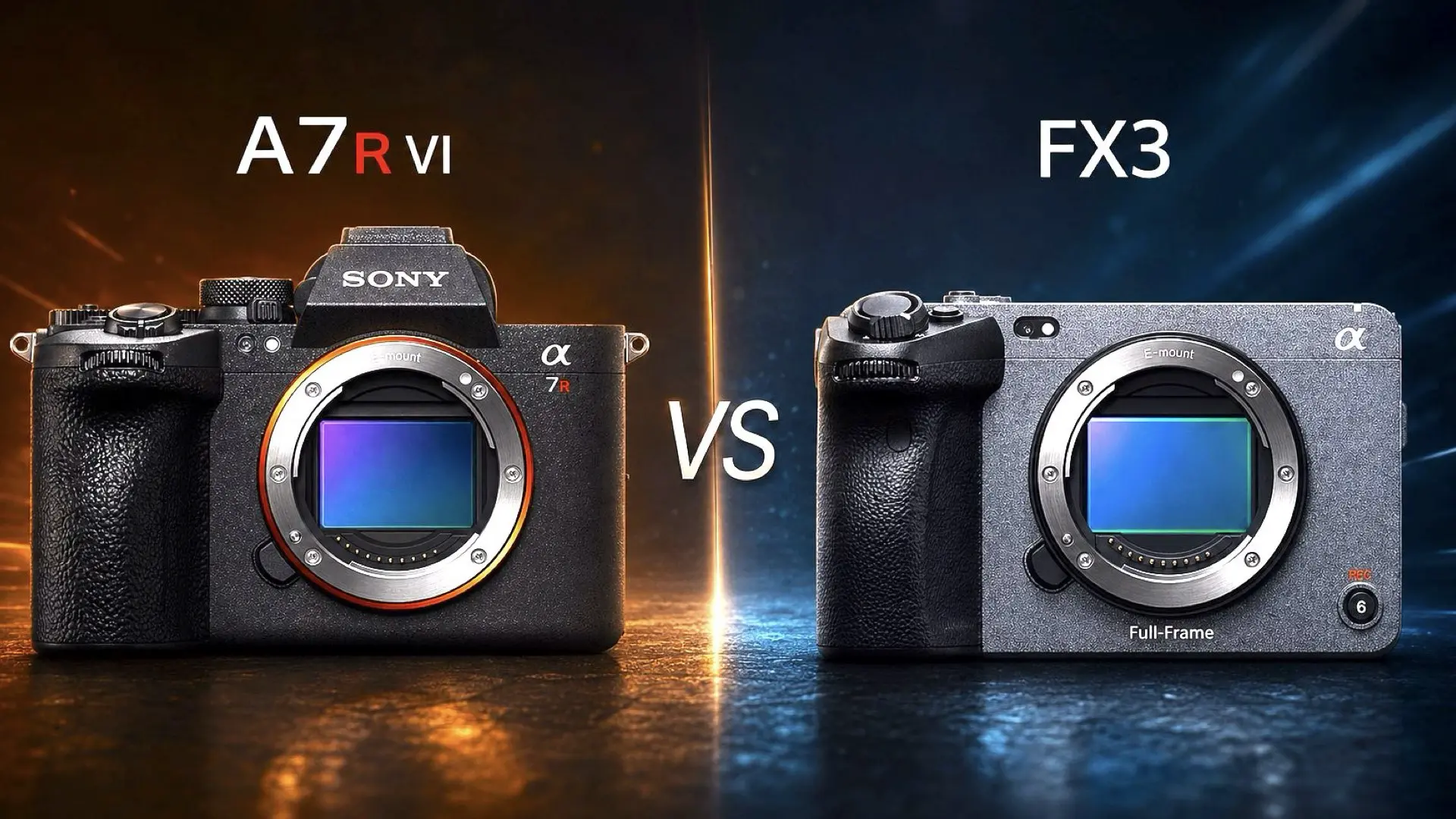
Sony Alpha 7R VI vs FX3 Reveals the New Camera Buying Problem – Y.M.Cinema
For years, the divide in the imaging world was clear: you bought a camera for photography or you bought a camera for cinema. However, the arrival of the latest hardware iterations has blurred these lines to the point of erasure. The current discourse surrounding the Sony Alpha 7R VI vs FX3 Reveals the New Camera Buying Problem – Y.M.Cinema, highlighting a strategic tension within Sony’s own lineup that leaves professionals questioning whether the company is inadvertently sabotaging its own flagship offerings.
The “buying problem” is no longer about which camera has the better sensor or a faster autofocus system. Instead, it has evolved into a crisis of identity. When a high-resolution powerhouse like the Alpha 7R VI incorporates professional-grade video tools, and a dedicated cinema tool like the FX3 remains the gold standard for reliability, the consumer is forced to choose between two different philosophies of production—often with overlapping feature sets that make the decision agonizing.
The Core of the Dilemma: High Resolution vs. Cinematic Intent
At the heart of the Sony Alpha 7R VI vs FX3 Reveals the New Camera Buying Problem – Y.M.Cinema is the conflict between resolution and utility. The Alpha 7R series has traditionally been the sanctuary for landscape, studio, and commercial photographers who demand every possible pixel to ensure maximum detail and cropping flexibility. Yet, as Sony pushes the boundaries of what a “hybrid” camera can do, the Alpha 7R VI has moved aggressively into the video space.
Conversely, the FX3 was designed from the ground up for the cinema line. It prioritizes thermal management, audio integration, and a form factor that favors rigs over viewfinders. The problem arises when the Alpha 7R VI offers video capabilities that are “good enough” for the vast majority of professional work, potentially rendering the specialized nature of the FX3 unnecessary for some, while the FX3’s lack of a high-resolution stills sensor makes it a non-starter for those who still need to deliver a print portfolio.
The modern creator is no longer just a “photographer” or a “videographer.” They are visual storytellers who require a tool that does both, but the industry is currently forcing them to choose which “half” of their identity to prioritize.
The Hybrid Paradox
The hybrid paradox occurs when a device attempts to be everything to everyone. By adding cinema-grade features to the Alpha 7R VI, Sony creates a powerhouse that can handle a high-fashion shoot in the morning and a commercial b-roll session in the afternoon. However, this versatility often comes at the cost of specialization. The FX3 doesn’t try to be a high-resolution stills camera; it focuses on being a reliable, cool-running video machine.
When these two worlds collide, the “buying problem” manifests as a question of trade-offs:
- The Alpha 7R VI Trade-off: You gain immense detail for stills and versatile video, but you may face thermal limitations during long-form recording and lack the native cinema-line ergonomics.
- The FX3 Trade-off: You gain a dedicated filmmaking tool with superior cooling and audio inputs, but you sacrifice the ability to produce ultra-high-resolution imagery.
Analyzing the “Sabotage” Theory
Industry analysts and creators, including those following the Y.M.Cinema perspective, have raised the question: Did Sony just sabotage its own flagship camera? To understand this, one must look at market cannibalization. When the Alpha 7R VI becomes too capable of video, it eats into the market share of the FX3. When the FX3 becomes the preferred tool for “hybrid” shooters who don’t need 60+ megapixels, it undermines the prestige of the Alpha line’s top-tier versatility.
This internal competition creates a fragmented user experience. Instead of a clear ladder of progression (e.g., Entry Level → Professional Hybrid → Dedicated Cinema), the paths now cross. A user might jump from a mid-range Alpha to an FX3, skipping the R-series entirely, or they might buy an R-series and find they no longer have a reason to invest in the Cinema Line.
| Feature Focus | Alpha 7R VI Approach | FX3 Approach |
|---|---|---|
| Primary Goal | Maximum Detail & Versatility | Reliability & Cinematic Workflow |
| Thermal Design | Standard Hybrid Cooling | Active Internal Cooling Fan |
| Imaging Priority | Ultra-High Resolution Stills | Optimized Video Performance |
| Body Ergonomics | EVF-centric, Photo-focused | Cage-ready, Handle-focused |
Who Is Actually Affected by the Buying Problem?
The Sony Alpha 7R VI vs FX3 Reveals the New Camera Buying Problem – Y.M.Cinema isn’t just a theoretical debate for gear enthusiasts; it has real-world implications for different tiers of professionals.
The Commercial Hybrid Professional
For the freelancer who manages a brand’s entire visual identity, the Alpha 7R VI is a tempting “one-and-done” solution. The ability to capture a high-res billboard image and a 4K promotional clip with the same body is a massive efficiency gain. However, these users often find themselves frustrated by the lack of XLR inputs or the tendency for the camera to overheat during a long interview—features that are native to the FX3.
The Dedicated Cinematographer
For those who exclusively shoot video, the Alpha 7R VI’s high resolution is actually a hindrance. High-megapixel sensors can be more prone to rolling shutter and generate more heat during processing. The FX3 remains the logical choice here, but the “buying problem” emerges when these professionals are asked to provide “stills for social media” from their video shoots. They are then forced to carry a second body, whereas an R-series user could have handled both.
The High-End Artist
Fine art photographers who are venturing into short-form video (such as Reels or TikTok) find themselves in a strange position. They need the R-series for their art, but the FX3’s workflow is far more intuitive for the video side of their business. The “sabotage” occurs when the R-series tries to mimic the FX3, potentially distracting from the core mission of image purity and resolution.
Industry Implications and the Future of Camera Design
This conflict points to a wider trend in the imaging industry: the death of the “single-purpose” tool. As software improves and sensors become more capable, the gap between a “photo camera” and a “video camera” is closing. This leads to a strategic crossroads for manufacturers.
If Sony continues to merge these capabilities, we may eventually see the disappearance of the “R” and “FX” distinctions in favor of a tiered system based on reliability rather than feature sets. In this future, you wouldn’t buy a camera based on whether it does “photo or video,” but rather on whether it is designed for “intermittent capture” (hybrid) or “continuous capture” (cinema).
The Sony Alpha 7R VI vs FX3 Reveals the New Camera Buying Problem – Y.M.Cinema is a symptom of this transition. We are currently in the “messy middle” where the hardware is capable of everything, but the physical bodies and marketing categories haven’t yet caught up to the reality of how modern content is created.
Key Takeaways for Prospective Buyers
- Prioritize Workflow over Specs: Do not buy based on a checklist of features. Ask if your day-to-day involves more “stopping and starting” (Alpha 7R VI) or “rolling and recording” (FX3).
- Evaluate Thermal Needs: If you shoot in hot environments or record long-form interviews without external cooling, the dedicated cinema architecture of the FX3 is non-negotiable.
- Assess Output Requirements: If you have a legal or contractual requirement to provide high-resolution print assets, the Alpha 7R VI is the only viable option of the two.
Frequently Asked Questions
What exactly is the “Camera Buying Problem” mentioned by Y.M.Cinema?
The “buying problem” refers to the confusing overlap in features between Sony’s high-resolution Alpha 7R series and its dedicated Cinema Line (FX series). It describes the difficulty professionals face when a hybrid camera (Alpha 7R VI) becomes so capable at video that it competes with a dedicated cinema tool (FX3), making it unclear which tool is the “correct” choice for a hybrid workflow.
Is the Sony Alpha 7R VI better than the FX3 for video?
It depends on the definition of “better.” The Alpha 7R VI may offer higher resolution and more versatility for those who also shoot stills. However, the FX3 is generally superior for professional video production due to its active cooling system, cinema-centric body design, and dedicated audio handling, which prevent overheating and streamline the filmmaking process.
Why would someone choose the FX3 over the Alpha 7R VI if they need high-resolution photos?
In most cases, they wouldn’t. If ultra-high-resolution stills are a primary requirement, the Alpha 7R VI is the necessary tool. Those who choose the FX3 despite this usually do so because their video workload is so demanding that they cannot risk the thermal limitations or the less-optimized video ergonomics of a hybrid body.
Did Sony “sabotage” the Alpha 7R VI?
The term “sabotage” is used analytically to describe how adding too many cinema features to the Alpha line may undermine the value proposition of the FX line, or vice versa. By making the Alpha 7R VI a “jack of all trades,” Sony may have made it a “master of none” in the eyes of extreme specialists, while simultaneously confusing the average professional buyer.
Which camera is better for a “one-man-band” content creator?
For creators who handle everything from photography to short-form video, the Alpha 7R VI often provides the best balance of power and versatility. However, if the “content” is primarily long-form video (like documentaries or long interviews), the FX3’s reliability and cooling make it the safer professional investment.
As the industry moves forward, the tension between the Alpha 7R VI and the FX3 serves as a case study in the challenges of product segmentation. For the user, the solution lies in ignoring the marketing labels and focusing strictly on the physical demands of their specific production environment.
