Mountbatten pavement art removed by SMRT raises larger questions on public spaces and expression: MP Gho Sze Kee – CNA
The removal of power-washing pavement art outside Mountbatten MRT station by SMRT has sparked a public debate over the boundaries of artistic expression in urban environments. According to reports from CNA and The Straits Times, Mountbatten MP Gho Sze Kee stated that the incident raises significant questions regarding artistic creativity and how public spaces are utilized for expression.
What happened at Mountbatten MRT station?
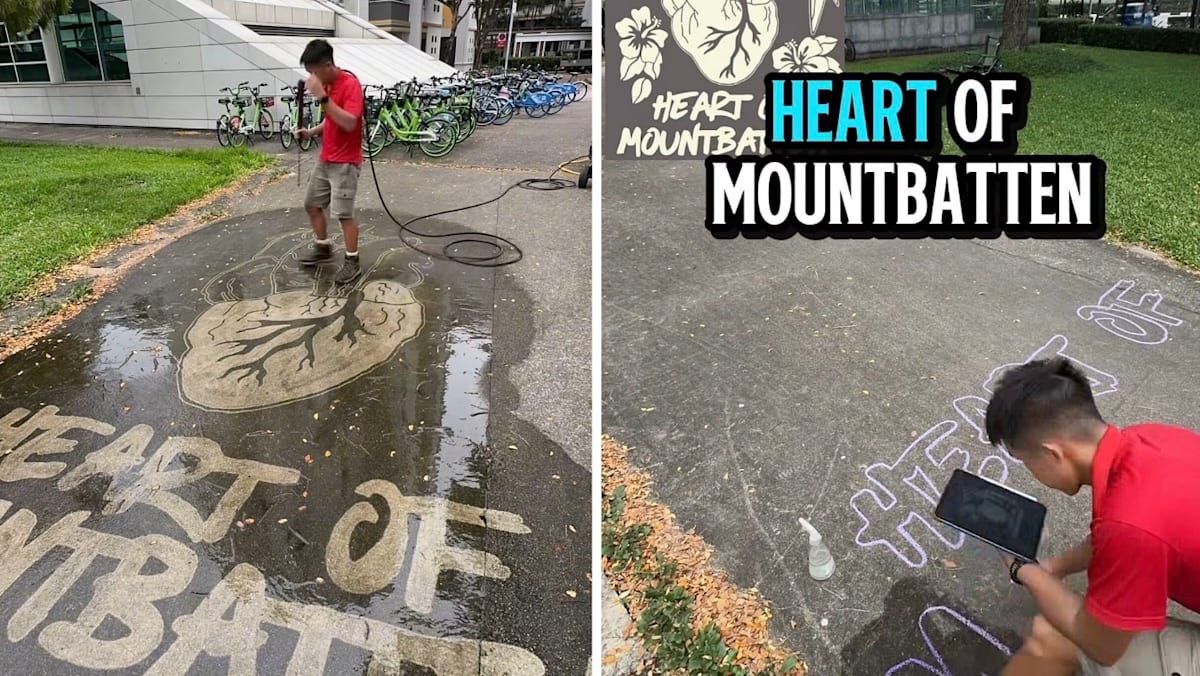
A local artist utilized a power-washing technique to create artwork on the pavement outside the Mountbatten MRT station. Unlike traditional graffiti, which involves adding paint or ink to a surface, this method involves cleaning specific areas of a dirty surface to create an image—a process often referred to as “reverse graffiti.”
The project came to an abrupt end after a complaint was lodged. According to reports from Stomp and MustShareNews, the artwork was subsequently erased, or “whitewashed,” by SMRT. The situation escalated beyond simple removal; AsiaOne reported that the artist was stopped and reported to the police following the incident.
The event quickly gained traction on social media, drawing attention to the contrast between the temporary, non-destructive nature of the art and the institutional response from the transport operator. While SMRT acted on a complaint to restore the pavement to its original state, the act of reporting the artist to the authorities shifted the conversation from one of maintenance to one of legality and expression.
Why MP Gho Sze Kee is questioning the removal of the art
The incident has drawn the attention of the local representative for the area. MP Gho Sze Kee has weighed in on the matter, suggesting that the removal of the Mountbatten artwork serves as a catalyst for a broader discussion on creativity in Singapore. According to CNA, Gho believes the situation raises larger questions about public spaces and expression.
The core of the MP’s concern lies in the tension between strict regulatory adherence and the organic growth of artistic expression. By highlighting this case, Gho Sze Kee points to a potential conflict in how the city manages its “shared spaces.” The primary questions emerging from this perspective include:
- How much room is there for spontaneous, non-permanent art in highly regulated transit hubs?
- Does the removal of “clean-based” art (reverse graffiti) constitute the same level of infringement as traditional vandalism?
- Where is the line between maintaining public order and stifling civic creativity?
This intervention by a Member of Parliament suggests that the incident is not merely a dispute between a transit operator and an artist, but a symptom of a larger social conversation regarding the “creative city” model.
The controversy of “Reverse Graffiti” and public space
To understand why this incident is polarizing, it is necessary to examine the technique used. Power-washing art, or reverse graffiti, is fundamentally different from traditional street art. Instead of applying a foreign substance (like spray paint) to a wall or floor, the artist removes a layer of accumulated grime and pollution to reveal the clean surface beneath.

This distinction creates a complex legal and ethical grey area:
| Feature | Traditional Graffiti | Reverse Graffiti (Power Washing) |
|---|---|---|
| Material | Adds paint, ink, or markers | Removes dirt and pollutants |
| Permanence | Often permanent or requires chemicals to remove | Temporary; fades as dirt accumulates |
| Surface Impact | Alters the chemical composition of the surface | Cleans the surface |
| Common Perception | Vandalism/Defacement | Ambiguous/Environmental cleaning |
From a management perspective, SMRT may view any unauthorized alteration of the pavement—regardless of whether it is “cleaning”—as a breach of protocol or a potential safety hazard. However, from an artistic perspective, the act is seen as a benign way to engage the public without causing permanent damage to state property.
The role of SMRT and the impact of complaints
SMRT’s response was triggered by a complaint, highlighting the role of the general public in shaping the urban landscape. In many highly managed cities, “broken windows theory” suggests that allowing small signs of disorder (even artistic ones) can lead to further decay or lawlessness. By removing the art immediately, SMRT adhered to a policy of maintaining a standardized, clean environment.
However, the decision to involve the police, as noted by AsiaOne, has been a point of contention. Critics argue that since no paint was used and the surface was effectively cleaned, a police report may have been an overreaction. This highlights a rigid approach to public space management where any deviation from the norm is treated as a legal violation rather than a creative experiment.
The incident underscores the power of a single complaint to override the enjoyment or appreciation of a piece of art by others in the community. It raises the question of whether public space should be managed based on the lowest common denominator of comfort or if there is room for curated, spontaneous expression.
Broader implications for artistic expression in Singapore
The Mountbatten incident is not an isolated event in the global conversation about street art, but it is particularly poignant in the Singaporean context. The city-state is known for its meticulous planning and cleanliness, which often leaves little room for the “organic” or “unauthorized” art found in cities like Berlin or Melbourne.
The reaction from figures like Jamus Lim, who reportedly invited the artist to collaborate or engage in further projects according to MustShareNews, suggests a desire to channel this energy into legitimate avenues. This represents a “middle path”: acknowledging the talent and the urge to express, but insisting it happens within a framework of permission.
The tension here is between two different visions of a city:
- The Regulated City: Where every inch of public space is planned, maintained, and devoid of unauthorized elements to ensure maximum efficiency and predictability.
- The Living City: Where public spaces are dynamic, allowing for temporary interventions that reflect the current mood, culture, and creativity of the residents.
When MP Gho Sze Kee mentions “larger questions on public spaces,” he is likely referring to this fundamental tension. If the goal is to foster a more creative and innovative society, the rigid removal of non-destructive art may be seen as counterproductive.
Comparing institutional and community responses
The response to the Mountbatten pavement art reveals a clear divide between institutional logic and community sentiment. SMRT acted as a custodian of infrastructure, prioritizing the “standard” look of the station and responding to a citizen’s complaint. Their priority was the restoration of the status quo.
In contrast, the community response—seen through the comments on platforms like Stomp and the actions of Jamus Lim—suggests a preference for the art. The community viewed the work not as a nuisance, but as an enhancement of a mundane commute. This gap suggests that the “public” that SMRT serves may have a different definition of “cleanliness” and “beauty” than the organization’s internal guidelines suggest.
The conflict at Mountbatten MRT is a microcosm of the struggle between administrative order and creative spontaneity in the modern metropolis.
This incident may prompt a review of how “temporary” or “non-destructive” art is handled in the future. Rather than a binary choice between “permitted” and “police-reported,” there may be room for a “grey zone” where artists can apply for short-term, low-impact permits to liven up transit spaces.
Frequently Asked Questions
Was the pavement art at Mountbatten MRT illegal?
While the reports do not specify a final legal verdict, AsiaOne noted that the artist was reported to the police. The legality often depends on whether the act is classified as “vandalism” or “mischief” under local laws, regardless of whether paint was used.

What is power-washing art?
Also known as reverse graffiti, it is a technique where an artist uses a high-pressure water jet to remove dirt and grime from a surface, creating a design through the contrast between the cleaned and uncleaned areas.
Why did SMRT remove the artwork?
According to reports from Stomp and MustShareNews, the artwork was removed following a complaint. SMRT’s action was aimed at restoring the pavement to its original condition.
What was MP Gho Sze Kee’s stance on the issue?
MP Gho Sze Kee suggested that the removal of the art raises important questions about how artistic creativity and expression are handled within public spaces in Singapore.
Did the artist face any positive outcomes from this?
Yes, according to MustShareNews, Jamus Lim extended an invitation to the artist, suggesting that the incident brought the artist’s work to the attention of those interested in supporting creative endeavors.
The resolution of the Mountbatten incident remains a point of reflection for urban planners and policymakers. As the city continues to evolve, the balance between the sterility of managed spaces and the vibrancy of public expression will likely remain a central point of debate. Whether this leads to more flexible guidelines for street artists or a reinforcement of current rules will depend on how these “larger questions” are answered by the authorities and the community.
