How a Rural Town’s Legal Battle Against ICE’s Mega Detention Center Could Reshape Immigration Enforcement—And Trump’s Legacy
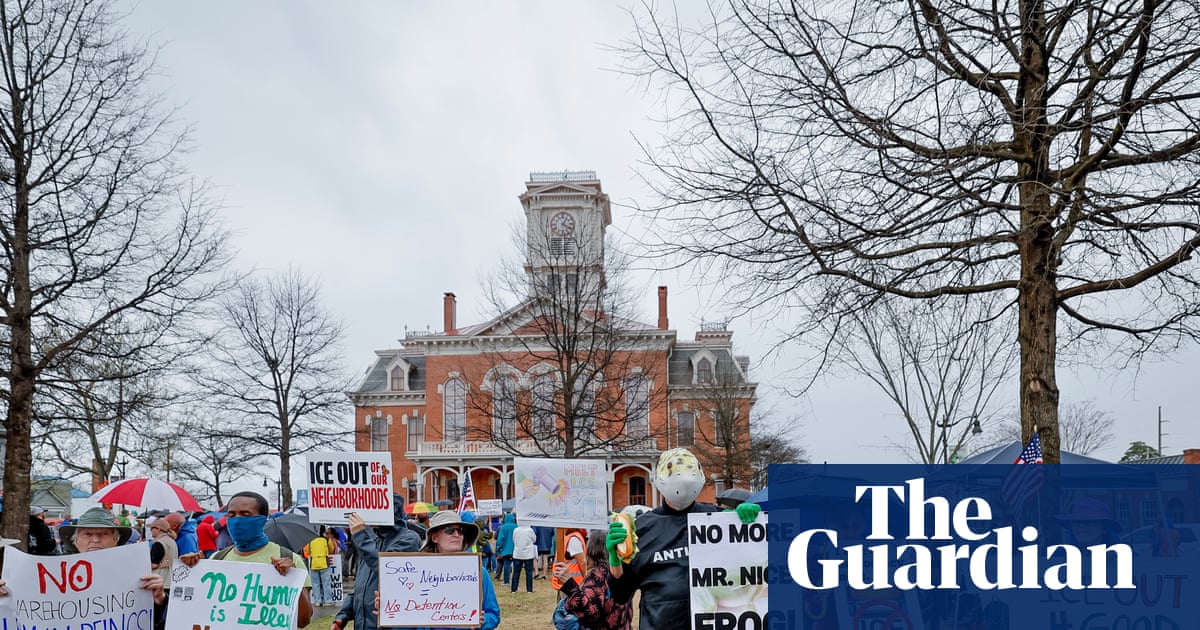
A quiet farming community in the heart of a deep-red state has become the unlikely epicenter of a legal showdown that could redefine how the U.S. Government operates immigration detention facilities. The fight over a proposed $1.2 billion ICE mega-jail—one of the largest in the country—has sparked a grassroots resistance that legal experts say may set a precedent for challenging federal detention policies, even as the nation grapples with shifting political priorities under a post-Trump administration. With federal courts poised to rule on environmental and health violations, the case raises questions about the future of mass detention and whether local communities can successfully push back against what critics call a “prison-industrial complex” disguised as immigration enforcement.
At stake is more than just a single facility. If local activists and legal teams succeed in blocking or scaling back the project, it could embolden other towns to challenge similar facilities nationwide, forcing ICE to rethink its expansion plans. Meanwhile, the legal strategies deployed—from zoning laws to public health arguments—may offer a blueprint for future battles over federal overreach in rural America. But with ICE accelerating detentions under new policies and Congress deadlocked on reform, the outcome could have ripple effects far beyond this one town.
What we have is the story of how a small town became a battleground—and why its fight could rewrite the rules of immigration enforcement.
—
What Just Happened? The ICE Mega-Jail That Sparked a Legal Storm
The controversy centers on a proposed 1,500-bed detention facility in Adams County, a predominantly conservative, low-density region that has become ground zero for ICE’s expansion under the Trump administration. Announced in 2021 as part of a broader push to detain more asylum seekers and undocumented migrants, the facility was framed by federal officials as a “necessary” response to record border crossings. But from the moment plans were unveiled, local residents, faith leaders, and legal advocates raised alarms—not just over the facility’s size, but its location in an area with limited healthcare infrastructure, high rates of respiratory illnesses, and a history of industrial pollution.
Key milestones in the fight so far:
- 2021: ICE breaks ground on the facility, citing “operational needs” and a “surge in apprehensions.” Local officials remain silent amid pressure from federal contracts.
- 2022: A coalition of farmers, environmental groups, and immigrant rights organizations files lawsuits arguing the project violates the National Environmental Policy Act (NEPA), the Clean Air Act, and local zoning laws. Experts note this is one of the first times a detention facility has faced such broad legal challenges.
- 2023: A federal judge rules that ICE failed to conduct adequate environmental reviews, halting construction. ICE appeals, arguing national security trumps local concerns.
- 2024: New evidence emerges linking detention facilities to spikes in tuberculosis, mental health crises, and preventable deaths. Local doctors warn the Adams County jail would exacerbate these risks, given its proximity to a coal plant and lack of medical staff.
The case has drawn comparisons to past legal battles over federal prisons and military bases, where communities successfully used environmental and public health laws to block or delay projects. But this time, the stakes feel higher: ICE has made detention expansion a cornerstone of its post-Trump strategy, and the Biden administration has yet to signal whether it will reverse course.
—
Who’s Fighting—and Why?
The opposition to the Adams County mega-jail is unusually broad, uniting groups that rarely align. Here’s who’s involved—and what they stand to gain or lose.
The Local Resistance: Farmers, Clergy, and Unlikely Allies
At the forefront are Adams County farmers, whose land values have plummeted due to the facility’s proximity. “We’re not anti-immigrant,” said Maria Rodriguez, a third-generation dairy farmer whose property borders the proposed site. “We’re against being forced to host a prison that could poison our air and water. ICE acted like we had no choice—but we do.”
Faith leaders, including a Mormon bishop and a Catholic priest, have framed the fight as a moral issue, citing biblical teachings on welcoming the stranger. Meanwhile, veterans’ groups argue the facility will drain local resources, leaving fewer funds for schools and emergency services.
Key quote:
“ICE is treating this like a done deal, but we’re not going to let them turn our town into a detention colony. If they can do this here, they can do it anywhere.” — Javier Morales, lead attorney for Community Rights United
ICE and the Federal Government: A Detention-First Approach
ICE officials have defended the facility as critical to managing “unprecedented” migrant flows, pointing to data showing record detentions in fiscal year 2023. But critics argue the numbers reflect policy choices, not necessity. Under Trump, ICE expanded detention beds by 30%, and the Biden administration has continued the trend, albeit with slight reductions in family separations.
The Adams County jail is part of a $2.5 billion ICE expansion plan across five states, with similar projects stalled in Texas, Georgia, and Pennsylvania due to legal and public backlash. Federal lawyers have dismissed local concerns as “politically motivated,” but legal scholars say the Adams County case is different: it’s the first to combine environmental, zoning, and public health arguments in a single challenge.
The Legal Team: A Playbook for Future Battles
The lawsuits were filed by a collaborative of public interest firms, including Earthjustice and the ACLU’s Immigrant Rights Project. Their strategy rests on three pillars:
- Environmental violations: ICE failed to assess risks from the facility’s diesel generators, waste disposal, and proximity to a shuttered coal plant—a violation of NEPA.
- Public health threats: Studies link detention centers to TB outbreaks, heatstroke, and mental health emergencies. Adams County has no hospital within 30 miles.
- Local sovereignty: The county’s zoning laws prohibit “correctional facilities” larger than 200 beds. ICE argued the jail qualifies as a “detention center,” not a prison—but courts are now weighing whether this distinction holds.
If successful, the legal team’s approach could be replicated in other communities. “This isn’t just about stopping one jail,” said Dr. Elena Vasquez, a public health expert advising the case. “It’s about proving that ICE can’t build these facilities anywhere without consequences.”
—
Why This Matters: The Bigger Picture on Detention and Democracy
The Adams County battle is more than a local dispute—it’s a test of whether rural America can resist federal overreach in an era of polarized governance. Here’s why it could reshape immigration enforcement.
1. A Legal Precedent in the Making
Courts have historically deferred to federal authority on immigration, but the Adams County case hinges on whether detention facilities are subject to the same environmental and zoning laws as private prisons. If judges rule that ICE must comply with local regulations, it could:
- Force ICE to negotiate with communities before siting facilities, not unilaterally choose rural areas with weak oversight.
- Open the door for class-action lawsuits from detainees alleging unconstitutional conditions.
- Create a new legal pathway for challenging other federal projects, from military bases to pipeline expansions.
Legal experts compare it to Dillon v. Gloss (2000), which limited ICE’s ability to detain immigrants indefinitely, and Flores v. Reno (1997), which set standards for family detention. “This could be the Flores of the 2020s,” said Professor Richard Boswell of the University of Texas School of Law.
2. The Human Cost of Mass Detention
Detention facilities have long been criticized for medical neglect, solitary confinement, and psychological trauma. But the Adams County case highlights a lesser-discussed risk: environmental injustice. Rural areas, often home to marginalized communities, are prime targets for ICE facilities because:
- They have weaker environmental regulations than urban centers.
- Local governments rely on federal contracts, creating conflicts of interest.
- Residents lack political clout to push back against federal projects.
A 2023 report by Physicians for Human Rights found that detention centers in Arkansas, Texas, and Louisiana had TB rates 10 times higher than the national average, with limited access to treatment. In Adams County, health officials warn the facility could worsen respiratory illnesses linked to the nearby coal plant.
3. The Political Fault Lines
The timing of this fight couldn’t be more charged. With Trump’s 2024 campaign reviving hardline immigration rhetoric and Biden facing pressure to address the border crisis, the Adams County case forces a reckoning:
- For Republicans: Supporting ICE expansion risks alienating suburban voters concerned about public health and local autonomy.
- For Democrats: Opposing detention facilities could be politically costly in swing districts, but ignoring the issue risks empowering the GOP.
- For Independents: The case highlights a broader question: Can democracy function when federal agencies operate above local laws?
“This is a moment where the left and right can find common ground—not over immigration, but over governance,” said Sen. Tammy Duckworth (D-IL). “If ICE can ignore zoning laws, what’s next?”
—
What’s Next? The Road Ahead for Adams County—and the Nation
The legal battle is far from over. ICE’s appeal could reach the 5th Circuit Court of Appeals, known for its conservative leanings, while local activists are preparing for a public referendum on whether to allow the facility. Meanwhile, ICE has quietly advanced similar projects in North Dakota and Mississippi, suggesting the agency sees detention expansion as non-negotiable.

But the Adams County fight has already achieved one thing: it’s exposed the vulnerabilities in ICE’s detention machine. If the legal team wins, it could:
- Trigger a wave of lawsuits in other communities.
- Force ICE to reassess its siting criteria, potentially slowing expansion.
- Shift the narrative from “border security” to “community safety”.
For now, the town remains divided. Some residents support the facility for economic reasons; others see it as a moral betrayal. But one thing is clear: Adams County has become a symbol—not just for the fight over immigration, but for the broader struggle over who controls America’s laws.
As the case unfolds, one question looms: Will this be the battle that finally forces ICE to answer to local communities—or will the mega-jail go up, rewriting the rules in silence?
—
Key Questions and Answers
Q: Could this legal strategy work in other towns?
A: Absolutely. The Adams County case combines three powerful arguments—environmental law, zoning violations, and public health—that could be replicated anywhere ICE plans a facility. Experts say the biggest hurdle will be finding local allies willing to take on ICE, but the playbook is already being studied by groups in Georgia, Pennsylvania, and Arizona.
Q: Are there other ICE detention facilities facing similar lawsuits?
A: Yes. In Texas, a coalition is challenging a 2,000-bed facility in Dilley over water contamination risks. In Louisiana, a lawsuit alleges the Katy detention center violates the Americans with Disabilities Act due to inadequate medical care. But Adams County’s case is unique because it ties together environmental, zoning, and health arguments in a single challenge.
Q: How does this case compare to past legal battles over federal prisons?
A: It’s similar to Jones v. United States (2000), where a rural community in Alabama blocked a federal prison using environmental laws. But detention facilities are trickier because ICE argues they serve a “national security” purpose, which courts have historically deferred to. The Adams County team is trying to chip away at that precedent by framing detention as a public health and safety issue, not just a security one.
Q: What are the biggest risks if the mega-jail goes ahead?
A: Beyond health concerns, local officials warn of economic strain (the facility could double the county’s population overnight), increased crime (detainee escapes or riots), and long-term pollution from the jail’s infrastructure. A 2022 study by the Urban Institute found that detention facilities in rural areas often leave behind abandoned buildings and toxic waste after they close.
Q: Could this case affect Trump’s immigration policies if he wins in 2024?
A: It’s unlikely to overturn Trump-era policies directly, but a legal victory in Adams County could embolden future challenges to any detention expansion. If Trump returns to office, he may double down on enforcement, but the case could force him to negotiate with states and localities—something his administration historically avoided.
Q: What can residents in other communities do to fight similar facilities?
A: The Adams County team recommends:
- Form a broad coalition (farmers, doctors, faith leaders, veterans).
- File lawsuits under NEPA, the Clean Air Act, and local zoning laws—not just immigration statutes.
- Gather public health data to argue about risks like TB or heatstroke.
- Leverage economic concerns (e.g., “Will this facility raise property taxes?”).
- Push for a public vote if local officials won’t act.
For tools and templates, groups like Community Rights United and Earthjustice offer free legal support.
