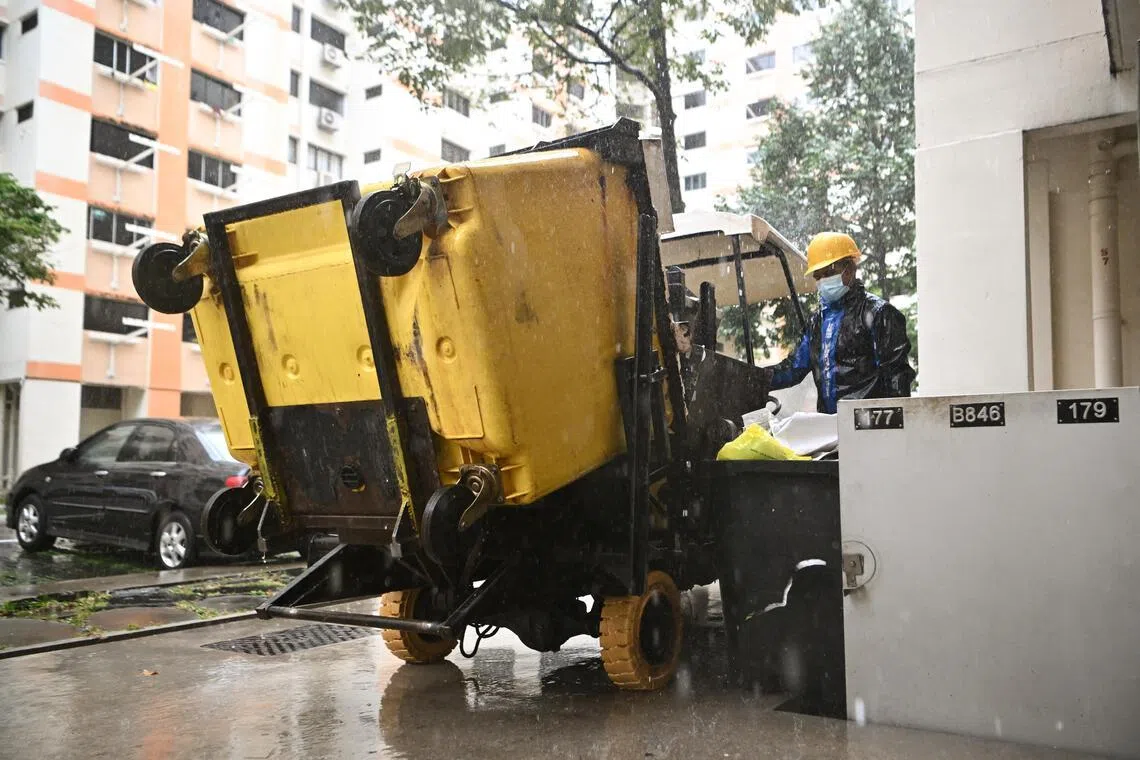
Higher Household Refuse Collection Fees from July 1: What Singapore Residents Need to Know
Singapore households will pay more for waste disposal starting July 1, marking the first increase in refuse collection fees in two years. HDB residents will see their monthly costs rise by S$0.44, according to reports from mustsharenews.com and CNA. The price adjustment affects waste collection services across the city-state.
How Much Will Refuse Collection Fees Increase on July 1?
The cost of waste disposal is rising for households across Singapore. For those living in Housing and Development Board (HDB) flats, the monthly increase is specifically pegged at S$0.44, according to mustsharenews.com. This change takes effect on July 1.
Reports from CNA and AsiaOne confirm that this is the first time these fees have been adjusted in two years. While the specific cent-value for landed properties was not detailed in all summaries, the general trend indicates a broad increase in the cost of maintaining waste hygiene services for all residential types.
| Housing Type | Monthly Fee Increase | Effective Date | Last Increase |
|---|---|---|---|
| HDB Households | S$0.44 | July 1 | Two years ago |
| Private/Landed | Increased (Exact amount varies) | July 1 | Two years ago |
Why Are Waste Collection Costs Rising Now?
The increase comes after a two-year period of price stability. According to CNA, the adjustment is the first of its kind since the previous fee cycle ended. While the provided news summaries do not list a specific government mandate, refuse collection fees in Singapore typically reflect the operational costs incurred by Public Waste Collectors (PWCs).
These costs generally include:
- Labor Expenses: Wages for waste collection crews and truck drivers.
- Fuel and Transport: The cost of operating heavy-duty collection vehicles.
- Equipment Maintenance: Upkeep of pneumatic waste conveyance systems and traditional bins.
- Disposal Fees: The cost of transporting waste to the Tuas South Incineration Plant or other waste-to-energy facilities.
The timing of the hike suggests a correction to align with current inflationary pressures and the rising costs of manpower and logistics within the waste management sector.
Who Manages the Refuse Collection System in Singapore?
To understand why these fees change, it is necessary to look at the structure of waste management in the city-state. The National Environment Agency (NEA) oversees the entire system. However, the actual collection of trash is carried out by Public Waste Collectors (PWCs).
The NEA divides Singapore into several collection zones. For each zone, a PWC is appointed to manage the collection and transport of household waste. These collectors are private companies contracted by the government to ensure that residential areas remain clean and hygienic.
For HDB residents, the refuse collection fee is typically bundled into the monthly service and conservancy charges (S&CC). This means the S$0.44 increase reported by mustsharenews.com will likely appear as a slight uptick in the total monthly bill paid to the Town Council.
Residents in landed properties, conversely, often deal with their collectors more directly or through specific billing cycles, depending on their location and the specific PWC serving their neighborhood.
“HDB households to pay S$0.44 more monthly for refuse collection from 1 July.” — mustsharenews.com
Comparing the Impact Across Different News Reports
Different media outlets have framed this update with varying levels of detail. The Straits Times and CNA focused on the timeline, emphasizing that this is the first increase in two years. This framing suggests a period of relative stability that has now come to an end.
In contrast, mustsharenews.com provided a concrete figure for HDB residents (S$0.44), offering a more granular look at the financial impact on the average citizen. AsiaOne and the Malay Mail focused on the broader application of the fee, signaling that “Singapore households” in general—not just those in public housing—will be affected.
This discrepancy in reporting highlights a common news trend: national outlets provide the “what” and “when,” while community-focused platforms provide the “how much” for the end consumer.
The Broader Context: Singapore’s Zero Waste Masterplan
The rise in collection fees occurs against the backdrop of Singapore’s aggressive push toward a “Zero Waste” future. The government has long signaled that the current method of waste disposal—incineration followed by landfilling at Semakau Landfill—is unsustainable.
The Semakau Landfill is projected to be full by 2035. Because of this, the NEA has been implementing various strategies to reduce the amount of waste that needs to be collected and processed. These include:
- The Mandatory Packaging Reporting: Requiring companies to report the types and amounts of packaging they use.
- Extended Producer Responsibility (EPR): Shifting the cost of waste management back to the producers of the waste, particularly for e-waste.
- Recycling Initiatives: Improving the quality of the “blue bin” recycling system to reduce contamination.
While a fee increase for collection may seem like a simple administrative adjustment, it reflects the increasing cost of managing a waste stream in a land-scarce environment. As the cost of incineration and landfill management rises, those costs eventually filter down to the household level.
Common Misconceptions About Refuse Fees
Many residents believe that refuse collection is a “free” service provided by the government. In reality, it is a paid utility. The fees are designed to recover a portion of the operational costs of the PWCs. The government often subsidizes these services to keep them affordable, but these subsidies cannot fully insulate residents from global inflation or rising labor costs.
Another misconception is that the fee increase is a “tax.” Technically, it is a service fee. A tax is a compulsory contribution to state revenue; a service fee is a payment for a specific service rendered—in this case, the removal of trash from the home to the incinerator.
Potential Long-Term Implications for Households
While S$0.44 per month is a small amount for an individual household, the cumulative effect of multiple utility increases can impact monthly budgeting for lower-income families. The Singapore government typically manages this through various rebates and vouchers, such as the U-Save rebates, which help offset rising utility costs.
Beyond the financial cost, such increases often serve as a subtle nudge for residents to reduce their waste output. When the cost of disposal rises, there is a greater incentive to engage in composting, recycling, and reducing single-use plastics.
For those interested in reducing their monthly expenses, exploring a related explainer on Singapore’s recycling grants may provide insights into how to minimize household waste.
Frequently Asked Questions
When do the new refuse collection fees start?
According to The Straits Times, CNA, and other major outlets, the higher household refuse collection fees take effect on July 1.

How much more will HDB residents pay?
As reported by mustsharenews.com, HDB households will pay an additional S$0.44 per month for refuse collection.
Is this the first time fees have increased in a while?
Yes. CNA reports that this is the first increase in refuse collection fees in two years.
Who is responsible for collecting the trash?
The National Environment Agency (NEA) oversees the system, but the actual work is performed by appointed Public Waste Collectors (PWCs) who operate within specific zones across Singapore.
How will I pay the increased fee?
For most HDB residents, the fee is integrated into the monthly service and conservancy charges (S&CC) billed by the Town Council. Landed property owners may see the change in their direct billing from their respective waste collectors.
Why is the fee increasing now?
While not explicitly detailed as a single cause in the reports, such increases typically stem from rising operational costs, including manpower, fuel, and the logistics of transporting waste to incineration plants.
Residents should monitor their upcoming monthly statements for the adjusted amounts. For those seeking more information on waste reduction, the NEA provides guidelines on proper recycling to help decrease the volume of household refuse.
