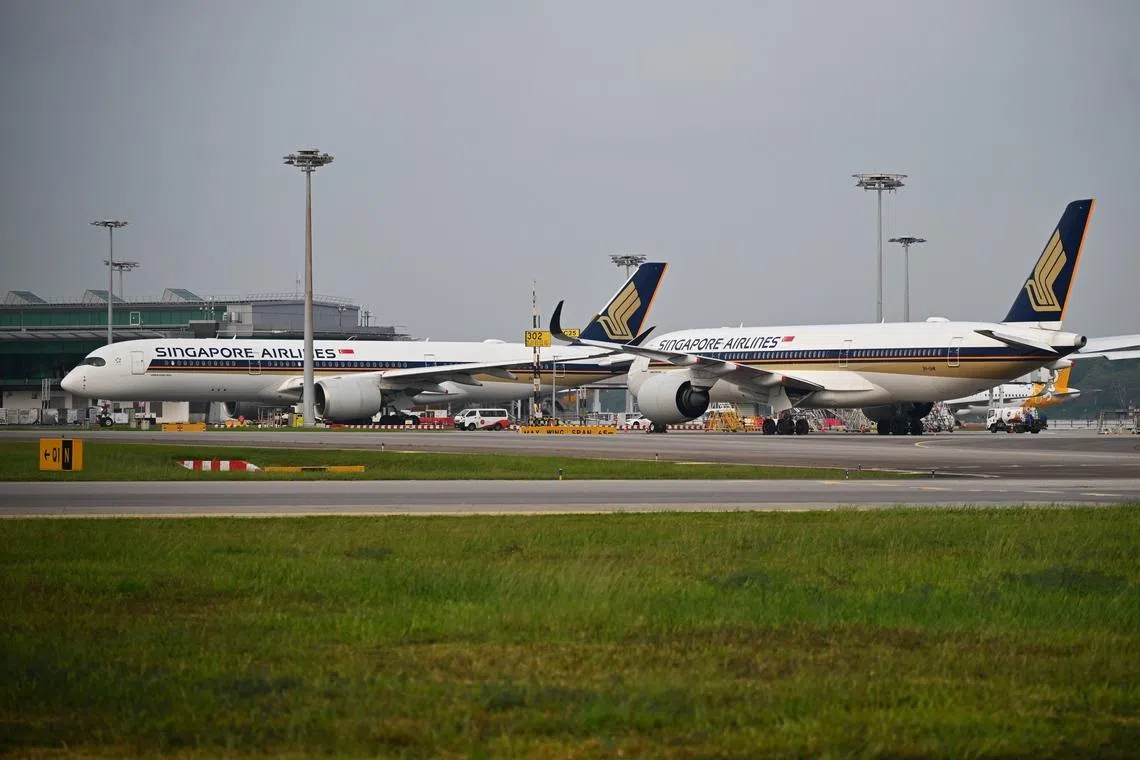
Singapore Airlines and Emirates Lead the Charge: Starlink In-Flight Wi-Fi Revolutionizes Air Travel
Passengers on selected flights with Singapore Airlines (SIA) and Emirates will soon experience a fresh era of in-flight connectivity, as both carriers prepare to roll out Starlink’s high-speed satellite broadband service. This groundbreaking technology, which leverages SpaceX’s constellation of low-Earth orbit (LEO) satellites, promises to transform the way travelers stay connected at 40,000 feet. With SIA’s rollout set to start in the first quarter of 2027 and Emirates already operating the world’s largest Starlink-enabled fleet, the aviation industry is witnessing a significant shift in passenger experience.
This upgrade isn’t just about faster internet speeds—it’s about redefining what passengers can do while airborne, from seamless video streaming to real-time collaboration, all while maintaining a stable connection from takeoff to landing.
What Happened: A New Standard in Airline Connectivity
Singapore Airlines announced on May 4, 2026, that it will progressively introduce Starlink’s LEO satellite-based broadband service on select aircraft starting from the first quarter of 2027. The service will be available on SIA’s Airbus A350-900 long-haul, A350-900 ultra-long-range, and A380 aircraft, with the rollout expected to continue until the end of 2029.
Emirates, meanwhile, has already taken a significant step forward. The airline’s iconic Airbus A380 returned to Dubai in late April 2026 equipped with the world’s first Starlink Wi-Fi onboard, marking a historic milestone in aviation connectivity. Emirates has also announced plans to equip its entire fleet of 232 Boeing 777 and A380 aircraft with Starlink technology, making it the largest Starlink-enabled international wide-body fleet in the world.
Key Details of the Rollout
- Singapore Airlines: Starlink service will be available on Airbus A350-900 long-haul, A350-900 ultra-long-range, and A380 aircraft starting Q1 2027.
- Emirates: Already operating Starlink on select aircraft, with plans to equip its entire fleet of 232 Boeing 777 and A380 aircraft.
- Service Features: Unlimited, complimentary connectivity for all cabin classes, supporting activities like video streaming, social media, gaming, and large file transfers.
- Technology: Uses Starlink’s LEO satellite constellation, offering significantly faster speeds and lower latency compared to traditional geostationary satellite Wi-Fi.
Who Is Involved: Airlines, Technology, and Passengers
Singapore Airlines
Singapore Airlines, known for its premium service and comprehensive in-flight offerings, is at the forefront of this technological upgrade. The airline has already equipped all its aircraft with Wi-Fi, though current services do not support streaming platforms like Disney+, Netflix, or YouTube. With Starlink, passengers will enjoy seamless connectivity from takeoff to landing, with no restrictions on streaming or data usage.
Yeoh Phee Teik, SIA’s senior vice-president for customer experience, emphasized the airline’s commitment to enhancing passenger experience:
“Singapore Airlines already offers the world’s most comprehensive complimentary in-flight Wi-Fi across our entire fleet. Starlink will take this to the next level by delivering next-generation high-speed connectivity, enabling customers to stay entertained, connected, and productive throughout their journey, with a smoother and seamless experience from takeoff to landing.” Yeoh Phee Teik, SIA Senior Vice-President for Customer Experience
Emirates
Emirates has been equally ambitious in its adoption of Starlink technology. The airline’s decision to equip its entire fleet with Starlink Wi-Fi underscores its commitment to providing the best possible experience for its passengers. Emirates’ move comes after it successfully launched Starlink on its Boeing 777 aircraft in late 2025 and has since expanded to its A380 fleet.

Emirates’ connectivity executive highlighted the airline’s strategic vision:
“The introduction of Starlink on our fleet represents a significant leap forward in our commitment to delivering unparalleled connectivity to our customers. This technology will enable our passengers to enjoy seamless, high-speed internet access throughout their journey, enhancing their overall travel experience.” Emirates Connectivity Executive
SpaceX and Starlink
At the heart of this transformation is SpaceX’s Starlink, a network of thousands of LEO satellites designed to provide high-speed, low-latency internet connectivity. Unlike traditional geostationary (GEO) satellite Wi-Fi, which suffers from higher latency and slower speeds due to the greater distance data must travel, Starlink’s LEO satellites orbit much closer to Earth. This proximity allows for faster data transmission and lower latency, making activities like video streaming and online gaming feasible while airborne.
According to recent network intelligence reports, Starlink’s median download speed on flights is significantly faster than traditional in-flight Wi-Fi services. For example, Starlink offers speeds of up to 319.99 Mbps, compared to 56.48 Mbps on Intelsat, and 15.34 Mbps on other traditional services.
Why It Matters: The Impact on Air Travel
Enhanced Passenger Experience
The introduction of Starlink on SIA and Emirates flights marks a significant improvement in passenger experience. Travelers will no longer be limited by slow internet speeds or intermittent connectivity. With Starlink, passengers can:
- Stream high-definition videos without buffering.
- Engage in video calls with crystal-clear quality.
- Play online games with minimal lag.
- Transfer large files instantly.
- Stay connected on social media without interruptions.
This level of connectivity is particularly valuable for business travelers who rely on stable internet access for meetings, document sharing, and collaboration. It also enhances the experience for leisure travelers who want to stay entertained with streaming services and social media.
Industry-Wide Adoption
The adoption of Starlink by major airlines like SIA and Emirates signals a broader trend in the aviation industry. Airlines worldwide are recognizing the importance of high-speed, reliable in-flight connectivity to meet the growing demands of modern travelers. Starlink’s technology is already being adopted by other carriers, including Qatar Airways, British Airways, Virgin Atlantic, and Lufthansa Group, which plans to equip over 800 aircraft with Starlink service.
This industry-wide shift is driven by the need to differentiate services, enhance passenger satisfaction, and stay competitive in an increasingly connected world.
Technological Advancements
Starlink’s LEO satellite technology represents a significant advancement over traditional in-flight Wi-Fi systems. By using a constellation of satellites that orbit much closer to Earth, Starlink reduces latency and increases speed, making it ideal for data-intensive activities. This technology also supports a more stable connection throughout the flight, from takeoff to landing, which was previously challenging with geostationary satellites.

For airlines, Which means fewer technical issues and a more reliable service for passengers. It also opens up new possibilities for in-flight entertainment and connectivity services, allowing airlines to offer more comprehensive and engaging experiences.
Reactions and Wider Implications
Passenger Expectations
The rollout of Starlink on SIA and Emirates flights is likely to raise passenger expectations for in-flight connectivity. Travelers who experience the seamless, high-speed internet provided by Starlink will expect similar services from other airlines. This could pressure other carriers to invest in similar technologies to remain competitive.
For business travelers, the ability to conduct video conferences and collaborate in real-time while flying can significantly enhance productivity. For leisure travelers, the ability to stream movies, play games, and stay connected on social media without interruptions adds a new level of convenience and enjoyment to air travel.
Industry Competition
The adoption of Starlink by SIA and Emirates also highlights the competitive landscape in the aviation industry. As airlines strive to differentiate their services, in-flight connectivity has turn into a key differentiator. Airlines that fail to retain up with technological advancements risk falling behind in terms of passenger satisfaction and market share.
This competition extends beyond just connectivity. Airlines are also investing in other areas such as cabin comfort, entertainment systems, and customer service to enhance the overall travel experience. The integration of Starlink is just one part of a broader strategy to create a more engaging and productive flying experience.
Future of In-Flight Connectivity
The rollout of Starlink by SIA and Emirates is a clear indication of the future of in-flight connectivity. As more airlines adopt this technology, passengers can expect to observe a significant improvement in the quality and reliability of in-flight internet services. This trend is likely to continue as advancements in satellite technology build high-speed, low-latency internet more accessible and affordable.
In the long term, this could lead to the integration of other advanced technologies, such as artificial intelligence for personalized in-flight services, augmented reality for enhanced entertainment, and even more sophisticated connectivity options like 5G integration.
Common Misconceptions and Clarifications
Despite the excitement surrounding Starlink’s rollout, there are several misconceptions about the technology and its impact on air travel:
Misconception: Starlink Will Replace All In-Flight Wi-Fi
While Starlink represents a significant upgrade, it is not intended to replace all existing in-flight Wi-Fi systems. Instead, it will be introduced on select aircraft, particularly those on long-haul routes where high-speed connectivity is most beneficial. Airlines will continue to use traditional Wi-Fi systems on other aircraft, depending on the specific needs and routes.
Misconception: Starlink Will Be Available on All Flights Immediately
The rollout of Starlink is a gradual process. SIA plans to introduce the service on select aircraft starting in Q1 2027, with the rollout continuing until the end of 2029. Emirates has already begun the rollout on its Boeing 777 and A380 aircraft, but the process will take time to complete across the entire fleet.
Misconception: Starlink Will Only Benefit Business Travelers
While business travelers will certainly benefit from Starlink’s high-speed connectivity, the technology also enhances the experience for leisure travelers. The ability to stream movies, play games, and stay connected on social media without interruptions adds significant value for all passengers.
What to Watch Next: The Evolution of Air Travel
The rollout of Starlink by Singapore Airlines and Emirates is just the beginning of a broader transformation in air travel. As technology continues to advance, passengers can expect to see even more innovations that enhance comfort, connectivity, and convenience. Here are a few key developments to keep an eye on:
- Expansion of Starlink: More airlines are expected to adopt Starlink technology in the coming years, leading to widespread improvements in in-flight connectivity.
- Integration of AI: Artificial intelligence could be used to personalize in-flight services, from entertainment recommendations to cabin crew assistance.
- Enhanced Entertainment: Airlines may introduce augmented reality and virtual reality experiences to further enhance passenger entertainment.
- Sustainability Initiatives: As airlines focus on reducing their environmental impact, expect to see more innovations in sustainable aviation fuels and eco-friendly cabin technologies.
Frequently Asked Questions
When will Starlink be available on Singapore Airlines flights?
Starlink will be available on select Singapore Airlines flights starting from the first quarter of 2027, with the rollout continuing until the end of 2029.
Which aircraft will have Starlink on Singapore Airlines?
Starlink will be available on SIA’s Airbus A350-900 long-haul, A350-900 ultra-long-range, and A380 aircraft.
Is Starlink Wi-Fi free for passengers?
Yes, Starlink Wi-Fi will be unlimited and complimentary for all passengers on Starlink-equipped flights, regardless of cabin class.
How fast is Starlink’s in-flight Wi-Fi compared to traditional services?
Starlink’s median download speed is significantly faster, with speeds up to 319.99 Mbps, compared to 56.48 Mbps on Intelsat and 15.34 Mbps on other traditional services.
Will Emirates offer Starlink on all its flights?
Emirates plans to equip its entire fleet of 232 Boeing 777 and A380 aircraft with Starlink technology, making it the largest Starlink-enabled fleet in the world.
What activities can passengers do with Starlink Wi-Fi?
Passengers can enjoy a wide range of activities, including video streaming, social media, online gaming, video calls, and transferring large files, all with minimal lag and high speed.
