Dutch far-right party pays damages to court artist after changing image with AI – The Guardian
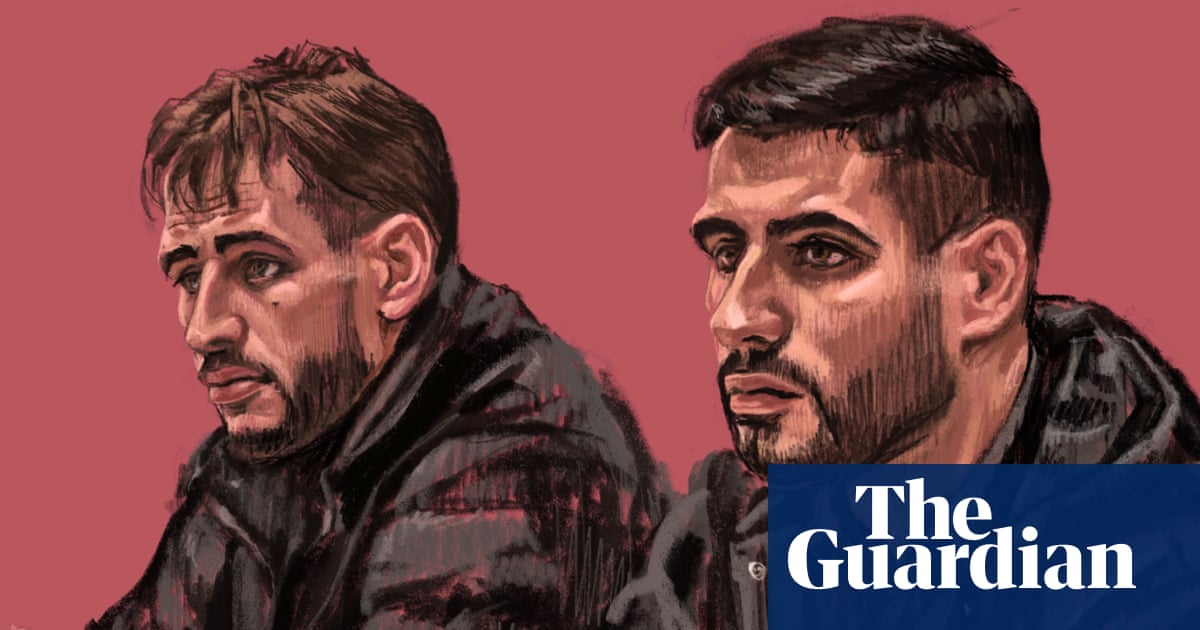
A Dutch court has ordered a far-right political party to pay damages to a professional court artist after the party used artificial intelligence to modify one of the artist’s sketches. The ruling establishes a legal boundary regarding the unauthorized use of AI to alter copyrighted creative works, specifically protecting the moral rights of the original creator.
What happened in the legal dispute between the PVV and the court artist?
The Party for Freedom (PVV), a far-right political organization in the Netherlands, was found liable for copyright infringement after it altered a sketch created by a professional court artist. According to court records, the PVV obtained a sketch produced during a legal proceeding and used AI software to modify the image’s appearance before publishing it for political purposes.
The artist filed a lawsuit claiming that the modifications distorted the original work and violated their intellectual property rights. The court ruled in favor of the artist, stating that the party did not have the legal authority to change the work, regardless of the technology used to achieve the alteration. The PVV was ordered to pay financial damages to compensate the artist for the infringement.
The core of the dispute centered on the “integrity” of the artwork. In many European jurisdictions, including the Netherlands, artists possess “moral rights” that exist separately from the economic right to sell a piece. These moral rights allow a creator to object to any distortion, mutilation, or other modification of their work that could be prejudicial to their honor or reputation.
Key facts of the case:
- Defendant: Party for Freedom (PVV).
- Plaintiff: An unnamed professional court artist.
- Action: Use of AI to modify a court sketch.
- Legal Violation: Infringement of copyright and moral rights.
- Outcome: Court-ordered payment of damages to the artist.
How did the AI modification lead to a copyright violation?
The PVV did not simply repost the image; they used generative AI to change specific elements of the sketch. While the party may have viewed this as a creative update or a necessary adjustment for their messaging, the law views the original sketch as a protected work of art. According to the legal findings, the AI-driven changes constituted an unauthorized derivative work.
AI tools, such as generative fill or image-to-image translation, allow users to add, remove, or alter details in an existing image with a few prompts. In this instance, the court found that these alterations stripped the original artist of their control over how their work was presented to the public. Because the AI altered the visual narrative of the sketch, it was deemed a violation of the artist’s right to preserve the integrity of their creation.
This case highlights a growing tension between the ease of AI editing and established copyright law. Many users assume that if they change an image “enough” using AI, it becomes a new work. However, the Dutch court clarified that if the underlying structure and essence of the original work remain recognizable, the original creator’s rights still apply.
Why does this ruling matter for the future of AI and art?
This ruling is significant because it addresses the “moral rights” aspect of AI, which is often overshadowed by discussions about “training data” and large-scale scraping. Most AI lawsuits focus on whether a company can train a model on millions of images without permission. This case, however, focuses on the output—specifically, the act of using AI to modify a specific, identified piece of art.
By awarding damages to the court artist, the court has signaled that AI is not a legal “loophole” for bypassing copyright. If a person or organization modifies a protected work using AI and publishes it without consent, they are just as liable as if they had manually painted over the original with a brush.
Legal analysts suggest this could lead to a surge in “moral rights” claims across the EU. As AI tools become integrated into standard editing software, the line between “touching up” an image and “altering its essence” becomes blurred. This case provides a precedent that protects the artist’s vision against algorithmic distortion.
| Aspect | Traditional Modification | AI-Driven Modification |
|---|---|---|
| Method | Manual editing (Photoshop, painting) | Generative AI prompts/filters |
| Legal Status | Requires permission for derivative works | Requires permission for derivative works |
| Moral Rights | Protects against distortion of vision | Protects against algorithmic distortion |
| Liability | Directly attributable to the editor | Attributable to the user of the AI tool |
What are the specific legal protections for artists in the Netherlands?
The Netherlands follows the European Union’s copyright framework, which is generally more protective of the “author” than the “publisher” compared to U.S. law. Under the Dutch Copyright Act, the creator of a work has both economic rights and personality rights (moral rights).
Economic rights allow the artist to charge a fee for the use of the image. Personality rights, however, are non-transferable. Even if the PVV had paid for the right to use the image, they would still have been prohibited from altering it in a way that harmed the artist’s reputation or distorted the work’s original intent without explicit permission.
In the context of court artists, their work is often the only visual record of a proceeding where photography is banned. This gives the sketches a unique documentary value. The court likely viewed the AI alteration not just as a copyright breach, but as a distortion of a documentary record.
For those interested in how these laws apply to other digital media, a related explainer on EU copyright directives provides further context on the “Digital Single Market” rules.
How does this compare to other global AI copyright battles?
Most high-profile AI cases, such as those involving Getty Images or various novelists against OpenAI, are “upstream” battles. They focus on the input: the act of using copyrighted data to train a model. The PVV case is a “downstream” battle, focusing on the final application of the tool.
In the United States, the concept of “Fair Use” is often invoked to justify the modification of images for political commentary or parody. However, the Dutch court did not find that the PVV’s modifications fell under a similar exemption. The ruling emphasizes that political utility does not grant a license to distort another person’s creative work.
This creates a contrast in how different regions handle AI. While the U.S. is still debating whether AI-generated art can even be copyrighted, European courts are focusing on how AI affects the rights of existing human creators. The Dutch ruling reinforces the human-centric approach to copyright, prioritizing the original artist over the technological efficiency of the AI user.
What were the political implications for the PVV?
The PVV, led by Geert Wilders, often utilizes aggressive visual communication to convey its political messages. Using a court sketch—a symbol of legal authority and factual recording—and altering it via AI suggests a desire to control the visual narrative of a legal event. The court’s decision to award damages serves as a rebuke of this practice.
While the financial damages may be a minor cost for a political party, the legal precedent is a strategic blow. It warns other political entities that using AI to “tweak” imagery for propaganda purposes can lead to costly litigation if the original source is a copyrighted work. The ruling underscores that the “truth” of a court sketch is protected from political re-imagining via algorithms.
“The use of AI to alter an artist’s work does not erase the original creator’s rights; it simply adds a new layer of infringement.”
Common misconceptions about AI and copyright in this case
There is a widespread belief that AI-generated content is “public domain” or that AI modifications create a “new” work that is exempt from original copyright. This case proves those assumptions wrong in the eyes of the Dutch judiciary.
- Misconception: “If I use AI to change an image, it’s a new piece of art.”
Fact: If the original work is still recognizable, it is considered a derivative work, which requires the original creator’s permission. - Misconception: “Political speech allows for the modification of images.”
Fact: While political speech is protected, it does not grant an absolute right to violate the moral rights of an artist. - Misconception: “The AI created the change, so the AI is responsible.”
Fact: The person or entity that prompts the AI and publishes the result is the legally responsible party.
What are the long-term consequences for creative professionals?
For court artists, illustrators, and photographers, this ruling provides a vital shield. As AI tools like Midjourney and DALL-E integrate “inpainting” and “outpainting” features, the risk of “stealth editing” increases. This is where an artist’s work is modified slightly to change a facial expression, a background detail, or a symbolic element, often without the public realizing the image has been tampered with.
The Dutch ruling suggests that artists can successfully sue not just for the use of their work, but for the alteration of it. This empowers creators to protect the “truth” of their work against AI-driven manipulation. It also encourages organizations to implement stricter guidelines on how AI is used to edit third-party content.
Future litigation will likely explore the “threshold of transformation.” At what point does an AI modification become so extensive that it is no longer a derivative work but a completely new creation? The PVV case suggests that as long as the original artist’s contribution is the foundation, the artist retains their rights.
For a deeper dive into the legalities of digital art, see our guide to intellectual property in the age of generative AI.
Frequently Asked Questions
Did the PVV pay for the original sketch?
Regardless of whether the party paid for the right to publish the sketch, the court found that they did not have the right to modify it. Under Dutch law, moral rights (the right to protect the work’s integrity) remain with the artist even if the economic rights are sold or licensed.
Can AI-modified images be used for political commentary?
Yes, but only if the modification does not violate the copyright or moral rights of the original creator. Using a generic or public domain image is safe, but altering a specific artist’s work without permission can lead to legal liability, as seen in the PVV case.
What are “moral rights” in copyright law?
Moral rights are the rights of an author to be credited for their work (attribution) and to prevent the work from being distorted or changed in a way that harms their reputation (integrity). These are distinct from economic rights, which deal with payment and licensing.
Will this ruling affect AI companies?
While this case was between a political party and an artist, it signals to AI companies that their tools are being used for copyright infringement. This may lead to more robust “copyright filters” or warnings within AI software when users attempt to modify uploaded images.
Is this ruling applicable outside of the Netherlands?
This is a Dutch court ruling and is legally binding only in the Netherlands. However, because the Netherlands follows EU copyright directives, it provides a strong indication of how other European courts might handle similar AI-driven copyright disputes.
