
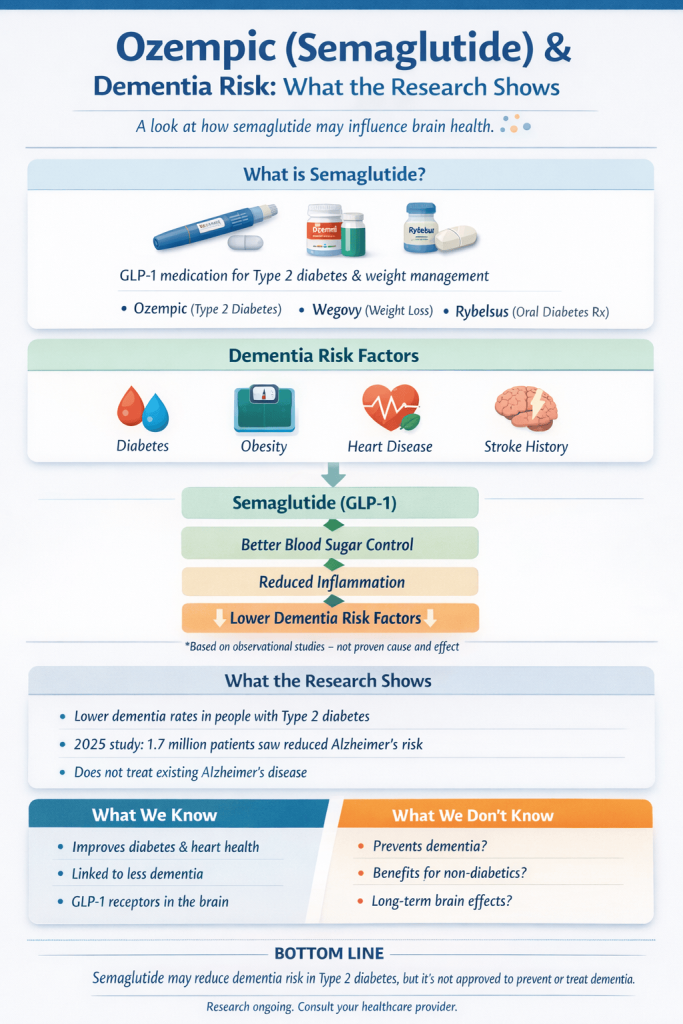
Semaglutide, a medication used to treat type 2 diabetes and obesity, is associated with a 53% reduction in dementia risk among patients with diabetes. While this GLP-1 receptor agonist shows significant efficacy in lowering overall dementia rates, research indicates it may provide limited benefits for those specifically suffering from Alzheimer’s disease.
- Dementia Risk: Patients with type 2 diabetes taking semaglutide saw a 53% decrease in dementia risk.
- Alzheimer’s Limitation: The drug’s effectiveness is notably lower when targeting Alzheimer’s specifically.
- Variable Response: Researchers are investigating a “brain switch” to explain why the medication does not work for every patient.
Why does semaglutide reduce dementia risk in diabetics?
According to recent research, medications in the GLP-1 class, such as semaglutide, significantly lower the likelihood of developing dementia in people with type 2 diabetes. The data shows a 53% reduction in risk for this population. This suggests that the metabolic regulation provided by the drug may offer neuroprotective benefits that extend beyond blood sugar control and weight loss.
Does the drug work for Alzheimer’s disease?
Despite the strong results regarding general dementia, the impact on Alzheimer’s disease is different. Research indicates that while GLP-1 agonists lower the broad risk of dementia, they bring little to no significant benefit for patients specifically dealing with Alzheimer’s. This distinction suggests that the mechanisms driving Alzheimer’s may be less responsive to the pathways targeted by semaglutide than other forms of cognitive decline.
Why is the medication ineffective for some patients?
Clinical observations show that semaglutide does not produce the same results in every individual. To understand this variance, brain researchers are currently focusing on a specific “switch” in the brain. This investigation aims to determine why some patients respond positively to the treatment while others do not, potentially identifying biological markers that predict efficacy.
What are the potential side effects on the brain?
As the use of “weight loss injections” like Ozempic increases, scientists are closely examining the neurological implications of these drugs. New brain research is exploring potential side effects associated with long-term use, ensuring that the cognitive benefits of dementia prevention are weighed against any possible adverse neurological impacts.
