
Scientists Create Largest-Ever Cosmological Simulation, Opening New Window Into Universe
A landmark achievement in computational astrophysics has been announced, with researchers unveiling the most detailed and expansive simulation of the universe’s evolution to date. This breakthrough model, developed through international collaboration and powered by cutting-edge supercomputing infrastructure, allows scientists to trace cosmic structure formation across unprecedented scales of time and space. The simulation, which encompasses billions of light-years and spans nearly the entire history of the cosmos, provides a virtual laboratory for testing theories about dark matter, dark energy and galaxy formation. By replicating the complex interplay of gravity, hydrodynamics, and cosmic expansion, the project offers fresh insights into how the universe transitioned from a nearly uniform state after the Substantial Bang to the intricate web of galaxies and voids observed today.
According to reports from Xinhua, the simulation represents a significant leap forward in both scale and resolution, enabling researchers to study phenomena that were previously beyond computational reach. The effort brings together experts from multiple disciplines, including theoretical physics, computer science, and observational astronomy, to create a cohesive framework for interpreting real-world data from telescopes and space-based observatories. As the scientific community continues to grapple with fundamental questions about the universe’s composition and evolution, this new tool is expected to play a pivotal role in guiding future research and refining cosmological models.
Understanding the Scale and Scope of the Simulation
What sets this cosmological simulation apart from previous efforts is its unprecedented combination of volume and detail. Earlier models often had to compromise—either simulating a large portion of the universe at low resolution or focusing on a small region with high precision. This new approach overcomes that limitation by employing advanced algorithms and optimized code that efficiently distribute computational workloads across thousands of processors. The result is a virtual universe that maintains high fidelity across a vast expanse, allowing scientists to observe both large-scale structures like superclusters and filaments, as well as smaller-scale features such as individual galactic halos and stellar nurseries.
The simulation tracks the evolution of dark matter under the influence of gravity, while likewise incorporating gas dynamics, star formation, and feedback processes from supernovae and active galactic nuclei. These physical processes are essential for shaping the visible universe, yet they are notoriously difficult to model accurately due to their nonlinear nature and wide range of scales. By integrating these components within a single cohesive framework, the simulation achieves a more realistic representation of how cosmic structures form and evolve over billions of years.
Initial outputs from the model have already begun to reproduce key features of the observed universe, including the cosmic web’s filamentary structure, the distribution of galaxy clusters, and the statistical properties of galaxy motions. Researchers note that while the simulation does not claim to replicate every detail of reality, it successfully captures the emergent patterns that arise from fundamental physical laws—a critical validation of the underlying assumptions in modern cosmology.
International Collaboration Drives the Breakthrough
The project is the product of a sustained multinational effort, with leading contributions from research institutions in China, Europe, and North America. Scientists involved emphasize that the success of the simulation relied not only on raw computational power but also on interdisciplinary cooperation—bridging gaps between numerical methods, astrophysical theory, and data validation techniques. Shared development of open-source software tools and standardized simulation protocols has allowed teams to build upon each other’s work, accelerating progress and ensuring reproducibility.
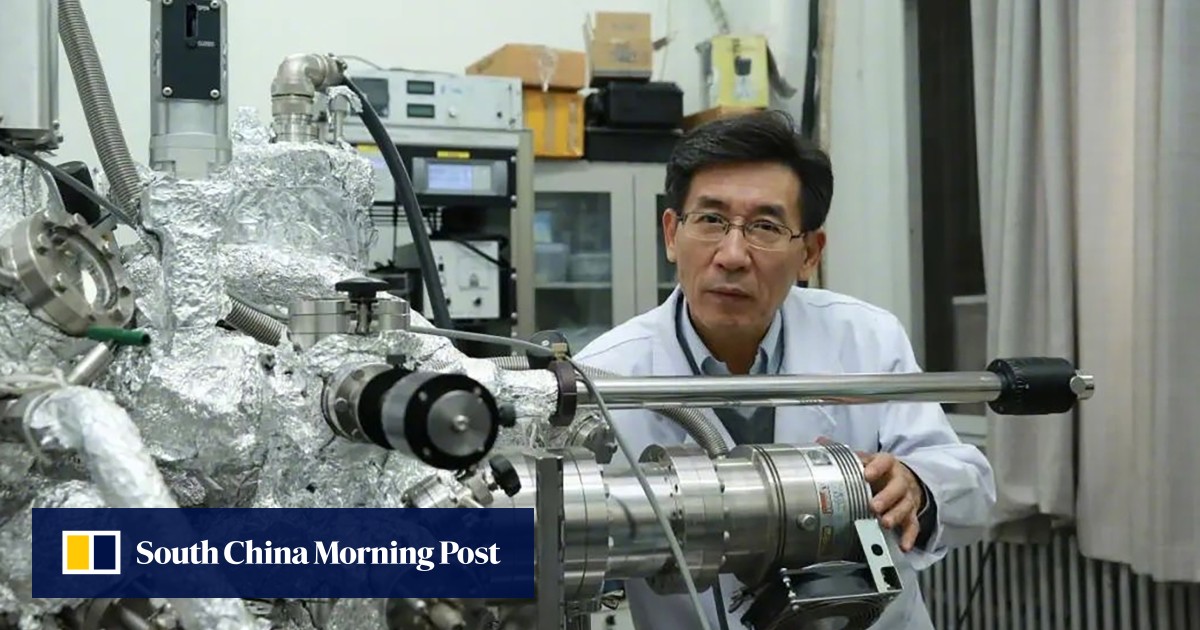
Reports from Global Times highlight the central role played by Chinese scientists in coordinating the initiative, particularly in optimizing performance on domestically developed supercomputing systems. These machines, among the fastest in the world, provided the necessary processing capacity to handle the simulation’s immense data demands—generating petabytes of output that require advanced storage and analytics solutions. The ability to leverage homegrown hardware for such a forefront scientific endeavor underscores growing self-reliance in high-performance computing capabilities.
Meanwhile, coverage from 巴士的報 points to the simulation’s official designation as “HyperMillennium,” reflecting its ambition to model a significant fraction of the universe’s history. The name underscores both the temporal scope—spanning a substantial portion of cosmic time—and the millennium-scale challenges overcome in bringing the project to fruition. Researchers involved describe the effort as a “decadal milestone” in computational cosmology, one that sets a new benchmark for future simulations.
Why This Matters: Implications for Cosmology and Fundamental Physics
The ability to simulate the universe with such precision has far-reaching implications for both theoretical and observational science. One of the most immediate applications lies in the interpretation of data from next-generation telescopes, such as the James Webb Space Telescope, the Vera C. Rubin Observatory, and upcoming radio arrays like the Square Kilometre Array. These instruments are gathering unprecedented volumes of data on distant galaxies, gravitational lensing, and the large-scale structure of the cosmos. By comparing real observations with synthetic outputs from the simulation, scientists can test competing hypotheses about dark matter properties, the nature of dark energy, and the validity of general relativity on cosmic scales.

For instance, if the simulation predicts a certain distribution of galaxy velocities or cluster masses that deviates from what is observed, it could signal the need to revise existing models—potentially pointing toward new physics beyond the Standard Model of particle physics. Conversely, strong agreement between simulation and observation would bolster confidence in the current Lambda-CDM framework, which describes a universe dominated by dark energy and cold dark matter.
Beyond cosmology, the technological advances developed for this project have spillover benefits for other fields requiring massive-scale simulations, including climate modeling, plasma physics, and biomedical research. The optimization techniques, parallel computing strategies, and data compression methods created to handle the simulation’s output are being adapted for use in diverse scientific domains, amplifying the project’s broader impact.
Addressing Common Misconceptions About Cosmological Simulations
Despite their growing sophistication, cosmological simulations are often misunderstood by the public and even occasionally mischaracterized in media coverage. One common misconception is that these models aim to recreate the universe in every detail—down to the motion of individual stars or planets. In reality, such a level of detail remains computationally infeasible and unnecessary for addressing large-scale questions. Instead, simulations focus on capturing statistically representative behaviors and emergent patterns that arise from known physical laws.
Another frequent misunderstanding is that simulation results constitute “proof” of a particular theory. Experts clarify that while simulations can support or challenge hypotheses, they are ultimately dependent on the assumptions and initial conditions fed into them. A simulation that matches observations does not confirm a theory beyond doubt. rather, it shows that the theory is consistent with the data under those specific assumptions. Scientific progress comes from iteratively refining models, testing alternatives, and seeking converging evidence from multiple independent sources.
There is also a tendency to overlook the role of uncertainty and approximation in these models. All simulations involve simplifications—whether due to unresolved physics, limited resolution, or computational constraints. Responsible science communication requires acknowledging these limitations while still highlighting the value of the insights gained. Transparency about uncertainties, sensitivity tests, and validation against observational benchmarks is essential for maintaining credibility.
Looking Ahead: Future Developments and Open Questions
While the current simulation marks a major achievement, researchers view it as a stepping stone rather than an endpoint. Ongoing efforts are focused on increasing resolution further, incorporating more sophisticated physics (such as neutrino dynamics and magnetic fields), and extending the timeline to cover even earlier epochs, including the cosmic dark ages and reionization period. There is also growing interest in creating ensembles of simulations—running hundreds of variations with slightly altered parameters—to better quantify uncertainties and explore how sensitive cosmic outcomes are to initial conditions.
Another frontier involves integrating machine learning techniques to accelerate simulation workflows or to emulate complex physical processes that are too expensive to compute directly. Hybrid approaches, where traditional numerical methods are combined with AI-driven emulators, could drastically reduce computation time while preserving accuracy, enabling more extensive parameter surveys and real-time comparison with incoming observational data.
Equally important is the push toward greater accessibility and collaboration. Many of the software tools and datasets generated by this project are being made available to the global scientific community through open repositories. By lowering barriers to entry, developers hope to empower researchers worldwide—especially those in under-resourced institutions—to conduct their own analyses and contribute to the collective understanding of the universe.
Balancing Ambition with Scientific Rigor
The excitement surrounding this breakthrough is tempered by a commitment to scientific caution. Leaders of the project stress that while the simulation is a powerful tool, It’s not a substitute for observation or theoretical innovation. Instead, it functions as part of a larger ecosystem of inquiry—one that includes ground-based telescopes, space missions, particle detectors, and pen-and-paper theory work. The true strength of the approach lies in its ability to connect these different strands, allowing scientists to pose sharper questions and design more targeted investigations.
As one researcher noted in a recent interview, “We’re not trying to build a perfect replica of the universe. We’re trying to build a mirror that reflects back what our theories predict—so we can see where they succeed, and where they fall short.” That mindset—humble, iterative, and evidence-driven—is what ultimately drives progress in cosmology. With this new simulation now in hand, the scientific community has a clearer reflection than ever before.
Key Points: What You Need to Recognize
- The simulation is the largest and most detailed cosmological model ever created, tracking the evolution of cosmic structures across billions of light-years.
- It was developed through an international collaboration, with significant contributions from Chinese scientists and use of domestically developed supercomputing systems.
- The model incorporates dark matter dynamics, gas physics, star formation, and feedback from energetic processes to produce a realistic representation of cosmic evolution.
- Early results show strong agreement with observed features of the universe, such as the cosmic web and galaxy cluster distributions.
- The simulation serves as a virtual testbed for refining cosmological theories and interpreting data from next-generation observatories.
- Limitations and assumptions are acknowledged; results are interpreted as consistent with, not proof of, underlying theories.
- Future work aims to increase resolution, add more physics, and integrate machine learning to enhance accessibility and predictive power.
Frequently Asked Questions
- What makes this cosmological simulation different from previous ones?
This simulation combines unprecedented scale with high resolution, allowing researchers to study both large-scale cosmic structures and smaller-scale galactic features within the same framework—something earlier models struggled to achieve due to computational trade-offs. - Who was involved in creating this simulation?
The project brought together an international team of scientists from institutions in China, Europe, and North America, with notable leadership from Chinese researchers and reliance on advanced domestic supercomputing infrastructure. - Can this simulation prove theories about dark matter or dark energy?
No simulation can definitively prove a theory. Instead, this model tests whether theoretical predictions match observed cosmic patterns—supporting or challenging ideas based on consistency with data. - Is the simulation trying to recreate every star and galaxy in detail?
No. It focuses on capturing statistically representative behaviors and emergent patterns from known physics, not on replicating individual stars or planets, which would be computationally prohibitive. - How will this simulation be used in future research?
It will help scientists interpret data from new telescopes, refine cosmological models, explore alternative physics, and serve as a shared resource for the global research community through open-access tools and data. - Are there risks of overestimating what the simulation can share us?
Yes. Scientists emphasize that all simulations rely on assumptions and simplifications. Results are interpreted cautiously, with attention to uncertainties, validation against real data, and the need for multiple lines of evidence.
