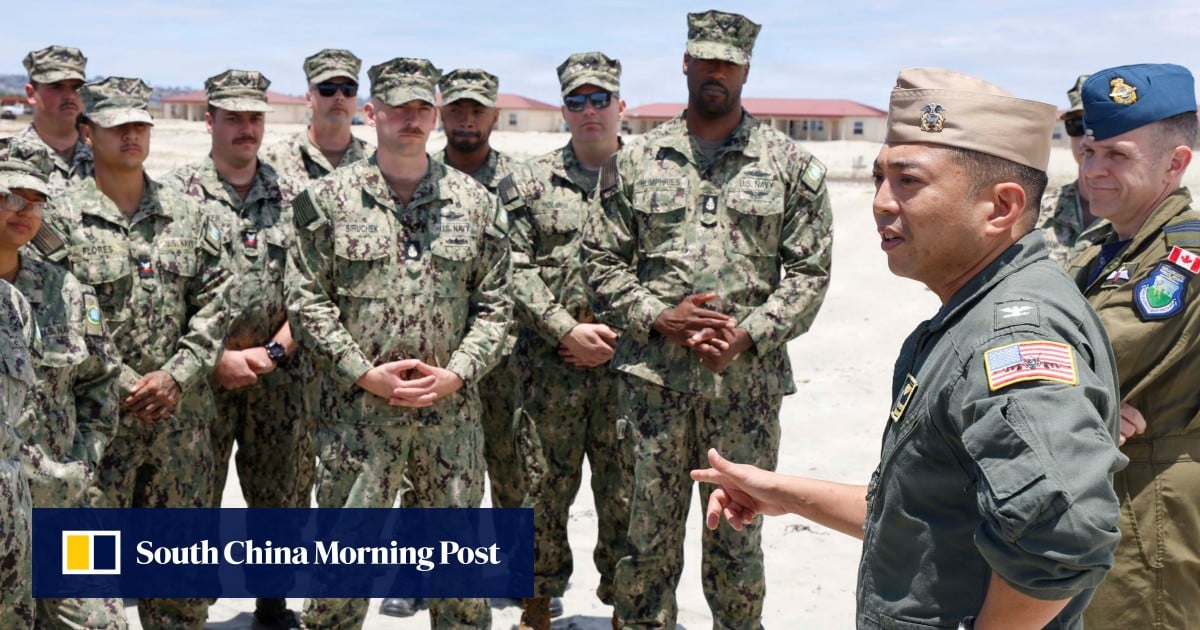
Aid and Diplomacy: US Navy’s Renewed Bid for Southeast Asian Influence – South China Morning Post
The US Navy is expanding its diplomatic and humanitarian aid initiatives across Southeast Asia to strengthen security ties and counter regional influence from China. This strategy shifts focus from purely military deterrence to “soft power” engagement, including maritime capacity building and disaster relief, according to US Indo-Pacific Command objectives.
Why is the US Navy increasing aid and diplomacy in Southeast Asia?
The US Navy has accelerated its “aid and diplomacy” framework to secure strategic access and foster loyalty among Association of Southeast Asian Nations (ASEAN) members. According to the US Department of Defense’s Indo-Pacific Strategy, the objective is to maintain a “free and open Indo-Pacific” by providing tangible security benefits that discourage regional partners from aligning exclusively with Beijing.
For decades, US presence in the region relied heavily on large-scale carrier strike groups and high-visibility exercises. However, current US Navy leadership has shifted toward “small-ship” diplomacy and capacity building. This involves providing patrol boats, enhancing radar systems, and conducting joint training for coast guards. These efforts aim to address the immediate needs of Southeast Asian nations—such as illegal fishing, piracy, and search-and-rescue—while building the infrastructure necessary for high-end military cooperation if conflicts arise.
Key drivers for this renewed bid include:
- Maritime Domain Awareness (MDA): Providing tools for nations to monitor their own Exclusive Economic Zones (EEZs) without relying on external powers.
- Countering “Grey Zone” Tactics: Helping partners resist non-military coercion, such as the use of maritime militias in the South China Sea.
- Infrastructure Integration: Utilizing the Enhanced Defense Cooperation Agreement (EDCA) in the Philippines to rotate troops and equipment more efficiently.
How does US maritime diplomacy contrast with Chinese regional strategy?
The US approach focuses on “capacity building” and security autonomy, whereas China’s regional strategy emphasizes infrastructure investment and economic interdependence through the Belt and Road Initiative (BRI). According to reports from the Center for Strategic and International Studies (CSIS), this creates a distinct contrast in how influence is brokered in Southeast Asia.
China often provides large-scale loans for ports and bridges, which critics argue creates “debt-trap diplomacy.” In contrast, the US Navy’s renewed bid focuses on “interoperability”—ensuring that a partner’s navy can communicate and operate alongside US forces. This is achieved through programs like the Cooperation Afloat Readiness and Training (CARAT) exercises.
| Feature | US Navy Approach | Chinese Maritime Strategy |
|---|---|---|
| Primary Tool | Security aid, training, and MDA tools | Infrastructure loans and port development |
| Strategic Goal | Interoperability and rules-based order | Economic integration and regional hegemony |
| Engagement Style | Multilateral exercises (e.g., CARAT) | Bilateral agreements and BRI projects |
| Focus Area | Coast guard and naval professionalism | Port logistics and commercial shipping |
Which Southeast Asian nations are central to this renewed US bid?
The US Navy is not applying a one-size-fits-all approach; instead, it is tailoring aid packages to the specific political needs of individual nations.
The Philippines: The Strategic Anchor
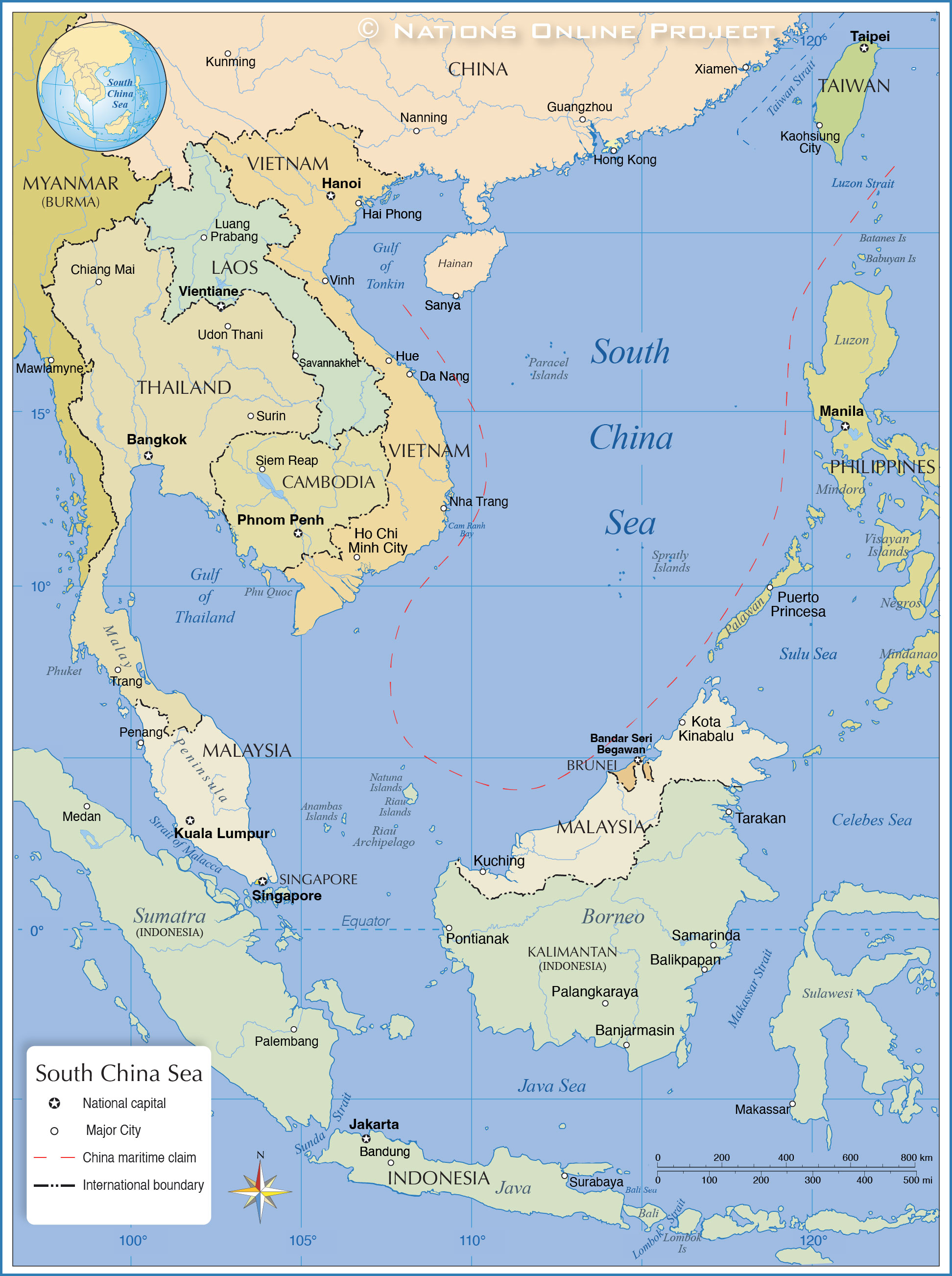
The Philippines remains the most critical partner. Under the current administration, the US has expanded its access to military bases via EDCA. The US Navy has increased its presence in the Philippine Sea, focusing on joint patrols that explicitly challenge territorial claims in the South China Sea. According to official statements from the Philippine Department of National Defense, these activities are intended to bolster the country’s “comprehensive archipelagic defense concept.”
Vietnam: The Pragmatic Partner
Despite a history of conflict, the US and Vietnam have moved toward a “Comprehensive Strategic Partnership.” The US Navy has provided Hamilton-class high-endurance cutters to the Vietnam Coast Guard. This aid allows Hanoi to patrol its waters more effectively, reducing its reliance on Chinese diplomacy to resolve maritime disputes.
Indonesia and Malaysia: The Neutral Balancers
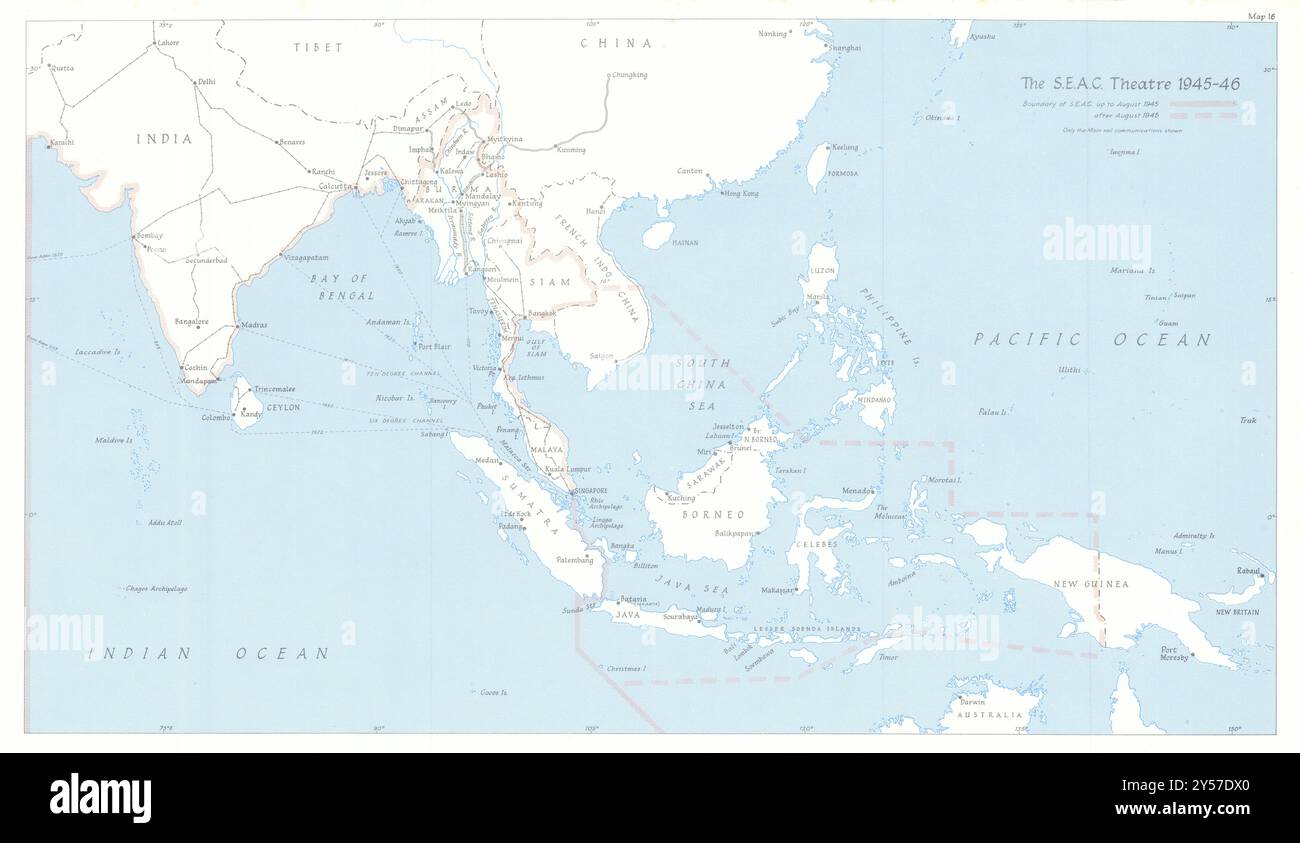
Indonesia and Malaysia generally avoid formal military alliances. The US Navy engages these nations through “Super Garuda Shield” exercises and maritime security assistance. The focus here is less on deterrence and more on “stability,” targeting shared interests like the security of the Malacca Strait—one of the world’s most vital shipping lanes.
“The goal is not to force a choice between the US and China, but to ensure that the rules of the road at sea are respected by all parties, regardless of their economic ties.” — US Indo-Pacific Command official briefing.
What are the risks and challenges of this diplomatic push?
The US Navy’s bid for influence faces significant headwinds, primarily the concept of “ASEAN Centrality.” Most Southeast Asian nations view themselves as a neutral bloc and are wary of becoming a theater for superpower competition. According to diplomatic analysts, there is a persistent fear that increased US military aid will provoke Beijing, leading to economic retaliation.
Furthermore, the “aid” provided by the US is often tied to security requirements and transparency, which can be more bureaucratic than the direct investment offered by China. There is also the risk of “over-promising and under-delivering.” If the US cannot provide consistent economic incentives to match its security guarantees, regional partners may view the Navy’s presence as a tool for US interests rather than a benefit to the host nation.
Common misconceptions about this strategy include:
- Misconception: The US is trying to build a “new NATO” in Asia.
Reality: The US is focusing on a “hub-and-spoke” model of bilateral partnerships rather than a formal multilateral treaty alliance. - Misconception: Aid is only about weapons.
Reality: A significant portion of the bid involves humanitarian assistance and disaster relief (HADR), which builds goodwill with civilian populations.
Timeline of US Navy Strategic Shifts in Southeast Asia
| Period | Strategic Focus | Key Action/Initiative |
|---|---|---|
| 2011–2016 | The “Pivot to Asia” | Initial shift of naval assets from Middle East to Pacific. |
| 2017–2020 | Free and Open Indo-Pacific (FOIP) | Increased Freedom of Navigation Operations (FONOPs). |
| 2021–Present | Integrated Deterrence & Aid | Focus on Coast Guard training, MDA, and EDCA expansion. |
The current phase is characterized by a move away from “big deck” diplomacy—where a single aircraft carrier visit was the primary signal—toward a persistent, integrated presence involving smaller vessels and constant technical cooperation. This approach is designed to be less provocative to China while being more useful to local partners.
How does this impact global shipping and trade?
The stability of Southeast Asian waters is directly tied to global economic health. A significant portion of global trade passes through the South China Sea and the Strait of Malacca. By increasing the capacity of local navies to police these waters, the US Navy aims to reduce the risk of disruptions caused by piracy or territorial skirmishes.
If the US Navy successfully implements its bid for influence, the result would be a more distributed security architecture. Rather than the US Navy acting as the sole “policeman” of the region, a network of capable local partners would share the burden of maintaining maritime order. This would theoretically lower the risk of a direct US-China clash by creating a buffer of stable, independent maritime states.
For those tracking regional developments, the most important indicators to watch will be the expansion of US access to ports in Malaysia or Indonesia and the level of participation in multilateral naval drills by ASEAN members who have traditionally remained aloof.
Frequently Asked Questions
What is the “renewed bid” for influence by the US Navy?
It is a strategic shift toward using a combination of maritime security aid, diplomatic engagement, and capacity building to strengthen ties with Southeast Asian nations, moving beyond traditional military deterrence to counter Chinese influence.
How does the US Navy provide “aid” to these countries?
Aid is provided through the transfer of patrol vessels, the installation of maritime surveillance technology, joint training exercises (like CARAT), and humanitarian assistance for disaster relief.
Why is the South China Sea central to this strategy?
The South China Sea is a critical global trade route and a point of intense territorial dispute. By helping partners monitor their waters, the US aims to uphold international law and prevent any single power from controlling the region.
Do ASEAN countries want the US Navy in their waters?
Responses vary. While some, like the Philippines, actively seek US support for security, others prefer a neutral stance to avoid jeopardizing economic ties with China. Most welcome aid that improves their own sovereignty and safety.
What is the difference between “soft power” and “hard power” in this context?
Hard power refers to the use of aircraft carriers and combat ships to deter aggression. Soft power, in this bid, refers to diplomacy, training, and humanitarian aid that builds long-term trust and institutional links.
For more information on regional security, you may find a related explainer on the South China Sea disputes or a detailed analysis of ASEAN’s neutrality policy helpful in understanding the broader geopolitical landscape.
