Samsung Introduces Next-Gen Galaxy Watch Features for AI-Powered Everyday Health Companion – samsung.com
The landscape of wearable technology is undergoing a seismic shift, moving away from simple data collection toward intelligent, actionable interpretation. In a move that signals the next era of personal wellness, Samsung Introduces Next-Gen Galaxy Watch Features for AI-Powered Everyday Health Companion – samsung.com, aiming to transform the smartwatch from a passive tracker into a proactive health strategist. By integrating advanced generative AI and refined sensor arrays, Samsung is attempting to bridge the gap between raw biometric data and meaningful lifestyle changes, positioning the Galaxy Watch as an indispensable tool for preventative health management.
For years, the primary value proposition of smartwatches has been the “count”—counting steps, counting calories, and counting heartbeats. However, the modern consumer is experiencing “data fatigue,” where an abundance of numbers provides little actual guidance. Samsung’s latest pivot focuses on the “why” and the “how,” utilizing Galaxy AI to synthesize complex biological signals into a coherent narrative about a user’s physical and mental state. This evolution marks a transition from a device that tells you how you slept to one that explains why you feel exhausted and suggests a specific plan to recover.
The Core Architecture of an AI Health Companion
At the heart of this update is a sophisticated synergy between hardware, and software. While the sensors provide the raw input, the AI acts as the translator. The “Everyday Health Companion” philosophy is built on the premise that health is not a static metric but a fluid state influenced by sleep, activity, nutrition, and stress.
The Role of Galaxy AI in Biometric Analysis
Galaxy AI does not simply trigger alerts based on thresholds; it looks for patterns. By analyzing longitudinal data—trends over weeks and months—the AI can establish a personalized baseline for each user. When a deviation occurs, the system can cross-reference multiple data points. For example, if a user’s resting heart rate is elevated, the AI doesn’t just report the number; it looks at the previous night’s sleep quality and the day’s activity levels to determine if the elevation is due to overtraining, illness, or stress.
BioActive Sensor Integration
The intelligence of the software is only as good as the accuracy of the hardware. Samsung continues to refine its BioActive Sensor, which combines optical heart rate monitoring, electrical heart signal (ECG) analysis, and bioelectrical impedance analysis (BIA). The AI-powered updates optimize how these sensors operate, reducing “noise” caused by movement or skin tone variations, ensuring that the data feeding the AI is as clean as possible.
“The shift toward AI-driven health companions represents a move from quantitative tracking to qualitative insight. We are no longer just measuring the body; we are interpreting the biological language of the user in real-time.”
Breakdown of Key AI-Powered Features
The new feature set is designed to tackle the most pressing concerns of the modern health-conscious user: energy management, sleep optimization, and holistic wellness. Rather than presenting these as isolated tools, Samsung has woven them into a unified experience.
The Energy Score: A New Metric for Readiness
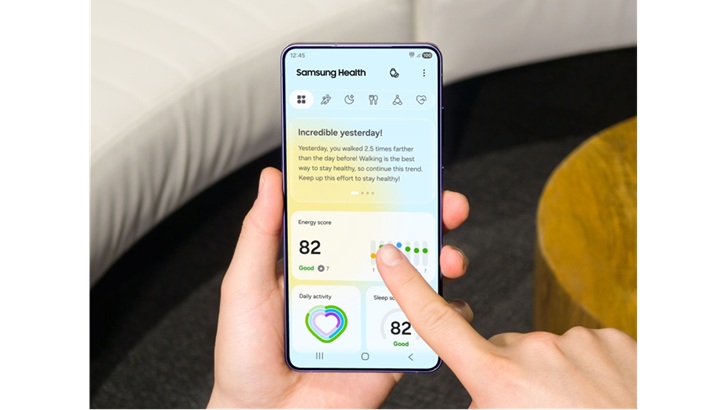
One of the most significant additions is the Energy Score. This feature functions as a daily “readiness” indicator, similar to concepts found in high-end athletic recovery tools. The Energy Score is calculated by analyzing several key pillars:

- Sleep Consistency: Not just the duration, but the quality and stability of sleep cycles.
- Heart Rate Variability (HRV): A critical indicator of the autonomic nervous system’s state and stress levels.
- Previous Day’s Activity: Balancing the physical load placed on the body with its recovery capacity.
By providing a single, easy-to-understand score, users can make informed decisions about whether to push for a personal record in the gym or prioritize a rest day to avoid burnout.
Advanced Sleep Coaching and AI Analysis
Sleep has long been a focal point for Samsung, but the next-gen features move beyond basic stage tracking. The AI now provides a “Sleep Animal” archetype—a gamified way to categorize sleep patterns—and couples this with a multi-week coaching program. The AI identifies specific behavioral triggers that negatively impact sleep and suggests personalized interventions, such as adjusting caffeine intake or altering the timing of evening workouts.
Personalized Wellness Insights
The “Companion” aspect of the watch manifests in its ability to offer proactive suggestions. If the AI detects a trend of increasing stress levels over several days, it may prompt the user to engage in a guided breathing session or suggest a mindful walk. This transforms the device from a reactive tool into a preventative one.
| Feature | Traditional Tracking | AI-Powered Companion Approach |
|---|---|---|
| Heart Rate | Displays current BPM | Analyzes trends to detect stress or illness |
| Sleep | Reports hours slept | Provides behavioral coaching for better quality |
| Activity | Counts steps and calories | Calculates “Energy Score” for daily readiness |
| Wellness | Manual logging of mood/food | Proactive suggestions based on biometric shifts |
Industry Context: The Wearable Arms Race
Samsung’s announcement does not happen in a vacuum. The wearable market is currently dominated by a “considerable three” rivalry between Samsung, Apple, and Google (via Fitbit/Pixel). Each is racing to integrate Large Language Models (LLMs) and generative AI into their health ecosystems.
Comparison with Competitors
While Apple has focused heavily on clinical-grade certifications and ecosystem lock-in, and Google/Fitbit has leaned into deep data analytics for sleep and stress, Samsung is positioning itself as the “integrator.” By leveraging the broader Galaxy ecosystem—connecting the watch to the phone and tablet—Samsung can create a more holistic health profile. The focus on “Everyday Health Companion” is a strategic attempt to make the technology feel less like a medical device and more like a supportive partner.
The Move Toward Preventative Medicine
There is a broader socio-economic trend toward preventative healthcare. As global healthcare systems face increasing strain, the ability to detect early warning signs of chronic conditions—such as hypertension or sleep apnea—via consumer wearables is becoming invaluable. Samsung’s AI features are a step toward a future where the watch can alert a user to visit a doctor before a symptom becomes acute.

Technical Implications and Data Privacy
Integrating AI into health tracking necessitates a massive amount of data processing. This raises critical questions about where that data lives and who has access to it. Samsung’s approach involves a hybrid of on-device processing and secure cloud computing.
On-Device vs. Cloud AI
To ensure low latency and higher privacy, certain AI computations—such as immediate heart rate anomalies—are handled on the device. More complex trend analysis, which requires comparing the user’s data against millions of other anonymized profiles to find patterns, is handled via encrypted cloud servers. This balance is crucial for maintaining a responsive user experience without sacrificing the depth of the analysis.
The Privacy Paradigm
Health data is the most sensitive information a person owns. The “AI Health Companion” framework requires a high level of trust. Samsung has implemented several layers of security, including Samsung Knox, to encrypt health data. However, as AI becomes more predictive, the industry must grapple with the ethics of “predictive health”—the point at which a device predicts a health issue that the user may not yet be aware of or may not want to know.
Addressing Common Misconceptions
As AI enters the health space, several misunderstandings often arise among consumers and the general public. It is important to clarify what an AI-powered health companion is—and what it is not.
AI Diagnosis vs. AI Insight
A common misconception is that an AI-powered watch can “diagnose” a disease. It is critical to understand that Samsung’s AI features are designed for wellness and insight, not medical diagnosis. While the watch can detect an irregular heart rhythm (via ECG), the AI’s role is to highlight a trend that warrants professional medical attention, not to replace a physician’s consultation. The “companion” is a guide, not a doctor.
The “Perfect Score” Fallacy
Users often fall into the trap of chasing a “100” Energy Score or a perfect sleep rating. Experts warn that over-reliance on these scores can lead to “orthosomnia”—an unhealthy obsession with achieving perfect sleep data, which ironically leads to more stress and worse sleep. Samsung’s AI attempts to mitigate this by focusing on trends rather than single-day snapshots, encouraging users to look at their health over a weekly or monthly average.
The Path Forward: What This Means for the User
The introduction of these features suggests a future where our devices understand our biological needs better than we do. Imagine a morning where your watch doesn’t just wake you up, but tells you: “Your recovery is low today due to poor REM sleep and high overnight heart rate; I’ve adjusted your calendar to move your high-intensity workout to tomorrow and suggested a light stretch for this morning.”
This level of integration requires a seamless flow of data between the watch, the smartphone, and perhaps even smart home devices (like a smart thermostat adjusting the room temperature for optimal sleep). Samsung is building the foundation for this “Ambient Health” environment.
Key Takeaways for Current Galaxy Watch Users
- Prioritize Trends: Stop looking at daily numbers and start observing the AI-generated weekly trends.
- Trust the Energy Score: Use the readiness metric to modulate exercise intensity and avoid injury.
- Engage with Coaching: The AI’s value increases the more you interact with its suggestions and provide feedback.
For those interested in further exploring how these AI integrations fit into the broader ecosystem, a related explainer on Galaxy AI integration may provide deeper technical context on the underlying models used across Samsung’s device lineup.
Frequently Asked Questions
Does the AI Health Companion require a subscription?
While basic tracking has always been free, some advanced AI-driven insights and personalized coaching features may be integrated into the Samsung Health ecosystem. Users should check their specific region and device model for the most current availability of these features.
Is the Energy Score accurate for professional athletes?
The Energy Score is designed for the general population to optimize daily wellness. While it provides valuable data on recovery and HRV, professional athletes often require more specialized, clinical-grade equipment. However, for the vast majority of fitness enthusiasts, it provides a highly reliable proxy for readiness.
How does the AI handle data if I switch from another smartwatch?
AI requires baseline data to be effective. When switching to a Galaxy Watch, there is typically a “calibration period” of several days to two weeks where the AI learns your unique biological rhythms before it can provide highly accurate Energy Scores and sleep insights.
Will these AI features work on older Galaxy Watch models?
Many of the software-based AI enhancements are delivered via One UI Watch updates. However, some features that rely on the latest BioActive sensor hardware may be exclusive to the newest generations of the Galaxy Watch. Checking for the latest software updates is the best way to see which features are available for your specific model.
How does the AI distinguish between stress and exercise?
The AI uses “sensor fusion.” It compares the heart rate increase with accelerometer data (movement) and skin conductance. If the heart rate spikes while the accelerometer shows no movement, the AI categorizes the event as stress or emotional arousal rather than physical exertion.
The trajectory of wearable technology is clear: we are moving toward a world of hyper-personalized health. By shifting the focus from raw data to AI-driven companionship, Samsung is not just selling a watch; it is offering a new way to interface with our own biology. As these systems become more refined, the boundary between “tracking” and “managing” health will continue to blur, leading to a more proactive, informed, and healthier society.
