
From Critical to Controlled: Cutting Vulnerabilities in a Live Manufacturing Environment
In the high-stakes world of industrial production, the phrase “downtime” is often equated with financial catastrophe. For manufacturing executives and plant managers, the tension between maintaining 24/7 operational availability and securing the network against an evolving threat landscape has reached a breaking point. The challenge is no longer just about identifying security holes; It’s about the precarious act of cutting vulnerabilities in a live manufacturing environment without triggering a systemic failure.
For years, many industrial facilities operated under the “air-gap” myth—the belief that because their Operational Technology (OT) was physically separated from the corporate IT network, it was inherently safe. However, the push toward Industry 4.0, the integration of IoT sensors and the necessity of remote vendor access have dissolved these boundaries. Today, the transition from critical to controlled is not merely a technical upgrade; it is a strategic imperative to prevent catastrophic outages, intellectual property theft, and physical safety hazards.
The Fundamental Conflict: Availability vs. Integrity
To understand why reducing vulnerabilities in a live environment is so complex, one must first understand the divergent priorities of Information Technology (IT) and Operational Technology (OT). In a standard corporate IT environment, the priority is often the “CIA Triad”: Confidentiality, Integrity, and Availability. If a laptop needs a critical security patch, the IT department pushes the update and restarts the machine. The cost of a ten-minute reboot is negligible.
In a manufacturing environment, the triad is flipped. Availability is the absolute priority. A Programmable Logic Controller (PLC) managing a chemical reaction or a robotic arm on an assembly line cannot be “rebooted” on a whim. An unplanned shutdown can result in ruined batches of product, damaged machinery, or, in the worst cases, life-threatening industrial accidents. This creates a paradox: the systems that are most critical to the business are often the most difficult to secure.
The primary hurdle in OT security is not a lack of tools, but the inherent risk that the cure—a security patch—could be more disruptive to production than the disease it is meant to prevent.
The Legacy Burden
Many live manufacturing environments are a patchwork of eras. It is not uncommon to find a state-of-the-art cloud-based analytics platform sitting atop a network of controllers that were installed twenty years ago. These legacy systems often run on obsolete operating systems that are no longer supported by the original manufacturer, meaning “official” patches simply do not exist.
When a new vulnerability is discovered in a legacy protocol, the organization finds itself in a “critical” state. They are aware of the hole, but they lack a direct way to plug it without replacing multimillion-dollar hardware—a process that would require weeks of planned downtime.
Moving From Critical to Controlled: A Strategic Framework
The journey from a critical, high-risk state to a controlled, resilient environment requires a shift from “reactive patching” to “risk-based management.” Rather than attempting to eliminate every single vulnerability—which is an impossible goal in a live environment—organizations must focus on reducing the exploitability of those vulnerabilities.

Phase 1: Comprehensive Asset Visibility
You cannot secure what you cannot see. The first step in cutting vulnerabilities is creating a definitive inventory of every device on the factory floor. This includes not only the obvious servers and workstations but also the “invisible” assets: sensors, actuators, gateways, and human-machine interfaces (HMIs).
Passive monitoring is the gold standard here. Unlike active scanning, which sends packets to devices to solicit a response—a process that can occasionally crash sensitive legacy PLCs—passive monitoring listens to the network traffic. By analyzing these communications, security teams can identify the make, model, firmware version, and communication patterns of every device without risking a system crash.
Phase 2: Contextual Risk Prioritization
A “Critical” rating from a Common Vulnerabilities and Exposures (CVE) database does not always translate to a “Critical” risk in a specific manufacturing context. For example, a vulnerability that allows remote code execution is terrifying if the device is connected to the internet, but far less urgent if the device is isolated in a deeply segmented zone with no external routing.
To move toward a controlled state, organizations must apply a context filter to their vulnerability data:
- Accessibility: Is the vulnerable device reachable from the corporate network or the internet?
- Impact: If this device were compromised, would it stop the entire line or just one non-essential sensor?
- Mitigation: Are there existing firewalls or physical locks that prevent an attacker from reaching the device?
| Risk Factor | IT Perspective (Standard) | OT Perspective (Manufacturing) |
|---|---|---|
| Patching Frequency | Weekly/Monthly (Automated) | Quarterly/Yearly (Scheduled Windows) |
| Primary Goal | Data Protection/Privacy | Process Continuity/Safety |
| Device Lifespan | 3–5 Years | 15–30 Years |
| Failure Impact | Loss of Productivity | Physical Damage/Environmental Hazard |
Tactics for Reducing Vulnerabilities Without Downtime
When a patch cannot be applied because the system is “live,” security teams must employ compensating controls. These are alternative methods of reducing risk that do not require modifying the software of the vulnerable device itself.
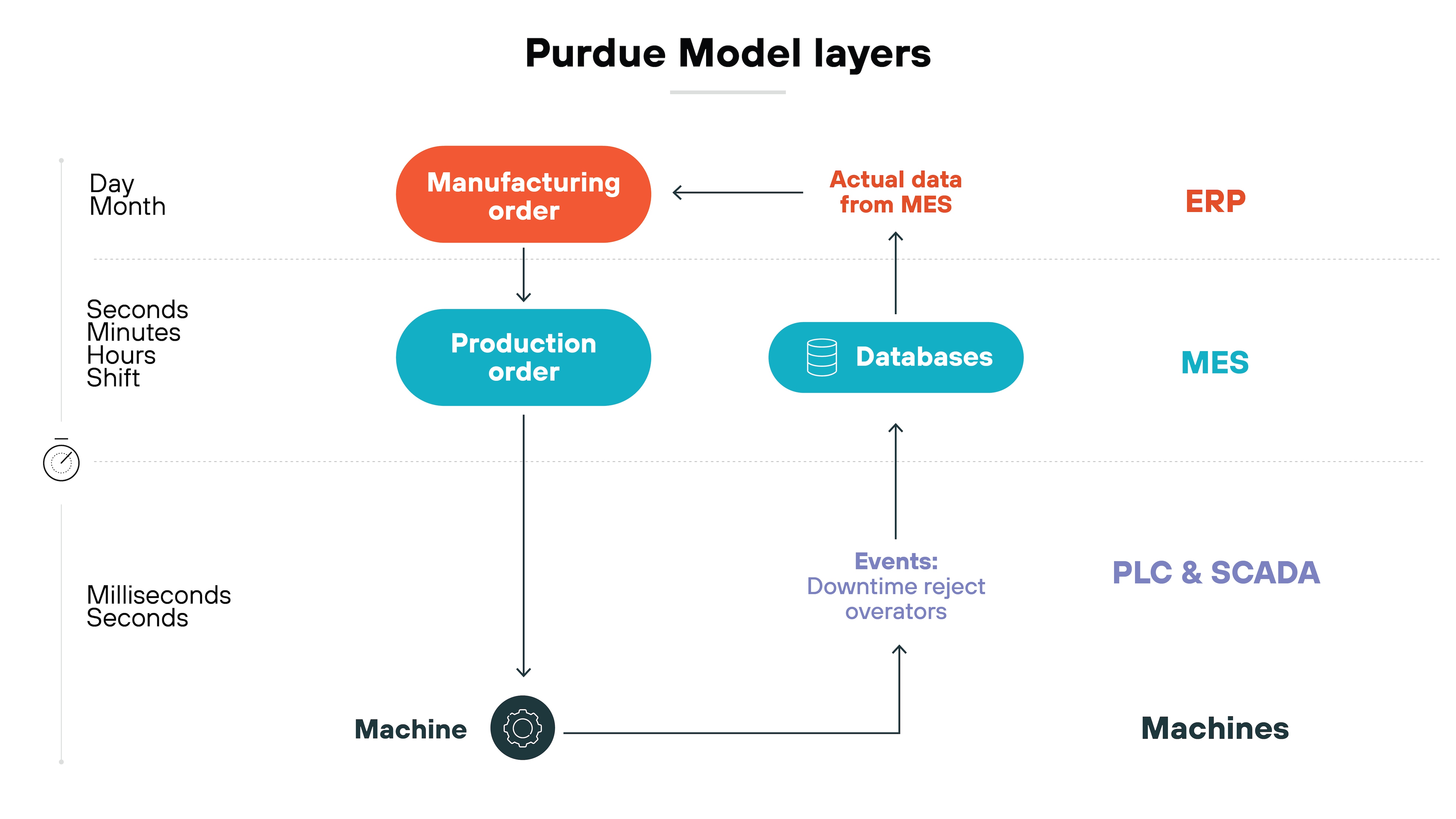
Network Segmentation and the Purdue Model
The most effective way to control vulnerabilities is to limit the “blast radius.” By implementing strict network segmentation—often based on the Purdue Model for Industrial Control Systems—organizations can isolate vulnerable legacy devices into “zones.”
By placing a firewall or a unidirectional gateway (data diode) between the corporate network and the production floor, the organization ensures that even if a workstation in the accounting department is infected with ransomware, the malware cannot traverse the network to reach the PLCs on the factory floor. This effectively moves the vulnerability from “critical” (exposed) to “controlled” (isolated).
Virtual Patching
Virtual patching is a method of protecting a system by implementing a security rule at the network level that blocks the exploit attempt before it ever reaches the vulnerable device. Instead of changing the code on the PLC, a Deep Packet Inspection (DPI) firewall is configured to recognize and drop the specific malicious packets associated with a known CVE.
This provides an immediate layer of protection, buying the organization time until the next scheduled maintenance window when a permanent firmware update can be applied.
Hardening the “Human-Machine Interface” (HMI)
Often, the vulnerability isn’t in the controller itself, but in the HMI—the screen the operator uses to control the machine. HMIs often run on versions of Windows that are outdated. Hardening these systems involves:
- Disabling Unnecessary Services: Turning off USB ports, removing web browsers, and disabling print spoolers.
- Application Whitelisting: Ensuring that only the specific control software can run, preventing any unauthorized scripts or malware from executing.
- Least Privilege Access: Ensuring operators do not have administrative rights to the OS, limiting the ability of a compromise to spread.
Overcoming the IT/OT Cultural Divide
The technical challenges of cutting vulnerabilities are often overshadowed by the cultural ones. Historically, IT teams and OT teams have spoken different languages. IT speaks of “patches,” “encryption,” and “zero trust.” OT speaks of “uptime,” “safety,” and “cycle times.”
To successfully transition from critical to controlled, these two groups must merge into a unified security operation. This convergence involves:
- Joint Governance: Creating a security committee where plant managers have a veto over patching schedules to ensure production is not jeopardized.
- Cross-Training: IT staff spending time on the factory floor to understand the physical consequences of a network lag, and OT staff learning the basics of cyber-threat vectors.
- Shared Metrics: Moving away from “number of patches applied” (an IT metric) toward “percentage of critical assets with compensating controls” (an OT-friendly metric).
Common Misconceptions in Manufacturing Security
As organizations strive to reduce their attack surface, several common myths often lead to poor decision-making. Correcting these is essential for a truly controlled environment.

Myth 1: “Our systems are too old to be hacked.”
In reality, legacy systems are often more vulnerable because they lack basic security features like password encryption or authentication. Attackers love legacy systems because once they gain access, there are few internal barriers to stop them.
Myth 2: “Updating the firmware is the only way to be secure.”
As discussed with virtual patching and segmentation, the goal is risk reduction, not vulnerability elimination. A patched system that is wide open to the internet is less secure than an unpatched system that is perfectly isolated.
Myth 3: “Security software will sluggish down my PLC.”
While installing an antivirus agent directly on a PLC is generally a poor idea (and often impossible), network-based security tools are non-intrusive. Passive monitoring and firewalling happen “out of band” and have zero impact on the timing of industrial processes.
The Path Forward: Resilience Over Perfection
The goal of cutting vulnerabilities in a live manufacturing environment is not to reach a state of zero risk—such a state does not exist. Instead, the objective is cyber resilience: the ability to withstand an attack and recover quickly without compromising safety or production.
This requires a continuous loop of discovery, assessment, and mitigation. By treating security as a component of operational excellence rather than an IT chore, manufacturers can protect their bottom line while embracing the efficiencies of a connected factory. The shift from critical to controlled is a journey of incremental gains, where every isolated segment and every virtual patch reduces the likelihood of a catastrophic event.
Frequently Asked Questions
How do I start reducing vulnerabilities if I can’t afford any downtime?
Start with passive asset discovery. This allows you to map your environment and identify vulnerabilities without sending a single packet to your controllers. Once you have a map, implement network segmentation to isolate the most critical assets from the corporate network.
What is the difference between a patch and a compensating control?
A patch is a direct fix to the software code of a device to remove a vulnerability. A compensating control (like a firewall rule or a virtual patch) is an external measure that prevents an attacker from reaching or exploiting that vulnerability, leaving the original software unchanged.
Is the Purdue Model still relevant in the age of Cloud and IIoT?
While the strict layers of the Purdue Model are evolving, the core principle—separating the process control zone from the enterprise zone—remains essential. Modern environments use “Software-Defined Perimeters” to achieve the same goal of isolation more flexibly.
Which is more dangerous: a known vulnerability or an unknown one (zero-day)?
In manufacturing, known vulnerabilities are often more dangerous because they are well-documented and easy for attackers to exploit using automated tools. However, a robust “defense-in-depth” strategy (segmentation, monitoring, and hardening) protects against both known and unknown threats by limiting movement within the network.
Who should lead the vulnerability management process in a factory?
It should be a collaborative effort. While the CISO (Chief Information Security Officer) provides the framework and tools, the Plant Manager or Head of Operations must oversee the implementation to ensure that security measures do not interfere with production safety or efficiency.
For those looking to further their understanding of industrial security, a related explainer on the Purdue Model can provide deeper insight into how to structure a secure OT network. Exploring the latest standards in IEC 62443 compliance can offer a roadmap for certifying your manufacturing environment’s resilience.
