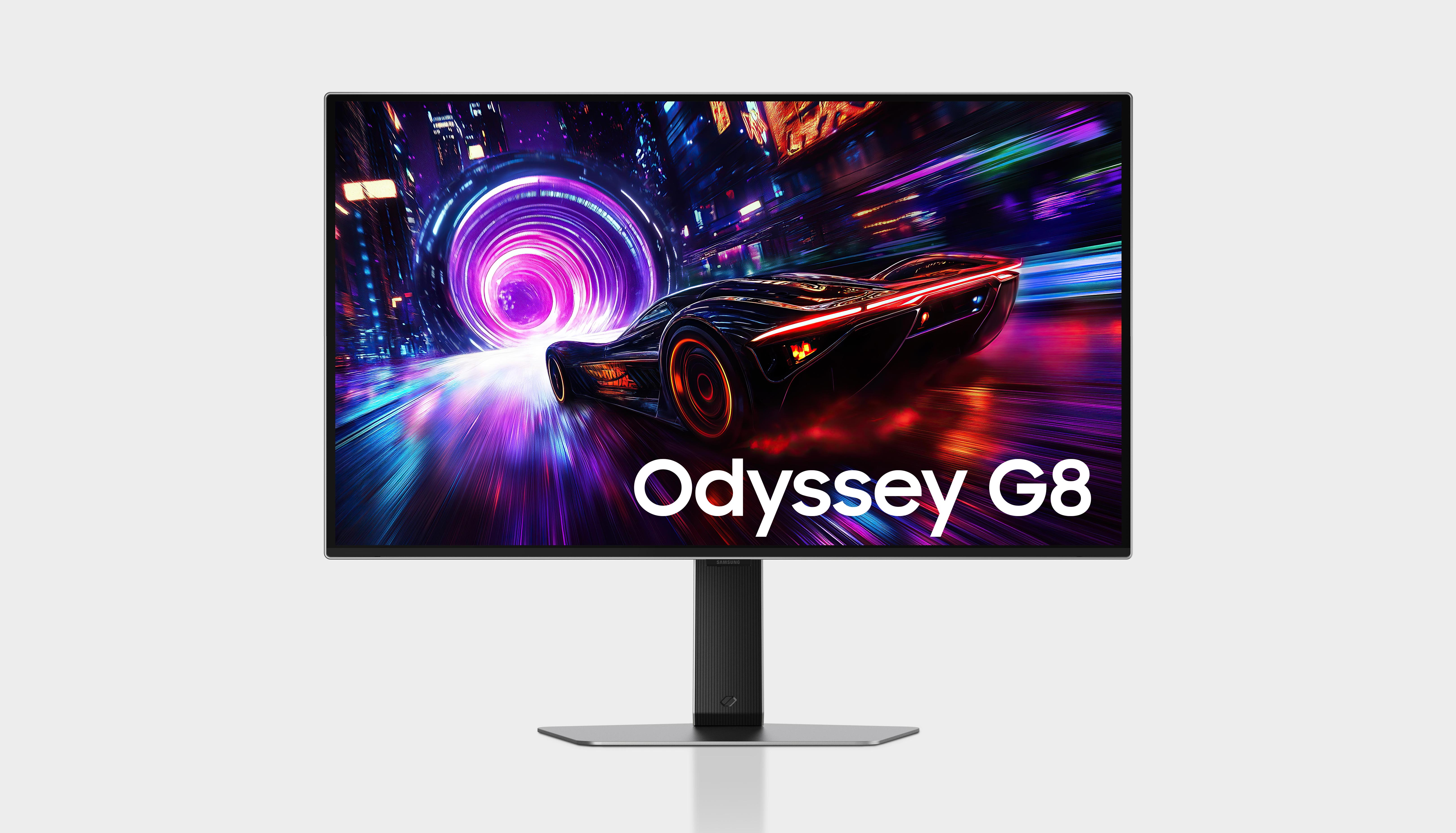
Samsung’s Breakthrough QD-OLED Monitor Panel Pushes 4K Gaming to 360Hz—What It Means for Esports, Creators, and Future Displays
Samsung Display has shattered another barrier in high-performance display technology, unveiling what it claims is the world’s first QD-OLED panel capable of delivering 4K resolution at 360Hz. The announcement marks a pivotal moment for competitive gaming, professional content creation, and the broader display industry, where refresh rates and color accuracy have long been locked in a technological arms race. While Samsung has dominated the OLED TV market for years, this new panel—expected to debut in consumer monitors within the next 12 months—could redefine what gamers, streamers, and designers demand from their screens.
But what exactly does this achievement mean for real-world performance? How does it compare to existing QD-OLED monitors like MSI’s recent “Triple-Mode” display? And why is Samsung betting big on OLED for monitors when LCD still dominates the market? This breakdown explores the technical leaps, industry implications, and what this development signals for the future of high-end displays.
—
What Samsung Just Achieved: A Technical Deep Dive
Samsung’s new QD-OLED panel isn’t just another incremental upgrade—it’s a fusion of two cutting-edge display technologies that have historically been at odds: Quantum Dot (QD) color enhancement and OLED’s self-emissive, ultra-fast response. Here’s how it works:
- QD-OLED Basics: Quantum dots are nanoscale semiconductors that emit pure, vibrant colors when excited by blue light. Combined with OLED’s pixel-level control, this creates displays with 100% DCI-P3 color volume, deeper blacks, and theoretically infinite contrast. However, scaling this to high refresh rates—especially at 4K—has been a major engineering challenge.
- The 360Hz Breakthrough: Most 4K OLED monitors today max out at 144Hz or 165Hz. Achieving 360Hz at this resolution requires overcoming bandwidth limitations, driver circuit efficiency, and thermal management. Samsung’s panel reportedly uses an enhanced driver IC (integrated circuit) architecture to reduce signal latency and power consumption, while a revised quantum dot layer minimizes color shift at high refresh rates.
- Comparison to LCD Alternatives: Traditional LCD panels (even high-end IPS or VA models) struggle to match OLED’s black levels and viewing angles. However, they can hit 240Hz or 360Hz at 1080p or 1440p with far less power draw. Samsung’s panel bridges this gap by offering OLED’s visual fidelity at LCD-like high-refresh performance—but with a trade-off in power efficiency and potential burn-in risks.
Key Specifications (Reported):
| Metric | Samsung QD-OLED Panel | Typical 4K OLED TV | High-End LCD (e.g., ASUS ROG Swift) |
|---|---|---|---|
| Resolution | 3840 × 2160 (4K UHD) | 3840 × 2160 | 3840 × 2160 |
| Max Refresh Rate | 360Hz | 120Hz (most) | 240Hz (some models) |
| Peak Brightness | ~1000 nits (QD-enhanced) | 800–1200 nits | 300–600 nits |
| Color Gamut | 100% DCI-P3, 95%+ Rec. 2020 | 95% DCI-P3 | 98% DCI-P3 (IPS) |
| Response Time (GTG) | <0.1ms | <0.1ms | 1–5ms (IPS) |
| Power Consumption (4K @ 360Hz) | ~200W (estimated) | N/A (TVs rarely exceed 120Hz) | ~150W (1440p @ 240Hz) |
Why This Matters: For the first time, a single panel can deliver both the fluidity of a 360Hz LCD and the visual richness of a high-end OLED. This could be a game-changer for:
- Competitive Gamers: Titles like Valorant, Counter-Strike 2, and Fortnite already push refresh rates to their limits. A 360Hz 4K monitor could reduce input lag and motion blur further, though real-world FPS gains may be marginal beyond 240Hz.
- Esports Pros: Teams investing in high-refresh setups (e.g., Team Liquid’s CS2 rigs) may adopt this for training, though eye strain and power costs could be concerns.
- Content Creators: Filmmakers and designers working in HDR and wide-gamut color spaces (e.g., Adobe RGB, ProPhoto) will benefit from the panel’s accuracy, though the high refresh rate may be overkill for static work.
- Manufacturers: Brands like LG, ASUS, and Alienware will race to integrate this panel into flagship monitors, potentially disrupting the $1,000–$2,000 premium display market.
—
How This Fits Into Samsung’s Display Strategy—and the Industry’s Future
Samsung Display isn’t just chasing gaming performance. Its move into high-refresh QD-OLED monitors aligns with three broader industry trends:
1. The OLED vs. Mini-LED LCD Showdown
While Samsung has led the OLED TV revolution, its monitor business has historically relied on LCD panels with Mini-LED backlighting (e.g., the Odyssey Ark series). However, OLED is making inroads:
- LG’s Dominance: LG Display has supplied most QD-OLED monitors to date (e.g., Alienware AW3423DW, ASUS ROG Swift PG32UQX), but these max out at 144Hz.
- Samsung’s Catch-Up: By entering the high-refresh QD-OLED space, Samsung can compete with LG in monitors while leveraging its existing OLED TV production lines (which already use similar quantum dot tech).
- The Mini-LED Threat: Panels like Apple Pro Display XDR and Dell UltraSharp UP3221Q use Mini-LED to achieve local dimming and high brightness without OLED’s potential burn-in. Samsung’s QD-OLED panel may not fully address this, but its color purity and contrast remain unmatched.
2. The “Triple-Mode” Monitor Trend: A Glimpse Into the Future?
Samsung’s announcement follows closely behind MSI’s “Triple-Mode” QD-OLED monitor, which can switch between 4K @ 360Hz, 1440p @ 520Hz, and 1080p @ 680Hz. While MSI’s model uses LG’s panels, Samsung’s in-house solution suggests:
- Modular Scaling: Future monitors may dynamically adjust resolution and refresh rate based on workload (e.g., 4K for movies, 1440p @ 500Hz for gaming).
- Power Efficiency Gaps: Running a 4K panel at 360Hz is energy-intensive. Samsung’s panel may use low-temperature polysilicon (LTPS) TFT drivers to mitigate this, but real-world power draw could still be a limiting factor.
- Market Fragmentation: The existence of two competing QD-OLED panel suppliers (LG and Samsung) could drive prices down, but it also risks confusion among consumers about which tech to choose.
3. The Esports and Pro Gamer Divide
Not all high-refresh displays are created equal. The 360Hz debate highlights a split in the gaming community:

- The “More is Better” Camp: Competitive CS2 and Valorant players argue that higher refresh rates reduce reaction time, even if the difference is 1–2ms. However, studies (e.g., NVIDIA’s 2020 research) suggest diminishing returns beyond 240Hz for most players.
- The Practicality Argument: Most games can’t utilize 360Hz due to engine limits (e.g., Call of Duty: Warzone caps at 240Hz). The real benefit may lie in smoother UI navigation and reduced screen tearing.
- The Eye Strain Factor: OLED’s per-pixel lighting reduces blue light but can cause temporary afterimages in fast-moving scenes. At 360Hz, this effect may worsen, though Samsung’s panel likely includes anti-burn-in algorithms.
Expert Take: According to DisplaySearch analyst Ross Young, “The biggest challenge isn’t the panel itself—it’s the ecosystem. For 360Hz to matter, we need games, GPUs, and cables that can actually push that much data without bottlenecks.” Current DisplayPort 2.1 can handle 4K @ 360Hz, but most GPUs (even the RTX 4090) struggle to exceed 240Hz in 4K.
—
Who Stands to Gain—and Who Might Lose?
The ripple effects of Samsung’s QD-OLED panel will extend far beyond the monitor market. Here’s who wins and who could face disruption:
Winners
- Samsung Display: Secures a foothold in the premium monitor market, reducing reliance on TV sales. Could also license this tech to competitors, similar to how it supplies OLED panels to Sony and Vizio.
- Gaming Hardware Brands: Companies like ASUS, Alienware, and LG can now offer flagship QD-OLED monitors with unmatched performance, justifying $2,000+ price tags.
- Content Creators: Filmmakers and designers working in HDR and wide-color workflows (e.g., Unreal Engine 5, Adobe Premiere Pro) will see more accurate color grading.
- Esports Teams: Organizations with deep pockets may adopt these monitors for training and broadcasting, though the cost and power draw could be prohibitive.
Potential Losers
- Mini-LED LCD Manufacturers: Brands like Apple and Dell may see OLED encroach on their high-end display segments, though Mini-LED still leads in brightness and longevity.
- Budget Gamers: Monitors in the $500–$800 range (e.g., 1440p @ 165Hz) may see reduced demand as enthusiasts chase the latest tech.
- OLED TV Makers: While Samsung benefits, LG and Sony may face pressure to increase their own high-refresh OLED monitor offerings to compete.
—
What So for Consumers: Should You Upgrade?
The short answer: Probably not—yet. Here’s what to consider before dropping thousands on a 4K 360Hz QD-OLED monitor:
When It Makes Sense
- You’re a competitive CS2 or Valorant player and already own an RTX 4090 or RX 7900 XTX.
- You work in HDR video editing or 3D rendering and need 100% DCI-P3 accuracy.
- You prioritize visual fidelity over power efficiency and don’t mind the higher cost and heat output.
When to Wait
- You play most games at 1440p or 1080p—144Hz is often enough.
- You’re concerned about eye strain—OLED’s per-pixel lighting can cause temporary afterimages at high refresh rates.
- You’re on a budget—$2,000+ monitors will take years to become affordable.
Real-World Test Case: The Alienware AW3423DW (a 34″ QD-OLED at 144Hz) sells for ~$2,500. A 4K 360Hz version could easily hit $3,500–$4,000. For comparison, an ASUS ROG Swift PG34UQX (4K 144Hz Mini-LED) costs ~$2,200—offering similar brightness but less color accuracy.
—
What’s Next: What to Watch For in 2024–2025
Samsung’s panel is still in development, but several key developments could shape its adoption:
1. Mass Production and Pricing
- Timeline: First monitors may launch in late 2024 or early 2025, with volume pricing dropping by 2026.
- Price Predictions: Early adopters could pay $3,000–$4,000, but $2,000 models may emerge within 18 months as yields improve.
2. Competitor Responses
- LG Display: Likely to accelerate its own high-refresh QD-OLED panel development to counter Samsung.
- TCL and BOE: May push Mini-LED alternatives with higher brightness to compete.
- NVIDIA/AMD: Could optimize drivers to better support 360Hz in games, though GPU bottlenecks remain.
3. New Use Cases
- VR/AR Integration: High-refresh QD-OLED could improve VR headsets (e.g., Meta Quest Pro) by reducing motion sickness.
- Automotive Displays: Samsung’s panel tech may trickle down to car infotainment systems for faster UI responses.
- Professional Simulation: Industries like aviation training and medical imaging could adopt these panels for high-fidelity visuals.
—
Frequently Asked Questions
Will a 4K 360Hz monitor make my games look significantly better?
Not necessarily. While 360Hz reduces motion blur and input lag, most games can’t render at that speed in 4K. The real benefit is in smoother UI navigation and reduced screen tearing, but 144Hz or 240Hz is often “good enough” for gaming.
Is QD-OLED better than Mini-LED for monitors?
It depends on your needs. QD-OLED wins in color accuracy and contrast, while Mini-LED excels in brightness and longevity. For gaming, QD-OLED is superior; for content creation with bright HDR, Mini-LED may be better.
How much power will a 4K 360Hz QD-OLED monitor use?
Estimates suggest 200–300W under load, compared to ~150W for a 1440p 240Hz Mini-LED. You’ll need a high-wattage PSU (850W+) and proper cooling.
When can I expect to buy one, and how much will it cost?
First models may arrive in late 2024, priced at $3,000–$4,000. By 2026, prices could drop to ~$2,000 as competition increases.
Will this panel cause burn-in like OLED TVs?
Samsung’s panel likely includes pixel refresh algorithms and anti-burn-in protections, but static elements (e.g., HUDs, menus) could still leave temporary marks. This represents less of an issue for gaming than for media consumption.
What games will actually benefit from 360Hz?
Fast-paced shooters like Valorant, CS2, and Overwatch 2 will see the most improvement. Fortnite and Rocket League may benefit slightly, but Call of Duty and Battlefield are capped at 240Hz.
—
Samsung’s leap into 4K 360Hz QD-OLED monitors isn’t just a technical milestone—it’s a bold statement that the display industry is entering a new era of performance. While the technology remains out of reach for most consumers in the short term, its arrival signals that refresh rates and color fidelity are no longer mutually exclusive. For now, the question isn’t whether this panel will succeed, but how quickly it will reshape what we expect from our screens—whether for gaming, creation, or beyond.
One thing is certain: the next generation of high-end monitors just got a whole lot more exciting.
