Russia Preparing to Deploy 115,000 Troops Near NATO Borders After Ukraine War – UNITED24 Media
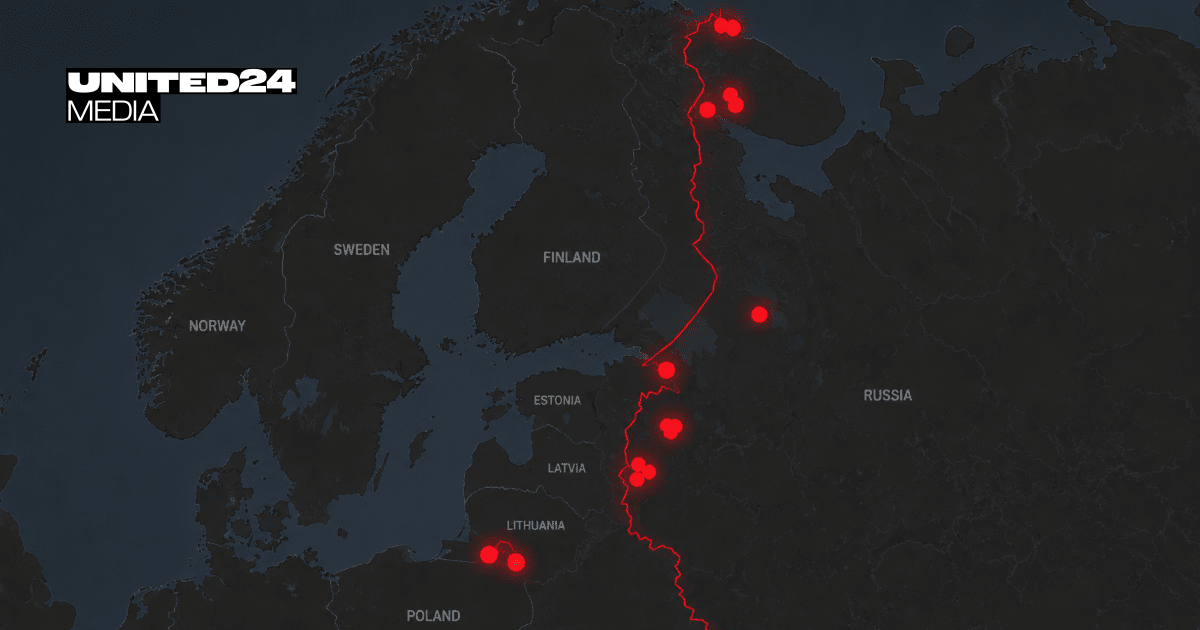
Russia is preparing to station 115,000 troops along its borders with NATO members, according to reports from UNITED24 Media. This military buildup focuses heavily on the Baltic region, signaling a strategic shift toward large-scale, multi-corps operations as the Kremlin adjusts its posture following the ongoing conflict in Ukraine.
What is the scale of the Russian troop buildup near NATO borders?
Reports from UNITED24 Media indicate that Russia is organizing the deployment of 115,000 personnel to its western frontiers. This movement isn’t a random surge but a structured reorganization of forces designed to maintain a persistent presence near NATO territory. The deployment targets key strategic zones, with a heavy emphasis on the borders of the Baltic states—Estonia, Latvia, and Lithuania—and the broader Baltic Sea region.
The Copenhagen Post reports that Russia is specifically building up military capabilities along its Baltic Sea borders. This includes not only ground forces but a coordinated effort to increase naval and aerial pressure in the region. The scale of this deployment suggests a transition from the temporary “special military operation” footing used in Ukraine back to a permanent, high-readiness posture against the West.
Key components of this buildup include:
- Personnel Volume: Approximately 115,000 troops earmarked for border regions.
- Regional Focus: High concentration of forces in the Baltic Sea theater.
- Operational Shift: A move toward multi-corps warfare, moving away from the smaller tactical groups seen in earlier stages of the Ukraine war.
Why is Russia reorganizing its military for multi-corps warfare?
The International Institute for Strategic Studies (IISS) notes that the current Baltic reorganization signals a return to “multi-corps warfare.” For years, modern military doctrine in many Western and Eastern nations shifted toward smaller, more flexible, and technologically integrated “brigade-centric” models. However, the war in Ukraine demonstrated that high-intensity conflict still requires the sheer mass and logistical depth of a corps-level structure.
A corps is a larger military unit than a division, typically comprising two or more divisions and supporting elements. By returning to this structure, the Russian military aims to regain the ability to conduct large-scale offensive or defensive operations that require massive manpower and heavy artillery coordination. According to the IISS, this reorganization allows Russia to manage larger fronts and sustain longer periods of combat, which is essential for any potential confrontation with a large alliance like NATO.
The shift to multi-corps warfare indicates that Russia is preparing for a conflict of attrition and scale, rather than relying on the “rapid strike” theories that failed during the initial invasion of Kyiv.
This structural change is not just about numbers; it is about command and control. Multi-corps structures allow for a more rigid but powerful hierarchy capable of moving tens of thousands of troops in unison. For NATO, this means the threat is no longer just “hybrid warfare” or small-scale incursions, but the potential for a full-scale conventional army to mass on its borders.
How does this affect the security of the Baltic States?
The Baltic states are currently viewed as one of the most volatile flashpoints in global security. Scoop – New Zealand News describes the Baltics as “The Most Dangerous Place On Earth,” suggesting the region is at a “boiling point.” The geographic vulnerability of Estonia, Latvia, and Lithuania—particularly the Suwalki Gap, the narrow strip of land connecting Poland to Lithuania—makes them primary targets in any Russian strategic calculation.
The buildup of 115,000 troops creates a psychological and tactical pressure cooker. While NATO has increased its “Enhanced Forward Presence” (eFP) in the region, the sheer volume of Russian personnel creates a disparity in raw numbers. The Copenhagen Post highlights that the buildup along the Baltic Sea borders is designed to challenge NATO’s ability to reinforce these states quickly from the Atlantic.
The implications for the region include:
- Increased Alert Levels: Baltic militaries are maintaining higher states of readiness and increasing the frequency of joint exercises with NATO allies.
- Infrastructure Hardening: Rapid investment in fortifications and defensive lines to slow any potential advance.
- Diplomatic Tension: A hardening of rhetoric between the Kremlin and the Baltic capitals, with little room for diplomatic de-escalation.
For more on how these regional tensions fit into larger geopolitical shifts, see our related explainer on NATO’s eastern flank strategy.
Is this a preparation for invasion or a strategic deterrent?
There is a significant divergence in how different outlets frame the intent behind these troop movements. While some see an imminent threat, others view the buildup as a posture of intimidation rather than a plan for active aggression.

The Caspian Post offers a contrasting perspective, suggesting that Baltic defenses are preparing for a “war Russia won’t fight.” This argument posits that Russia lacks the current capacity—given its losses in Ukraine—to successfully launch a full-scale invasion of NATO territory. From this viewpoint, the deployment of 115,000 troops is a “paper tiger” strategy: a way to force NATO to spend more on defense and to keep the Baltic states in a state of perpetual anxiety without actually initiating a conflict that would trigger Article 5.
To understand the different interpretations of this military buildup, consider the following comparison:
| Source | Perspective on Intent | Primary Driver |
|---|---|---|
| UNITED24 Media / Scoop | High-risk escalation/Boiling point | Direct threat to NATO borders and Baltic sovereignty. |
| IISS | Structural military evolution | Return to multi-corps warfare for large-scale conflict. |
| Caspian Post | Strategic deterrence/Posture | Psychological warfare; Russia lacks capacity for active invasion. |
Despite the skepticism from some analysts, the physical reality of 115,000 troops near a border changes the calculus for military planners. Even if an invasion is not the primary goal, the presence of such a force allows Russia to conduct “salami slicing” tactics—small, incremental seizures of territory or hybrid attacks that are too small to trigger a full NATO response but large enough to destabilize the region.
What is the timeline of Russian military shifts post-Ukraine?
The transition toward this new border posture did not happen overnight. It is the result of lessons learned from the failures of the 2022 invasion of Ukraine. Initially, Russia relied on “Battalion Tactical Groups” (BTGs), which were designed for speed and agility. However, the BTGs proved insufficient for the brutal, static attrition of the Donbas.
The timeline of the shift follows a specific pattern:
- The BTG Failure (2022): High losses in specialized units led to a collapse of the brigade-centric model.
- The Mobilization Phase (2022-2023): Russia began absorbing conscripts and contract soldiers into larger, less specialized formations.
- The Structural Pivot (2023-2024): The Kremlin began formally reorganizing these masses into corps-level structures, as noted by the IISS.
- The Border Deployment (Current): The movement of these reorganized forces toward the NATO borders, including the 115,000-troop figure reported by UNITED24 Media.
This timeline shows a military that is not simply “adding more men,” but is fundamentally rebuilding its architecture to survive and conduct a long-term war against a peer competitor. The focus on the Baltic Sea borders suggests that Russia views the maritime and land access to Northern Europe as its most critical vulnerability and its most potent point of leverage.
How is NATO responding to the threat in the Baltics?
NATO’s response has transitioned from “tripwire” deterrence to “deterrence by denial.” In the past, NATO’s strategy was to have enough troops in the Baltics to make Russia hesitate, knowing that an attack would trigger a massive response from the US and Europe. “Deterrence by denial” means having enough forces on the ground to actually stop an invasion in its tracks before territory is lost.
According to reports on Baltic defenses, this involves several key strategies:
- Increased Permanent Presence: Moving from rotational forces to permanent bases in Estonia, Latvia, and Lithuania.
- Logistical Overhauls: Improving the “Military Mobility” of the EU to ensure tanks and troops can move across borders without bureaucratic delays.
- Air and Missile Defense: Deploying advanced radar and missile systems to counter Russian aerial superiority in the Baltic Sea.
However, the “boiling point” described by Scoop highlights a critical gap: the time it takes for NATO to mobilize. If Russia can deploy 115,000 troops in a coordinated multi-corps strike, the window for NATO to react is measured in hours, not days. This is why the reorganization reported by the IISS is viewed with such concern; it suggests Russia is preparing for a “sprint” that could overwhelm local defenses before the full weight of the alliance arrives.
Common misconceptions about the Russian troop buildup
Much of the public discourse around Russian troop movements is clouded by oversimplification. It is important to distinguish between different types of military presence.
Misconception 1: “115,000 troops means an invasion is starting tomorrow.”
Military buildup is not the same as an attack order. As the Caspian Post suggests, these forces may be intended as a permanent deterrent. Stationing troops on a border is a standard geopolitical tool used to signal resolve and create leverage in negotiations.

Misconception 2: “Russia is too weak from Ukraine to threaten NATO.”
While Russia has suffered immense losses, the IISS analysis shows they are adapting. The shift to multi-corps warfare is a direct response to those losses. By changing the structure of their army, they are attempting to turn their remaining mass into a more effective tool for large-scale warfare.
Misconception 3: “The Baltics are easily defended.”
Geographically, the Baltics are a nightmare for defenders. The Suwalki Gap is a narrow corridor that, if seized, would cut off the Baltic states from their NATO allies in Poland and Germany. The buildup of Russian forces near this specific area is what drives the “Most Dangerous Place On Earth” narrative.
For more on the geography of the conflict, check our analysis of the Suwalki Gap security risks.
The strategic role of the Baltic Sea in Russia’s plans
The Copenhagen Post emphasizes that the military build-up is not limited to land borders. The Baltic Sea is a critical theater. Russia’s control of Kaliningrad—an exclave situated between Poland and Lithuania—provides a forward base for Iskander missiles and Baltic Fleet assets.
By deploying 115,000 troops and enhancing its naval presence, Russia creates a “bastion” strategy. This involves securing the Baltic Sea to protect its naval assets and potentially block NATO shipping lanes. If Russia can dominate the Baltic Sea, it effectively isolates the Baltic states from maritime reinforcement, making the land-based defenses even more precarious.
The interaction between the land forces (the 115,000 troops) and the naval assets in the Baltic Sea creates a dual-threat environment. NATO must now defend against a synchronized attack that could come from the east (via Belarus and Russia) and from the sea (via the Baltic Fleet and Kaliningrad).
Frequently Asked Questions
According to UNITED24 Media, Russia is preparing to deploy approximately 115,000 troops near its borders with NATO members, with a significant focus on the Baltic region.
As reported by the International Institute for Strategic Studies (IISS), multi-corps warfare is a return to large-scale military organization. Instead of using small, flexible brigades, the military organizes into larger “corps” to manage massive amounts of manpower and artillery for high-intensity conflicts.
The Baltics are geographically vulnerable, particularly due to the Suwalki Gap. Outlets like Scoop – New Zealand News highlight that the combination of Russian troop buildups and the region’s strategic location makes it one of the most dangerous areas for potential conflict.
Opinions vary. While some see the 115,000-troop deployment as a preparation for aggression, other sources, such as the Caspian Post, suggest it is a strategic deterrent designed to intimidate NATO without initiating a direct war that Russia may not be able to sustain.
NATO is shifting toward “deterrence by denial,” which involves increasing permanent troop presence in the Baltics, improving military mobility across Europe, and enhancing air and missile defense systems to stop an invasion before territory is lost.
