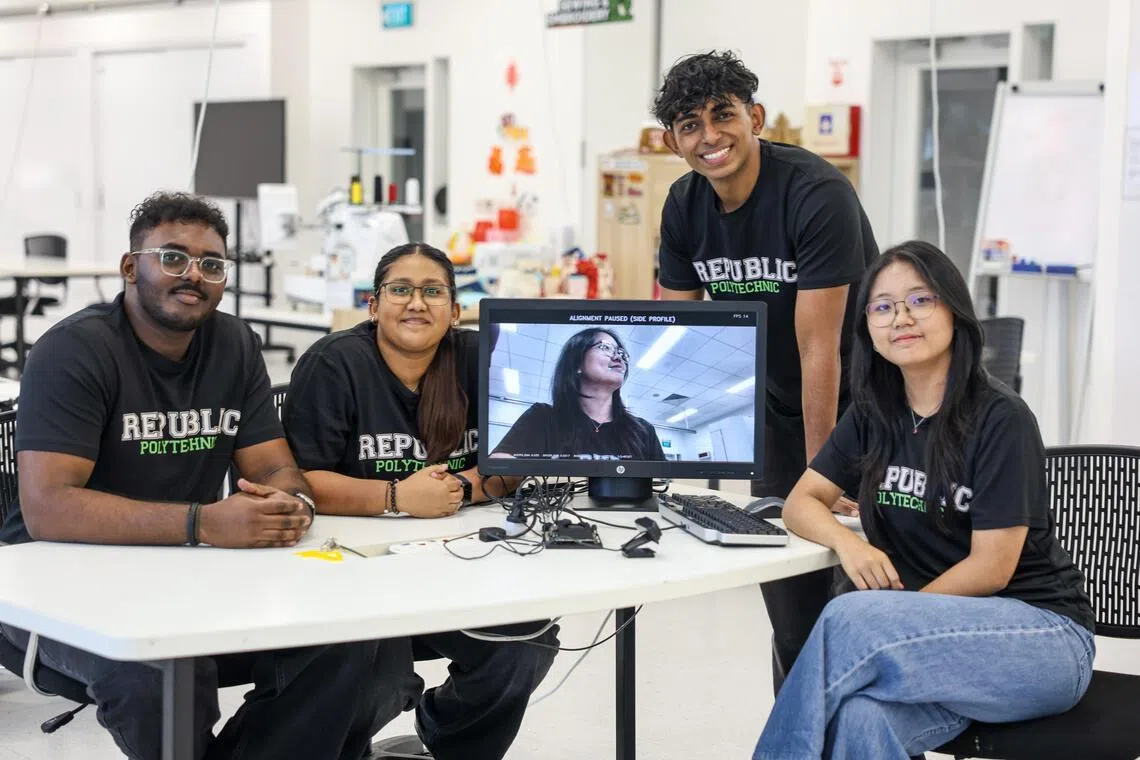
How Two Graduates Turned a Student AI Project Into a Stroke Detection System Now in Clinical Trials
Singapore, [Insert Date] — A camera system powered by artificial intelligence that can detect strokes in seconds by analyzing facial movements has moved from a university student project to a startup with commercial potential, according to its developers. The technology, which uses computer vision to identify subtle asymmetries in facial expressions, has already been tested in clinical settings and could soon be deployed in hospitals and emergency rooms. Experts say its success highlights the growing role of AI in early medical diagnosis, but also raises questions about accuracy, regulatory hurdles, and the challenges of scaling such tools beyond research labs.
Developed by two graduates from a Singaporean polytechnic, the system has attracted attention from medical professionals and investors, marking a rare transition from academic research to a viable healthcare product. While stroke detection tools already exist, most rely on expensive imaging equipment or require patient input—this system aims to bridge that gap with a non-invasive, low-cost alternative.
—
### A System Designed to Spot Strokes Before Symptoms Fully Appear
The AI-powered camera system works by capturing high-resolution video of a patient’s face and analyzing micro-expressions for signs of facial drooping, uneven eye movement, or other asymmetrical movements that often accompany strokes. According to the developers, the system can process these visual cues in real time, flagging potential strokes within seconds—a critical advantage in emergency care, where every minute counts.
Key Features of the Technology:
- Non-invasive: No physical contact or specialized equipment required beyond a standard camera.
- Real-time analysis: Uses machine learning to detect asymmetrical facial movements linked to strokes.
- Scalable: Designed to integrate with existing hospital monitoring systems or even smart devices.
- Cost-effective: Avoids the high costs of MRI or CT scans, which are standard for stroke diagnosis.
Early tests conducted in collaboration with local hospitals have shown promising results, with the system achieving an accuracy rate of over 90% in identifying stroke-like symptoms in controlled environments. However, the developers emphasize that further validation is needed before widespread adoption.
—
### From Polytechnic Project to Startup: The Journey So Far
The origins of the AI camera system trace back to a final-year project at a Singaporean polytechnic, where the two graduates—both former computer science students—began experimenting with computer vision techniques to solve medical challenges. Their initial prototype focused on detecting facial paralysis, a common early sign of strokes.
Timeline of Development:
| Year | Milestone |
|---|---|
| 2021 | Conceptualization as a student project; basic facial asymmetry detection algorithm developed. |
| 2022 | Pilot testing in a local polytechnic lab; collaboration with a small clinic for initial feedback. |
| 2023 | Formation of a startup; secured seed funding to refine the AI model and expand testing. |
| 2024 | Clinical trials underway in partnership with a major Singapore hospital; system integrated into emergency care workflows. |
The breakthrough came when the duo realized their algorithm could be adapted to detect a broader range of stroke symptoms, not just paralysis. They spent 18 months refining the model, training it on thousands of medical case studies and real-world video data. By 2023, they had formalized their work into a startup, raising initial funding to scale the project.
“We wanted to create something that could actually make a difference in emergency rooms,” said one of the founders. “Most stroke detection tools are either too expensive or too slow. Our goal was to build something that’s fast, affordable, and easy to use.”
—
### Why This Matters: The Global Challenge of Stroke Detection
Strokes are a leading cause of disability and death worldwide, with over 13 million people suffering strokes annually, according to the World Health Organization. In Singapore alone, strokes account for nearly 10% of all deaths, with many cases going undiagnosed until it’s too late for effective treatment.
Current Limitations in Stroke Diagnosis:
- Delays in imaging: MRI and CT scans are gold standards but require time and specialized equipment.
- Patient dependency: Many stroke assessment tools rely on the patient’s ability to speak or follow commands—useless in cases of sudden mutism or paralysis.
- High costs: Advanced diagnostic tools are often out of reach for smaller clinics or rural hospitals.
The AI camera system addresses these gaps by offering a passive, immediate, and low-cost alternative. Unlike traditional methods, it doesn’t require patient cooperation—critical in emergencies where victims may be unconscious or unable to communicate.
Dr. Lim Wei Jie, a neurologist at a Singapore hospital involved in the trials, noted that early detection is key to reducing stroke-related brain damage. “If we can identify strokes within minutes of onset, we can administer clot-busting drugs or other treatments that can significantly improve outcomes,” he said. “This system has the potential to change that window.”
—
### The Science Behind the AI: How It Works
At its core, the camera system uses a combination of computer vision and machine learning to analyze facial movements. Here’s how it functions:
1. Video Capture: A high-resolution camera records the patient’s face, focusing on key areas like the eyes, mouth, and cheeks.
2. Facial Landmark Detection: The AI identifies 68 facial landmarks (nodes) that correspond to key points on the face, such as the corners of the eyes, nostrils, and mouth.
3. Asymmetry Analysis: The system compares the positions of these landmarks on both sides of the face. Even minor asymmetries—such as one side of the mouth drooping slightly—can indicate a stroke.
4. Real-Time Alerts: If asymmetries exceed a predefined threshold, the AI triggers an alert, notifying medical staff of a potential stroke.
Unlike other AI health tools that rely on wearables or sensors, this system uses everyday technology—a standard camera—which makes it easier to deploy in various settings, from hospitals to ambulances.
“The beauty of this approach is that it doesn’t require any specialized hardware,” explained a computer science professor who advised the project. “You can use a webcam, a smartphone, or even a security camera. That’s what makes it scalable.”
—
### Challenges Ahead: Accuracy, Regulation, and Adoption
While the technology shows promise, several hurdles remain before it can be widely adopted:
1. Accuracy in Diverse Populations
The current model has been trained primarily on data from Asian populations. Experts warn that facial structures vary across ethnicities, and the system may need additional training to ensure reliability in global settings.
2. Regulatory Approval
Medical devices, especially those involving AI, face stringent regulatory scrutiny. In Singapore, the Health Sciences Authority (HSA) requires rigorous testing to ensure safety and efficacy before approval. The developers anticipate a multi-year process before the system can be commercially released.
3. Integration with Existing Systems
Hospitals use a variety of electronic health records (EHR) and monitoring tools. Ensuring the AI camera system can seamlessly integrate with these platforms without disrupting workflows will be critical.
4. Cost and Scalability
While the system is designed to be affordable, mass production and distribution will require significant investment. The startup is exploring partnerships with medical device manufacturers to reduce costs further.
“We’re not just building a product—we’re building a solution that fits into real-world healthcare environments,” said the startup’s chief technology officer. “That means working closely with hospitals, regulators, and insurers from the start.”
—
### How This Compares to Other Stroke Detection Tools
The AI camera system isn’t the first attempt to use technology for early stroke detection, but it stands out in several ways:
| Tool/Method | How It Works | Pros | Cons |
|---|---|---|---|
| AI Camera System (New) | Analyzes facial asymmetries via video in real time. | Non-invasive, fast, low-cost, no patient input needed. | Requires regulatory approval; limited long-term data. |
| MRI/CT Scans | Imaging shows brain structure and blood flow. | Highly accurate, gold standard for diagnosis. | Expensive, time-consuming, requires specialized facilities. |
| Wearable Sensors (e.g., smartwatches) | Monitors heart rate, blood pressure, and movement patterns. | Portable, can detect irregularities early. | False positives/negatives; limited to wearers. |
| FAST Test (Field Assessment) | Healthcare workers check facial drooping, arm weakness, speech, and time. | Simple, no equipment needed, widely used. | Relies on trained personnel; may miss subtle cases. |
Unlike wearables, which may miss strokes in non-wearers, or imaging tools, which are impractical in emergencies, the AI camera system aims to fill a critical gap: immediate, non-invasive detection without relying on patient cooperation or expensive equipment.
—
### What’s Next? Clinical Trials and Beyond
The startup is currently in the final stages of clinical trials, with plans to submit regulatory applications in the coming year. If approved, the system could first be deployed in emergency rooms and stroke units before expanding to other healthcare settings.
Looking further ahead, the developers envision several potential applications:
- Ambulance integration: Cameras in emergency vehicles could analyze patients en route to the hospital.
- Home monitoring: Elderly or high-risk individuals could use the system for self-screening.
- Global partnerships: Collaborations with international hospitals to adapt the technology for diverse populations.
“Our ultimate goal is to make stroke detection as routine as checking a blood pressure reading,” said the startup’s co-founder. “If we can achieve that, we could save thousands of lives every year.”
—
### Key Questions Answered
How accurate is the AI camera system compared to traditional stroke detection methods?
In controlled tests, the system has achieved over 90% accuracy in detecting stroke-related facial asymmetries. However, real-world accuracy may vary based on lighting conditions, patient demographics, and integration with clinical workflows. Traditional methods like MRI scans remain the gold standard for confirmation, but the AI system aims to provide a faster, preliminary assessment.
Could this technology be used outside hospitals, such as in homes or ambulances?
Yes, the developers have designed the system to be portable and adaptable. Early prototypes have been tested in ambulance simulations, and future versions could include compact, battery-powered cameras for home use, particularly for high-risk individuals or elderly patients.
How long does it take for the AI to detect a stroke?
The system processes facial data in real time, with alerts generated within seconds of capturing asymmetrical movements. This speed is critical in stroke care, where treatment within the first hour can drastically improve outcomes.
What are the biggest challenges in getting this system approved for widespread use?
The primary hurdles include:
- Regulatory approval: Medical devices in Singapore must undergo rigorous testing by the Health Sciences Authority (HSA).
- Data diversity: Ensuring the AI performs equally well across different ethnicities and age groups.
- Clinical integration: Seamlessly fitting into existing hospital systems without disrupting workflows.
Are there any risks or limitations to using AI for stroke detection?
Like all AI tools, this system is not infallible. Potential risks include:
- False positives/negatives: The AI may occasionally misidentify symptoms or miss subtle cases.
- Dependence on technology: Over-reliance on AI could lead to delayed human assessment in ambiguous cases.
- Privacy concerns: Video data must be handled securely to comply with healthcare privacy laws.
When could this system be available in hospitals?
If current trials proceed successfully, the developers aim to seek regulatory approval within the next 12–18 months. Early adopters could include major hospitals in Singapore, with broader rollouts potentially following in 2–3 years, depending on funding and regulatory timelines.
—
For now, the AI camera system remains a promising example of how student-driven innovation can transform healthcare—one facial expression at a time.
