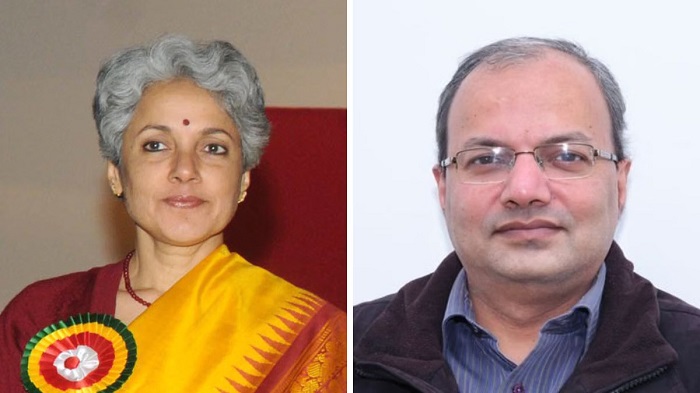
Soumya Swaminathan and Manindra Agrawal Recognized as Fellows of the Royal Society: A Milestone in Global Scientific Leadership
In a landmark decision that underscores the growing influence of global scientific talent, Dr. Soumya Swaminathan and Dr. Manindra Agrawal have been elected as Fellows of the Royal Society, one of the most prestigious scientific institutions in the world. This recognition not only highlights their individual contributions to their respective fields but also reflects the increasing prominence of international researchers in shaping the future of science and innovation. As the Royal Society continues to honor excellence in research, the election of these two scientists marks a significant moment for the global scientific community.
The Royal Society: A Legacy of Scientific Excellence
Founded in 1660, the Royal Society has long been a beacon of scientific inquiry and discovery. Its Fellows—chosen from across the globe—represent the pinnacle of achievement in the natural sciences, mathematics, and engineering. The election of new Fellows is a rigorous process, involving peer review and evaluation of groundbreaking contributions to knowledge. The institution’s mission to promote scientific progress through collaboration and open dialogue remains as relevant today as it was centuries ago.
The recent addition of Soumya Swaminathan and Manindra Agrawal to the Royal Society’s ranks underscores the organization’s commitment to recognizing talent from diverse backgrounds. Their election is not just a personal achievement but a testament to the interconnected nature of modern science, where cross-border collaboration and interdisciplinary research drive innovation.
Who Are Soumya Swaminathan and Manindra Agrawal?
Soumya Swaminathan is a distinguished medical scientist and public health leader whose career has been defined by a commitment to addressing some of the world’s most pressing health challenges. As the former Chief Scientist at the World Health Organization (WHO), she played a pivotal role in shaping global health policies, particularly during the COVID-19 pandemic. Her research on tuberculosis and antimicrobial resistance has had a profound impact on public health strategies worldwide. Swaminathan’s work exemplifies the intersection of science, policy, and humanitarian action, making her a trailblazer in the field of global health.
Manindra Agrawal, is a pioneering computer scientist whose contributions to theoretical computer science have redefined the boundaries of computational complexity. As a professor at the Indian Institute of Technology (IIT) Kanpur, he co-developed the AKS primality test—a breakthrough algorithm that efficiently determines whether a number is prime. This achievement, recognized with the prestigious Gödel Prize, has had far-reaching implications for cryptography, cybersecurity, and algorithm design. Agrawal’s work highlights the transformative power of mathematics in solving real-world problems.
Both scientists have built careers that transcend disciplinary boundaries, embodying the spirit of curiosity and innovation that the Royal Society seeks to celebrate. Their election to the Fellowship is a recognition of not only their individual accomplishments but also their role in fostering a culture of excellence in science.
The Significance of the Royal Society Election
The election of Swaminathan and Agrawal to the Royal Society is more than an academic honor; it is a statement about the evolving landscape of scientific leadership. In an era where global challenges such as climate change, pandemics, and technological disruption demand collaborative solutions, the Royal Society’s decision to welcome these scientists reflects a broader recognition of the need for diverse perspectives in science.
For Swaminathan, the honor comes at a time when public health systems worldwide are under unprecedented pressure. Her insights into infectious diseases and health equity are critical as nations grapple with the long-term impacts of the COVID-19 crisis. Agrawal’s election, meanwhile, highlights the growing importance of computer science in addressing complex global issues, from data security to artificial intelligence ethics.
The Royal Society’s selection process emphasizes not only technical excellence but also the ability to communicate scientific ideas to broader audiences. Both Swaminathan and Agrawal have been vocal advocates for science education and public engagement, making them ideal representatives of the Society’s mission to bridge the gap between research and society.
Reactions and Broader Implications
The news of their election has been met with widespread acclaim within the scientific community. Colleagues and peers have praised their contributions, noting that their work sets a benchmark for future generations of researchers. “Dr. Swaminathan’s dedication to global health and Dr. Agrawal’s pioneering research in computer science exemplify the kind of leadership the Royal Society values,” said a statement from a prominent science organization. “Their election is a win for science and for the communities they serve.”
The recognition also carries symbolic weight for their home countries. India, in particular, has seen a surge in scientific innovation in recent years, with researchers making significant strides in fields ranging from biotechnology to artificial intelligence. The election of Swaminathan and Agrawal adds to a growing list of Indian scientists who have been acknowledged by international institutions, reinforcing the nation’s role as a hub of scientific talent.
their success highlights the importance of investing in education and research infrastructure. Both scientists have emphasized the need for systemic support to nurture young talent, particularly in developing economies. As they take on their roles as Fellows, they are likely to use their platforms to advocate for policies that promote equitable access to scientific opportunities.
Challenges and Future Prospects
While the election of Swaminathan and Agrawal is a cause for celebration, it also raises questions about the broader challenges facing the scientific community. Issues such as funding disparities, gender inequality, and the commercialization of research continue to shape the landscape of global science. As Fellows, both scientists are expected to contribute to the Royal Society’s efforts to address these challenges through policy advocacy and public discourse.
Sw
