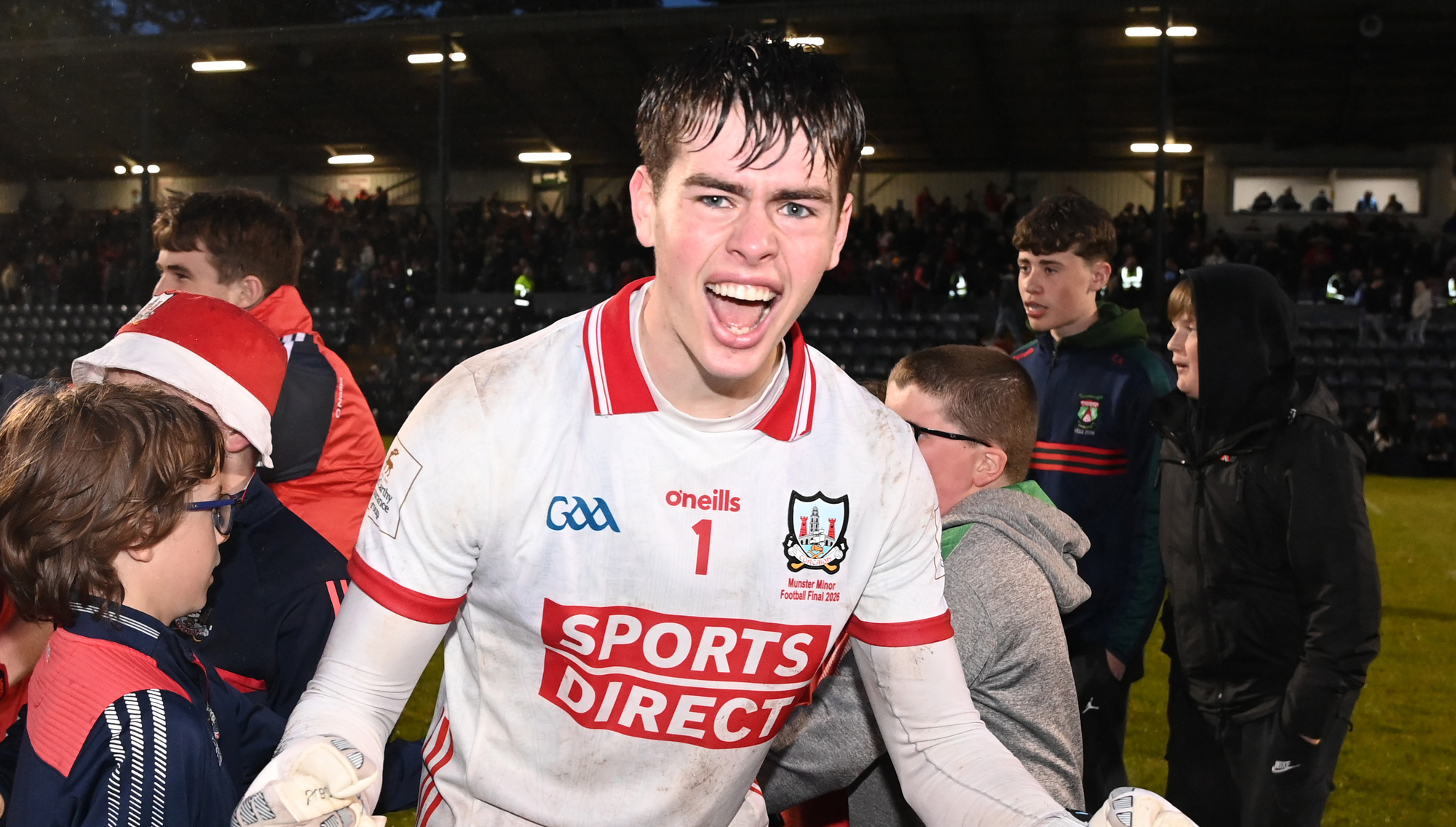
Cork Minor Keeper Rory Twohig Shows Road Bowling Promise
Rory Twohig, a goalkeeper for the Cork minor team, has demonstrated significant aptitude for road bowling, according to recent reports. The athlete, already established within the high-pressure environment of inter-county Gaelic games, has drawn attention for his ability to transition his physical strength and coordination to the traditional sport of road bowling.
Who is Rory Twohig and how did his road bowling talent emerge?
Rory Twohig is a recognized figure in the Cork GAA setup, specifically serving as a goalkeeper for the minor squad. In the context of Gaelic games, the minor grade represents a critical developmental stage for athletes typically under the age of 17, serving as the primary pipeline for senior inter-county representation. Twohig’s role as a keeper requires a combination of explosive power, rapid reflexes, and precise long-range distribution—skills that have unexpectedly translated to the road.
The emergence of Twohig’s skill in road bowling came to light as he engaged with the traditional pastime, which remains a cultural staple in specific pockets of Munster, particularly in Cork and Tipperary. Reports indicate that his natural strength and the technical mechanics of his delivery allowed him to achieve distances and accuracies that are uncommon for beginners in the sport. This development has sparked interest among those who follow both the structured environment of the GAA and the more informal, heritage-based competitions of road bowling.
Key attributes Twohig brings from the goalmouth to the road include:
- Core Stability: The ability to generate power from the legs and hips, essential for both long pucks in hurling and long bowls in road bowling.
- Hand-Eye Coordination: A prerequisite for elite goalkeeping that assists in the precise release of the bowl.
- Mental Discipline: The focus required to maintain composure during a high-stakes minor championship match translates to the patience and precision needed for long-distance bowling.
What is road bowling and why is it significant in Cork?
Road bowling is a traditional Irish sport involving the bowling of a heavy iron ball (the “bowl”) along a public road. The objective is to reach a designated finish line in the fewest number of bowls possible. Unlike the manicured pitches of the GAA, road bowling takes place on the undulating, often unpredictable surfaces of rural roads, making the sport as much about strategy and “reading the road” as it is about raw power.
In Cork, road bowling is more than a hobby; it is a deeply ingrained part of the regional identity. The sport is characterized by its grassroots nature, often organized by local committees rather than a centralized national governing body. It attracts large crowds in rural parishes, where the “bowl” is a symbol of local pride and masculine prowess.
The sport generally categorizes bowls by weight and size, with different competitions focusing on different distances. The difficulty lies in the “kick” of the road—how the bowl reacts to potholes, camber, and gravel. For an athlete like Twohig, the challenge is to adapt the linear power of a goalkeeper’s strike into the rolling trajectory of a bowl.
| Feature | GAA Goalkeeping | Road Bowling |
|---|---|---|
| Primary Goal | Preventing scores / Distribution | Maximum distance / Minimum bowls |
| Surface | Level grass pitch | Public tarmac/country roads |
| Key Physical Tool | Hurley or Football | Iron Bowl |
| Core Metric | Saves and accuracy | Distance and trajectory |
How do the skills of a minor goalkeeper translate to road bowling?
The physical parallels between goalkeeping and road bowling are more significant than they appear on the surface. A goalkeeper in the modern game is no longer a passive shot-stopper; they are the primary playmaker for the defense. The ability to launch a ball 60 to 80 meters downfield requires a specific kinetic chain—starting from the foot, moving through the core, and ending in a whip-like motion of the arm.
According to observers of the sport, the “delivery” in road bowling requires a similar explosive release. The bowl must be released at a precise angle to ensure it doesn’t “jump” off the road or lose momentum too quickly. Twohig’s experience in the Cork minor system means he has undergone rigorous strength and conditioning, providing him with the muscular foundation to propel a heavy iron bowl further than the average enthusiast.
Furthermore, the psychological aspect of being a goalkeeper—where one mistake can lead to a goal—builds a level of resilience and focus. In road bowling, a single bad bounce can ruin a round. The ability to reset and focus on the next bowl is a mental trait Twohig has honed in the competitive atmosphere of inter-county minors.
The Mechanics of the Bowl
To understand why a keeper’s promise in this area is notable, one must look at the mechanics of the throw. Road bowling is not a simple toss; it is a low-trajectory launch that utilizes the weight of the bowl to maintain inertia. The grip and the release point are critical. A goalkeeper’s familiarity with gripping a ball and releasing it with maximum velocity creates a natural advantage in mastering the initial launch phase of the bowl.

The cultural intersection of traditional sports and modern athletics
The fact that a modern inter-county athlete like Rory Twohig is showing promise in road bowling highlights a continuing link between professionalized sport and traditional folk games in Ireland. While the GAA has become a highly scientific operation—incorporating GPS tracking, nutritional plans, and sports psychology—road bowling remains an organic, community-driven activity.
This intersection is rare. Most elite minor players are encouraged to specialize, spending their off-season in the gym or focusing on skill-specific drills. Engaging in road bowling represents a return to a more visceral form of competition. It suggests a versatility in Twohig’s athletic profile, showing that he possesses a “natural” sporting instinct that exists outside of a coached environment.
Historically, many of Ireland’s greatest athletes were multi-disciplinary. In previous generations, it was common for a player to play football, hurl, and bowl. While specialization has reduced this trend, Twohig’s emergence suggests that the physical attributes required for top-level GAA are still fundamentally aligned with the demands of traditional Irish strength sports.
What are the implications for Twohig’s sporting career?
While road bowling is likely to remain a secondary pursuit, the “promise” shown by Twohig serves as a testament to his overall athletic ceiling. For scouts and coaches within the Cork GAA system, seeing an athlete excel in an unrelated strength-based sport is often a positive indicator of raw physical potential.
However, the primary focus for any minor inter-county player is the transition to the Under-20 and Senior ranks. The physical demands of senior goalkeeping are immense, requiring a level of agility and strength that can take years to fully develop. The road bowling serves as a low-stress outlet that maintains his strength and coordination without the mental burnout associated with constant high-stakes match play.
There is also a public relations dimension. In a county like Cork, where traditional sports are revered, an athlete who can bridge the gap between the modern stadium and the country road earns a specific kind of respect. This cultural fluency can help a young player connect with a wider base of supporters across the county.
Potential Risks and Balances
From a coaching perspective, the main concern with any dual-sport interest is the risk of injury. Road bowling involves repetitive, high-force movements that can strain the shoulder and lower back if not performed with correct form. However, because road bowling is typically played less frequently than GAA training, it is unlikely to interfere with his primary commitments to the Cork minor team.
Common misconceptions about road bowling
To the uninitiated, road bowling may seem like a simple game of “throwing a ball.” However, this oversimplification ignores the technical complexity of the sport. It is not merely about strength; it is about the interaction between the bowl and the terrain.
One common misconception is that the heaviest bowl is always the best. In reality, the choice of bowl depends on the road surface. A bowl that is too heavy may not get enough “lift” on a rough road, while one that is too light may be diverted by a small stone. The “promise” shown by Rory Twohig involves not just the distance he can throw, but his intuitive understanding of how to make the bowl behave on the road.
Another misconception is that the sport is dying. While it does not have the commercial backing of the GAA, road bowling continues to thrive in rural communities. The interest in Twohig’s ability is a sign that the sport still has the power to attract young, elite athletes, ensuring that the tradition continues into a new generation.
Comparing the athletic demands of the goal and the road
When analyzing the “promise” mentioned in reports regarding Rory Twohig, it is useful to look at the specific physical demands of both roles. Both require a “burst” of energy, but the application is different.
- The Goalkeeper’s Burst: This is reactive. It is a sudden movement to the left or right to save a shot, or a vertical leap to catch a high ball. It is anaerobic and explosive.
- The Bowler’s Burst: This is proactive. It is a coordinated sequence of movements designed to transfer maximum energy from the ground, through the torso, and into the bowl. It is a study in biomechanical efficiency.
Twohig’s ability to excel in both suggests a high level of “athletic intelligence.” He can switch from the reactive requirements of the goal to the proactive requirements of the bowl, a transition that requires a sophisticated understanding of his own body’s center of gravity and power output.
Frequently Asked Questions
Is Rory Twohig a professional road bowler?
No. Rory Twohig is primarily a GAA athlete, specifically a goalkeeper for the Cork minor team. His involvement in road bowling is described as showing “promise,” indicating a talent for the sport rather than a professional career path.

What is the connection between goalkeeping and road bowling?
Both activities require significant upper-body strength, core stability, and the ability to generate explosive power. The long-range distribution skills required of a modern GAA goalkeeper are biomechanically similar to the launch phase of a road bowl.
Where is road bowling most popular in Ireland?
Road bowling is most prevalent in the province of Munster, with particularly strong traditions in County Cork, County Tipperary, and County Waterford.
Does road bowling interfere with GAA training?
Generally, no. Road bowling is typically a seasonal or occasional activity and does not follow the rigorous daily schedule of inter-county GAA training. For an athlete like Twohig, it likely serves as a recreational outlet that complements his physical conditioning.
What makes a “promising” road bowler?
A promising bowler is someone who can combine raw strength (to get the bowl moving) with technical precision (to ensure the bowl stays on the best part of the road) and a strategic understanding of the terrain.
The story of Rory Twohig’s aptitude for road bowling serves as a reminder of the deep sporting roots in Cork. While his primary ambitions lie within the goalposts of the GAA, his ability to master a traditional folk sport adds a layer of versatility to his athletic identity. As he progresses through the minor and under-20 ranks, his dual-interest in these disparate disciplines marks him as a unique figure in the current landscape of Cork sports.
