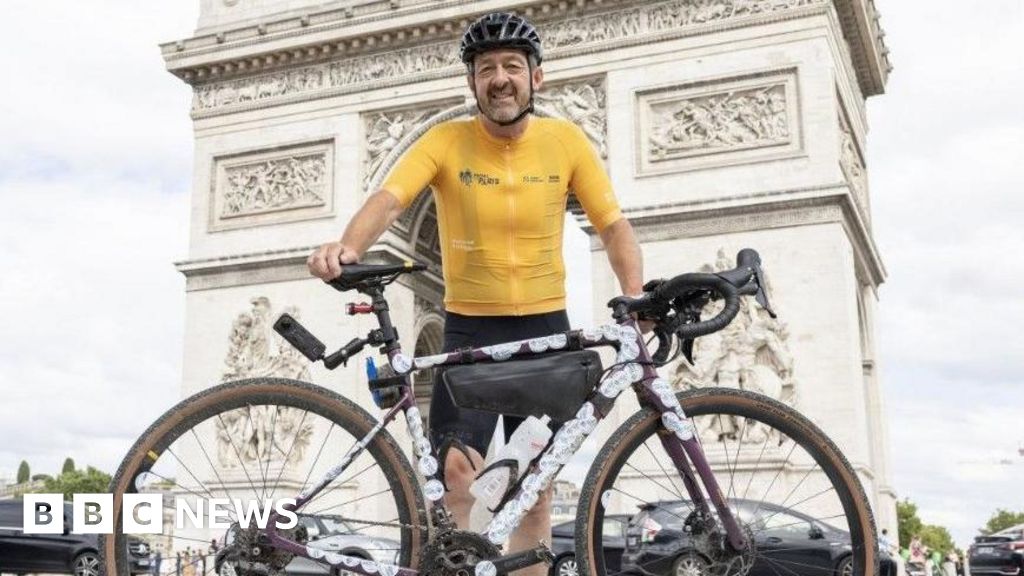
‘Fuel prices are a reason to swap car for bike’ – BBC: Analyzing the Shift Toward Sustainable Commuting
The volatility of global energy markets has transformed the daily commute from a routine task into a significant financial burden for millions. As petrol and diesel costs fluctuate wildly due to geopolitical instability and supply chain disruptions, a growing number of motorists are reconsidering their reliance on four wheels. The sentiment that ‘fuel prices are a reason to swap car for bike’ – BBC has captured a wider socio-economic trend: the intersection of the cost-of-living crisis and the urgent need for sustainable urban mobility.
This shift is not merely a temporary reaction to a spike in pump prices but represents a fundamental pivot in how urban populations perceive transportation. While the immediate catalyst is often financial, the transition to cycling is frequently sustained by secondary benefits, including improved physical health, reduced stress, and a smaller environmental footprint. However, the transition from a climate-controlled vehicle to a bicycle is rarely seamless, involving a complex interplay of infrastructure availability, safety concerns, and cultural shifts.
The Economic Catalyst: Why Fuel Costs Are Driving the Change
For decades, the private car was viewed as the ultimate symbol of freedom and efficiency. However, that narrative is shifting as the operational costs of vehicle ownership climb. Beyond the immediate cost of fuel, car owners are facing rising insurance premiums, increased maintenance costs due to inflation, and, in many cities, escalating parking fees and congestion charges.
When the cost of a daily commute exceeds a certain percentage of a household’s disposable income, the “breaking point” is reached. At this juncture, the bicycle—particularly the electric bike (e-bike)—emerges as a viable economic alternative. Unlike cars, which require constant fueling and expensive servicing, bicycles offer a near-zero marginal cost per trip.
The Mathematics of the Swap
To understand why ‘fuel prices are a reason to swap car for bike’ – BBC is a sentiment shared by so many, one must look at the comparative monthly expenditures. A typical commuter spending 30 to 60 minutes in traffic may spend hundreds of dollars or pounds per month on fuel alone. In contrast, the investment in a high-quality bicycle or e-bike is often recouped within a few months of ceased fuel consumption.
| Expense Category | Average Car (Monthly) | Bicycle/E-Bike (Monthly) | Impact of Swap |
|---|---|---|---|
| Fuel/Energy | High (Variable) | Negligible/Particularly Low | Significant Saving |
| Insurance | Moderate to High | Low (Optional) | Moderate Saving |
| Maintenance | Periodic/Expensive | Low/Frequent but Cheap | Moderate Saving |
| Parking/Tolls | Moderate to High | Usually Free | Significant Saving |
Key Financial Takeaways:
- Immediate Liquidity: Switching to a bike frees up monthly cash flow immediately.
- Asset Depreciation: While cars depreciate rapidly, a well-maintained bike holds a higher percentage of its value relative to its initial cost.
- Health Dividends: Reduced healthcare costs over time due to increased physical activity.
The E-Bike Revolution: Bridging the Gap
One of the primary barriers to swapping a car for a bike has historically been the “sweat factor” and the limitation of distance. Traditional cycling requires a level of physical exertion that can be incompatible with professional dress codes or long-distance commutes. Here’s where the electric bicycle has fundamentally altered the landscape.
E-bikes act as a bridge, allowing individuals who may be older, less fit, or commuting longer distances to make the switch without the physical exhaustion associated with traditional cycling. By providing pedal assistance, these vehicles make hills and headwinds manageable, effectively expanding the “commutable radius” of a home.
Overcoming the Distance Barrier
The adoption of e-bikes has challenged the notion that cycling is only for short trips. With batteries now capable of supporting 30 to 60 miles on a single charge, the 5-to-10-mile commute—previously the domain of the car—is now easily accessible. This technological leap is a critical component of why the idea that ‘fuel prices are a reason to swap car for bike’ – BBC is becoming a practical reality for a broader demographic.
“The e-bike has democratized cycling. It is no longer just for the athletic or the adventurous; it is now a legitimate tool for the working professional who wants to avoid the financial drain of the petrol pump.”
Infrastructure: The Invisible Barrier to Adoption
While the economic incentive is clear, the willingness to abandon a car is heavily dependent on the environment. A commuter in Copenhagen or Amsterdam faces a very different set of challenges than one in Houston, London, or Delhi. The “swap” is only sustainable if the journey is perceived as safe.
The Safety Paradox
Many potential cyclists cite safety as their primary concern. The fear of sharing the road with heavy vehicles—often driven by stressed motorists—creates a psychological barrier that fuel prices alone cannot overcome. For the transition to be permanent, urban planning must shift from “car-centric” to “people-centric” designs.
Effective infrastructure includes:
- Protected Bike Lanes: Physical barriers that separate cyclists from motorized traffic.
- Secure Parking: Reducing the risk of theft, which remains a top deterrent for bike buyers.
- Integrated Transit: The ability to combine cycling with trains or buses for “last-mile” connectivity.
The Concept of the ’15-Minute City’
The rise of the “15-minute city”—an urban planning model where all essential services are within a 15-minute walk or cycle—is gaining traction. This model reduces the necessity of car ownership entirely. When the environment is designed for proximity, the financial pressure of fuel prices becomes the final push needed to move people out of their cars and onto two wheels.
Environmental and Psychological Implications
While the initial motivation for many is the wallet, the long-term result is often a shift in lifestyle. The environmental impact of replacing a combustion-engine vehicle with a bicycle is profound. Transport is one of the largest contributors to urban air pollution and global greenhouse gas emissions.
Reducing the Carbon Footprint
A single person swapping their car for a bike for a daily 10-mile round trip can reduce their annual CO2 emissions by several hundred kilograms. When scaled across a city, this leads to measurable improvements in air quality, reducing the prevalence of respiratory illnesses among the general population.
The Mental Health Dividend
Beyond the environment, the psychological shift is notable. “Commuter stress”—the anxiety induced by traffic jams and parking struggles—is replaced by a period of physical activity. Studies have consistently shown that active commuting lowers cortisol levels and increases alertness upon arrival at work, potentially increasing productivity.
For more on how urban shifts affect well-being, see our related explainer on sustainable urban living.
Stakeholders and Their Roles in the Transition
The movement toward cycling is not a solitary act; it involves various stakeholders whose interests and actions influence the speed of adoption.
1. Municipal Governments
Cities hold the power to accelerate this trend through zoning laws and infrastructure spending. By implementing “Low Traffic Neighborhoods” (LTNs) or increasing taxes on inner-city driving, governments can make the bike the most logical choice.
2. Employers
Companies are increasingly recognizing the value of “cycle-to-work” schemes. By providing showers, secure lockers, and financial incentives for bike purchases, employers can reduce the need for expensive corporate parking lots and improve employee health.
3. The Automotive Industry
Car manufacturers are facing a dual challenge: the shift to electric vehicles (EVs) and the shift away from car ownership entirely. Some are pivoting toward “mobility as a service” (MaaS), recognizing that the future may not be about selling a car, but providing a way to get from A to B.
Common Misconceptions About Swapping Cars for Bikes
Despite the growing trend, several myths persist that prevent people from making the switch. Addressing these is essential for anyone considering the transition.
Myth 1: “Cycling is too slow for a professional commute.”
In many congested urban centers, the average speed of a car during rush hour is surprisingly low—sometimes slower than a cyclist. When you factor in the time spent searching for parking, the bicycle is often the faster option for trips under five miles.
Myth 2: “I’m not fit enough to cycle to work.”
This is where the e-bike is a game-changer. Pedal-assist technology allows users to choose their level of exertion. Many find that they build the necessary fitness gradually, starting with high assistance and moving to lower levels as they grow stronger.
Myth 3: “Biking is only viable in decent weather.”
While rain and snow are challenges, “all-weather” cycling is a reality in cities like Copenhagen. The key is proper gear—waterproof clothing and mudguards. For many, the frustration of a traffic jam in the rain is worse than the experience of cycling through it with the right equipment.
Comparative Analysis: The Long-Term Outlook
To determine if the trend cited in ‘fuel prices are a reason to swap car for bike’ – BBC is a permanent shift or a temporary spike, we must look at the trajectory of urban living.
The convergence of three factors—inflationary pressure on fuel, the maturity of e-bike technology, and a global push toward Net Zero emissions—suggests that we are seeing a structural change. The car is moving from being a “default” tool for every trip to a “specialized” tool for long-distance or heavy-load journeys.
Potential Future Scenarios:
- The Hybrid Commute: A rise in “multi-modal” travel, where users bike to a transit hub and take a train for the remainder of the journey.
- Corporate Integration: Workplaces becoming “bike hubs” with integrated charging and maintenance services.
- Policy-Driven Shifts: More cities implementing “car-free” zones, making the bike the only viable way to enter city centers.
For a deeper dive into the economics of this transition, you may find our analysis of the cost-of-living crisis useful.
Frequently Asked Questions
Is it actually cheaper to own an e-bike than a car?
In almost every scenario, yes. While a high-quality e-bike can cost between $1,000 and $4,000, this is a fraction of the cost of a car’s purchase price, insurance, registration, and fuel. The electricity cost to charge an e-bike battery is negligible—often costing only a few cents per full charge.
How do I handle the ‘sweat factor’ when cycling to work?
There are three primary solutions: using an e-bike to reduce exertion, wearing moisture-wicking athletic gear and changing into professional clothes upon arrival, or requesting that your employer provide showering facilities. Many cyclists also find that a slower, more steady pace prevents excessive sweating.
What is the safest way to transition from a car to a bike?
Start small. Try “test commuting” on weekends or using your bike for one or two days a week. Use apps like Google Maps or Strava to find “quiet routes” that avoid main arteries. Investing in a high-visibility vest, a high-quality helmet, and strong lights is non-negotiable for safety.
Can a bike really replace a car for a family?
For many urban families, yes. Cargo bikes—which feature large front or rear racks—can carry two children and a week’s worth of groceries. While they cannot replace a car for a cross-country trip, they are often more efficient for the “school run” and local errands.
Will fuel prices eventually drop, making the car attractive again?
While prices may fluctuate, the long-term trend is toward the decarbonization of transport. Even if fuel prices stabilize, the added benefits of cycling—health, time saved in traffic, and environmental impact—often outweigh the convenience of the car once a person has made the switch.
The narrative that ‘fuel prices are a reason to swap car for bike’ – BBC highlights a pivotal moment in urban history. What begins as a financial necessity often evolves into a lifestyle preference. As cities continue to evolve and technology makes cycling more accessible, the reliance on the internal combustion engine for short urban trips is likely to diminish, paving the way for cleaner, healthier, and more affordable cities.
