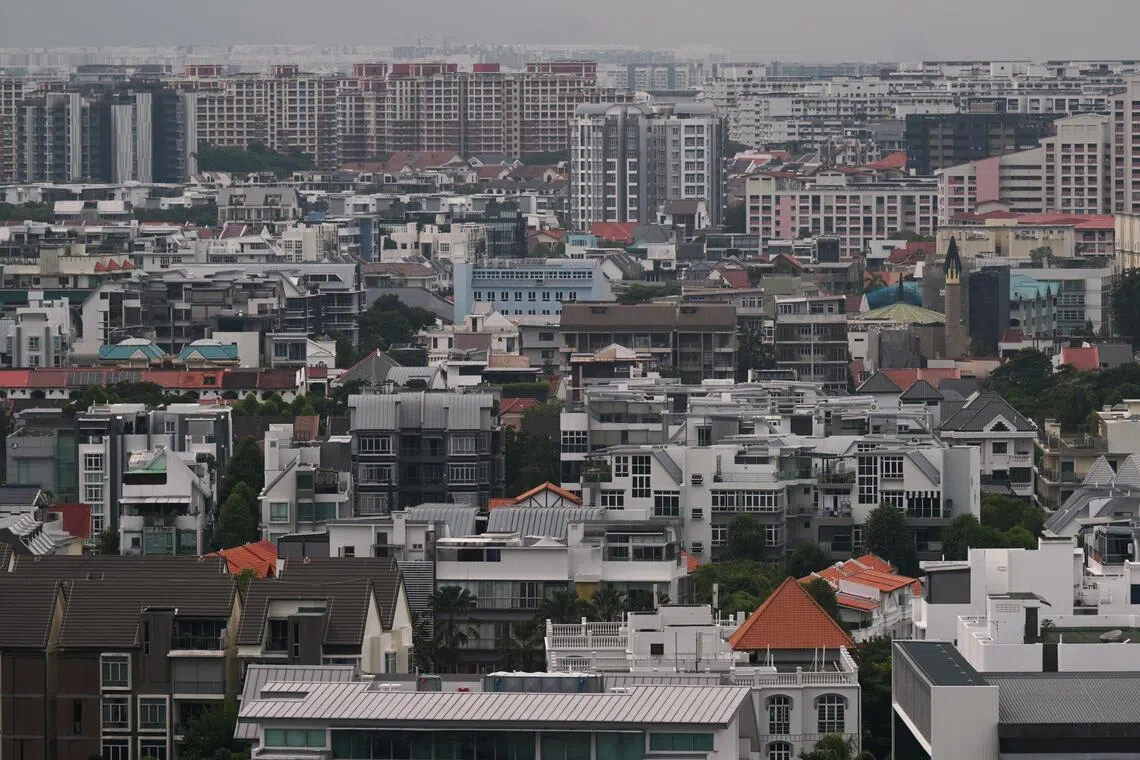
Resale Condos Staying on Market Longer as Buyers Take Their Time, Sellers Hold Firm on Prices – The Straits Times
Resale condominiums in Singapore are spending more time on the market as a price standoff emerges between cautious buyers and resolute sellers. According to reporting by The Straits Times, this trend reflects a broader market hesitation where buyers seek better deals and lower valuations, while owners refuse to slash asking prices despite a noticeable slowdown in transaction speeds.
Why Resale Condos are Taking Longer to Sell
The residential property market is experiencing a period of friction. Properties that once moved quickly are now lingering in listings for weeks or months longer than the historical average. This shift is not necessarily a sign of a crash, but rather a misalignment of expectations between the two primary parties in a real estate transaction.
Buyers have shifted their approach from the aggressive bidding seen during the post-pandemic surge to a more methodical, “wait-and-see” strategy. This caution is driven by several macroeconomic factors, including sustained high interest rates and a tightening of credit. When borrowing costs rise, the monthly mortgage burden increases, forcing buyers to be more discerning about the price they are willing to pay for a resale unit.
Sellers, conversely, are operating from a position of perceived strength. Many owners entered the market or upgraded their properties during a period of rapid price appreciation. According to market observations reported by The Straits Times, these sellers are reluctant to accept offers that they feel undervalue their assets, believing that the long-term trajectory of Singapore real estate remains upward.
- Buyer Stance: Prioritizing value, analyzing yields more strictly, and waiting for potential price corrections.
- Seller Stance: Holding onto high asking prices based on previous peak valuations and a lack of urgent pressure to liquidate.
- Market Result: An increase in “Days on Market” (DOM) and a decrease in the volume of successful transactions.
The Role of Interest Rates and Borrowing Costs
Mortgage rates have a direct impact on the affordability of resale condos. As the Monetary Authority of Singapore (MAS) and global central banks have adjusted rates to combat inflation, the cost of servicing a home loan has climbed. For a buyer, a 1% or 2% increase in interest rates can translate to hundreds or thousands of dollars in additional monthly payments.
This financial pressure creates a “valuation gap.” A buyer may see a property as worth $1.5 million based on their current borrowing capacity and the projected rental yield, while the seller insists on $1.6 million based on what a neighbor’s unit sold for eighteen months ago. Because the buyer cannot easily bridge this gap without overextending their finances, the property remains listed.
“The current deadlock is a classic case of pricing psychology. Buyers are calculating based on today’s costs, while sellers are remembering yesterday’s gains.”
This discrepancy is particularly evident in the mid-tier condo segment, where buyers are more sensitive to interest rate fluctuations than those in the ultra-luxury market, who often make cash purchases or have more diverse financing options.
How Government Cooling Measures Influence the Standoff
Singapore’s property market is heavily regulated to prevent bubbles, and recent cooling measures have added another layer of complexity to the resale landscape. The Additional Buyer’s Stamp Duty (ABSD), particularly for foreign buyers and those purchasing second properties, has significantly reduced the pool of active buyers.
When the pool of buyers shrinks, the competition for any single unit drops. In a high-competition environment, buyers are forced to compete on price, often pushing sellers to raise their asks. In the current environment, the lack of “bidding wars” gives the buyer more leverage in negotiations, but only if the seller is motivated to sell.
Many sellers are not motivated. Those who have already paid off a significant portion of their mortgages or those who do not need to move for a new home are comfortable letting their units sit on the market. This lack of urgency prevents the price corrections that typically occur when demand drops.
Impact of ABSD on Different Buyer Profiles
| Buyer Profile | Impact of Cooling Measures | Effect on Resale Market |
|---|---|---|
| First-time Singaporeans | Minimal (standard taxes) | More selective, focusing on affordability. |
| Investment Buyers | High (increased ABSD) | Reduced demand for smaller, rental-focused units. |
| Foreign Nationals | Very High (significant ABSD) | Sharp decline in luxury resale transactions. |
Comparing Current Trends to Previous Market Cycles
To understand why “resale condos staying on market longer as buyers take their time, sellers hold firm on prices” is a significant trend, it helps to compare it to previous cycles. In the 2013 cooling measure era, the market saw a more pronounced correction in prices because the measures were coupled with a different economic backdrop.
Currently, the market is not seeing a wholesale price drop, but rather a stagnation in volume. This is a “sideways” market. In previous crashes, sellers eventually panicked and dropped prices to exit. Today, the prevalence of high equity—where owners have significant gains from the 2020-2022 boom—acts as a buffer. Sellers can afford to wait because they are not “underwater” on their loans.
This creates a paradox: the market is slower, but prices remain sticky. This differs from a true bear market where prices fall rapidly. Instead, Singapore is experiencing a period of price discovery, where the market is trying to find a new equilibrium between high borrowing costs and high asset valuations.
For a deeper dive into how this compares to historical trends, see our related explainer on Singapore property cycles.
Which Condo Segments are Most Affected?
The “staying on market longer” phenomenon is not uniform across all property types. The impact varies depending on the size, location, and price point of the condo.
The Luxury Segment
Ultra-luxury condos often see the longest time on market. These properties have a smaller pool of qualified buyers. When foreign demand dips due to ABSD or global economic instability, these units can sit for months. However, luxury sellers are often the least likely to drop prices, as their buyers are less sensitive to mortgage rates.

The Mid-Range Family Condo
This segment is currently the primary battleground. These units are typically bought by locals upgrading from HDB flats. Because these buyers are heavily reliant on bank loans, they are the most affected by interest rate hikes. They are the ones “taking their time,” meticulously calculating their Debt Servicing Ratio (DSR) before making an offer.
Small Entry-Level Units
One- and two-bedroom units, often targeted by investors, have seen a shift. With higher taxes on second properties, the investor pool has shrunk. These units are now more dependent on owner-occupiers, who may find the layout too small for long-term living, leading to slower turnover.
Common Misconceptions About the Current Market
There are several narratives currently circulating among homeowners and prospective buyers that may oversimplify the situation.
Misconception 1: “Longer time on market means a crash is coming.”
Not necessarily. A crash is characterized by falling prices and forced sales. Currently, prices are holding steady. The increase in time on market indicates a lack of agreement on price, not a lack of fundamental value in the assets.
Misconception 2: “Sellers will eventually be forced to drop prices.”
This only happens if sellers are financially distressed. Many Singaporean condo owners have low leverage or high equity. If a seller doesn’t need the cash immediately, they have no incentive to lower the price, regardless of how long the unit stays on the market.
Misconception 3: “Buyers are just waiting for a massive price drop.”
While some are, many are simply waiting for interest rates to stabilize. A buyer might be happy to pay the current price if the mortgage rate drops by 0.5%, making the monthly payment manageable.
Implications for Buyers and Sellers
The current stalemate requires a change in strategy for both parties. The days of rapid-fire transactions and immediate price hikes are temporarily on hold.
For Sellers
Owners must realize that “asking price” and “selling price” are diverging. To attract a buyer in a cautious market, sellers may need to focus on “soft” incentives rather than hard price cuts. This includes:
- Improving the unit’s presentation through staging or minor renovations.
- Offering flexible completion dates to accommodate the buyer’s timeline.
- Being realistic about the current borrowing constraints of their target buyer profile.
For Buyers
Buyers have more time to conduct due diligence, but they must avoid the trap of waiting for a “bottom” that may never come. In a market where sellers are holding firm, the best strategy is often to:
- Target motivated sellers (e.g., those relocating or upgrading).
- Offer a fair price based on recent transactional data rather than outdated peak prices.
- Ensure their financing is pre-approved to act quickly when a genuine deal appears.
For more information on financing your home in a high-rate environment, check out our guide to Singapore mortgage options.
Key Market Indicators to Watch
To determine if this standoff will break, analysts and homeowners should monitor specific data points. These indicators will signal whether the market is shifting in favor of the buyer or the seller.
- URA Transaction Volume: A sustained drop in the number of resale transactions would suggest that the price gap is too wide for most buyers to bridge.
- Interest Rate Pivots: Any signal from the US Federal Reserve or MAS regarding a rate cut would likely trigger a surge in buyer activity.
- New Launch Pricing: If developers lower the price of new units, resale sellers may be forced to follow suit to remain competitive.
- Rental Yields: If rents begin to fall, investors may feel more pressure to sell their units, potentially increasing supply and lowering prices.
Frequently Asked Questions
Why are resale condos staying on the market longer right now?
According to reports from The Straits Times, the primary reason is a pricing gap. Buyers are more cautious due to higher interest rates and tighter credit, leading them to offer lower prices. Sellers, however, are holding onto high asking prices based on previous market peaks, resulting in fewer successful transactions and longer listing periods.

Does this mean condo prices in Singapore are falling?
Not necessarily. While the volume of transactions has slowed and units are taking longer to sell, the actual transaction prices have remained relatively firm. It is a market of stagnation rather than a rapid decline.
Should I wait to buy a resale condo or buy now?
This depends on your financial situation. If you find a motivated seller and can afford the current mortgage rates, waiting for a massive price drop may be risky, as sellers are currently showing little sign of lowering prices. However, if you are stretched thin financially, waiting for interest rates to stabilize may be the safer route.
Why won’t sellers just lower their prices to sell faster?
Many sellers have significant equity in their homes from previous price increases. Without an urgent need for cash or a requirement to move, they are comfortable waiting for a buyer who is willing to pay their desired price rather than accepting a lower offer.
How do cooling measures affect this situation?
Cooling measures, such as the ABSD, reduce the number of eligible buyers (especially investors and foreigners). With fewer buyers competing for the same units, there is less pressure on buyers to overpay, which encourages them to take more time and negotiate more aggressively.
