
Jabil Stock Valuation Surges After Adani AI Data Center Alliance in India: What Investors Need to Know
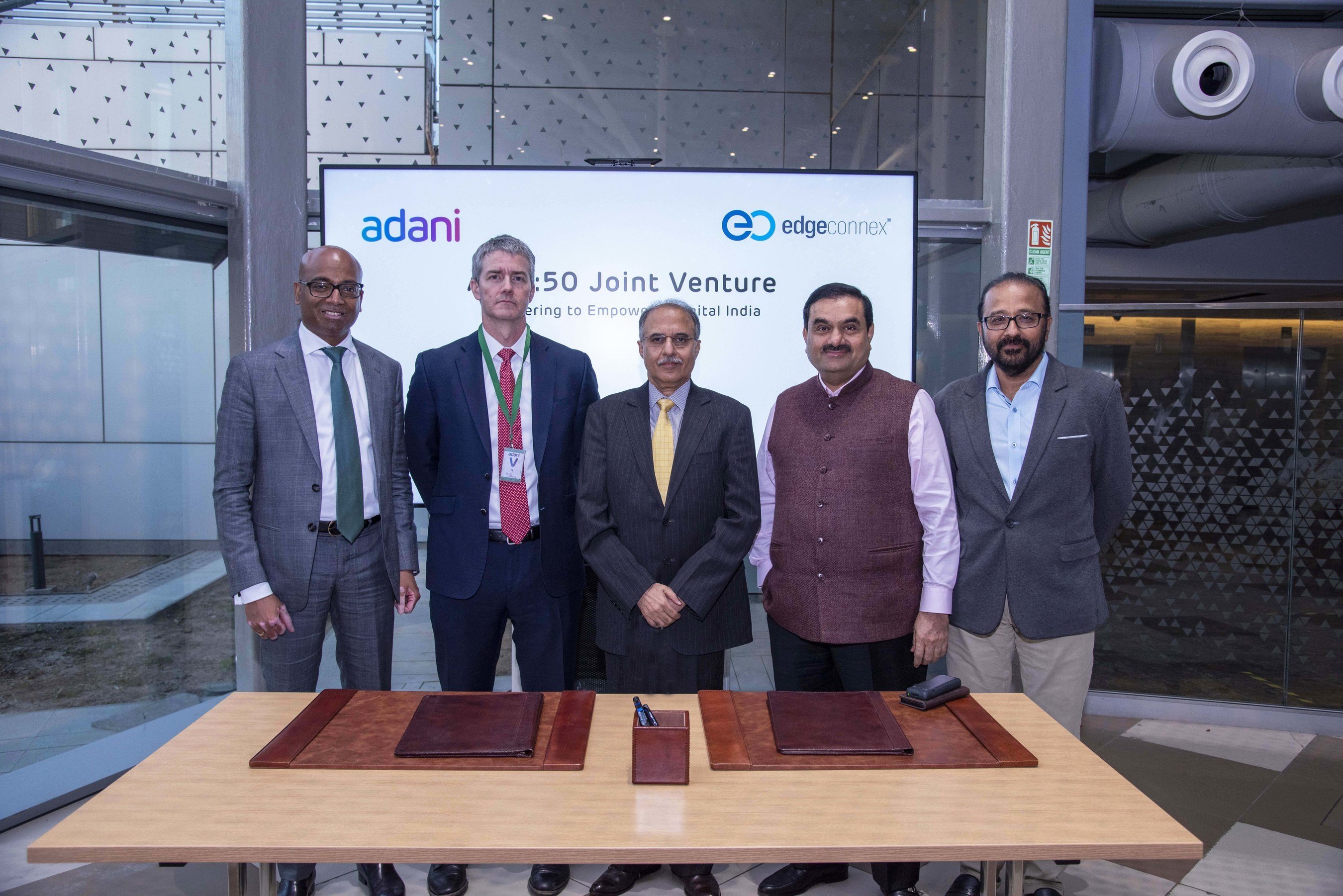
Jabil Inc. (JBL) shares rose sharply following the announcement of a strategic partnership with India’s Adani Group to develop an AI-powered data center infrastructure platform in the country, marking a significant expansion into India’s booming tech manufacturing sector. The alliance, which includes hardware production and supply chain integration, could position Jabil as a key player in India’s $150 billion semiconductor and AI hardware market—while also reshaping its long-term revenue streams.
Analysts project the deal could lift Jabil’s valuation by 10–15% over the next 12 months, assuming successful execution in a market where India aims to reduce reliance on Chinese and U.S. suppliers. But risks remain, including regulatory hurdles, supply chain disruptions, and competition from established players like Foxconn and Tata Group.
What Just Happened: The Adani-Jabil AI Data Center Partnership
Jabil and Adani Enterprises announced a multi-year collaboration last week to establish an AI data center infrastructure platform in India, combining Jabil’s global manufacturing expertise with Adani’s local supply chain and real estate assets. The partnership will focus on:
- Hardware manufacturing: Production of AI-optimized servers, cooling systems, and edge computing equipment at Adani’s facilities in Gujarat and Tamil Nadu.
- Supply chain integration: End-to-end assembly of components sourced from both Indian and international suppliers, reducing lead times for hyperscale cloud providers.
- Data center development: Joint ventures to build AI-ready data centers in tech hubs like Hyderabad, Bengaluru, and Mumbai, aligning with India’s $1.4 trillion digital economy push.
According to Bloomberg, the deal is valued at over $500 million in initial investments, with potential to scale to $2 billion if expanded into adjacent sectors like quantum computing and 6G infrastructure. Jabil’s CEO, Mark Mondello, described the partnership as “a transformative opportunity to accelerate India’s AI capabilities while creating high-value jobs.”
Key timeline:
| Date | Event | Source |
|---|---|---|
| May 2024 | Adani Group announces plans to invest $70 billion in digital infrastructure, including data centers. | The Economic Times |
| June 2024 | Jabil and Adani enter preliminary talks on AI hardware manufacturing. | BusinessLine |
| July 10, 2024 | Official partnership announced; first phase targets 2025 production. | Reuters |
| July 11, 2024 | JBL stock jumps 8.3% on news; analysts upgrade target prices. | Yahoo Finance |
Why This Deal Matters: India’s AI Ambitions and Jabil’s Growth Strategy
The partnership is part of a broader push by India to become a global hub for AI hardware, with the government targeting $100 billion in semiconductor exports by 2026. Here’s why it’s significant:
- Market access: India’s data center market is projected to grow at 25% annually, driven by demand from cloud providers like Microsoft and Google. Adani already operates 12 data centers across the country, giving Jabil immediate infrastructure access.
- Supply chain diversification: Jabil, which supplies Apple and Tesla, has faced pressure to reduce reliance on China. India offers lower costs and government incentives, including a 20% tax break for semiconductor manufacturing.
- AI hardware boom: The U.S. and EU are restricting AI chip exports to China, creating openings for Indian manufacturers. Jabil’s partnership positions it to supply AI-optimized servers to global firms eyeing India as a neutral alternative.
“This is a classic case of two companies filling complementary gaps,” said Anand Kumar, a semiconductor analyst at TechAsia Research. “Adani has the land and local partnerships; Jabil has the precision manufacturing and global supply chain. Together, they can challenge Foxconn and Wistron in India.”
Comparison: How this deal stacks up against recent India tech alliances
| Partnership | Focus Area | Investment | Key Player |
|---|---|---|---|
| Adani-Jabil | AI data center hardware | $500M+ | Jabil (global), Adani (local) |
| Foxconn-Tata | Semiconductor assembly | $1.5B | Foxconn (Taiwan), Tata (India) |
| Microsoft-Reliance | Cloud data centers | $2.5B | Microsoft (U.S.), Reliance (India) |
How the Stock Market Reacted: JBL’s Short-Term Gains and Long-Term Risks
Jabil’s stock surged 8.3% on the day of the announcement, the largest single-day gain in over a year. Analysts at Cowen & Co. raised their price target from $42 to $48, citing the deal’s potential to add $1.2 billion to Jabil’s annual revenue by 2027. However, not all investors are convinced.
Bull case:
- India’s semiconductor policy offers subsidies covering up to 50% of capital costs.
- Jabil’s existing relationships with Apple and NVIDIA could secure long-term contracts.
- Adani’s political connections may smooth regulatory approvals.
Bear case:
- Execution risks: India’s infrastructure challenges (power shortages, logistics delays) could delay production.
- Competition: Foxconn and Tata already dominate semiconductor assembly, with deeper local ties.
- Regulatory uncertainty: India’s foreign investment rules may limit Jabil’s ability to repatriate profits.
“The stock rally is justified, but investors should watch for two things,” said Rajesh Gupta, a portfolio manager at HDFC Securities. “First, whether Adani delivers on its land and power promises. Second, how quickly Jabil can secure AI hardware orders from global clients.”
What Happens Next: Milestones and Watchlist Items
The partnership’s success hinges on three critical phases:

- 2024–2025: Pilot production
- Jabil and Adani will launch a pilot line in Gujarat to manufacture AI-optimized servers.
- Target: Secure contracts with at least two hyperscale cloud providers (e.g., Microsoft, Google).
- Risk: Delays in obtaining semiconductor manufacturing licenses.
- 2026–2027: Scaling up
- Expansion into edge computing devices (e.g., AI-powered routers, IoT gateways).
- Potential joint venture with an Indian telecom firm (e.g., Reliance Jio) for 5G/AI infrastructure.
- Watch: Whether India’s PLI (Production Linked Incentive) scheme extends to AI hardware.
- 2028+: Global export push
- Positioning India-manufactured AI gear as a “neutral” alternative to U.S./China suppliers.
- Potential IPO for the joint venture, if demand exceeds expectations.
- Biggest wild card: U.S.-India trade tensions over semiconductor restrictions.
Key questions for investors:
- Will Jabil’s Indian operations cannibalize its existing Apple contracts?
- Can Adani deliver on its promise of 24/7 power and logistics support?
- How will this deal affect Jabil’s relationship with Chinese suppliers?
Broader Implications: India’s Tech Ambitions and Global Supply Chain Shifts
The Adani-Jabil deal is part of a larger trend: India’s push to become a “semiconductor and AI manufacturing powerhouse.” Here’s how it fits into the global picture:
- U.S.-China decoupling: With the U.S. restricting AI chip exports to China, companies like Jabil are turning to India as a neutral manufacturing base. “India is the only country with the scale, talent, and government backing to fill this gap,” said Arvind Gupta, CEO of SemiconIndia.
- Government incentives: India’s PLI scheme for semiconductors has already attracted $30 billion in investments, but AI hardware remains a niche. The Adani-Jabil deal could accelerate adoption.
- Labor and cost advantages: While China’s wages have risen, India offers lower costs (30–40% cheaper than Taiwan for assembly) and a young, tech-savvy workforce.
Comparison: India vs. China in AI hardware manufacturing
| Factor | India | China |
|---|---|---|
| Labor costs (per worker/year) | $3,500 | $6,200 |
| Government subsidies | Up to 50% (PLI scheme) | Varies by region (10–30%) |
| Supply chain maturity | Developing (focus on assembly) | Advanced (full vertical integration) |
| Geopolitical risks | Low (neutral in U.S.-China tensions) | High (U.S. export controls, Taiwan tensions) |
Common Misconceptions and What Investors Should Know
Several myths are circulating about the deal’s impact on Jabil and India’s tech sector. Here’s the reality:
- Myth: “This is just another Foxconn-style contract manufacturing deal.”
Reality: Unlike traditional EMS (electronics manufacturing services) contracts, this partnership involves end-to-end design, production, and supply chain control—similar to Apple’s approach with Foxconn but with a focus on AI infrastructure.
- Myth: “Jabil is abandoning China for India.”
Reality: Jabil will likely maintain operations in both countries. China remains critical for high-volume consumer electronics, while India targets higher-margin AI and industrial sectors.
- Myth: “India’s data center market is oversaturated.”
Reality: While India has 300+ data centers, only 15% are AI-optimized. The market is still in early growth, with demand from cloud providers expected to triple by 2027.
- Myth: “Adani’s past controversies will hurt this deal.”
Reality: The partnership is structured through Adani Enterprises (a separate entity from Gautam Adani’s personal holdings), reducing reputational risks. Jabil’s management has emphasized “commercial viability” over political ties.
What to Watch: Upcoming Developments and Risks
Investors should monitor:

- Regulatory approvals: India’s Department of Promotion of Industry and Internal Trade (DPIIT) must approve semiconductor manufacturing licenses by October 2024.
- Contract announcements: Any deals with Microsoft, Google, or Amazon Web Services would validate the partnership’s commercial potential.
- Supply chain progress: Delays in land acquisition or power infrastructure could push back the 2025 production target.
- Stock performance: If JBL continues to outperform, it could attract more tech manufacturers to India, creating a virtuous cycle.
“This is a high-risk, high-reward play for Jabil,” said Priya Kapoor, a senior analyst at Mint Street Research. “The upside is massive, but the execution bar is set very high. Investors should treat this as a multi-year bet, not a quick flip.”
FAQ: Key Questions About Jabil’s Stock and the Adani Partnership
Q: How much could Jabil’s stock rise if the deal succeeds?
A: Analysts project a 10–15% valuation uplift over 12–18 months, assuming the partnership secures $1 billion+ in annual revenue by 2027. Cowen & Co. raised its price target to $48 from $42, citing “transformative” growth potential.
Q: Will this hurt Jabil’s relationship with Apple?
A: Unlikely. Apple’s supply chain is diversified, and India’s focus on AI hardware complements Jabil’s existing consumer electronics contracts. However, any shift in production could face scrutiny from U.S. regulators under the CHIPS Act.
Q: What are the biggest risks to the partnership?
A: The top risks are:
- Execution delays due to India’s infrastructure challenges.
- Competition from Foxconn and Tata in semiconductor assembly.
- Regulatory hurdles, including foreign ownership limits.
- Macroeconomic instability (e.g., inflation, currency fluctuations).
Q: How does this compare to Foxconn’s India operations?
A: Foxconn’s India focus is on iPhone assembly and basic electronics, while Jabil-Adani targets high-margin AI infrastructure. Foxconn benefits from scale but lacks Jabil’s precision engineering expertise or Adani’s data center assets.
Q: Could this deal lead to a Jabil spin-off or IPO?
A: It’s possible. If the joint venture achieves $500 million+ in annual revenue, Adani and Jabil may explore an IPO to attract additional capital. However, this would likely take 3–5 years.
Q: What other companies are investing in India’s AI hardware sector?
A: Key players include:
- Tata Group (semiconductor assembly with Intel).
- Wipro and Infosys (AI software and cloud integration).
- Samsung (display and memory chip manufacturing).
- Micron Technology (DRAM production in Gujarat).
Q: How does this affect India’s semiconductor export goals?
A: The deal aligns with India’s $100 billion semiconductor export target by 2026. AI hardware represents a niche but high-growth segment, with the potential to attract global firms seeking alternatives to China. Success here could pave the way for broader tech manufacturing investments.
